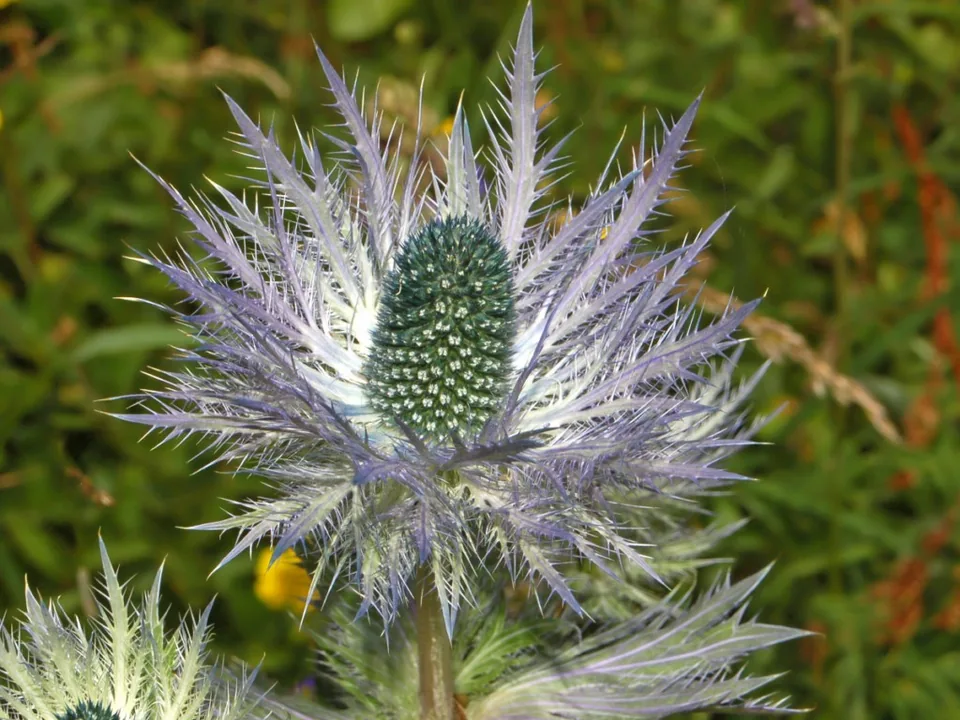
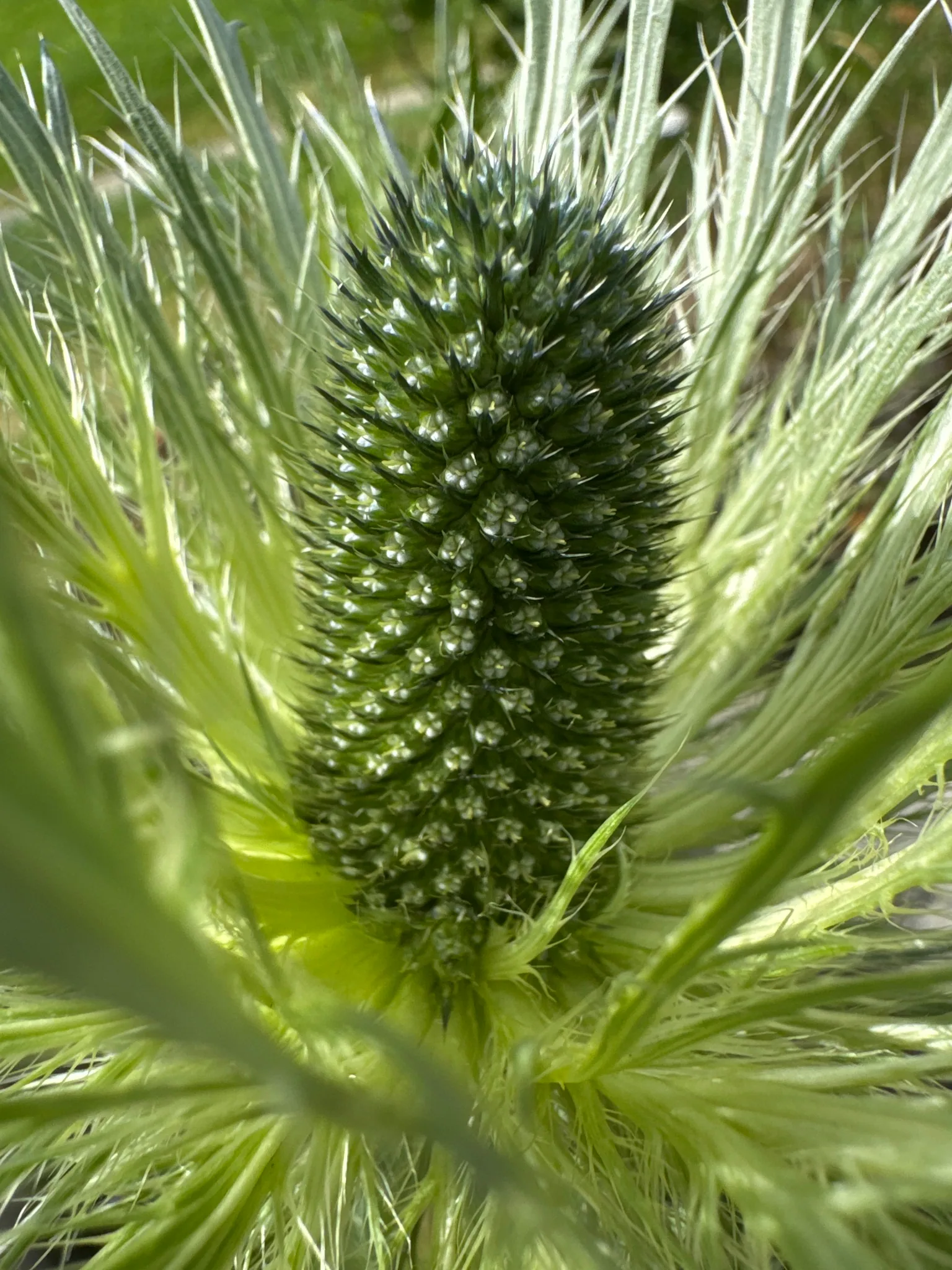

How to Grow and Care for Eryngium alpinum
Eryngium alpinum
Written by Emilio Marruso · last checked
At a glance
Alpine sea holly is a perennial that asks for very little: give it full sun and it comes back year after year. Once it settles in, it handles dry spells and needs only low to regular watering. Starting it is simple too: sow the seed right where it will grow, as soon as it ripens, because the seed does not keep for long.
- Sun
Full sun
What the sources say (1)
Light: Full sun
Recommended Temperature Zone: Sunset: 1-24,29-43 USDA: 2-8 Sun Exposure: Full sun
— Alpine Eryngo (Eryngium alpinum) [5] - Water
Low to regular water; handles drought once settled in
What the sources say (1)
Watering: Low to regular water; drought tolerant once established
Growth Habits: Perennial, 1 to 2.5 feet tall (30 to 75 cm.), 1 to 2.5 feet in spread (30 to 75 cm.), dark green leaves Flowers: Blue flowers Watering Needs: Little water to moderate water
— Alpine Eryngo (Eryngium alpinum) [5] - Propagation
From seed, sown right where it will grow
What the sources say (1)
Propagation: Seed (sown in situ; short-lived seed)
Needs specific temperature: Sow at 18-22 C° for 4 weeks, move to minimum -4 C° for 6 weeks, move to 5-12 C°. for germination Depth to plant seed: cover the seeds thin Sow in situ
— Alpine Sea Holly (Eryngium alpinum) - Garden.org [6] - Sowing
Sow outdoors as soon as the seed ripens: it doesn't keep long
What the sources say (2)
Sowing: Direct after the seed ripens
Seeds are short viable, best to sow direct after ripening
— Alpine Sea Holly (Eryngium alpinum) - Garden.org [6] Propagation: Seed (sown in situ; short-lived seed)
Needs specific temperature: Sow at 18-22 C° for 4 weeks, move to minimum -4 C° for 6 weeks, move to 5-12 C°. for germination Depth to plant seed: cover the seeds thin Sow in situ
— Alpine Sea Holly (Eryngium alpinum) - Garden.org [6]
Overview
Eryngium alpinum is an endemic Alpine species found in Italy only at a very few sites in the Cottian and Maritime Alps and the Carnic Alps. [2]
This record is incomplete: the sources we read do not cover every field yet.
Not yet covered by our sources: Hardiness, coldest zone, Hardiness, warmest zone, Pruning
Eryngium alpinum care
How to water Eryngium alpinum
Low to regular water; drought tolerant once established
What the sources say (1)
Growth Habits: Perennial, 1 to 2.5 feet tall (30 to 75 cm.), 1 to 2.5 feet in spread (30 to 75 cm.), dark green leaves
Flowers: Blue flowers
Watering Needs: Little water to moderate waterHow much light Eryngium alpinum needs
Full sun
What the sources say (1)
Recommended Temperature Zone:
Sunset: 1-24,29-43
USDA: 2-8
Sun Exposure: Full sunHow much cold Eryngium alpinum can take
Hardiness, coldest zone
Not stated in the sources we read.
Hardiness, warmest zone
Not stated in the sources we read.
How to propagate Eryngium alpinum
Seed (sown in situ; short-lived seed)
What the sources say (1)
Needs specific temperature: Sow at 18-22 C° for 4 weeks, move to minimum -4 C° for 6 weeks, move to 5-12 C°. for germination
Depth to plant seed: cover the seeds thin
Sow in situHow to grow Eryngium alpinum
The plant
Life cycle
perennial
What the sources say (1)
The native range of this species is Jura, Alps to NW. Balkan Peninsula. It is a perennial and grows primarily in the temperate biome.Remedies
The sources we checked give no remedies for this plant.
Calendar
Sowing
Direct after the seed ripens
What the sources say (1)
Seeds are short viable, best to sow direct after ripeningPruning
Not stated in the sources we read.
Months as given by the sources, which are mostly from the United States (northern hemisphere). In the southern hemisphere they shift by about six months.
Indicative values
Values from a secondary source, not checked word for word like the rest of this page. Use them as a starting point.
- Mature height
- 61-76.2 cm (2-2.5 ft)Indicative value, adapt it to your climate · Secondary source
- Drought tolerant
- yesIndicative value, adapt it to your climate · Secondary source
- Soil
- Rocky, gravelly, dry, Well-drainedIndicative value, adapt it to your climate · Secondary source
- Soil pH
- 6-7.5Indicative value, adapt it to your climate · Secondary source
- USDA hardiness zones
- 2-8 [winter low −45.6 to −6.7 °C (−50 to 20 °F)]Indicative value, adapt it to your climate · Secondary source
- Care level
- LowIndicative value, adapt it to your climate · Secondary source
- Growth rate
- ModerateIndicative value, adapt it to your climate · Secondary source
- Pruning
- March, April, June, July, AugustIndicative value, adapt it to your climate · Secondary source
- Pests
- Crown rot, Mildew, Root rot, Slugs, snails, Pest resistant, Disease resistant, Rabbit resistant, Drought resistantIndicative value, adapt it to your climate · Secondary source
Similar plants
- Amethyst eryngo Eryngium amethystinum
- Eryngo Eryngium aquaticum
- Giant sea holly Eryngium giganteum
- Rattlesnake Master Eryngium yuccifolium
- Sea holly Eryngium maritimum
- Sea Holly Eryngium planum
- Abies grandis Abies grandis
- Abraham Trachystemon orientalis
Sources
Every value above is quoted from these documents. Links lead to the original publisher.
- Eryngium alpinum L. | Plants of the World Online | Kew Science · powo.science.kew.org, consulted
- Eryngium alpinum | Paradisia · paradisiapp.pngp.it, consulted
- How to Grow Eryngium - Sea Holly · harvesttotable.com, consulted
- Sea Holly Flowers - Information About Growing Eryngium Plants | Gardening Know How · gardeningknowhow.com, consulted
- Alpine Eryngo (Eryngium alpinum) · desert-tropicals.com, consulted
- Alpine Sea Holly (Eryngium alpinum) - Garden.org · garden.org, consulted
Written by Emilio Marruso · last checked