
How to Grow and Care for Ashe Juniper
Juniperus ashei
Written by Emilio Marruso · last checked
Toxic to: Animals, People · Why
At a glance
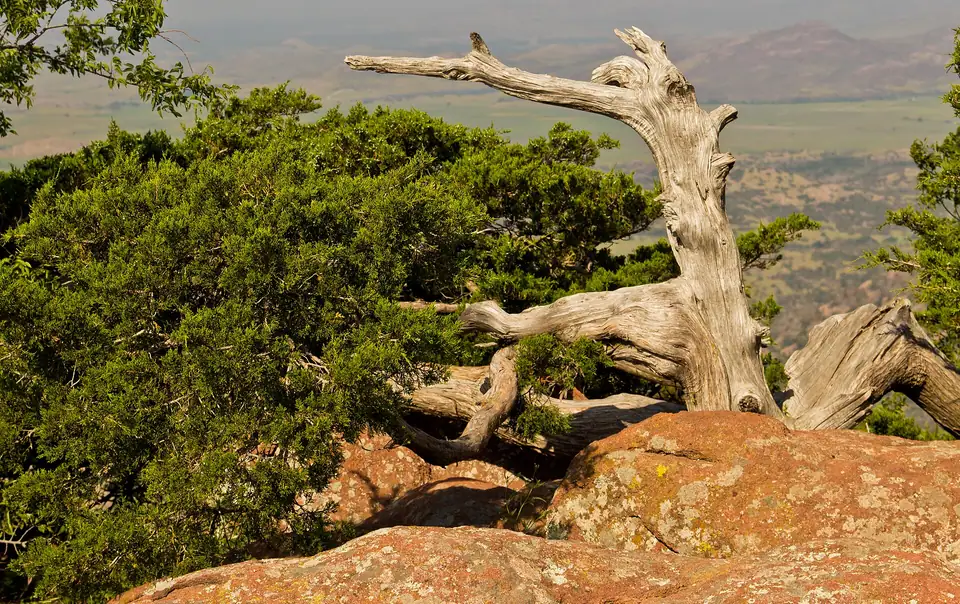
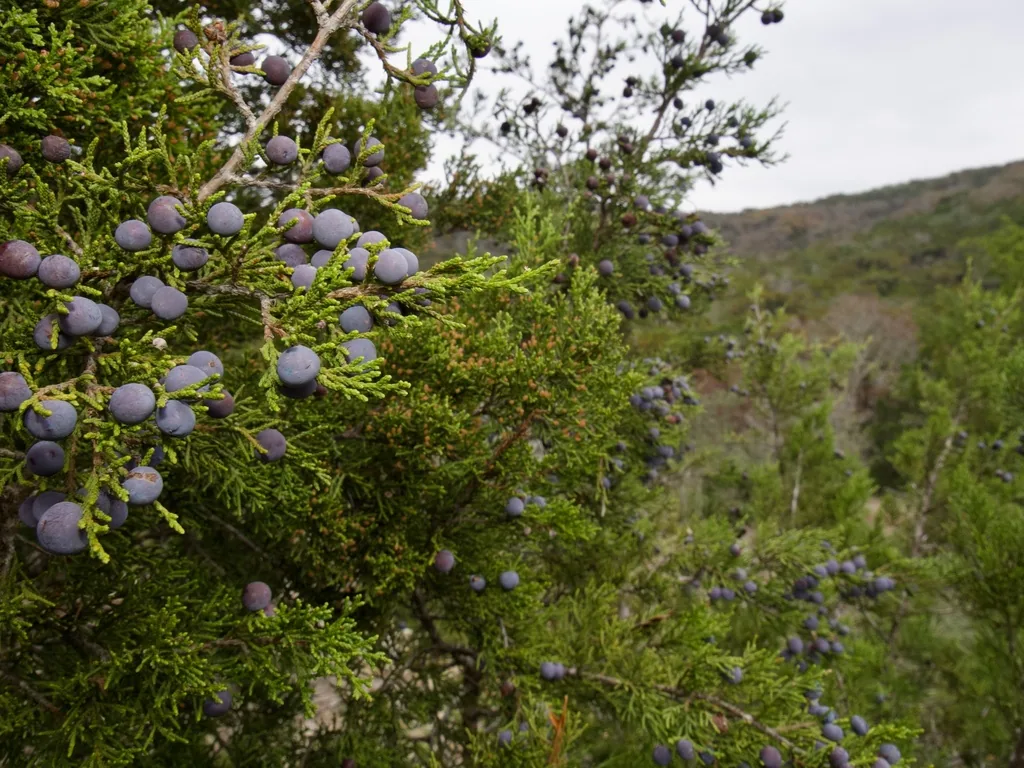
Ashe juniper is a tough, easygoing tree: it grows in sun or part shade, uses little water and handles drought with ease. It can reach 30 feet tall, and birds and small mammals love its berries, so it brings wildlife right to your garden. Plant pot-grown seedlings in early summer, or sow the seeds outdoors in fall.
- Sun
Sun to part shade
What the sources say (3)
- Water
Needs little water and tolerates drought
What the sources say (1)
Watering: Low water use; drought tolerant
Low maintenance, drought tolerant.
— Juniperus ashei - Native Plant Society of Texas [8] - Cold
Survives winters down to 0 °F (−17.8 °C)
Hardy in very cold winters · USDA 7 · RHS H6 · Z7
What the sources say (1)
Hardiness, coldest zone: 7 [winter low −17.8 to −12.2 °C (0 to 10 °F)]
Hardiness Zone 7+
— Ashe Juniper (Juniperus ashei) — Practical Plants [5] - Planting
Plant pot-grown seedlings in early summer
What the sources say (1)
Planting: Early summer (pot-grown seedlings)
Grow on in pots until large enough, then plant out in early summer.
— Juniperus ashei - Native Plant Society of Texas [8] - Harvest
The fruit can be eaten raw or cooked; birds and small mammals love the berries
- Size
Up to 30 ft tall
What the sources say (2)
Mature height: up to 914.4 cm (30 ft)
It rarely grows over 30 ft or 9 m tall.
— Plants of Texas Rangelands » Ashe Juniper, Blueberry Juniper [2] Ashe juniper is a low-branched, mounded, multiple trunked shrubby tree that can grow as much as 30 feet tall but usually is seen at half that
— Ashe juniper [1] - Propagation
From seed, cuttings of mature wood, or by layering
What the sources say (3)
Propagation: Seed (cold stratification); cuttings of mature wood; layering
Stratify at 41 degrees for 30-120 days.
— Lady Bird Johnson Wildflower Center - The University of Texas at Austin [3] Cuttings of mature wood, 5 - 10cm with a heel, September/October in a cold frame.
— Ashe Juniper (Juniperus ashei) — Practical Plants [5] Layering in September/October. Takes 12 months
— Ashe Juniper (Juniperus ashei) — Practical Plants [5] - Sowing
Sow outdoors in fall, or give the seeds a cold period and sow in spring
What the sources say (4)
Sowing: Outdoors in fall, or stratified and sown in spring
Seed can be sown outdoors in fall or stratified and sown in spring.
— Lady Bird Johnson Wildflower Center - The University of Texas at Austin [3] Propagation: Seed (cold stratification); cuttings of mature wood; layering
Stratify at 41 degrees for 30-120 days.
— Lady Bird Johnson Wildflower Center - The University of Texas at Austin [3] Cuttings of mature wood, 5 - 10cm with a heel, September/October in a cold frame.
— Ashe Juniper (Juniperus ashei) — Practical Plants [5] Layering in September/October. Takes 12 months
— Ashe Juniper (Juniperus ashei) — Practical Plants [5] - Safety
Its pollen strongly irritates people with cedar allergies; it may be toxic to animals
Overview
Ashe juniper is a native evergreen shrub or small tree of limestone soils in Texas, Oklahoma, Arkansas and Missouri. [3][6] It is drought tolerant and grows in rocky, well-drained soils in sun to part shade. [8][3] Its pollen is very irritating to people with cedar allergies. [3]
This record is incomplete: the sources we read do not cover every field yet.
Not yet covered by our sources: Hardiness, warmest zone, Pruning
Ashe Juniper care
How to water Ashe Juniper
Low water use; drought tolerant
What the sources say (1)
Low maintenance, drought tolerant.How much light Ashe Juniper needs
Sun to part shade
How much cold Ashe Juniper can take
Hardiness, coldest zone
7 [winter low −17.8 to −12.2 °C (0 to 10 °F)]
What the sources say (1)
Hardiness
Zone 7+Hardiness, warmest zone
Not stated in the sources we read.
How to propagate Ashe Juniper
Seed (cold stratification); cuttings of mature wood; layering
What the sources say (3)
Stratify at 41 degrees for 30-120 days.Cuttings of mature wood, 5 - 10cm with a heel, September/October in a cold frame.Layering in September/October. Takes 12 monthsHow to grow Ashe Juniper
The plant
Life cycle
perennial
What the sources say (1)
This evergreen tree is a perennial, cool- and warm-season native.Family
Cupressaceae
What the sources say (1)
Ashe Juniper, Blueberry Juniper, Ashe's Juniper
Juniperus ashei J. Buchholz
Cupressaceae (Cypress family)Mature height
up to 914.4 cm (30 ft)
Fertilizing
Micronutrients
The sources give different values depending on region, zone or growing conditions.
What each source says
Juniperus in general: Magnesium when deficient: Epsom salt (magnesium sulfate) at 25.5 mL/m² on the soil or as a foliar feed at 37.4 g per litre of water
What the sources say (1)
Juniperus in general: Apply Epsom salts (magnesium sulfate) either to the soil (1 cup per 100 square feet) or as a foliar fertilizer (5 ounces per gallon of water).Signs of deficiency
The sources give different values depending on region, zone or growing conditions.
What each source says
Juniperus in general: Magnesium deficiency: yellowing or dead foliage in the center of the plant and slow growth
What the sources say (1)
Juniperus in general: Magnesium (Mg) deficiency is a result of improper nutrition. A juniper lacking sufficient magnesium develops yellowing or dead foliage in the center and grows slowly.Remedies
Each remedy shows what official sources say about it; traditional remedies without an official source are marked as such. Harmful ones are listed so you know to avoid them.
Treating the plant
Getting rid of it
juniper encroachment
goat browsing Works
Goating must be carefully managed to prevent the destruction of desirable browse plants
— texnat.tamu.edu [11] How: Goats defoliate juniper seedlings, saplings and regrowth, which decreases their vigor; maintenance control of juniper with goats is used after the initial treatment.
Goating is another effective ecological tool for controlling or suppressing juniper seedlings, saplings and regrowth.
— texnat.tamu.edu [11] What the evidence says Goating is another effective ecological tool for controlling or suppressing juniper seedlings, saplings and regrowth.
— texnat.tamu.edu [11] hand cutting Works
How: Juniper was initially controlled by hand cutting; hand cutting and hand grubbing are also used as follow-up control of surviving seedlings and saplings.
Juniper was initially controlled by hand cutting at a cost of $42.00/acre.
— texnat.tamu.edu [12] What the evidence says Several highly effective and proven maintenance control treatments are available, including prescribed fire, goating, individual plant herbicide treatments, hand cutting, hand grubbing, and mechanical grubbing.
— texnat.tamu.edu [11]
Is Ashe Juniper toxic to pets?
Reported by the source, quoted verbatim. This is not medical or veterinary advice: if a person or an animal may have eaten this plant, contact a poison control centre or a veterinarian.
Animals
Possibly toxic to mammals
[4]The source flags the risk for this animal but does not explain why.
People
Calendar
Sowing
Outdoors in fall, or stratified and sown in spring
What the sources say (1)
Seed can be sown outdoors in fall or stratified and sown in spring.Planting
Early summer (pot-grown seedlings)
What the sources say (1)
Grow on in pots until large enough, then plant out in early summer.Pruning
Not stated in the sources we read.
Months as given by the sources, which are mostly from the United States (northern hemisphere). In the southern hemisphere they shift by about six months.
Edibility
Reported by the source, quoted verbatim. Do not eat a plant on the basis of this page alone: identification mistakes can be dangerous.
Indicative values
Values from a secondary source, not checked word for word like the rest of this page. Use them as a starting point.
- Drought tolerant
- yesIndicative value, adapt it to your climate · Secondary source
- Soil pH
- 6-7.5Indicative value, adapt it to your climate · Secondary source
- Care level
- MediumIndicative value, adapt it to your climate · Secondary source
- Growth rate
- LowIndicative value, adapt it to your climate · Secondary source
- Pruning
- February, March, AprilIndicative value, adapt it to your climate · Secondary source
Similar plants
- Common Juniper Juniperus communis
- Chinese Juniper Juniperus chinensis
- Creeping Juniper Juniperus horizontalis
- Eastern Redcedar Juniperus virginiana
- Japanese Garden Juniper Juniperus procumbens
- One-seed Juniper Juniperus monosperma
- Rocky Mountain Juniper Juniperus scopulorum
- Savin Juniper Juniperus sabina
Sources
Every value above is quoted from these documents. Links lead to the original publisher.
- Ashe juniper · uaex.uada.edu, consulted
- Plants of Texas Rangelands » Ashe Juniper, Blueberry Juniper · rangeplants.tamu.edu, consulted
- Lady Bird Johnson Wildflower Center - The University of Texas at Austin · wildflower.org, consulted
- Juniperus ashei - Useful Temperate Plants · temperate.theferns.info, consulted
- Ashe Juniper (Juniperus ashei) — Practical Plants · practicalplants.org, consulted
- Ashe's Juniper (Ashe Juniper) | Missouri Department of Conservation · mdc.mo.gov, consulted
- Conifer Database - ashei · conifersociety.org, consulted
- Juniperus ashei - Native Plant Society of Texas · npsot.org, consulted
- hortsense.cahnrs.wsu.edu · hortsense.cahnrs.wsu.edu
- extension.psu.edu · extension.psu.edu
- texnat.tamu.edu · texnat.tamu.edu
- texnat.tamu.edu · texnat.tamu.edu
Written by Emilio Marruso · last checked