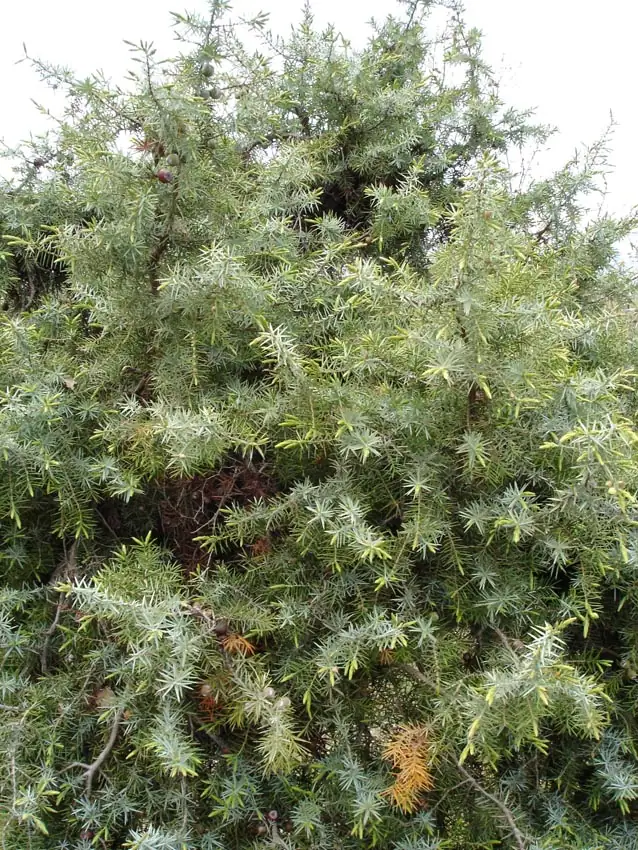
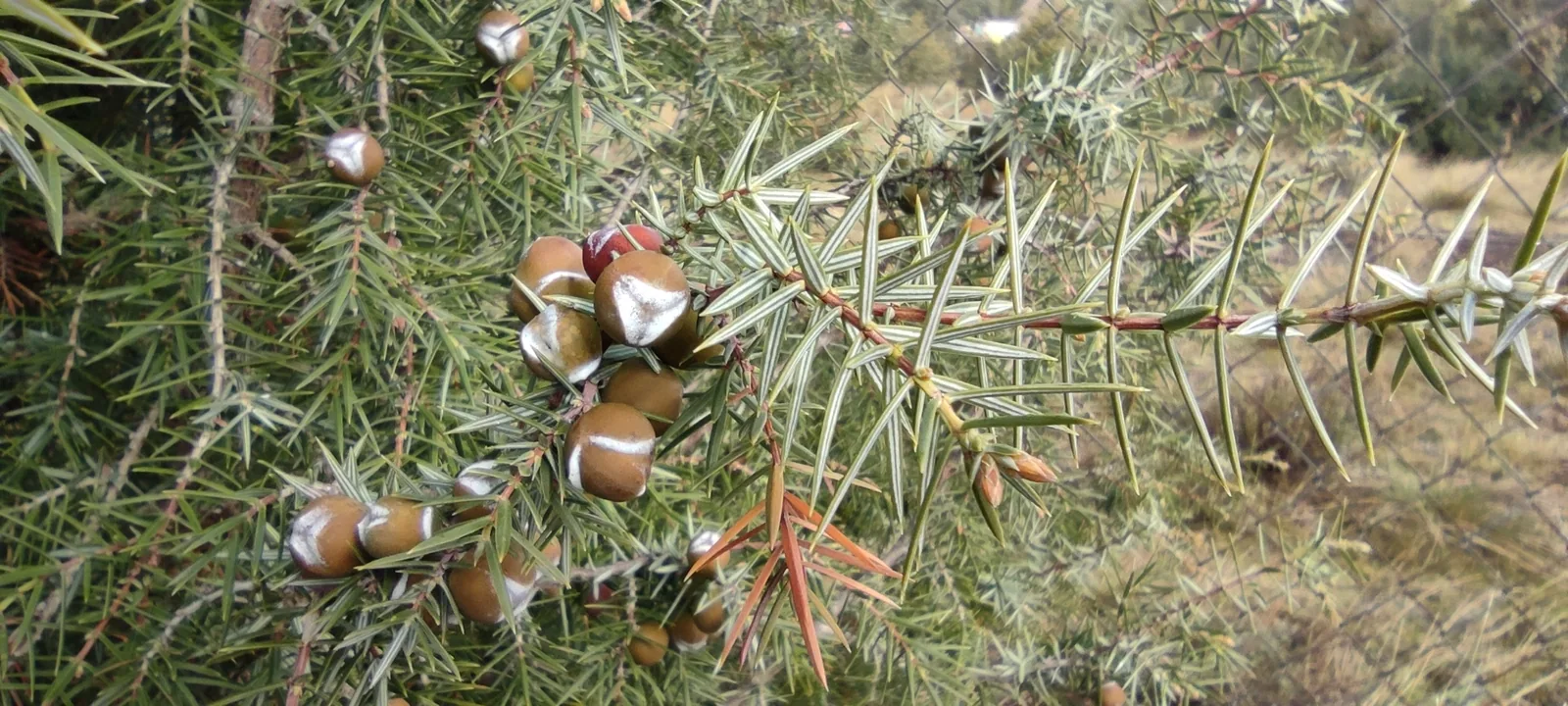

How to Grow and Care for Prickly juniper
Juniperus oxycedrus
Written by Emilio Marruso · last checked
At a glance
Prickly juniper is a tough, sun-loving tree that thrives in hot, dry spots and handles drought once established. Give it full sun and well-drained soil, and it can grow 33–49 ft tall. Its mature seed cones are sometimes used to flavor savory dishes, as a condiment or as pickles, a lovely bonus from such an easygoing tree.
- Sun
Full sun, in an open, sunny spot
What the sources say (2)
Light: Full sun (open, sunny position)
The prickly juniper prefers a warm, Mediterranean climate and is often found in well-drained, rocky or sandy soils in full sunlight.
— Juniperus oxycedrus - EUFORGEN European forest genetic resources programme [1] Requires an open, sunny position. Succeeds in most soils if they are well drained
— Juniperus oxycedrus - Useful Temperate Plants [7] - Water
Handles drought once established; doesn't like damp, wet climates
What the sources say (3)
Watering: Drought tolerant once established; succeeds in hot dry positions
A drought tolerant plant once established, succeeding in hot dry positions
— Juniperus oxycedrus - Useful Temperate Plants [7] Watering notes: Needs well-drained soil; dislikes moist to wet climates
Succeeds in most soils if they are well drained, preferring a neutral or slightly alkaline soil
— Juniperus oxycedrus - Useful Temperate Plants [7] It requires warm to hot summers in order to thrive and dislikes moist to wet climates.
— Juniperus oxycedrus - Useful Temperate Plants [7] - Soil
Well-drained soil; thrives in hot, dry spots
What the sources say (3)
Watering notes: Needs well-drained soil; dislikes moist to wet climates
Succeeds in most soils if they are well drained, preferring a neutral or slightly alkaline soil
— Juniperus oxycedrus - Useful Temperate Plants [7] It requires warm to hot summers in order to thrive and dislikes moist to wet climates.
— Juniperus oxycedrus - Useful Temperate Plants [7] Watering: Drought tolerant once established; succeeds in hot dry positions
A drought tolerant plant once established, succeeding in hot dry positions
— Juniperus oxycedrus - Useful Temperate Plants [7] - Planting
Plant pot-grown seedlings in early summer; rooted cuttings the following fall
What the sources say (2)
Planting: Seedlings grown on in pots: early summer; rooted cuttings: the following autumn
Grow on in pots until large enough, then plant out in early summer.
— Prickly Juniper (Juniperus oxycedrus) — Practical Plants [6] Cuttings of mature wood, 5 - 10cm with a heel, September/October in a cold frame. Plant out in the following autumn
— Prickly Juniper (Juniperus oxycedrus) — Practical Plants [6] - Harvest
Mature seed cones are sometimes used to flavor savory food, as a condiment or as pickles
- Size
33–49 ft tall
What the sources say (1)
Mature height: 1000-1500 cm (10-15 m)
The prickly juniper (Juniperus oxycedrus L.) is a shrub or small tree which grows up to 10-15 m in height.
— Juniperus oxycedrus [2] - Propagation
From seed or from cuttings of mature wood with a heel
What the sources say (2)
Propagation: Seed (needs cold stratification, slow to germinate), cuttings of mature wood with a heel
The seed requires a period of cold stratification.
— Prickly Juniper (Juniperus oxycedrus) — Practical Plants [6] Cuttings of mature wood, 5 - 10cm with a heel, September/October in a cold frame.
— Prickly Juniper (Juniperus oxycedrus) — Practical Plants [6] - Sowing
Sow in a cold frame as soon as the seed is ripe; it needs cold and is slow to sprout
What the sources say (3)
Sowing: As soon as the seed is ripe, in a cold frame
The seed is best sown as soon as it is ripe in a cold frame.
— Prickly Juniper (Juniperus oxycedrus) — Practical Plants [6] Propagation: Seed (needs cold stratification, slow to germinate), cuttings of mature wood with a heel
The seed requires a period of cold stratification.
— Prickly Juniper (Juniperus oxycedrus) — Practical Plants [6] Cuttings of mature wood, 5 - 10cm with a heel, September/October in a cold frame.
— Prickly Juniper (Juniperus oxycedrus) — Practical Plants [6]
Overview
Prickly juniper is a small evergreen conifer of the Mediterranean region, usually found in well-drained, rocky or sandy soils in full sunlight. [1] It is cultivated as an ornamental shrub in southern Europe and is drought tolerant once established. [2][7] It is dioecious, so male and female plants are needed if seed is wanted, and the seed is slow to germinate. [7][6]
This record is incomplete: the sources we read do not cover every field yet.
Not yet covered by our sources: Hardiness, warmest zone, Pruning
Prickly juniper care
How to water Prickly juniper
Watering
Drought tolerant once established; succeeds in hot dry positions
What the sources say (1)
A drought tolerant plant once established, succeeding in hot dry positionsWatering notes
Needs well-drained soil; dislikes moist to wet climates
What the sources say (2)
Succeeds in most soils if they are well drained, preferring a neutral or slightly alkaline soilIt requires warm to hot summers in order to thrive and dislikes moist to wet climates.How much light Prickly juniper needs
Full sun (open, sunny position)
What the sources say (2)
The prickly juniper prefers a warm, Mediterranean climate and is often found in well-drained, rocky or sandy soils in full sunlight.Requires an open, sunny position. Succeeds in most soils if they are well drainedHow much cold Prickly juniper can take
Hardiness, coldest zone
The sources give different values depending on region, zone or growing conditions.
What each source says
According to Conifer Society: 9 [winter low −6.7 to −1.1 °C (20 to 30 °F)]
According to Practical Plants: 7 [winter low −17.8 to −12.2 °C (0 to 10 °F)]+
What the sources say (2)
According to Conifer Society: Hardy to USDA Zone 9 - cold hardiness limit between 20° and 30°F (-6.6° and -1.1°C).According to Practical Plants: Shade tolerance
no shade
Water
moderate
Hardiness
Zone 7+Hardiness, warmest zone
Not stated in the sources we read.
How to propagate Prickly juniper
Seed (needs cold stratification, slow to germinate), cuttings of mature wood with a heel
How to grow Prickly juniper
The plant
Mature height
1000-1500 cm (10-15 m)
What the sources say (1)
The prickly juniper (Juniperus oxycedrus L.) is a shrub or small tree which grows up to 10-15 m in height.Fertilizing
Micronutrients
The sources give different values depending on region, zone or growing conditions.
What each source says
Juniperus in general: Magnesium when deficient: Epsom salt (magnesium sulfate) at 25.5 mL/m² on the soil or as a foliar feed at 37.4 g per litre of water
What the sources say (1)
Juniperus in general: Apply Epsom salts (magnesium sulfate) either to the soil (1 cup per 100 square feet) or as a foliar fertilizer (5 ounces per gallon of water).Signs of deficiency
The sources give different values depending on region, zone or growing conditions.
What each source says
Juniperus in general: Magnesium deficiency: yellowing or dead foliage in the center of the plant and slow growth
What the sources say (1)
Juniperus in general: Magnesium (Mg) deficiency is a result of improper nutrition. A juniper lacking sufficient magnesium develops yellowing or dead foliage in the center and grows slowly.Remedies
The sources we checked give no remedies for this plant.
Calendar
Sowing
As soon as the seed is ripe, in a cold frame
What the sources say (1)
The seed is best sown as soon as it is ripe in a cold frame.Planting
Seedlings grown on in pots: early summer; rooted cuttings: the following autumn
What the sources say (2)
Grow on in pots until large enough, then plant out in early summer.Cuttings of mature wood, 5 - 10cm with a heel, September/October in a cold frame. Plant out in the following autumnPruning
Not stated in the sources we read.
Months as given by the sources, which are mostly from the United States (northern hemisphere). In the southern hemisphere they shift by about six months.
Edibility
Reported by the source, quoted verbatim. Do not eat a plant on the basis of this page alone: identification mistakes can be dangerous.
The mature seed cones are sometimes used as a flavouring in savoury foods, as condiments and as pickles
[7]
Similar plants
- Chinese Juniper Juniperus chinensis
- Common Juniper Juniperus communis
- Creeping Juniper Juniperus horizontalis
- Eastern Redcedar Juniperus virginiana
- Japanese Garden Juniper Juniperus procumbens
- One-seed Juniper Juniperus monosperma
- Rocky Mountain Juniper Juniperus scopulorum
- Savin Juniper Juniperus sabina
Sources
Every value above is quoted from these documents. Links lead to the original publisher.
- Juniperus oxycedrus - EUFORGEN European forest genetic resources programme · euforgen.org, consulted
- Juniperus oxycedrus · ies-ows.jrc.ec.europa.eu, consulted
- Juniperus oxycedrus L. | Plants of the World Online | Kew Science · powo.science.kew.org, consulted
- Conifer Database - oxycedrus · conifersociety.org, consulted
- Juniperus oxycedrus - Trees and Shrubs Online · treesandshrubsonline.org, consulted
- Prickly Juniper (Juniperus oxycedrus) — Practical Plants · practicalplants.org, consulted
- Juniperus oxycedrus - Useful Temperate Plants · temperate.theferns.info, consulted
- Juniperus oxycedrus (prickly juniper) description · conifers.org, consulted
- hortsense.cahnrs.wsu.edu · hortsense.cahnrs.wsu.edu
Written by Emilio Marruso · last checked