
How to Grow and Care for Spring pea
Lathyrus vernus
Written by Emilio Marruso · last checked
Toxic to: Cats, Dogs, Horses · Why
At a glance
Spring vetchling asks for very little: plant it from March to May in partial shade, and once settled it needs only occasional watering in dry weather. You can also start it from seed in March–April or September–October. In fall, when it starts looking tattered, simply cut it to the ground and your garden stays neat and tidy.
- Sun
Partial shade; full sun only where summers are not too hot
- Water
Once settled, water only now and then in dry weather
What the sources say (1)
Watering: Occasional watering during dry weather once established
Once established, it only needs occasional watering during dry weather.
— Great Plant Pick: Lathyrus vernus, spring vetchling | HeraldNet.com [7] - Planting
Plant from March to May
What the sources say (1)
Planting: March-May
| Plant | | | yes | yes | yes | | | | | | |
— Lathyrus vernus | BBC Gardeners World Magazine [1] - Pruning
In fall, cut it to the ground once it starts looking tattered
What the sources say (1)
Pruning: Fall: cut to the ground once it starts looking tattered
In fall cut it to the ground once it starts looking tattered.
— Great Plant Pick: Lathyrus vernus, spring vetchling | HeraldNet.com [7] - Watch out
In hot, humid climates it can die back in summer: give it partial shade
- Sowing
Sow in March–April or September–October
What the sources say (1)
Sowing: March-April and September-October
| Sow | | | yes | yes | | | | | yes | yes | |
— Lathyrus vernus | BBC Gardeners World Magazine [1] - Safety
Can be toxic to cats, dogs and horses
Overview
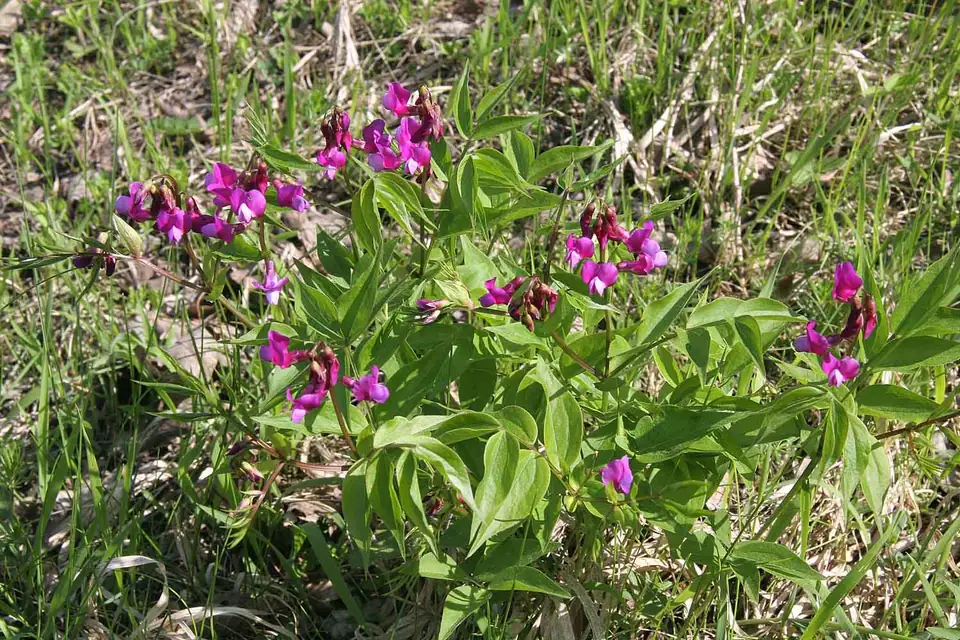
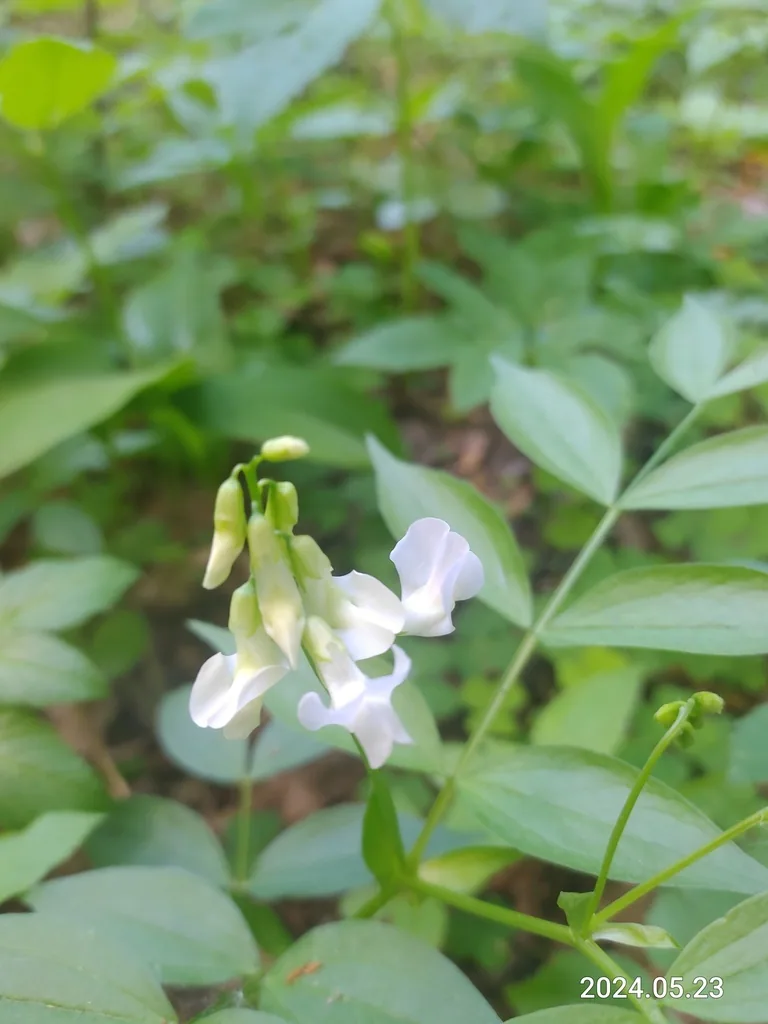
Lathyrus vernus is a compact, bushy perennial with pea-like foliage and dark purple vetch-like flowers. [1] It suits a partially shaded spring border with rich but well-drained soil. [1] It grows in forest fringes, glades, meadows and shrubberies in Europe. [4]
This record is incomplete: the sources we read do not cover every field yet.
Not yet covered by our sources: Hardiness, coldest zone, Hardiness, warmest zone, Propagation
Spring pea care
How to water Spring pea
Occasional watering during dry weather once established
What the sources say (1)
Once established, it only needs occasional watering during dry weather.How much light Spring pea needs
The sources give different values depending on region, zone or growing conditions.
What each source says
According to Gardeners' World: Dappled shade, partial shade
According to Great Plant Picks (HeraldNet): Full sun to light or open shade
most parts of the country (fonte: Horticulture): Partial shade; tolerates full sun where summers are not too scorching
What the sources say (4)
According to Gardeners' World: Sun Exposure:
Dappled shade, partial shadeAccording to Great Plant Picks (HeraldNet): The mounding perennial will grow best in well-drained or sandy soils with full sun to light or open shade.most parts of the country (fonte: Horticulture): Although in most parts of the country it's best to plant spring vetchling in partial shade, it will tolerate full sun exposure in areas where summers aren't too scorching.Sun Exposure:
Dappled shade, partial shadeHow much cold Spring pea can take
Hardiness, coldest zone
Not stated in the sources we read.
Hardiness, warmest zone
Not stated in the sources we read.
How to propagate Spring pea
Not stated in the sources we read.
How to grow Spring pea
Fertilizing
Mineral fertilizers
The sources give different values depending on region, zone or growing conditions.
What each source says
Lathyrus in general, in containers: High-potassium liquid feed, to encourage flowering
What the sources say (1)
Lathyrus in general, in containers: Plants in containers will benefit from feeding with a high potassium fertiliser, such as tomato feedSpring pea pests and problems
Summer die-back in hot, humid climates
Symptom: Dying back as the season progresses
What to do: Plant in partial shade in most regions; full sun is tolerated only where summers are not too scorching
What the sources say (2)
spring vetchling may swoon in gardens where summer temperatures and humidity are high, dying back as the season progresses.
— Spring Vetchling - Horticulture [6] Although in most parts of the country it's best to plant spring vetchling in partial shade, it will tolerate full sun exposure in areas where summers aren't too scorching.
— Spring Vetchling - Horticulture [6]
Remedies
Each remedy shows what official sources say about it; traditional remedies without an official source are marked as such. Harmful ones are listed so you know to avoid them.
Treating the plant
powdery mildew
pick off affected leaves and avoid overcrowding Partly works
How: Avoid overcrowded spacing of plants and carefully pick off affected leaves as soon as symptoms are evident.
Disease can be minimized by avoiding overcrowded spacing of plants and by carefully picking off affected leaves as soon as symptoms are evident.
— portal.ct.gov [10] What the evidence says Disease can be minimized by avoiding overcrowded spacing of plants and by carefully picking off affected leaves as soon as symptoms are evident.
— portal.ct.gov [10]
aphids
insecticidal soap spray Works
How: Spray with insecticidal soap.
Spraying with insecticidal soap, ultrafine horticultural oil or malathion, which are among the compounds registered for control of this pest in Connecticut, will control this pest.
— portal.ct.gov [10] What the evidence says For example, insecticidal soap is a safe, effective organic insecticide with minimal environmental impact.
— extension.psu.edu [11]
caterpillars
bacillus thuringiensis (bt) Official source, not independently tested
How: Bt is registered for control of corn earworm larvae feeding on sweet pea.
Bacillus thuringiensis var. kurstaki (Bt) and spinosad are registered for control of this pest in Connecticut.
— portal.ct.gov [10]
root rot
avoid overwatering and watering into the crown Official source, not independently tested
How: Avoid overwatering, especially in heavy soils, and avoid watering directly into the crown area.
It is helpful to avoid overwatering, especially in heavy soils, and to avoid watering directly into the crown area of the plant.
— portal.ct.gov [10]
Is Spring pea toxic to pets?
Reported by the source, quoted verbatim. This is not medical or veterinary advice: if a person or an animal may have eaten this plant, contact a poison control centre or a veterinarian.
Lathyrus ‘Vernus’ can be toxic. Toxic to: Is known to attract Cats Cats Is known to attract Dogs Dogs Is known to attract Horses Horses
[1]The source flags the risk for this animal but does not explain why.
Calendar
March-April and September-October
What the sources say (1)
| Sow | | | yes | yes | | | | | yes | yes | | March-May
What the sources say (1)
| Plant | | | yes | yes | yes | | | | | | | Fall: cut to the ground once it starts looking tattered
What the sources say (1)
In fall cut it to the ground once it starts looking tattered.Months as given by the sources, which are mostly from the United States (northern hemisphere). In the southern hemisphere they shift by about six months.
Indicative values
Values from a secondary source, not checked word for word like the rest of this page. Use them as a starting point.
- Life cycle
- Herbaceous PerennialIndicative value, adapt it to your climate · Secondary source
- Mature height
- 15.2-30.5 cm (0.5-1 ft)Indicative value, adapt it to your climate · Secondary source
- Hours of sun
- 6-8 hoursIndicative value, adapt it to your climate · Secondary source
- Soil pH
- 6-7.5Indicative value, adapt it to your climate · Secondary source
- USDA hardiness zones
- 5-9 [winter low −28.9 to −1.1 °C (−20 to 30 °F)]Indicative value, adapt it to your climate · Secondary source
- Care level
- MediumIndicative value, adapt it to your climate · Secondary source
- Growth rate
- HighIndicative value, adapt it to your climate · Secondary source
- Propagation
- Seed Propagation, Division, Layering Propagation, CuttingIndicative value, adapt it to your climate · Secondary source
Similar plants
- Everlasting Pea Lathyrus latifolius
- Flat Pea Lathyrus sylvestris
- Sweet pea Lathyrus odoratus
- Tuberous pea Lathyrus tuberosus
- Garden pea Lathyrus oleraceus
- Grass pea Lathyrus sativus
- Lathyrus pratensis Lathyrus pratensis
- Red pea Lathyrus cicera
Sources
Every value above is quoted from these documents. Links lead to the original publisher.
- Lathyrus vernus | BBC Gardeners World Magazine · gardenersworld.com, consulted
- Lathyrus vernus (L.) Bernh. subsp. vernus · infoflora.ch, consulted
- Search for species - Frühlings-Platterbse (Lathyrus vernus (L.) Bernh.) · i-flora.com, consulted
- AgroAtlas - Relatives - Lathyrus vernus (L.)Bernh. - Spring pea. · agroatlas.ru, consulted
- Archiv - Pflanzenportraits - Unser Garten - Botanischer Garten der Universität Potsdam - Universität Potsdam · uni-potsdam.de, consulted
- Spring Vetchling - Horticulture · hortmag.com, consulted
- Great Plant Pick: Lathyrus vernus, spring vetchling | HeraldNet.com · heraldnet.com, consulted
- spring pea articles - Encyclopedia of Life · eol.org, consulted
- rhs.org.uk · rhs.org.uk
- portal.ct.gov · portal.ct.gov
- extension.psu.edu · extension.psu.edu
Written by Emilio Marruso · last checked