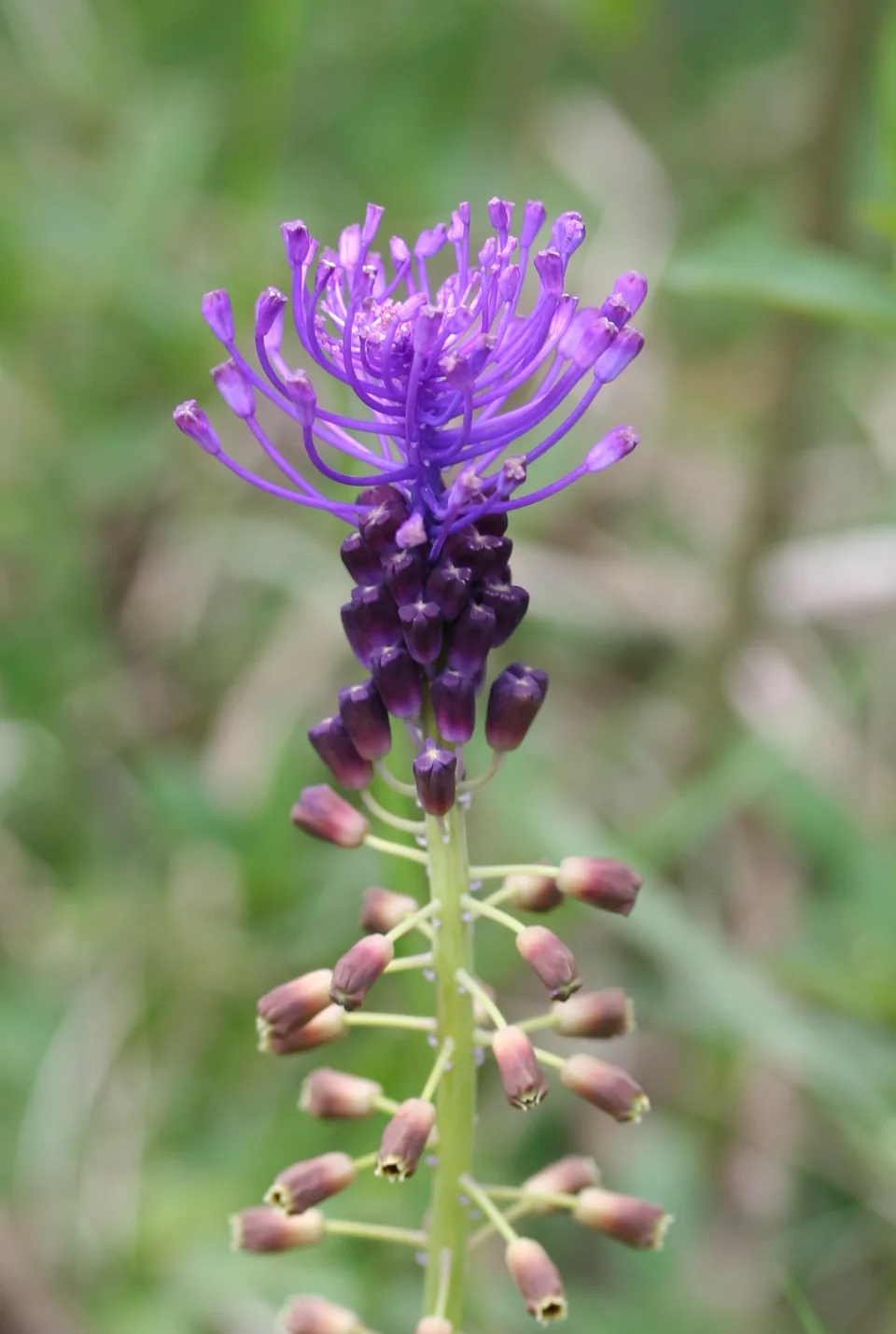
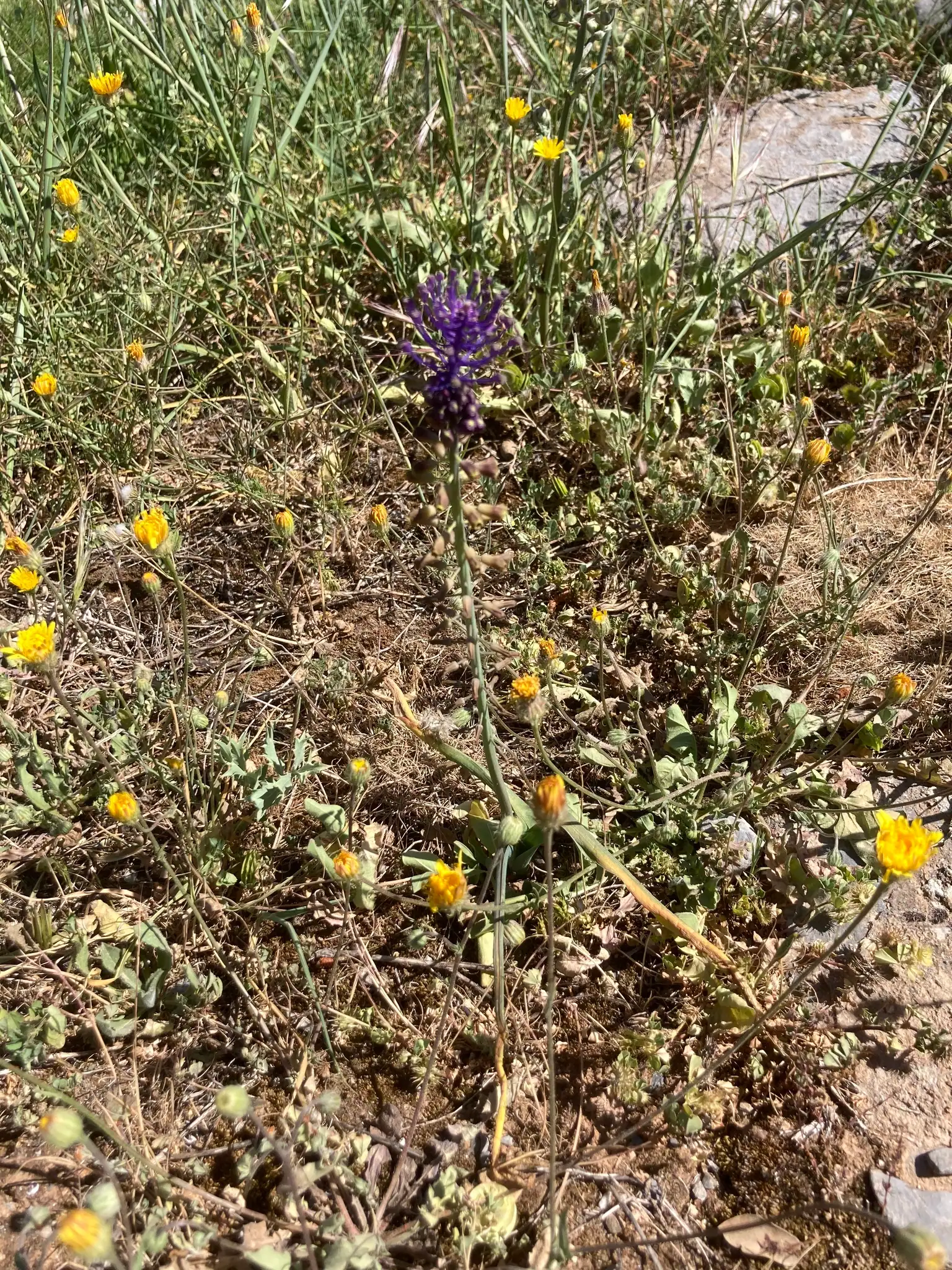

How to Grow and Care for Tassel Hyacinth
Muscari comosum
Written by Emilio Marruso · last checked
At a glance
Tassel hyacinth is a bulb with a tasty secret: its bulbs, known as lampascioni, are a prized delicacy in Mediterranean countries for their strong, bitter taste. Plant the bulbs in fall, keep them moist through spring until flowering, then let them rest almost dry in summer. Dig them up before the flower stalks appear and enjoy a true Mediterranean treat.
- Water
Keep moist from spring until it flowers; little or no water after that
What the sources say (4)
Watering: Keep consistently moist in spring through flowering; little or no watering after flowering, as the plant tolerates drought and goes semi-dormant in the dry summer
During the spring and through flowering, the ground should stay consistently moist.
— How to Grow and Care for Feather (Tassel) Grape Hyacinth [5] After flowering, you can basically stop watering. They tolerate drought and go semi-dormant during the dry summer.
— How to Grow and Care for Feather (Tassel) Grape Hyacinth [5] Watering notes: Water deeply immediately after planting; well-drained soil is required to prevent the bulbs from rotting
Tassel hyacinth growing is simple, but the plant requires well-drained soil to prevent the bulbs from rotting.
— Wild Tassel Hyacinth Info - Information On The Care Of Tassel Hyacinths | Gardening Know How [6] Water deeply immediately after planting.
— Wild Tassel Hyacinth Info - Information On The Care Of Tassel Hyacinths | Gardening Know How [6] - Soil
Well-drained soil so the bulbs don't rot, pH 6.0–7.0
What the sources say (4)
Soil pH, minimum: 6.0
While they’ll tolerate some sand or clay, the soil should ideally be loose, with good drainage, and a pH between 6.0 to 7.0.
— How to Grow and Care for Feather (Tassel) Grape Hyacinth [5] Soil pH, maximum: 7.0
While they’ll tolerate some sand or clay, the soil should ideally be loose, with good drainage, and a pH between 6.0 to 7.0.
— How to Grow and Care for Feather (Tassel) Grape Hyacinth [5] Watering notes: Water deeply immediately after planting; well-drained soil is required to prevent the bulbs from rotting
Tassel hyacinth growing is simple, but the plant requires well-drained soil to prevent the bulbs from rotting.
— Wild Tassel Hyacinth Info - Information On The Care Of Tassel Hyacinths | Gardening Know How [6] Water deeply immediately after planting.
— Wild Tassel Hyacinth Info - Information On The Care Of Tassel Hyacinths | Gardening Know How [6] - Planting
Plant the bulbs in fall and water deeply right away
What the sources say (3)
Planting: Fall (autumn)
Plant the round tassel hyacinth bulbs about 3 inches (8 cm.) deep in fall, with the pointy side up .
— Wild Tassel Hyacinth Info - Information On The Care Of Tassel Hyacinths | Gardening Know How [6] Watering notes: Water deeply immediately after planting; well-drained soil is required to prevent the bulbs from rotting
Tassel hyacinth growing is simple, but the plant requires well-drained soil to prevent the bulbs from rotting.
— Wild Tassel Hyacinth Info - Information On The Care Of Tassel Hyacinths | Gardening Know How [6] Water deeply immediately after planting.
— Wild Tassel Hyacinth Info - Information On The Care Of Tassel Hyacinths | Gardening Know How [6] - Harvest
The bulbs are edible: dig them up before the flower stalks appear
What the sources say (2)
Harvest: Bulbs are harvested before the flowering phase
its harvesting occurs in uncultivated fields before the flowering phase, using a tool similar to a spade with a very narrow blade capable of going deep into the soil.
— agronomy [3] The bulbs are edible and they can be harvested before the flower stalks emerge.
— How to Grow and Care for Feather (Tassel) Grape Hyacinth [5] - Pests
Aphids can yellow the leaves; spray them off with a gentle stream of water
- Propagation
From seeds, bulbs, small offset bulbs or by dividing clumps
What the sources say (2)
Propagation: Seeds, bulbs, bulblets and division of clumps
Propagation can occur from seeds, bulbs, and bulblets, i.e., small bulbs that form laterally from the mother bulb during the growing season [12].
— agronomy [3] You can divide overgrown clumps as well.
— How to Grow and Care for Feather (Tassel) Grape Hyacinth [5] - Sowing
Seeds sprout slowly and poorly; a cool 50 °F (10 °C) helps them sprout
- Containers
Grows in containers too
What the sources say (1)
In containers: Yes
They also work in large containers.
— How to Grow and Care for Feather (Tassel) Grape Hyacinth [5]
Overview
Tassel hyacinth is a bulbous geophyte native from the Canary Islands to Central Europe and Iran. [4] Its bulb is used in traditional gastronomy in several Italian regions, where it is known as lampascione. [3] In the garden it needs loose, well-drained soil and is grown from bulbs planted in autumn. [5][6]
Tassel Hyacinth care
How to water Tassel Hyacinth
Watering
Keep consistently moist in spring through flowering; little or no watering after flowering, as the plant tolerates drought and goes semi-dormant in the dry summer
What the sources say (2)
During the spring and through flowering, the ground should stay consistently moist.After flowering, you can basically stop watering. They tolerate drought and go semi-dormant during the dry summer.Watering notes
Water deeply immediately after planting; well-drained soil is required to prevent the bulbs from rotting
What the sources say (2)
Tassel hyacinth growing is simple, but the plant requires well-drained soil to prevent the bulbs from rotting.Water deeply immediately after planting.How much light Tassel Hyacinth needs
The sources give different values depending on region, zone or growing conditions.
What each source says
According to Gardener’s Path: Full sun for the best blooms; survives in less light but flowers poorly
According to Gardening Know How: Dappled sunlight or light shade
According to Gardening Know How (feather hyacinth): Some sun and some shade
What the sources say (3)
According to Gardener’s Path: Plant feather hyacinth in full sun for the best blooms. They can survive in less light, but they won’t flower well.According to Gardening Know How: Tassel grape hyacinth is a woodland plant that prefers dappled sunlight or light shade.According to Gardening Know How (feather hyacinth): They should be planted pointy tip up in an area that gets some sun and some shade.How much cold Tassel Hyacinth can take
Hardiness, coldest zone
The sources give different values depending on region, zone or growing conditions.
What each source says
According to Gardener’s Path: 5 [winter low −28.9 to −23.3 °C (−20 to −10 °F)]
According to Gardening Know How: 4 [winter low −34.4 to −28.9 °C (−30 to −20 °F)]
What the sources say (2)
According to Gardener’s Path: Feather hyacinth grows in US Hardiness Zones 5 to 8 and returns reliably year after year from underground bulbs.According to Gardening Know How: Tassel hyacinth bulbs are hardy to USDA plant hardiness zones 4 through 8.Hardiness, warmest zone
8 [winter low −12.2 to −6.7 °C (10 to 20 °F)]
What the sources say (2)
Feather hyacinth grows in US Hardiness Zones 5 to 8 and returns reliably year after year from underground bulbs.Tassel hyacinth bulbs are hardy to USDA plant hardiness zones 4 through 8.Best soil for Tassel Hyacinth
Soil pH, minimum
6.0
What the sources say (1)
While they’ll tolerate some sand or clay, the soil should ideally be loose, with good drainage, and a pH between 6.0 to 7.0.Soil pH, maximum
7.0
What the sources say (1)
While they’ll tolerate some sand or clay, the soil should ideally be loose, with good drainage, and a pH between 6.0 to 7.0.Where to grow Tassel Hyacinth
In containers
Yes
What the sources say (1)
They also work in large containers.Spacing
The sources give different values depending on region, zone or growing conditions.
What each source says
According to Gardening Know How (tassel hyacinth): 5-10 cm (2-4 in)
According to Gardening Know How (feather hyacinth): 8-10 cm (3-4 in)
According to Gardener’s Path: 2.5 cm (1 in)
What the sources say (3)
According to Gardening Know How (tassel hyacinth): Allow 2 to 4 inches (5-10 cm.) between each bulb.According to Gardening Know How (feather hyacinth): Plant the bulbs about 5 inches (13 cm.) deep and 3 to 4 inches (8-10 cm.) apart.According to Gardener’s Path: Space the bulbs about an inch apart.How to propagate Tassel Hyacinth
Seeds, bulbs, bulblets and division of clumps
How to grow Tassel Hyacinth
The plant
Life cycle
The sources give different values depending on region, zone or growing conditions.
What each source says
cultivar 'Plumosum': perennial:
What the sources say (1)
cultivar 'Plumosum': perennial: 'Plumosum' is a cultivar of Grape Hyacinths, a flowering bulb in the asparagus family. The 'Plumosum' cultivar is a clump forming perennial distinguished from other grape hyacinths by its open, feathery, violet blooms and branched purple stems that appear in May.Family
Liliaceae
What each source says
cultivar 'Plumosum': asparagus family (Asparagaceae):
What the sources say (2)
cultivar 'Plumosum': asparagus family (Asparagaceae): 'Plumosum' is a cultivar of Grape Hyacinths, a flowering bulb in the asparagus family.is a widespread herbaceous geophyte belonging to the Liliaceae family and distributed over south-western and central Europe, the Mediterranean areaMature height
The sources give different values depending on region, zone or growing conditions.
What each source says
cultivar 'Plumosum': 15.2-22.9 cm (6-9 in):
What the sources say (1)
cultivar 'Plumosum': 15.2-22.9 cm (6-9 in): 'Plumosum' is a relatively short plant, maturing to a height of 6 to 9 inchesSowing and growth
Sowing depth
The sources give different values depending on region, zone or growing conditions.
What each source says
cultivar 'Plumosum' (bulb planting depth): 12.7 cm (5 in):
What the sources say (1)
cultivar 'Plumosum' (bulb planting depth): 12.7 cm (5 in): For best results, plant 'Plumosum' 5 inches deep to the base of the bulb, spacing the plants 1 inch apartHarvest and storage
How to harvest
dig the bulbs in uncultivated fields before flowering with a spade with a very narrow blade that goes deep into the soil; at the beginning of the vegetation a cut is made to leave a small green spike
What the sources say (1)
its harvesting occurs in uncultivated fields before the flowering phase, using a tool similar to a spade with a very narrow blade capable of going deep into the soil. At the beginning of the vegetation, a cut is made to leave a small green spikeTassel Hyacinth pests and problems
Aphids
Symptom: Yellowing and stunted growth of leaves and stems when feeding in numbers
What to do: Spray the aphids off with a gentle stream of water from the hose; no need for insecticides
What the sources say (1)
Aphids are the most likely pest you’ll encounter.
— How to Grow and Care for Feather (Tassel) Grape Hyacinth [5] Seed dormancy
Symptom: Long dormancy (7-8 months) and low germination rate in seed propagation
What to do: Pre-germinative treatments (hydro-priming, osmo-priming) and a germination temperature of 10 °C improve germination
What the sources say (1)
The long period of dormancy (7–8 months) and low germination rate represent a problem in M.
— agronomy [3]
Remedies
The sources we checked give no remedies for this plant.
Calendar
Planting
Fall (autumn)
What the sources say (1)
Plant the round tassel hyacinth bulbs about 3 inches (8 cm.) deep in fall, with the pointy side up .Harvest
Bulbs are harvested before the flowering phase
What the sources say (2)
its harvesting occurs in uncultivated fields before the flowering phase, using a tool similar to a spade with a very narrow blade capable of going deep into the soil.The bulbs are edible and they can be harvested before the flower stalks emerge.Months as given by the sources, which are mostly from the United States (northern hemisphere). In the southern hemisphere they shift by about six months.
Edibility
Reported by the source, quoted verbatim. Do not eat a plant on the basis of this page alone: identification mistakes can be dangerous.
In particular, in Turkey [4] and in Italian regions as Sardinia [5], Sicily [6], Basilicata [3,7], Puglia [8], Campania, Molise, and Calabria [9], the bulb is used in traditional gastronomy due to its characteristic strong bitter taste [2,10] and interesting
[3]The bulbs are edible and they can be harvested before the flower stalks emerge.
[5]Tassel hyacinth bulbs, known as lampascioni, are considered a delicacy in Mediterranean countries where the plant is cultivated for this purpose.
[6]
Similar plants
- Common grape hyacinth Muscari neglectum
- Compact Grape Hyacinth Muscari botryoides
- Grape Hyacinth Muscari armeniacum
- Muscari commutatum Muscari commutatum
- Asphodelus ramosus Asphodelus ramosus
- Bluebead Lily Clintonia borealis
- Cardiocrinum giganteum Cardiocrinum giganteum
- Carolina Lily Lilium michauxii
Sources
Every value above is quoted from these documents. Links lead to the original publisher.
- Leopoldia comosa 'Plumosum' (Grape Hyacinth, Tassel Hyacinth) | North Carolina Extension Gardener Plant Toolbox · plants.ces.ncsu.edu, consulted
- Muscari comosum (L.) Mill. · infoflora.ch, consulted
- agronomy · iris.unibas.it, consulted
- Muscari comosum (L.) Mill. | Plants of the World Online | Kew Science · powo.science.kew.org, consulted
- How to Grow and Care for Feather (Tassel) Grape Hyacinth · gardenerspath.com, consulted
- Wild Tassel Hyacinth Info - Information On The Care Of Tassel Hyacinths | Gardening Know How · gardeningknowhow.com, consulted
- Care Of Feather Hyacinths: Learn How To Grow A Muscari Feather Hyacinth | Gardening Know How · gardeningknowhow.com, consulted
- 176 Muscari comosum (L.) Miller · monteriza.aranzadi.eus, consulted
Written by Emilio Marruso · last checked