
How to Grow and Care for Common grape hyacinth
Muscari neglectum
Written by Emilio Marruso · last checked
Toxic to: People · Why
At a glance
This little bulb is easy to love: plant it in fall, give it well-drained soil and moderate water, and it comes back year after year, staying under 8 inches tall. It's happy in containers too, and its scented flowers can even be sprinkled over rhubarb. Just keep the bulb away from curious mouths, because it's poisonous.
- Water
Moderate watering; too much water rots the bulb
What the sources say (4)
Watering: Moderate
Shade tolerance no shade Water moderate Hardiness Zone 4+ Soil textures
— Grape Hyacinth (Muscari neglectum) — Practical Plants [3] Water moderately from the moment the flower scape sprouts until it is a little developed; increase watering until the flower wilts and reduce watering again. Overwatering rots the bulb.
— Muscari neglectum or Common grape hyacinth | Care and Growing [5] Watering notes: Overwatering rots the bulb; needs well-drained soil
Water moderately from the moment the flower scape sprouts until it is a little developed; increase watering until the flower wilts and reduce watering again. Overwatering rots the bulb.
— Muscari neglectum or Common grape hyacinth | Care and Growing [5] Prefers a rich open well-drained soil and a sunny position [1] [12] .
— Grape Hyacinth (Muscari neglectum) — Practical Plants [3] - Cold
Survives winters down to −30 °F (−34.4 °C)
Very hardy · USDA 4 · RHS H7 · Z4
What the sources say (1)
Hardiness, coldest zone: 4 [winter low −34.4 to −28.9 °C (−30 to −20 °F)]
Shade tolerance no shade Water moderate Hardiness Zone 4+ Soil textures
— Grape Hyacinth (Muscari neglectum) — Practical Plants [3] - Soil
Needs well-drained soil
What the sources say (2)
Watering notes: Overwatering rots the bulb; needs well-drained soil
Water moderately from the moment the flower scape sprouts until it is a little developed; increase watering until the flower wilts and reduce watering again. Overwatering rots the bulb.
— Muscari neglectum or Common grape hyacinth | Care and Growing [5] Prefers a rich open well-drained soil and a sunny position [1] [12] .
— Grape Hyacinth (Muscari neglectum) — Practical Plants [3] - Planting
Plant the bulbs in fall
What the sources say (1)
Planting: Fall
Starch grape hyacinth grows in any type of soil that has good drainage. Plant the bulbs in the fall.
— Muscari neglectum or Common grape hyacinth | Care and Growing [5] - Harvest
The scented flowers can be sprinkled over rhubarb for flavor
- Pests
The main problem is bulb rot: avoid overwatering
- Size
Stays under 8 inches tall
What the sources say (1)
Mature height: under 20 cm [7.9 in]
Perennial herb, clonal, geophytic, bulb-bearing, fibrous-rooted, rosetted, scapose with 1−2 ascending, axillary inflorescences, in range < 20 cm tall;
— Vascular Plants of Williamson County [2] - Propagation
Divide the small bulbs that form around the main one, or grow it from seed
What the sources say (3)
Propagation: Division of offsets and bulblets; seed
Division of offsets in July/August after the leaves die down [1] . It can be done every other year if a quick increase is required [1] .
— Grape Hyacinth (Muscari neglectum) — Practical Plants [3] Muscari neglectum is propagated by separation of bulblets in autumn.
— Muscari neglectum or Common grape hyacinth | Care and Growing [5] Seed - best sown as soon as ripe in a greenhouse [7] . The seed can also be sown in early spring in a greenhouse.
— Grape Hyacinth (Muscari neglectum) — Practical Plants [3] - Sowing
Sow as soon as the seed is ripe, or in early spring in a greenhouse
What the sources say (1)
Sowing: As soon as ripe, or in early spring (in a greenhouse)
Seed - best sown as soon as ripe in a greenhouse [7] . The seed can also be sown in early spring in a greenhouse.
— Grape Hyacinth (Muscari neglectum) — Practical Plants [3] - Containers
Grows in containers too
What the sources say (1)
In containers: Yes
Common grape hyacinth is used in rockeries, borders and in pots for balconies, windows and terraces.
— Muscari neglectum or Common grape hyacinth | Care and Growing [5] - Safety
The bulb is poisonous: don't eat it
Overview
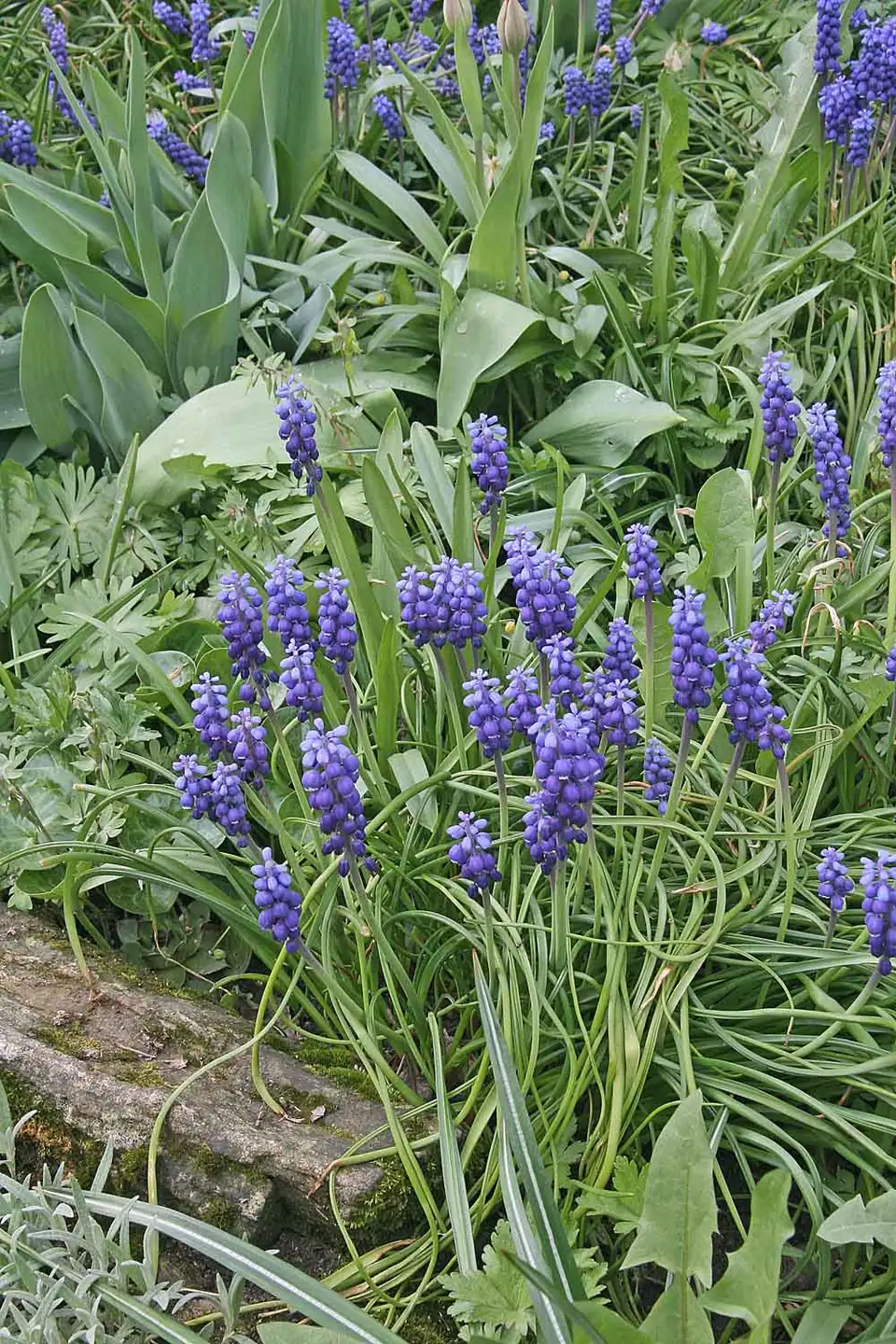
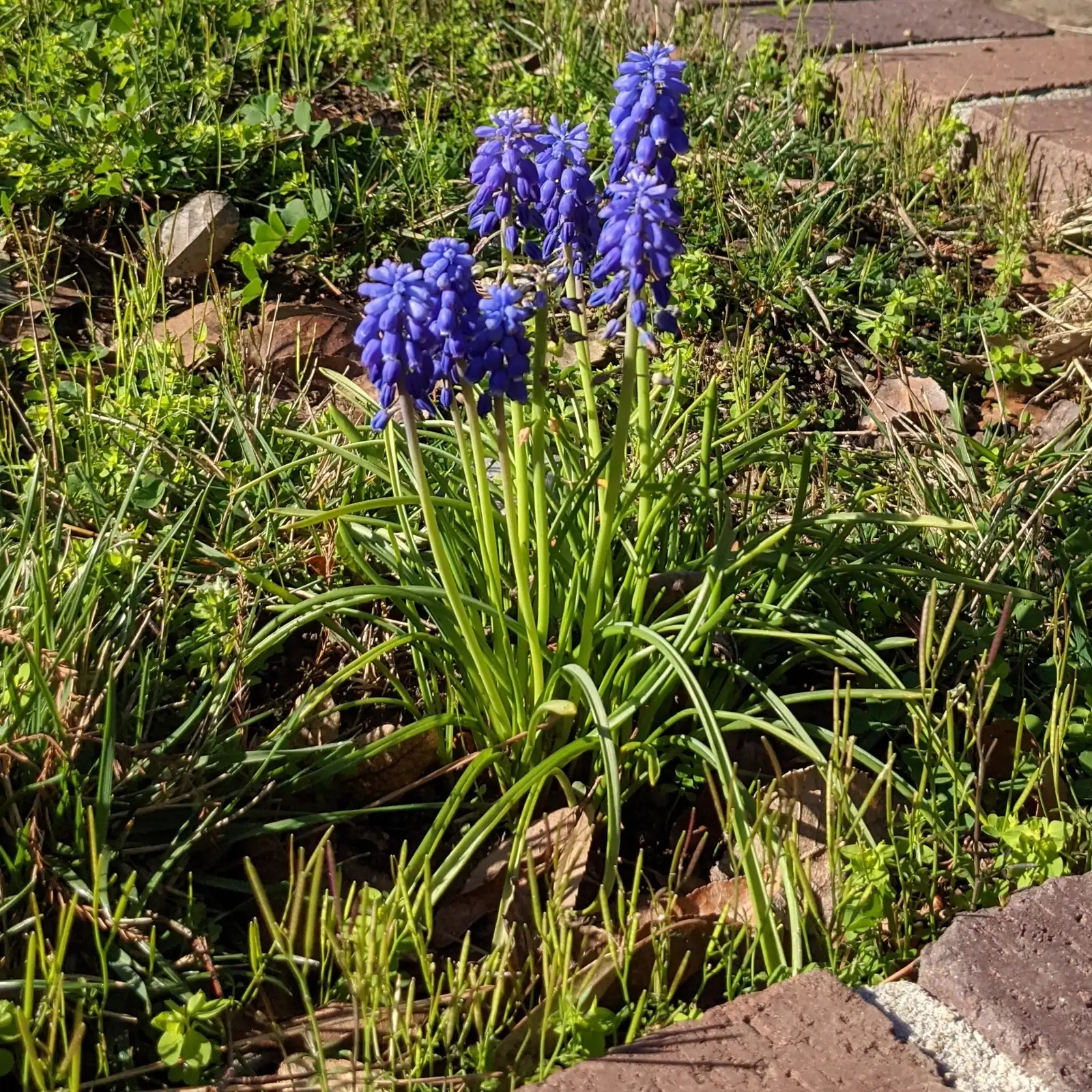
Common grape hyacinth is a small bulbous plant used in rockeries, borders and pots. [5] It grows in any well-drained soil and can spread freely and become invasive. [3][5] The bulb is reported as poisonous, containing a substance said to act like saponin. [3]
This record is incomplete: the sources we read do not cover every field yet.
Not yet covered by our sources: Hardiness, warmest zone, Pruning
Common grape hyacinth care
How to water Common grape hyacinth
Watering
Moderate
What the sources say (2)
Shade tolerance
no shade
Water
moderate
Hardiness
Zone 4+
Soil texturesWater moderately from the moment the flower scape sprouts until it is a little developed; increase watering until the flower wilts and reduce watering again. Overwatering rots the bulb.Watering notes
Overwatering rots the bulb; needs well-drained soil
What the sources say (2)
Water moderately from the moment the flower scape sprouts until it is a little developed; increase watering until the flower wilts and reduce watering again. Overwatering rots the bulb.Prefers a rich open well-drained soil and a sunny position [1] [12] .How much light Common grape hyacinth needs
The sources disagree:
Muscari neglectum grows in full sun and semi-shade exposures
[5]
How much cold Common grape hyacinth can take
Hardiness, coldest zone
4 [winter low −34.4 to −28.9 °C (−30 to −20 °F)]
What the sources say (1)
Shade tolerance
no shade
Water
moderate
Hardiness
Zone 4+
Soil texturesHardiness, warmest zone
Not stated in the sources we read.
Where to grow Common grape hyacinth
Yes
What the sources say (1)
Common grape hyacinth is used in rockeries, borders and in pots for balconies, windows and terraces.How to propagate Common grape hyacinth
Division of offsets and bulblets; seed
What the sources say (3)
Division of offsets in July/August after the leaves die down [1] . It can be done every other year if a quick increase is required [1] .Muscari neglectum is propagated by separation of bulblets in autumn.Seed - best sown as soon as ripe in a greenhouse [7] . The seed can also be sown in early spring in a greenhouse.How to grow Common grape hyacinth
The plant
Life cycle
perennial
What the sources say (1)
Perennial herb, clonal, geophytic, bulb-bearing, fibrous-rooted, rosetted, scaposeFamily
Mature height
under 20 cm [7.9 in]
What the sources say (1)
Perennial herb, clonal, geophytic, bulb-bearing, fibrous-rooted, rosetted, scapose with 1−2 ascending, axillary inflorescences, in range < 20 cm tall;Common grape hyacinth pests and problems
Bulb rot from overwatering
What to do: Avoid excess irrigation
What the sources say (1)
Water moderately from the moment the flower scape sprouts until it is a little developed; increase watering until the flower wilts and reduce watering again. Overwatering rots the bulb.
— Muscari neglectum or Common grape hyacinth | Care and Growing [5]
Remedies
The sources we checked give no remedies for this plant.
Is Common grape hyacinth poisonous?
Reported by the source, quoted verbatim. This is not medical or veterinary advice: if a person or an animal may have eaten this plant, contact a poison control centre or a veterinarian.
The bulb is poisonous [9] . It contains a substance called comisic acid, which is said to act like saponin [9] .
[3]
Calendar
Sowing
As soon as ripe, or in early spring (in a greenhouse)
What the sources say (1)
Seed - best sown as soon as ripe in a greenhouse [7] . The seed can also be sown in early spring in a greenhouse.Planting
Fall
What the sources say (1)
Starch grape hyacinth grows in any type of soil that has good drainage. Plant the bulbs in the fall.Pruning
Not stated in the sources we read.
Months as given by the sources, which are mostly from the United States (northern hemisphere). In the southern hemisphere they shift by about six months.
Edibility
Reported by the source, quoted verbatim. Do not eat a plant on the basis of this page alone: identification mistakes can be dangerous.
Similar plants
- Compact Grape Hyacinth Muscari botryoides
- Grape Hyacinth Muscari armeniacum
- Muscari commutatum Muscari commutatum
- Tassel Hyacinth Muscari comosum
- Aaron's Beard Hypericum calycinum
- Abies grandis Abies grandis
- Abraham Trachystemon orientalis
- Abyssinian banana Ensete ventricosum
Sources
Every value above is quoted from these documents. Links lead to the original publisher.
- Muscari neglectum Guss. · infoflora.ch, consulted
- Vascular Plants of Williamson County · w3.biosci.utexas.edu, consulted
- Grape Hyacinth (Muscari neglectum) — Practical Plants · practicalplants.org, consulted
- Muscari neglectum - Useful Temperate Plants · temperate.theferns.info, consulted
- Muscari neglectum or Common grape hyacinth | Care and Growing · consultaplantas.com, consulted
Written by Emilio Marruso · last checked