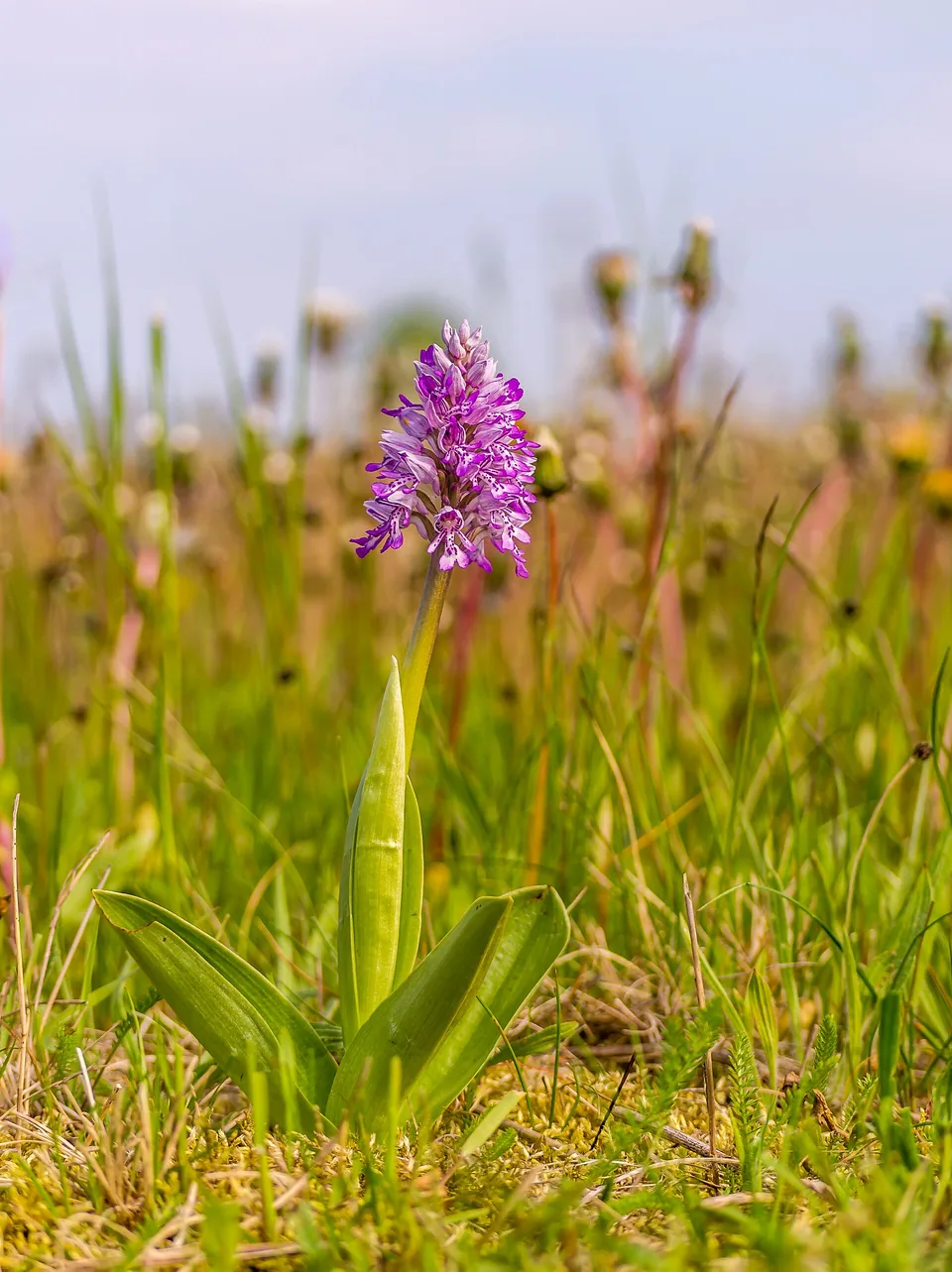
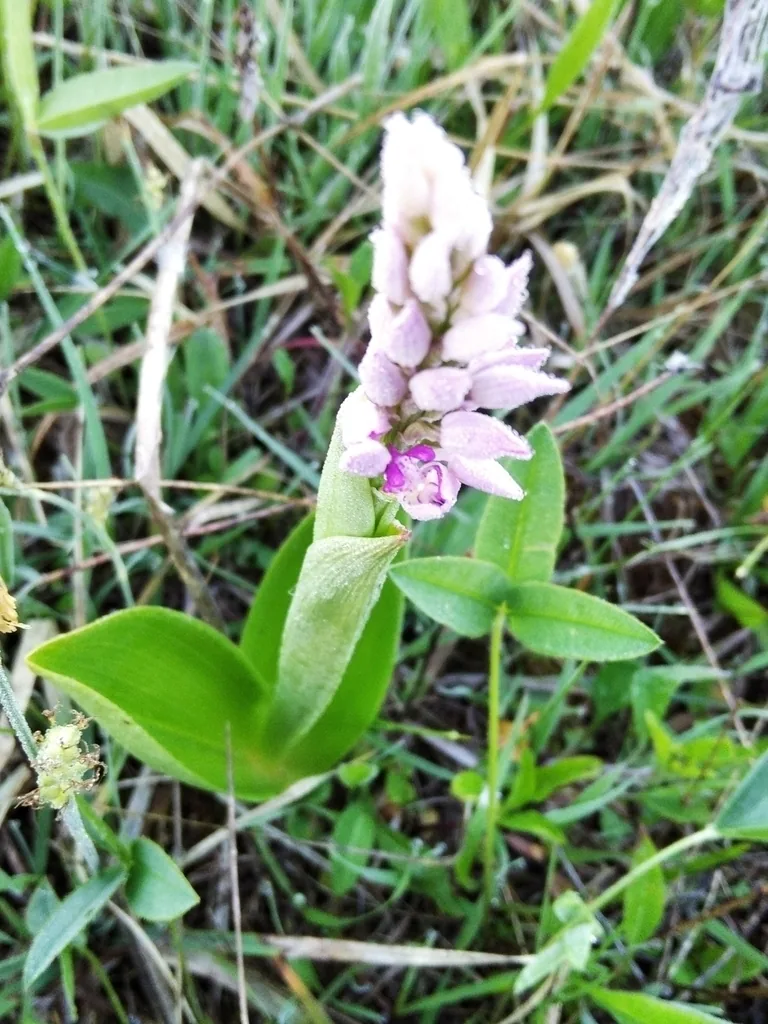

How to Grow and Care for Military orchid
Orchis militaris
Written by Emilio Marruso · last checked
At a glance
The military orchid stands 8–20 inches tall and loves full sun. Plant it in autumn, while it rests, in soil that stays moist but never too wet. Its tubers have a story too: dried and ground, they give salep, a fine white powder, and you can divide them as the flowers fade to make new plants.
- Sun
Full sun
What the sources say (1)
Light: Full sun
The species thrives in full sun conditions, preferring moist soils which retain water in order for the plant to withstand summer drought periods, but which are not too wet.
— Helmknabenkraut │ Nationalpark Donau-Auen [3] - Water
Keep the soil moist, but not too wet
What the sources say (1)
Watering: Moist soil that retains water but is not too wet
The species thrives in full sun conditions, preferring moist soils which retain water in order for the plant to withstand summer drought periods, but which are not too wet.
— Helmknabenkraut │ Nationalpark Donau-Auen [3] - Planting
Plant in autumn, while the plant is resting
What the sources say (1)
Planting: Autumn, while the plant is dormant
Plant out bulbs whilst the plant is dormant, preferably in the autumn
— Orchis militaris - Useful Temperate Plants [1] - Harvest
The tubers, dried and ground, give salep: a fine white powder
- Size
8–20 inches tall
What the sources say (1)
Mature height: 20-50 cm [8–20 in]
Stängel 20-50 cm hoch, unten mit schmalen, spitzen Blättern, oben mit spreitenlosen Blattscheiden.
— Orchis militaris L. [2] - Propagation
Divide the tubers as the flowers fade, or scatter seed on soil taken from around older plants
What the sources say (2)
Propagation: Seed (surface sown, with soil from around established plants); division of tubers as the flowers fade
Seed - surface sow, preferably as soon as it is ripe, in the greenhouse and do not allow the compost to dry out.
— Orchis militaris - Useful Temperate Plants [1] Division of the tubers as the flowers fade
— Orchis militaris - Useful Temperate Plants [1]
Overview
Military orchid is a tuberous terrestrial orchid up to 60 cm [24 in] tall that grows on grassy, chalky or basic soils. [4][3] It is very sensitive to fertilizers and difficult to cultivate because it depends on a symbiotic soil fungus. [1]
This record is incomplete: the sources we read do not cover every field yet.
Not yet covered by our sources: Hardiness, coldest zone, Hardiness, warmest zone, Pruning
Military orchid care
Measurements in square brackets are our conversion into the other unit system; the quoted text is unchanged.
How to water Military orchid
Moist soil that retains water but is not too wet
What the sources say (1)
The species thrives in full sun conditions, preferring moist soils which retain water in order for the plant to withstand summer drought periods, but which are not too wet.How much light Military orchid needs
Full sun
What the sources say (1)
The species thrives in full sun conditions, preferring moist soils which retain water in order for the plant to withstand summer drought periods, but which are not too wet.How much cold Military orchid can take
Hardiness, coldest zone
Not stated in the sources we read.
Hardiness, warmest zone
Not stated in the sources we read.
How to propagate Military orchid
Seed (surface sown, with soil from around established plants); division of tubers as the flowers fade
How to grow Military orchid
The plant
Family
Orchidaceae
What the sources say (1)
Species SIFS: 281000 Checklist: 1031380 - Orchidaceae - Orchis - Orchis militaris L.Mature height
20-50 cm [8–20 in]
What the sources say (1)
Stängel 20-50 cm hoch, unten mit schmalen, spitzen Blättern, oben mit spreitenlosen Blattscheiden.Remedies
The sources we checked give no remedies for this plant.
Calendar
Planting
Autumn, while the plant is dormant
What the sources say (1)
Plant out bulbs whilst the plant is dormant, preferably in the autumnPruning
Not stated in the sources we read.
Months as given by the sources, which are mostly from the United States (northern hemisphere). In the southern hemisphere they shift by about six months.
Edibility
Reported by the source, quoted verbatim. Do not eat a plant on the basis of this page alone: identification mistakes can be dangerous.
It is a source of 'salep', a fine white to yellowish-white powder that is obtained by drying the tuber and grinding it into a powder
[1]
Similar plants
- Early Purple Orchid Orchis mascula
- Monkey orchid Orchis simia
- Lady orchid Orchis purpurea
- Orchis italica Orchis italica
- Bee orchid Ophrys apifera
- Dragon's mouth Arethusa bulbosa
- Heath spotted-orchid Dactylorhiza maculata
- Large Whorled Pogonia Isotria verticillata
Sources
Every value above is quoted from these documents. Links lead to the original publisher.
- Orchis militaris - Useful Temperate Plants · temperate.theferns.info, consulted
- Orchis militaris L. · infoflora.ch, consulted
- Helmknabenkraut │ Nationalpark Donau-Auen · donauauen.at, consulted
- Orchis militaris - Military Orchid · first-nature.com, consulted
Written by Emilio Marruso · last checked