
How to Grow and Care for Orchis italica
Orchis italica
Written by Emilio Marruso · last checked
Toxic to: People · Why
At a glance
This perennial orchid comes back year after year and grows 20 inches tall. Plant it while it is resting, preferably in autumn, and keep an eye out for slugs and snails, which love it. Its tuberous root is surprisingly nutritious and can even be made into a flour called salep, a fun bit of history to grow in your own garden.
- Planting
Plant while it is resting, preferably in autumn
What the sources say (1)
Planting: While dormant, preferably in autumn
Plant out bulbs whilst the plant is dormant, preferably in the autumn
— Orchis italica - Useful Temperate Plants [8] - Harvest
The tuberous root is nutritious and can be made into a flour called salep
- Pests
Slugs and snails love it: check your plants often
- Size
Grows 20 in tall
What the sources say (1)
Mature height: 50 cm [20 in]
Morphologically it can be described as: a perennial herb with 2 ovoid rhizotubers; stem up to 50 cm generally erect, cylindrical in cross section, green;
—  [3] - Safety
No known hazards to people
Overview
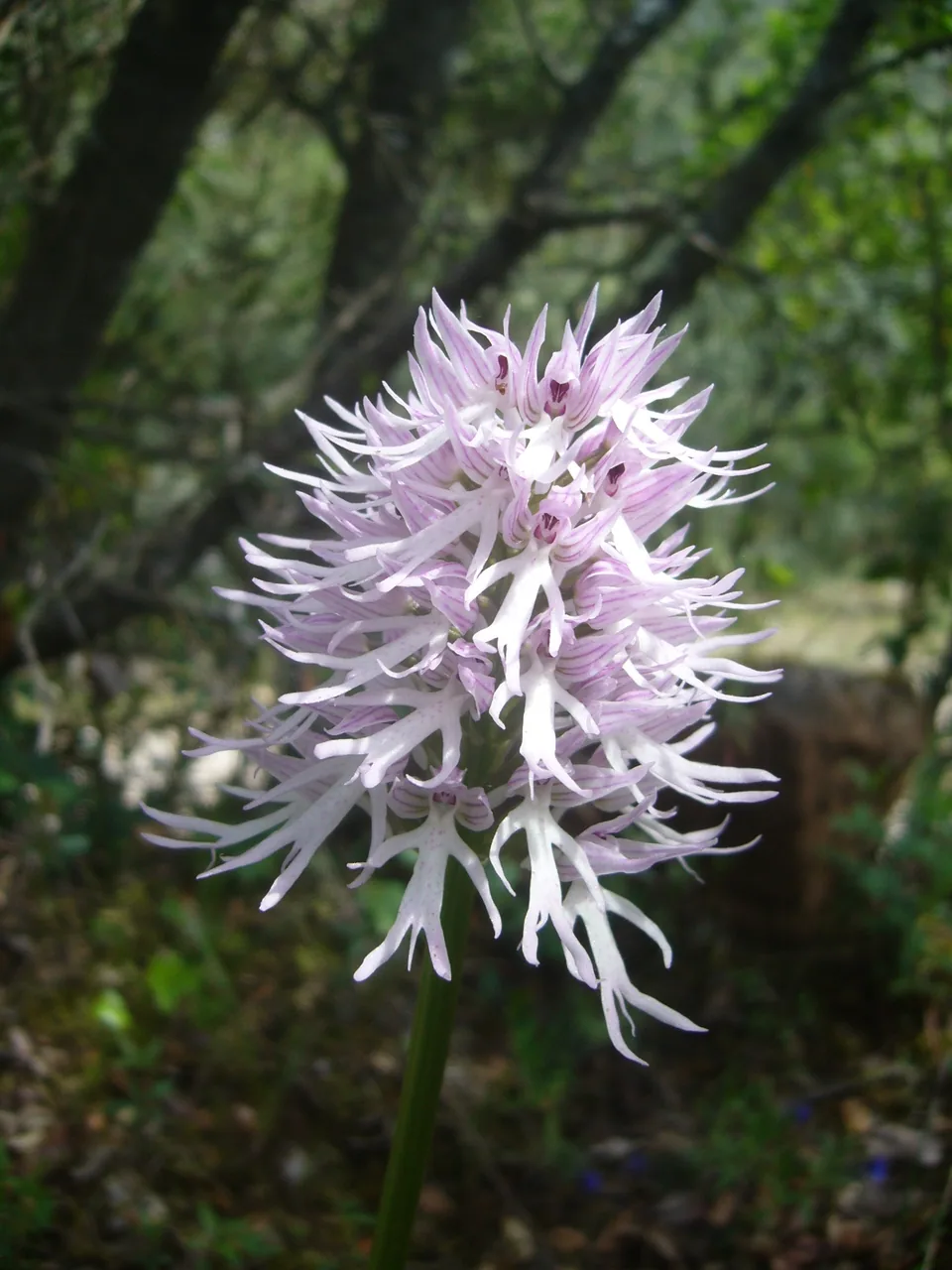
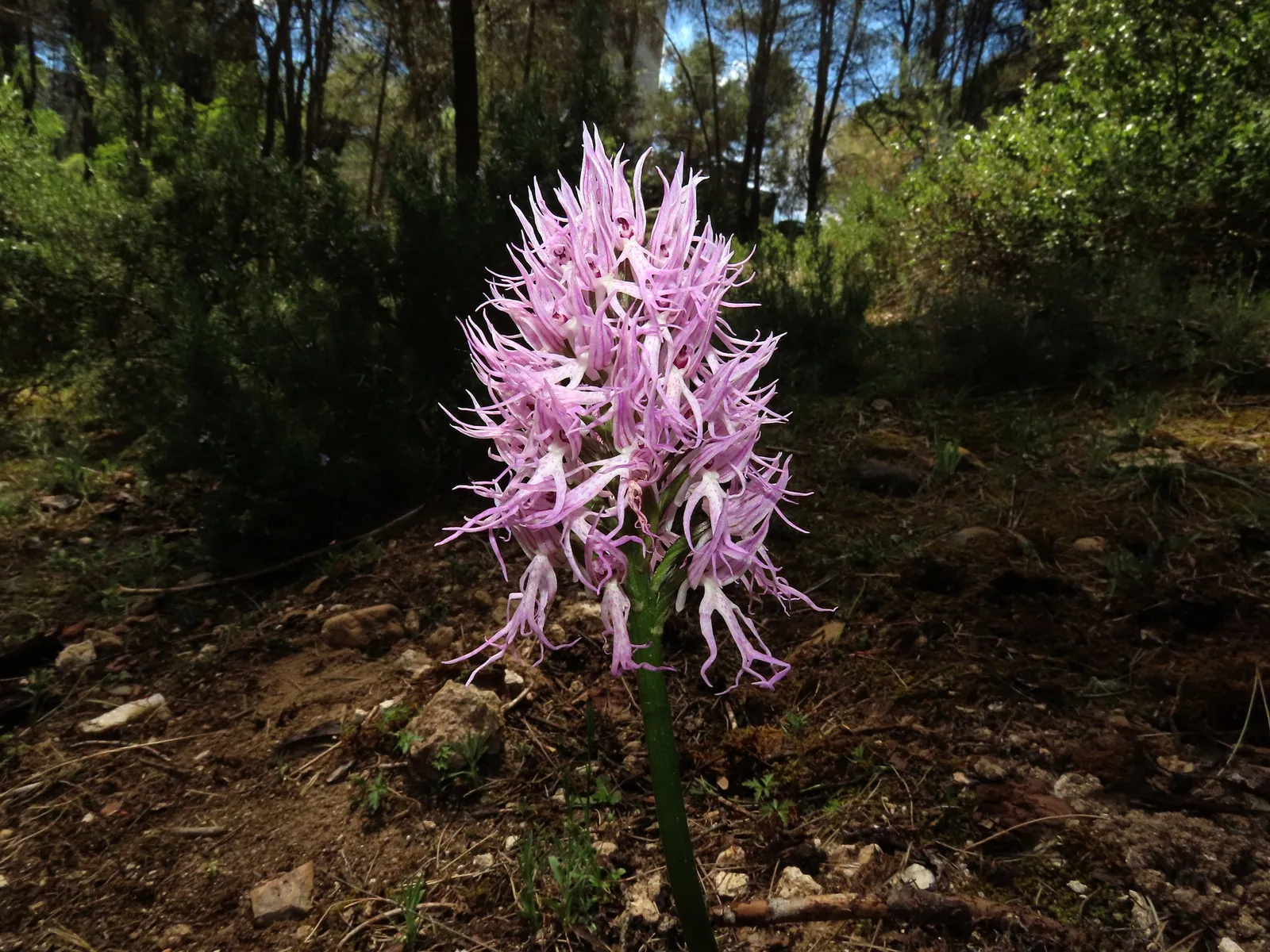
The naked man orchid grows up to 50 cm [20 in] and has a rosette of wavy-margined leaves at the base. [4] It is described as a lime-loving species of thin grasses, garrigues, light scrub and bright woodland. [2] Its tuberous root can be made into a flour known as salep, and it is harvested from the wild for local use as food and medicine. [6][8]
This record is incomplete: the sources we read do not cover every field yet.
Not yet covered by our sources: Watering, Hardiness, coldest zone, Hardiness, warmest zone, Pruning, Propagation
Orchis italica care
Measurements in square brackets are our conversion into the other unit system; the quoted text is unchanged.
How to water Orchis italica
Not stated in the sources we read.
How much light Orchis italica needs
The sources give different values depending on region, zone or growing conditions.
What each source says
According to Useful Temperate Plants: Sunny position
According to The Garden of Eaden: Partial shade
What the sources say (2)
According to Useful Temperate Plants: Best grown in a sunny position in a well-drained bank and a loamy soilAccording to The Garden of Eaden: It prefers to grow in a low nutrient soil partial shade.How much cold Orchis italica can take
Hardiness, coldest zone
Not stated in the sources we read.
Hardiness, warmest zone
Not stated in the sources we read.
How to propagate Orchis italica
Not stated in the sources we read.
How to grow Orchis italica
The plant
Life cycle
perennial
What the sources say (1)
Morphologically it can be described as: a perennial herb with 2 ovoid rhizotubers; stem up to 50 cm generally erect, cylindrical in cross section, green;Mature height
50 cm [20 in]
What the sources say (1)
Morphologically it can be described as: a perennial herb with 2 ovoid rhizotubers; stem up to 50 cm generally erect, cylindrical in cross section, green;Orchis italica pests and problems
Slugs and snails
Symptom: Cultivated plants are very susceptible to predation
What the sources say (1)
Cultivated plants are very susceptible to the predation of slugs and snails
— Orchis italica - Useful Temperate Plants [8]
Remedies
The sources we checked give no remedies for this plant.
Is Orchis italica poisonous?
Reported by the source, quoted verbatim. This is not medical or veterinary advice: if a person or an animal may have eaten this plant, contact a poison control centre or a veterinarian.
Known Hazards None known
[8]
Calendar
Planting
While dormant, preferably in autumn
What the sources say (1)
Plant out bulbs whilst the plant is dormant, preferably in the autumnPruning
Not stated in the sources we read.
Months as given by the sources, which are mostly from the United States (northern hemisphere). In the southern hemisphere they shift by about six months.
Edibility
Reported by the source, quoted verbatim. Do not eat a plant on the basis of this page alone: identification mistakes can be dangerous.
Similar plants
- Early Purple Orchid Orchis mascula
- Lady orchid Orchis purpurea
- Military orchid Orchis militaris
- Monkey orchid Orchis simia
- Aaron's Beard Hypericum calycinum
- Abies grandis Abies grandis
- Abraham Trachystemon orientalis
- Abyssinian banana Ensete ventricosum
Sources
Every value above is quoted from these documents. Links lead to the original publisher.
- Orchis italica Poiret - Herbari Virtual del Mediterrani Occidental · herbarivirtual.uib.cat, consulted
- Orchis italica Poir. | Plants of the World Online | Kew Science · powo.science.kew.org, consulted
-  · rosa.uniroma1.it, consulted
- Orchis italica - Naked Man Orchid · first-nature.com, consulted
- · cretanflora.com, consulted
- NAKED MAN ORCHID - Orchis Italica |The Garden of Eaden · gardenofeaden.blogspot.com, consulted
- Orchis italica | Pacific Bulb Society · pacificbulbsociety.org, consulted
- Orchis italica - Useful Temperate Plants · temperate.theferns.info, consulted
Written by Emilio Marruso · last checked