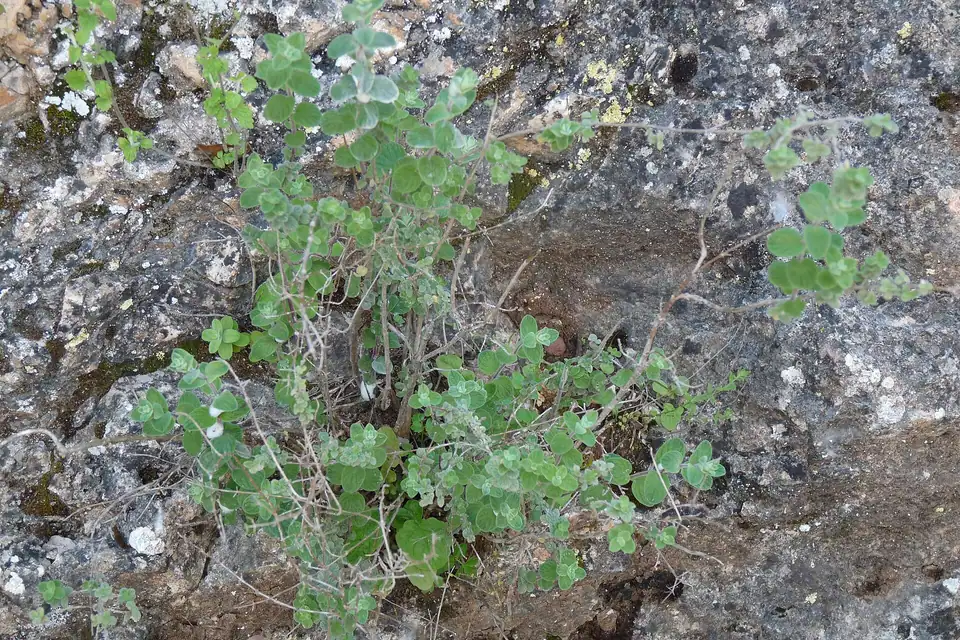

How to Grow and Care for Syrian oregano
Origanum syriacum
Written by Emilio Marruso · last checked
At a glance
Syrian oregano is a true kitchen treasure: its leaves and flowering tops taste like a blend of thyme, marjoram and oregano. Give it full sun, start the seeds indoors six to eight weeks before the last frost, and plant it out once frost has passed. You can pick fresh leaves early in the season and all summer long, even from a pot.
- Sun
Full sun; it also takes light shade
What the sources say (1)
Light: Full sun; tolerates light shade
Light full sun Shade tolerance light shade Water moderate
— Bible Hyssop (Origanum syriacum) — Practical Plants [3] - Planting
Plant out after the last frost; young seedlings go out in early summer
What the sources say (2)
Planting: After the last frost (transplants); early summer (seedlings pricked out)
Transplants can be put in the ground after the last frost.
— What Is Syrian Oregano - Learn About Syrian Oregano Uses And Care | Gardening Know How [2] Prick out the seedlings into individual pots when they are large enough to handle and plant them out into their permanent positions in early summer.
— Bible Hyssop (Origanum syriacum) — Practical Plants [3] - Pruning
Prune early in the season
What the sources say (1)
Pruning: Early in the season
Trim back your oregano early to encourage more growth.
— What Is Syrian Oregano - Learn About Syrian Oregano Uses And Care | Gardening Know How [2] - Harvest
Pick leaves from early in the season all summer; leaves and flower tops season your food
What the sources say (1)
Harvest: Leaves can be harvested early in the season and throughout the summer
Syrian oregano grows quickly and early in the season it will begin to produce soft, silver-green leaves that can be harvested right away and throughout the summer.
— What Is Syrian Oregano - Learn About Syrian Oregano Uses And Care | Gardening Know How [2] - Propagation
By seed, by division in March or October, or by cuttings of young shoots in June
What the sources say (3)
Propagation: Seed; division in March or October; basal cuttings of young barren shoots in June
Seed - sow in a greenhouse in early spring at 10 - 13°c and only just cover the seed.
— Bible Hyssop (Origanum syriacum) — Practical Plants [3] Division in March or October. Very easy, larger divisions can be planted out direct into their permanent positions.
— Bible Hyssop (Origanum syriacum) — Practical Plants [3] Basal cuttings of young barren shoots in June. Very easy.
— Bible Hyssop (Origanum syriacum) — Practical Plants [3] - Sowing
Sow indoors in early spring, 6–8 weeks before the last frost
What the sources say (2)
Sowing: Early spring, in a greenhouse or indoors (six to eight weeks before the last expected frost)
Seed - sow in a greenhouse in early spring at 10 - 13°c and only just cover the seed.
— Bible Hyssop (Origanum syriacum) — Practical Plants [3] With seeds, start them indoors six to eight weeks before the last expected frost.
— What Is Syrian Oregano - Learn About Syrian Oregano Uses And Care | Gardening Know How [2] - Containers
Grows in containers too
What the sources say (1)
In containers: Yes
You can try to grow this herb in containers that can be taken indoors for the winter, but they most often do not do well inside.
— What Is Syrian Oregano - Learn About Syrian Oregano Uses And Care | Gardening Know How [2]
Overview
Syrian oregano is a perennial herb whose leaves and flowering tops are used as a seasoning and in the blend known as za'atar. [3][2] It grows upright rather than spreading and needs a very well drained, sandy or gritty soil. [2] It can be propagated by seed, division or basal cuttings. [3]
This record is incomplete: the sources we read do not cover every field yet.
Not yet covered by our sources: Watering
Syrian oregano care
How to water Syrian oregano
Not stated in the sources we read.
How much light Syrian oregano needs
Full sun; tolerates light shade
What the sources say (1)
Light
full sun
Shade tolerance
light shade
Water
moderateHow much cold Syrian oregano can take
Hardiness, coldest zone
The sources give different values depending on region, zone or growing conditions.
What each source says
According to Gardening Know How: 9 [winter low −6.7 to −1.1 °C (20 to 30 °F)]
According to Practical Plants: 8 [winter low −12.2 to −6.7 °C (10 to 20 °F)]+
What the sources say (2)
According to Gardening Know How: Syrian oregano is a perennial herb, but not a hardy one. It grows well in zones 9 and 10 and won’t tolerate winter temperatures that are too cold.According to Practical Plants: Water
moderate
Hardiness
Zone 8+
Soil textures
sandy, loamy, clayHardiness, warmest zone
10 [winter low −1.1 to 4.4 °C (30 to 40 °F)]
What the sources say (1)
Syrian oregano is a perennial herb, but not a hardy one. It grows well in zones 9 and 10 and won’t tolerate winter temperatures that are too cold.Where to grow Syrian oregano
Yes
What the sources say (1)
You can try to grow this herb in containers that can be taken indoors for the winter, but they most often do not do well inside.How to propagate Syrian oregano
Seed; division in March or October; basal cuttings of young barren shoots in June
What the sources say (3)
Seed - sow in a greenhouse in early spring at 10 - 13°c and only just cover the seed.Division in March or October. Very easy, larger divisions can be planted out direct into their permanent positions.Basal cuttings of young barren shoots in June. Very easy.How to grow Syrian oregano
Fertilizing
When
The sources give different values depending on region, zone or growing conditions.
What each source says
in containers: Late spring or early summer, once plants have been in the same container for more than one year
What the sources say (1)
in containers: However, plants that have been growing in the same container for more than one year will benefit from a sprinkling of general purpose granular feed in late spring or early summer.How often
The sources give different values depending on region, zone or growing conditions.
What each source says
in the ground: No additional feeding needed
What the sources say (1)
in the ground: Oregano grows well in fairly poor, free-draining soil, so plants in the ground don't need any additional feeding.Mineral fertilizers
The sources give different values depending on region, zone or growing conditions.
What each source says
in containers: A sprinkling of general purpose granular fertiliser
What the sources say (1)
in containers: However, plants that have been growing in the same container for more than one year will benefit from a sprinkling of general purpose granular feed in late spring or early summer.Remedies
The sources we checked give no remedies for this plant.
Calendar
Sowing
Early spring, in a greenhouse or indoors (six to eight weeks before the last expected frost)
What the sources say (2)
Seed - sow in a greenhouse in early spring at 10 - 13°c and only just cover the seed.With seeds, start them indoors six to eight weeks before the last expected frost.Planting
After the last frost (transplants); early summer (seedlings pricked out)
What the sources say (2)
Transplants can be put in the ground after the last frost.Prick out the seedlings into individual pots when they are large enough to handle and plant them out into their permanent positions in early summer.Harvest
Leaves can be harvested early in the season and throughout the summer
What the sources say (1)
Syrian oregano grows quickly and early in the season it will begin to produce soft, silver-green leaves that can be harvested right away and throughout the summer.Pruning
Early in the season
What the sources say (1)
Trim back your oregano early to encourage more growth.Months as given by the sources, which are mostly from the United States (northern hemisphere). In the southern hemisphere they shift by about six months.
Edibility
Reported by the source, quoted verbatim. Do not eat a plant on the basis of this page alone: identification mistakes can be dangerous.
The leaves and flowering tops are used as a seasoning, having a flavour reminiscent of a blend of thyme, marjoram and oregano
[3]
Indicative values
Values from a secondary source, not checked word for word like the rest of this page. Use them as a starting point.
- Life cycle
- Herbaceous PerennialIndicative value, adapt it to your climate · Secondary source
- Mature height
- 30.5-76.2 cm (1-2.5 ft)Indicative value, adapt it to your climate · Secondary source
- Watering
- MinimumIndicative value, adapt it to your climate · Secondary source
- Drought tolerant
- yesIndicative value, adapt it to your climate · Secondary source
- Soil pH
- 6-8Indicative value, adapt it to your climate · Secondary source
- Care level
- MediumIndicative value, adapt it to your climate · Secondary source
- Growth rate
- LowIndicative value, adapt it to your climate · Secondary source
Similar plants
- Marjoram Origanum majorana
- Oregano Origanum vulgare
- Pot marjoram Origanum onites
- Dittany of Crete Origanum dictamnus
- Ornamental Oregano Origanum laevigatum
- Angelica Angelica archangelica
- Anise burnet saxifrage Pimpinella anisum
- Artemisia afra Artemisia afra
Sources
Every value above is quoted from these documents. Links lead to the original publisher.
- Production, postharvest and economic potentials of Origanum syriacum as a new crop in Lebanon - by Shadi Salim Atallah · scholarworks.aub.edu.lb, consulted
- What Is Syrian Oregano - Learn About Syrian Oregano Uses And Care | Gardening Know How · gardeningknowhow.com, consulted
- Bible Hyssop (Origanum syriacum) — Practical Plants · practicalplants.org, consulted
- rhs.org.uk · rhs.org.uk
Written by Emilio Marruso · last checked