
How to Grow and Care for Brewer's Spruce
Picea breweriana
Written by Emilio Marruso · last checked
At a glance
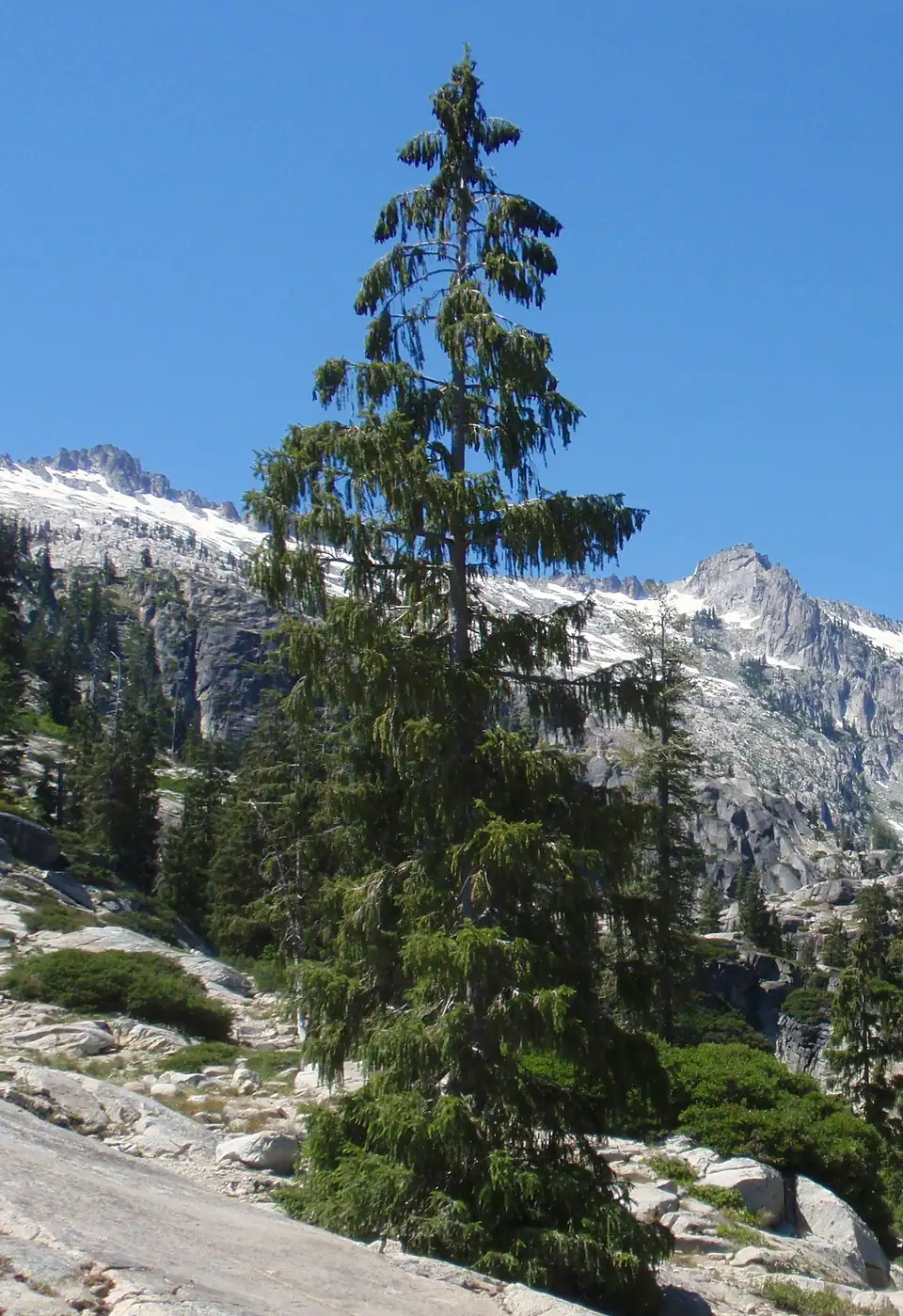
Brewer spruce is a stately conifer that can grow 50 to 80 feet tall, a true showpiece for a large garden. It loves plenty of moisture at the roots, so give it deep, moist soil, especially in drier areas. Just never let it sit in waterlogged ground, and keep an eye out for root rot.
- Water
Plenty of moisture at the roots; deep, moist soil, but never waterlogged
What the sources say (2)
Watering: Abundant moisture at the roots; deep moist soil if grown in drier areas
Likes abundant moisture at the roots, if grown in drier areas it must be given a deep moist soil
— Picea breweriana - Useful Temperate Plants [4] Watering notes: Never occurs in areas where the soils are saturated during the growing season (wild stands)
It never occurs in areas where the soils are saturated during the growing season, such as boggy or wet areas.
— Picea breweriana | Threatened Conifers of the World (en-GB) [2] - Cold
Survives winters down to −10 °F (−23.3 °C)
Very hardy · USDA 6 · RHS H7 · Z6
What the sources say (1)
Hardiness, coldest zone: 6 [winter low −23.3 to −17.8 °C (−10 to 0 °F)]
Hardy to USDA Zone 6 Native to the Siskiyou Mountains of southwestern Oregon and northern California.
— Picea breweriana | Landscape Plants | Oregon State University [1] - Pests
Watch out for root rot
What the sources say (1)
Diseases: root rot (Heterobasidion annosum)
In some areas, the high incidence of root rot ( Heterobasidion annosum ) further lowers its resistance to wind (Thornburgh, 1990).
— Picea breweriana | Threatened Conifers of the World (en-GB) [2] - Size
50 to 80 ft tall
What the sources say (1)
Mature height: 1500-2400 cm (50-80 ft; 15-24 m)
Conifer, evergreen tree, 50-80 ft (15-24 m) tall, slow growing, open crown, long pendulous middle and lower branches (weeping), to 2.5 m long.
— Picea breweriana | Landscape Plants | Oregon State University [1]
Overview
Brewer spruce is a slow-growing evergreen conifer with an open crown and long pendulous branches. [1] It is native to the Siskiyou Mountains of southwestern Oregon and northern California. [1]
This record is incomplete: the sources we read do not cover every field yet.
Not yet covered by our sources: Hardiness, warmest zone, Pruning, Propagation
Brewer's Spruce care
How to water Brewer's Spruce
Watering
Abundant moisture at the roots; deep moist soil if grown in drier areas
What the sources say (1)
Likes abundant moisture at the roots, if grown in drier areas it must be given a deep moist soilWatering notes
Never occurs in areas where the soils are saturated during the growing season (wild stands)
What the sources say (1)
It never occurs in areas where the soils are saturated during the growing season, such as boggy or wet areas.How much light Brewer's Spruce needs
The sources give different values depending on region, zone or growing conditions.
What each source says
According to Oregon State University: Sun
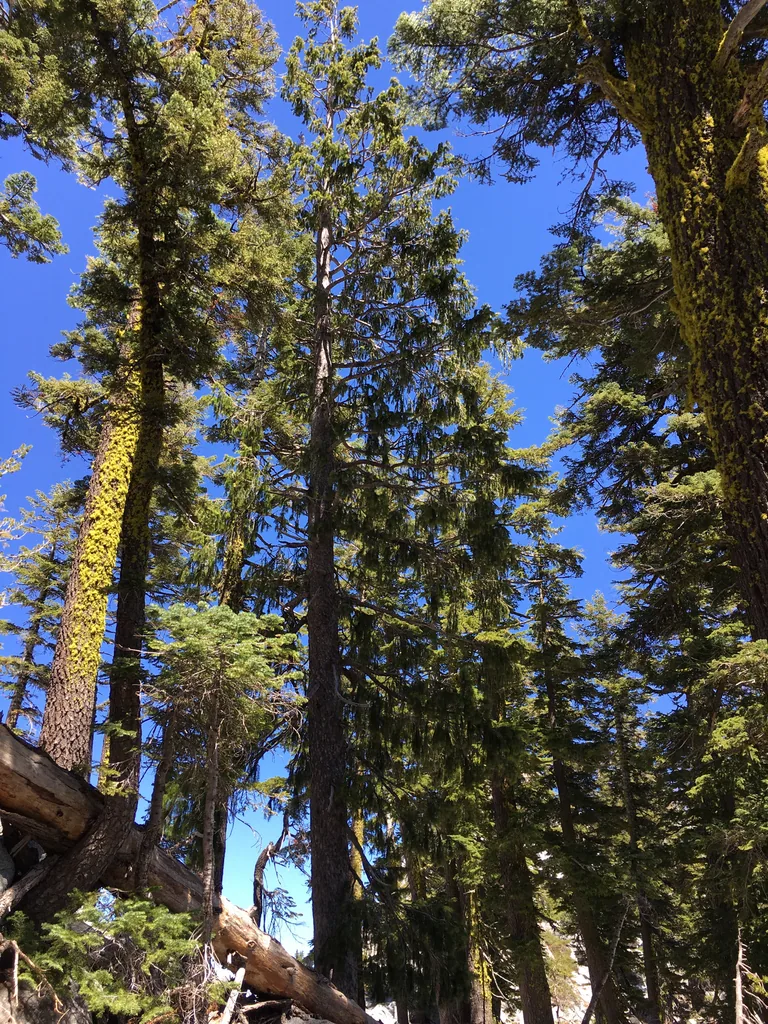
wild stands (RBGE): Very shade tolerant
What the sources say (2)
According to Oregon State University: Sun
-
Hardy to USDA Zone 6 Native to the Siskiyou Mountains of southwestern Oregon and northern California.wild stands (RBGE): Brewer spruce is very shade tolerant and can become established under an almost closed canopy.How much cold Brewer's Spruce can take
Hardiness, coldest zone
6 [winter low −23.3 to −17.8 °C (−10 to 0 °F)]
What the sources say (1)
Hardy to USDA Zone 6 Native to the Siskiyou Mountains of southwestern Oregon and northern California.Hardiness, warmest zone
Not stated in the sources we read.
Best soil for Brewer's Spruce
Soil pH, minimum
The sources give different values depending on region, zone or growing conditions.
What each source says
wild soils (RBGE): 4.6
cultivation (Temperate Plants Database): 4
What the sources say (2)
wild soils (RBGE): Soil pH ranges between 4.6 and 7.2 on mica schist, metavolcanic, granitic, and ultrabasic soils.cultivation (Temperate Plants Database): Prefers a pH between 4 to 6[ 200 Title
The New RHS Dictionary of Gardening. 1992.Soil pH, maximum
The sources give different values depending on region, zone or growing conditions.
What each source says
wild soils (RBGE): 7.2
cultivation (Temperate Plants Database): 6
What the sources say (2)
wild soils (RBGE): Soil pH ranges between 4.6 and 7.2 on mica schist, metavolcanic, granitic, and ultrabasic soils.cultivation (Temperate Plants Database): Prefers a pH between 4 to 6[ 200 Title
The New RHS Dictionary of Gardening. 1992.How to propagate Brewer's Spruce
Not stated in the sources we read.
How to grow Brewer's Spruce
The plant
Family
Pinaceae
What the sources say (1)
Brewer spruce Pinaceae Picea breweriana
Leaf: Evergreen, four-sided needles, spirally arranged; 1 inch long, with a blunt apexMature height
1500-2400 cm (50-80 ft; 15-24 m)
What the sources say (1)
Conifer, evergreen tree, 50-80 ft (15-24 m) tall, slow growing, open crown, long pendulous middle and lower branches (weeping), to 2.5 m long.Pests and diseases
Diseases
root rot (Heterobasidion annosum)
What the sources say (1)
In some areas, the high incidence of root rot ( Heterobasidion annosum ) further lowers its resistance to wind (Thornburgh, 1990).Remedies
The sources we checked give no remedies for this plant.
Calendar
Pruning
Not stated in the sources we read.
Months as given by the sources, which are mostly from the United States (northern hemisphere). In the southern hemisphere they shift by about six months.
Indicative values
Values from a secondary source, not checked word for word like the rest of this page. Use them as a starting point.
- Life cycle
- PerennialIndicative value, adapt it to your climate · Secondary source
- Drought tolerant
- yesIndicative value, adapt it to your climate · Secondary source
- Care level
- MediumIndicative value, adapt it to your climate · Secondary source
- Growth rate
- HighIndicative value, adapt it to your climate · Secondary source
- Pruning
- February, March, April, MayIndicative value, adapt it to your climate · Secondary source
- Propagation
- Seed Propagation, Cutting, Grafting Propagation, Layering PropagationIndicative value, adapt it to your climate · Secondary source
Similar plants
- Black Spruce Picea mariana
- Blue spruce Picea pungens
- Dragon Spruce Picea asperata
- Engelmann Spruce Picea engelmannii
- Himalayan Spruce Picea smithiana
- Norway Spruce Picea abies
- Oriental Spruce Picea orientalis
- Red Spruce Picea rubens
Sources
Every value above is quoted from these documents. Links lead to the original publisher.
- Picea breweriana | Landscape Plants | Oregon State University · landscapeplants.oregonstate.edu, consulted
- Picea breweriana | Threatened Conifers of the World (en-GB) · threatenedconifers.rbge.org.uk, consulted
- Picea breweriana (weeping spruce) description · conifers.org, consulted
- Picea breweriana - Useful Temperate Plants · temperate.theferns.info, consulted
- Brewer spruce printable card · dendro.cnre.vt.edu, consulted
Written by Emilio Marruso · last checked