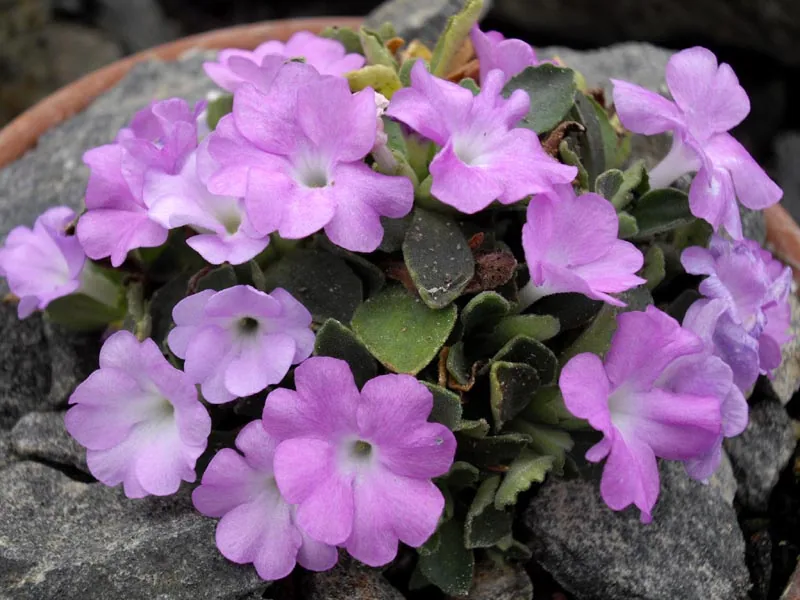
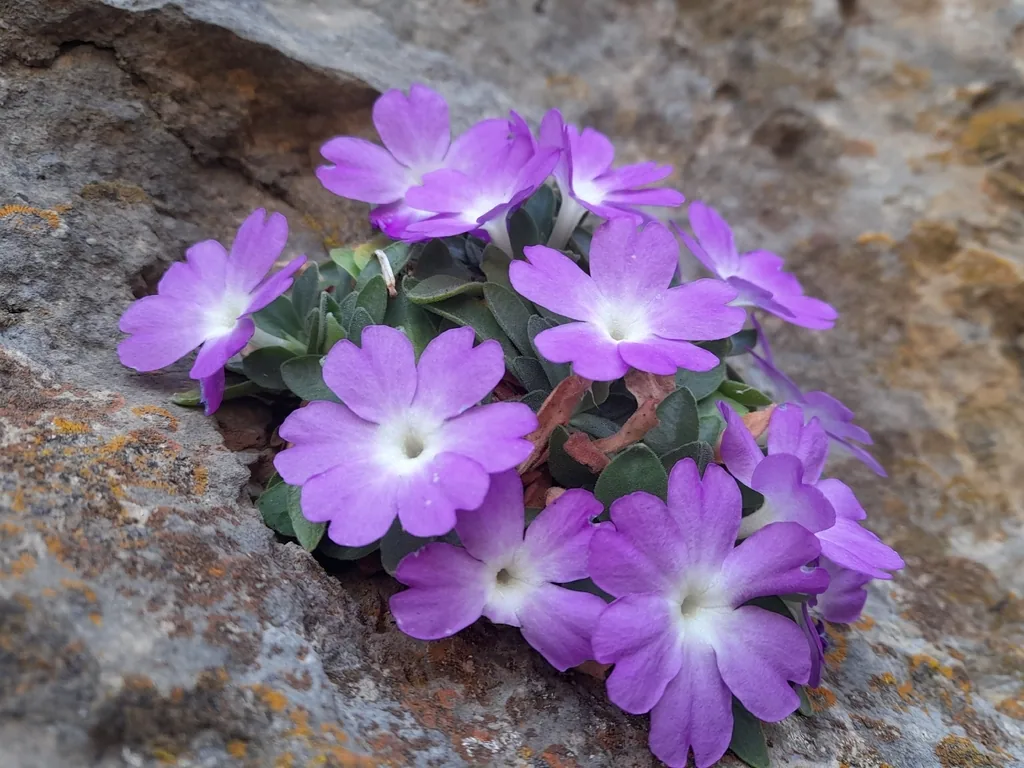

How to Grow and Care for Primula allionii
Primula allionii
Written by Emilio Marruso · last checked
At a glance
This little primrose is happy in a pot and asks only for part shade, with shelter from the sun in spring and summer. Give it a reasonable amount of water while it grows, keep the leaves dry, and let the pot stay just damp in winter. A quick winter tidy-up of old leaves, best with tweezers, keeps it healthy.
- Sun
Part shade; keep it shaded in spring and summer
What the sources say (2)
Light: Part shade; shaded in spring and summer
Light Range: Part Shade to Part Shade
— Primula allionii ( Allion Primrose ) - Professional Gardening Tips [4] Through spring and summer they require shading. From the end of March until September we apply a traditional whitewash shading to the glass
—  [3] - Water
Water moderately while growing, keep the pot just damp in winter; never wet the leaves
What the sources say (3)
Watering: Reasonable amount of water while in active growth; reduced over winter to keep pots only just damp
Give a reasonable amount of water while in active growth. Reduce water over winter to keep pots only just damp.
—  [3] - Cold
Survives winters down to −30 °F (−34.4 °C)
Very hardy · USDA 4 · RHS H7 · Z4
What the sources say (2)
Hardiness, coldest zone: 4 [winter low −34.4 to −28.9 °C (−30 to −20 °F)]
USDA Hardiness Zone: 4 to 8 AHS Heat Zone: 3 to 7
— Primula allionii ( Allion Primrose ) - Professional Gardening Tips [4] Hardiness, warmest zone: 8 [winter low −12.2 to −6.7 °C (10 to 20 °F)]
USDA Hardiness Zone: 4 to 8 AHS Heat Zone: 3 to 7
— Primula allionii ( Allion Primrose ) - Professional Gardening Tips [4] - Soil
Acidic to neutral soil, pH 4.5–7
What the sources say (2)
Soil pH, minimum: 4.5
pH Range: 4.5 to 7 Soil Range: Sandy Loam to Clay Loam
— Primula allionii ( Allion Primrose ) - Professional Gardening Tips [4] Soil pH, maximum: 7
pH Range: 4.5 to 7 Soil Range: Sandy Loam to Clay Loam
— Primula allionii ( Allion Primrose ) - Professional Gardening Tips [4] - Pruning
In winter, remove old, dead or dying leaves
What the sources say (1)
Pruning: Winter: remove old, dead or dying leaves
A good winter job is to carefully remove old, dead or dying leaves. Otherwise these could rot and lead to the death of the plant.
—  [3] - Pests
Wet leaves invite gray mold, and old leaves left on can rot and kill it; pick them off with tweezers
What the sources say (2)
- Containers
Grows well in containers
Overview
Primula allionii grows on limestone cliffs in the French Maritime Alps at 700-1900 m [2,296.6–6,233.6 ft]. [1] In cultivation it is grown in pots in an open mix in an alpine house, plunged in sand to keep the root zone cool. [1] Plants are shaded under glass from March to September. [3]
This record is incomplete: the sources we read do not cover every field yet.
Not yet covered by our sources: Propagation
Primula allionii care
Measurements in square brackets are our conversion into the other unit system; the quoted text is unchanged.
How to water Primula allionii
Watering
Reasonable amount of water while in active growth; reduced over winter to keep pots only just damp
What the sources say (1)
Give a reasonable amount of water while in active growth. Reduce water over winter to keep pots only just damp.Watering notes
Keep water off the foliage (Botrytis risk)
How much light Primula allionii needs
Part shade; shaded in spring and summer
How much cold Primula allionii can take
Hardiness, coldest zone
4 [winter low −34.4 to −28.9 °C (−30 to −20 °F)]
What the sources say (1)
USDA Hardiness Zone:
4 to 8
AHS Heat Zone:
3 to 7Hardiness, warmest zone
8 [winter low −12.2 to −6.7 °C (10 to 20 °F)]
What the sources say (1)
USDA Hardiness Zone:
4 to 8
AHS Heat Zone:
3 to 7Best soil for Primula allionii
Soil pH, minimum
4.5
What the sources say (1)
pH Range:
4.5 to 7
Soil Range:
Sandy Loam to Clay LoamSoil pH, maximum
7
What the sources say (1)
pH Range:
4.5 to 7
Soil Range:
Sandy Loam to Clay LoamWhere to grow Primula allionii
How to propagate Primula allionii
Not stated in the sources we read.
Primula allionii pests and problems
Botrytis and leaf rot
Symptom: Water on the leaves risks Botrytis; old, dead or dying leaves left on the plant can rot and kill it
What to do: Keep water off the leaves; remove old, dead or dying leaves in winter, best with tweezers
Remedies
The sources we checked give no remedies for this plant.
Calendar
Pruning
Winter: remove old, dead or dying leaves
What the sources say (1)
A good winter job is to carefully remove old, dead or dying leaves. Otherwise these could rot and lead to the death of the plant.Months as given by the sources, which are mostly from the United States (northern hemisphere). In the southern hemisphere they shift by about six months.
Similar plants
- Cowslip Primula veris
- Eastern Shooting Star Primula meadia
- Oxlip Primula elatior
- Primrose Primula vulgaris
- Primula malacoides Primula malacoides
- Auricula Primula auricula
- Primrose Primula obconica
- Primula palinuri Primula palinuri
Sources
Every value above is quoted from these documents. Links lead to the original publisher.
- Allionii at alpine level – Botanics Stories · stories.rbge.org.uk, consulted
- Alpine extravaganza – Botanics Stories · stories.rbge.org.uk, consulted
-  · srgc.org.uk, consulted
- Primula allionii ( Allion Primrose ) - Professional Gardening Tips · backyardgardener.com, consulted
Written by Emilio Marruso · last checked