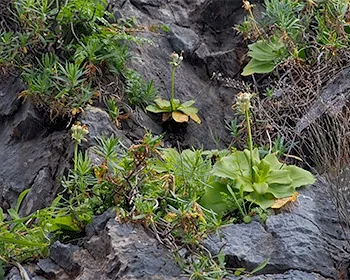
How to Grow and Care for Primula palinuri
Primula palinuri
Written by Emilio Marruso · last checked
At a glance
Palinuro primrose is a charming plant to raise from seed: sow it in April in a cool greenhouse and the seeds sprout in 30 days. Give it a few hours of gentle morning sun, regular water in summer and cool, slightly moist soil in winter, and its stems can reach 10 inches. It grows happily in a container, too.
- Sun
A few hours of morning sun; shade it from afternoon and evening sun
What the sources say (1)
Light: A few hours of direct morning sun, protected from direct afternoon and evening sun
which allows for a few hours of direct solar irradiation in the morning but protects them from direct sunlight in the afternoon and evening
— DOI 10.24823/Sibbaldia.2024.2029 [1] - Water
Water regularly in summer; in winter keep it cool and slightly moist
What the sources say (1)
Watering: Regularly watered in summer; kept slightly moist and cool in winter
Plants are regularly watered during summer months and kept slightly moist and cool during winter months.
— DOI 10.24823/Sibbaldia.2024.2029 [1] - Pests
Mealybugs in late summer at the base of the leaves; pick them off by hand or use their natural enemy
What the sources say (1)
Pests: mealybug (Pseudococcus viburni)
During late summer, P. palinuri plants can be vulnerable to infestation with the mealybug Pseudococcus viburni, especially at the base of the leaf rosette and the rhizome.
— DOI 10.24823/Sibbaldia.2024.2029 [1] - Size
Stems up to 10 inches tall
What the sources say (1)
Mature height: stems up to 25 cm [9.8 in]
Primula palinuri shows similarities to some of the larger forms of P. auricula, with stems up to 25 cm tall and leaves that are about 20 cm long by 7 cm wide,
— DOI 10.24823/Sibbaldia.2024.2029 [1] - Propagation
Grow new plants from seed; leaf cuttings don't work
What the sources say (2)
Propagation: By seed; not easily propagated vegetatively (leaf cuttings unsuccessful)
The species is not easily propagated by vegetative propagation methods, such as leaf cuttings.
— DOI 10.24823/Sibbaldia.2024.2029 [1] RRZBG has established a solid protocol for effective cultivation and propagation of this species by seed.
— DOI 10.24823/Sibbaldia.2024.2029 [1] - Sowing
Sow in April in a cool greenhouse; seeds sprout in 30 days
What the sources say (3)
Sowing: April (cool greenhouse)
Royal Rotterdam Zoological and Botanical Gardens: seeds of Primula palinuri were sown in a cool greenhouse in April 2023. They germinated after approximately 30 days
— DOI 10.24823/Sibbaldia.2024.2029 [1] seeds of Primula palinuri were sown in a cool greenhouse in April 2023. They germinated after approximately 30 days
— DOI 10.24823/Sibbaldia.2024.2029 [1] Days to germination: 30
They germinated after approximately 30 days at temperatures of around 10–15 °C.
— DOI 10.24823/Sibbaldia.2024.2029 [1] - Containers
Grows in containers too
What the sources say (1)
In containers: Yes
pricked out in small groups and planted in pots (9 × 9 × 9 cm) filled with a universal potting soil
— DOI 10.24823/Sibbaldia.2024.2029 [1]
Overview
Primula palinuri is a rare primula restricted to vertical cliffs on the Tyrrhenian coast of southern Italy, between Palinuro and Scalea. [1] In the wild it flowers from the end of January to mid-April, with yellow flowers. [1] At the Rotterdam botanical gardens it is kept in a cold greenhouse from October to April to prevent frost and excess moisture damage. [1]
This record is incomplete: the sources we read do not cover every field yet.
Not yet covered by our sources: Hardiness, coldest zone, Hardiness, warmest zone, Pruning
Primula palinuri care
How to water Primula palinuri
Regularly watered in summer; kept slightly moist and cool in winter
What the sources say (1)
Plants are regularly watered during summer months and kept slightly moist and cool during winter months.How much light Primula palinuri needs
A few hours of direct morning sun, protected from direct afternoon and evening sun
What the sources say (1)
which allows for a few hours of direct solar irradiation in the morning but protects them from direct sunlight in the afternoon and eveningHow much cold Primula palinuri can take
Hardiness, coldest zone
Not stated in the sources we read.
Hardiness, warmest zone
Not stated in the sources we read.
Where to grow Primula palinuri
Yes
What the sources say (1)
pricked out in small groups and planted in pots (9 × 9 × 9 cm) filled with a universal potting soilHow to propagate Primula palinuri
By seed; not easily propagated vegetatively (leaf cuttings unsuccessful)
How to grow Primula palinuri
The plant
Mature height
stems up to 25 cm [9.8 in]
What the sources say (1)
Primula palinuri shows similarities to some of the larger forms of P. auricula, with stems up to 25 cm tall and leaves that are about 20 cm long by 7 cm wide,Sowing and growth
Days to germination
30
What the sources say (1)
They germinated after approximately 30 days at temperatures of around 10–15 °C.Pests and diseases
Pests
mealybug (Pseudococcus viburni)
What the sources say (1)
During late summer, P. palinuri plants can be vulnerable to infestation with the mealybug Pseudococcus viburni, especially at the base of the leaf rosette and the rhizome.Fertilizing
When
The sources give different values depending on region, zone or growing conditions.
What each source says
ex situ conservation cultivation, seedlings potted on: When seedlings are pricked out into pots
What the sources say (1)
ex situ conservation cultivation, seedlings potted on: they were pricked out in small groups and planted in pots (9 × 9 × 9 cm) filled with a universal potting soil and with added slow-release organic fertilisers for 100 days.Natural fertilizers
The sources give different values depending on region, zone or growing conditions.
What each source says
ex situ conservation cultivation, seedlings potted on: Slow-release organic fertiliser mixed into the potting soil when seedlings are potted on
What the sources say (1)
ex situ conservation cultivation, seedlings potted on: they were pricked out in small groups and planted in pots (9 × 9 × 9 cm) filled with a universal potting soil and with added slow-release organic fertilisers for 100 days.Primula palinuri pests and problems
Mealybug (Pseudococcus viburni)
Symptom: Late-summer infestation, especially at the base of the leaf rosette and the rhizome
What to do: Removed manually or with the natural enemy Cryptolaemus montrouzieri
What the sources say (2)
During late summer, P. palinuri plants can be vulnerable to infestation with the mealybug Pseudococcus viburni, especially at the base of the leaf rosette and the rhizome.
— DOI 10.24823/Sibbaldia.2024.2029 [1] Mealybugs can be removed either manually or by using the adults or larvae of the natural enemy Cryptolaemus montrouzieri
— DOI 10.24823/Sibbaldia.2024.2029 [1]
Remedies
Each remedy shows what official sources say about it; traditional remedies without an official source are marked as such. Harmful ones are listed so you know to avoid them.
Treating the plant
mealybugs
manual removal or Cryptolaemus beetles Not verified
Traditional remedy, not verified by an official source.
How: Mealybugs can be removed manually or by using the adults or larvae of the natural enemy Cryptolaemus montrouzieri.
vine weevils
nematodes watered in Not verified
Traditional remedy, not verified by an official source.
How: Once a year, when temperatures are above 15 °C, the plants are given a solution of water and nematodes (Steinernema spp.).
Calendar
April (cool greenhouse)
What each source says
Royal Rotterdam Zoological and Botanical Gardens: April (cool greenhouse)
What the sources say (2)
Royal Rotterdam Zoological and Botanical Gardens: seeds of Primula palinuri were sown in a cool greenhouse in April 2023. They germinated after approximately 30 daysseeds of Primula palinuri were sown in a cool greenhouse in April 2023. They germinated after approximately 30 daysNot stated in the sources we read.
Months as given by the sources, which are mostly from the United States (northern hemisphere). In the southern hemisphere they shift by about six months.
Similar plants
- Auricula Primula auricula
- Cowslip Primula veris
- Eastern Shooting Star Primula meadia
- Oxlip Primula elatior
- Primrose Primula obconica
- Primrose Primula vulgaris
- Primula allionii Primula allionii
- Primula malacoides Primula malacoides
Sources
Every value above is quoted from these documents. Links lead to the original publisher.
- DOI 10.24823/Sibbaldia.2024.2029 · journals.rbge.org.uk, consulted
- Primula di Palinuro | Luoghi - Italian Botanical Heritage · luoghi.italianbotanicalheritage.com, consulted
- Primula di Palinuro (Primula palinuri) — Cielo Mare Terra · cielomareterra.org, consulted
Written by Emilio Marruso · last checked