
How to Grow and Care for Hardhack
Spiraea douglasii
Written by Emilio Marruso · last checked
Toxic to: People · Why
At a glance
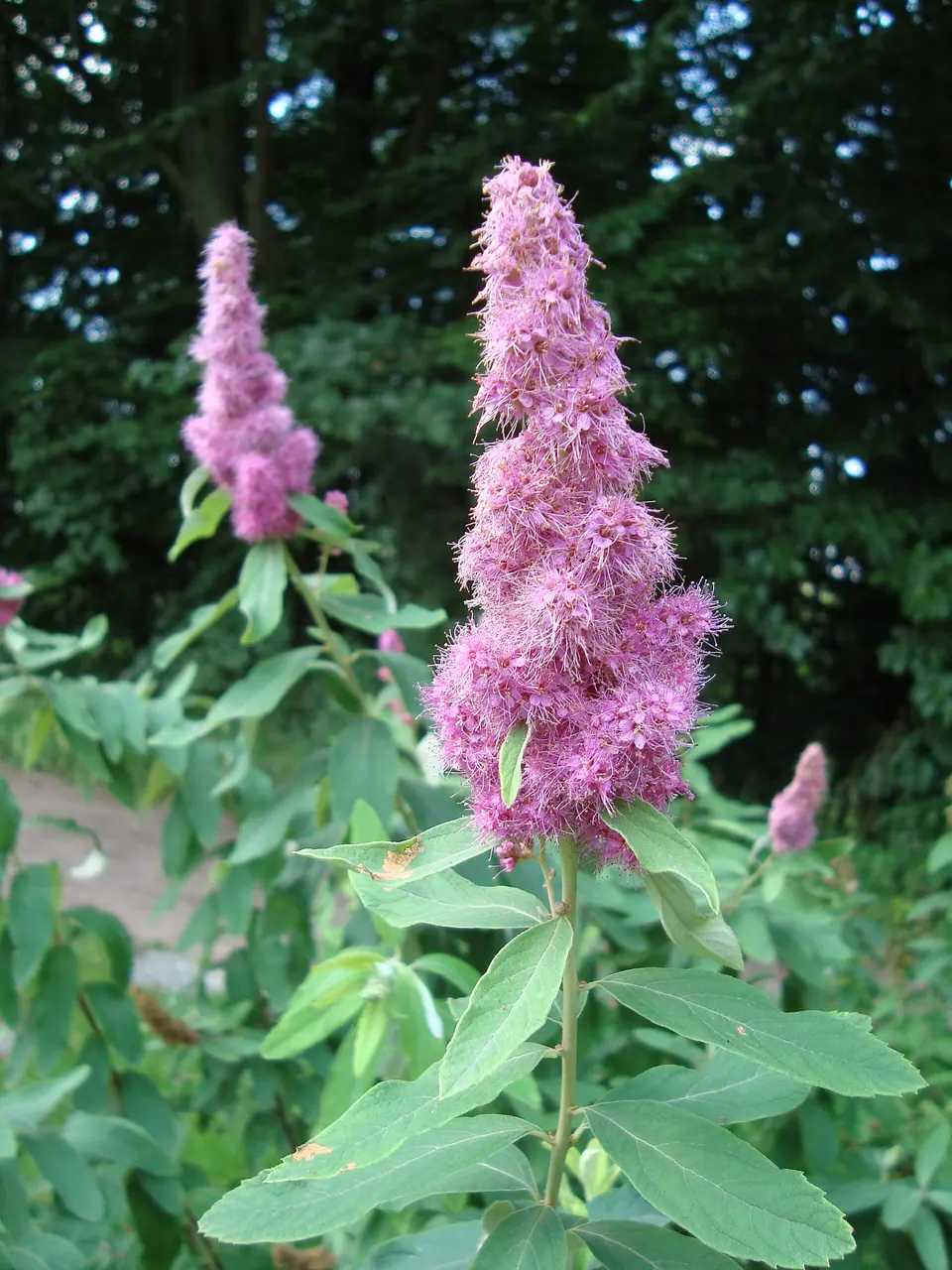
Douglas spirea is a long-lived member of the rose family that doesn't mind wet feet: it tolerates soil flooded for part of the year and even grows wild on ground that is always wet. It takes a wide range of soils, from pH 4.5 to 7.5, and asks only for a pruning in late winter or early spring.
- Water
Handles wet soil: it tolerates seasonal flooding and grows wild on always-wet ground
What the sources say (1)
Watering notes: Tolerant of seasonal inundation of the soil; also found in the wild on permanently wet soils
Tolerant of seasonal inundation of the soil, the plant is also found in the wild on permanently wet soils
— Spiraea douglasii - Useful Temperate Plants [1] - Cold
Survives winters down to −20 °F (−28.9 °C)
Very hardy · USDA 5 · RHS H7 · Z5
What the sources say (1)
Hardiness, coldest zone: 5 [winter low −28.9 to −23.3 °C (−20 to −10 °F)]
Hardy to USDA Zone 5 Native range from Oregon to Alaska, found in marsh borders, stream banks, and wet meadows, sometimes found in drier situations
— Spiraea douglasii | Landscape Plants | Oregon State University [7] - Soil
Acidic to slightly alkaline soil, pH 4.5–7.5
- Planting
Plant seedlings in late spring or early summer, the year after sowing
What the sources say (1)
Planting: Late spring or early summer (seedlings, the year after sowing)
Plant them out in late spring or early summer of the following year.
— Spiraea douglasii - Useful Temperate Plants [1] - Pruning
In late winter or early spring, cut back the shoots that flowered last summer
What the sources say (2)
Pruning: Late winter or early spring, cutting back shoots that flowered the previous summer
The shoots that flowered the previous summer should be pruned back in late winter or early spring
— Spiraea douglasii - Useful Temperate Plants [1] The shoots that flowered the previous summer should be pruned back in February or early March
— Spiraea douglasii - Trees and Shrubs Online [6] - Propagation
From seed, cuttings or by dividing the suckers
What the sources say (3)
Propagation: Seed; softwood cuttings; half-ripe and mature wood cuttings; division of suckers
Propagate by seed or softwood cuttings. Offshoots from the creeping underground stems can be readily established.
— Lady Bird Johnson Wildflower Center - The University of Texas at Austin [3] Cuttings of half-ripe wood, mid summer in a light sandy soil a frame.
— Spiraea douglasii - Useful Temperate Plants [1] Division of suckers in early spring [5] . They can be planted out straight into their permanent positions.
— Steeplebush (Spiraea douglasii) — Practical Plants [4] - Safety
Can be poisonous if eaten in large amounts
Overview
Spiraea douglasii spreads freely at the roots, usually forming thickets. [1]
This record is incomplete: the sources we read do not cover every field yet.
Not yet covered by our sources: Hardiness, warmest zone
Hardhack care
How to water Hardhack
Watering
The sources disagree:
Water Use: Low Light Requirement: Part Shade Soil Moisture: Moist
[3]
What the sources say (2)
but prefers a good loamy soil with abundant moistureWater
moderate
Hardiness
Zone 5+
Soil textures
sandy, loamy, clay
Soil pH
acid, neutral, alkaline
Tolerates Nutritionally Poor Soil
No
Drought
intolerantWatering notes
Tolerant of seasonal inundation of the soil; also found in the wild on permanently wet soils
What the sources say (1)
Tolerant of seasonal inundation of the soil, the plant is also found in the wild on permanently wet soilsHow much light Hardhack needs
The sources disagree:
Water Use: Low Light Requirement: Part Shade Soil Moisture: Moist
[3]
How much cold Hardhack can take
Hardiness, coldest zone
5 [winter low −28.9 to −23.3 °C (−20 to −10 °F)]
What the sources say (1)
Hardy to USDA Zone 5 Native range from Oregon to Alaska, found in marsh borders, stream banks, and wet meadows, sometimes found in drier situationsHardiness, warmest zone
Not stated in the sources we read.
Best soil for Hardhack
Soil pH, minimum
4.5
What the sources say (1)
Succeeds in soils with a pH ranging from 4.5 - 7.5Soil pH, maximum
7.5
What the sources say (1)
Succeeds in soils with a pH ranging from 4.5 - 7.5How to propagate Hardhack
Seed; softwood cuttings; half-ripe and mature wood cuttings; division of suckers
What the sources say (3)
Propagate by seed or softwood cuttings. Offshoots from the creeping underground stems can be readily established.Cuttings of half-ripe wood, mid summer in a light sandy soil a frame.Division of suckers in early spring [5] . They can be planted out straight into their permanent positions.How to grow Hardhack
The plant
Life cycle
perennial
What the sources say (1)
Generation: Perennial - Notable feature: besides the cone shaped magenta blooms,Family
Rosaceae
What the sources say (1)
Family: Rosaceae - Plant Type: deciduous, thicket-forming dense shrubRemedies
Each remedy shows what official sources say about it; traditional remedies without an official source are marked as such. Harmful ones are listed so you know to avoid them.
Treating the plant
powdery mildew
removing infected leaves Partly works
How: remove the few infected leaves
If powdery mildew is noticed on a few leaves, simply removing them will help with control.
— hgic.clemson.edu [8] What the evidence says If powdery mildew is noticed on a few leaves, simply removing them will help with control.
— hgic.clemson.edu [8] pruning out infected stems Partly works
How: at the end of the growing season prune out infected stems and remove fallen leaves
At the end of the growing season, prune out infected stems and remove fallen leaves, which can serve as a source of further infection.
— hgic.clemson.edu [8] What the evidence says At the end of the growing season, prune out infected stems and remove fallen leaves, which can serve as a source of further infection.
— hgic.clemson.edu [8] improving air circulation Partly works
How: improve air circulation around the plant
Powdery mildew can be minimized by improving air circulation around the plant. Chemical control is usually not necessary.
— portal.ct.gov [9] What the evidence says Powdery mildew can be minimized by improving air circulation around the plant.
— portal.ct.gov [9]
aphids
insecticidal soap or ultrafine horticultural oil Official source, not independently tested
Consult the label for dosage rates and safety precautions.
— portal.ct.gov [9] How: apply as foliar sprays when insects are present
When needed, ultrafine horticultural oil, insecticidal soap or malathion are among the compounds registered for control of this pest in Connecticut.
— portal.ct.gov [9]
scale insects
ultrafine horticultural oil or insecticidal soap Official source, not independently tested
How: spray twigs and stems late in June or early in July when crawlers are active, with thorough coverage
Among the compounds registered for control of this pest in Connecticut are ultrafine horticultural oil, insecticidal soap or malathion.
— portal.ct.gov [9]
leafroller
clipping off nests Official source, not independently tested
How: clip off and dispose of the nests
The remedy is to clip off and dispose of the nests.
— portal.ct.gov [9]
Is Hardhack poisonous?
Reported by the source, quoted verbatim. This is not medical or veterinary advice: if a person or an animal may have eaten this plant, contact a poison control centre or a veterinarian.
Calendar
Planting
Late spring or early summer (seedlings, the year after sowing)
What the sources say (1)
Plant them out in late spring or early summer of the following year.Pruning
Late winter or early spring, cutting back shoots that flowered the previous summer
What the sources say (2)
The shoots that flowered the previous summer should be pruned back in late winter or early springThe shoots that flowered the previous summer should be pruned back in February or early MarchMonths as given by the sources, which are mostly from the United States (northern hemisphere). In the southern hemisphere they shift by about six months.
Indicative values
Values from a secondary source, not checked word for word like the rest of this page. Use them as a starting point.
- Mature height
- 121.9-182.9 cm (4-6 ft)Indicative value, adapt it to your climate · Secondary source
- Soil
- Loamy Humus RockyIndicative value, adapt it to your climate · Secondary source
- Care level
- MediumIndicative value, adapt it to your climate · Secondary source
- Growth rate
- HighIndicative value, adapt it to your climate · Secondary source
- Pests
- Pest resistant, Disease resistantIndicative value, adapt it to your climate · Secondary source
Similar plants
- Breath of Spring Spiraea Spiraea thunbergii
- Bridal wreath Spiraea prunifolia
- Japanese Spiraea Spiraea japonica
- Meadowsweet Spiraea alba
- Steeplebush Spiraea tomentosa
- Threelobe Spirea Spiraea trilobata
- White spirea Spiraea betulifolia
- Afghan Cherry Prunus jacquemontii
Sources
Every value above is quoted from these documents. Links lead to the original publisher.
- Spiraea douglasii - Useful Temperate Plants · temperate.theferns.info, consulted
- Virginia Tech Dendrology Fact Sheet · dendro.cnre.vt.edu, consulted
- Lady Bird Johnson Wildflower Center - The University of Texas at Austin · wildflower.org, consulted
- Steeplebush (Spiraea douglasii) — Practical Plants · practicalplants.org, consulted
- Spirea/Hardhack - North Creek Wetland · uwb.edu, consulted
- Spiraea douglasii - Trees and Shrubs Online · treesandshrubsonline.org, consulted
- Spiraea douglasii | Landscape Plants | Oregon State University · landscapeplants.oregonstate.edu, consulted
- hgic.clemson.edu · hgic.clemson.edu
- portal.ct.gov · portal.ct.gov
Written by Emilio Marruso · last checked