
How to Grow and Care for Early Blue (Hook) Violet
Viola adunca
Written by Emilio Marruso · last checked
Toxic to: People · Why
At a glance
You can start this violet from seed in a cold frame in autumn or early spring, or from divisions planted in summer. Its young leaves and flower buds go raw into salads, and the dried leaves make a tea. Give it soil with a pH of 6–6.5 so the leaves stay green, and leave the roots, fruit and seeds alone: they are poisonous.
- Cold
Survives winters down to −30 °F (−34.4 °C)
Very hardy · USDA 4 · RHS H7 · Z4
What the sources say (1)
Hardiness, coldest zone: 4 [winter low −34.4 to −28.9 °C (−30 to −20 °F)]
Hardiness Zone 4+
— Western Dog Violet (Viola adunca) — Practical Plants [3] - Soil
Soil with pH 6–6.5; in soil that is too alkaline the leaves turn yellow
- Planting
Plant seedlings in summer; plant divisions in summer or the following spring
What the sources say (5)
Planting: Summer (seedlings and divisions); following spring (divisions)
Seedlings (fonte: Practical Plants): Prick out the seedlings into individual pots when they are large enough to handle and plant them out in the summer.
— Western Dog Violet (Viola adunca) — Practical Plants [3] Seedlings (fonte: Native Plant Propagation Guidelines): Prick the seedlings out into individual pots when they are large enough to handle and plant out in late summer.
— Viola Adunca [5] Divisions (fonte: Practical Plants): Plant them out in the summer or the following spring.
— Western Dog Violet (Viola adunca) — Practical Plants [3] Plant them out in the summer or the following spring.
— Western Dog Violet (Viola adunca) — Practical Plants [3] Prick out the seedlings into individual pots when they are large enough to handle and plant them out in the summer.
— Western Dog Violet (Viola adunca) — Practical Plants [3] - Harvest
Young leaves and flower buds are eaten raw or cooked; dried leaves make a tea
- Propagation
Grow new plants from seed or by dividing the clump
- Sowing
Sow in a cold frame in autumn, or in early spring
What the sources say (2)
Sowing: Autumn (seed, in a cold frame); early spring (stored seed or seed sown into flats, in a cold frame)
Seed - best sown in the autumn in a cold frame. Sow stored seed in early spring in a cold frame.
— Western Dog Violet (Viola adunca) — Practical Plants [3] Sow seed in early spring into flats or a cold frame and cover lightly.
— Viola Adunca [5] - Safety
Roots, fruit and seeds are poisonous: they can upset the stomach
Overview
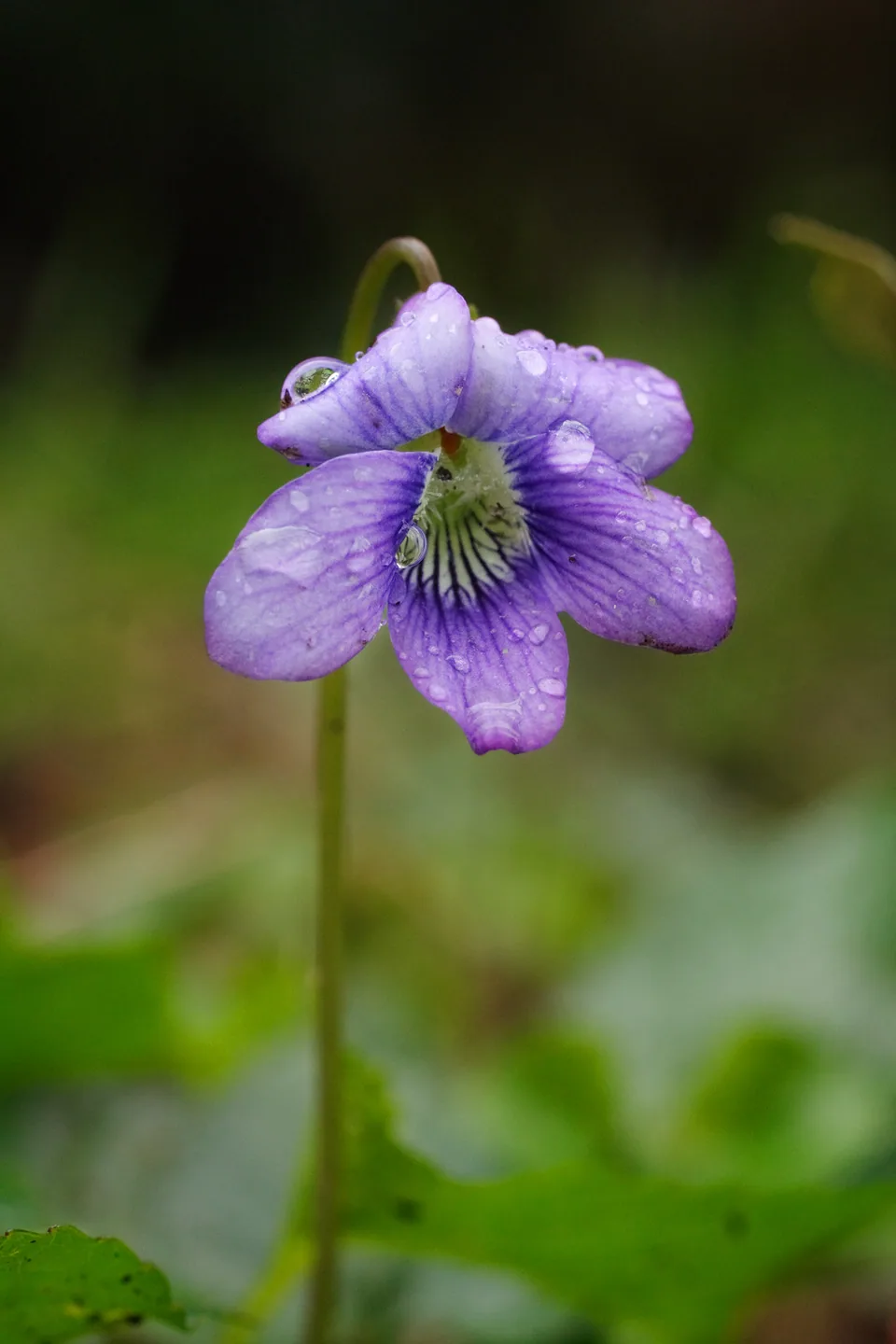
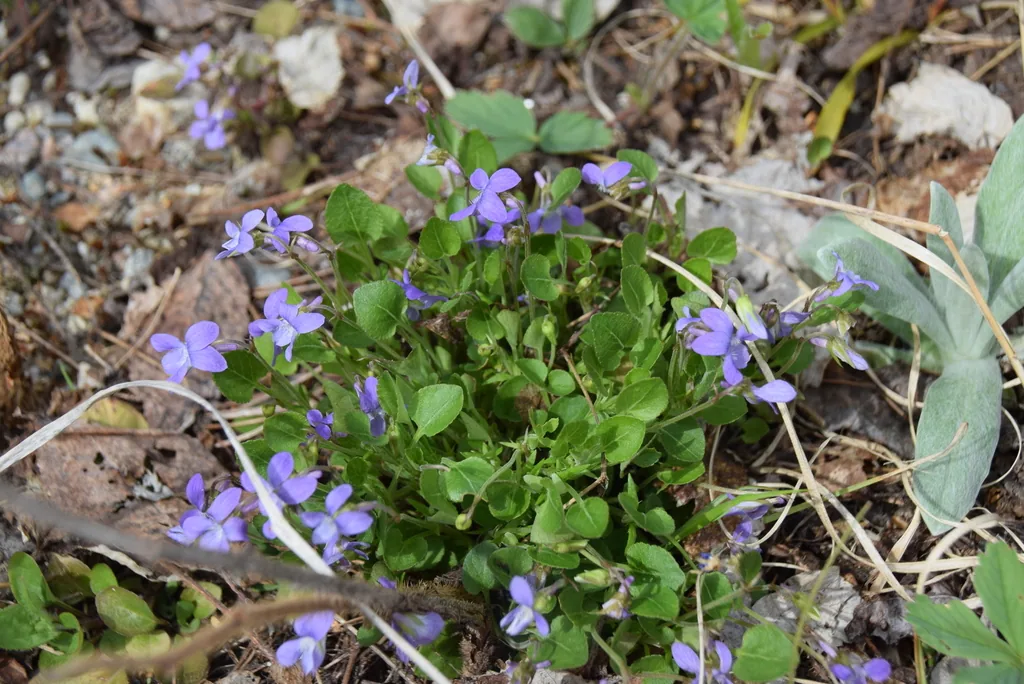
Viola adunca is a small perennial herb with blue to purple pansy-like flowers, blooming from April to August. [1] It is native to meadows, open woods and open slopes from sea level to timberline. [1]
This record is incomplete: the sources we read do not cover every field yet.
Not yet covered by our sources: Hardiness, warmest zone, Pruning
Early Blue (Hook) Violet care
How to water Early Blue (Hook) Violet
The sources give different values depending on region, zone or growing conditions.
What each source says
According to Natural Edge: Tolerant of drought
According to Useful Temperate Plants: Tolerates seasonally saturated soils and occasional droughts
How much light Early Blue (Hook) Violet needs
How much cold Early Blue (Hook) Violet can take
Hardiness, coldest zone
4 [winter low −34.4 to −28.9 °C (−30 to −20 °F)]
What the sources say (1)
Hardiness
Zone 4+Hardiness, warmest zone
Not stated in the sources we read.
How to propagate Early Blue (Hook) Violet
Early Blue (Hook) Violet pests and problems
Chlorosis in high-pH soil
Symptom: Plants become chlorotic if the pH is too high
What to do: Prefers a pH between 6 and 6.5
What the sources say (1)
Tolerates sandstone and limestone soils but becomes chlorotic if the pH is too high.
— Viola adunca - Useful Temperate Plants [4]
Remedies
Each remedy shows what official sources say about it; traditional remedies without an official source are marked as such. Harmful ones are listed so you know to avoid them.
First aid
First aid: not a substitute for a doctor
ingestion
remove plant pieces from the mouth, sips of water or milk Official source, not independently tested
Call a poison center at 1-800-222-1222 for expert guidance.
— poison.org [9] How: Take all pieces of the plant out of the person's mouth, then give a few sips of water or milk.
Take all pieces of the plant out of the person’s mouth. - Give them a few sips of water or milk.
— nnepc.org [8]
Is Early Blue (Hook) Violet poisonous?
Reported by the source, quoted verbatim. This is not medical or veterinary advice: if a person or an animal may have eaten this plant, contact a poison control centre or a veterinarian.
Calendar
Sowing
Autumn (seed, in a cold frame); early spring (stored seed or seed sown into flats, in a cold frame)
Planting
Summer (seedlings and divisions); following spring (divisions)
What each source says
Seedlings (fonte: Practical Plants): Summer
Seedlings (fonte: Native Plant Propagation Guidelines): Late summer
Divisions (fonte: Practical Plants): Summer or the following spring
What the sources say (5)
Seedlings (fonte: Practical Plants): Prick out the seedlings into individual pots when they are large enough to handle and plant them out in the summer.Seedlings (fonte: Native Plant Propagation Guidelines): Prick the seedlings out into individual pots when they are large enough to handle and plant out in late summer.Divisions (fonte: Practical Plants): Plant them out in the summer or the following spring.Plant them out in the summer or the following spring.Prick out the seedlings into individual pots when they are large enough to handle and plant them out in the summer.Pruning
Not stated in the sources we read.
Months as given by the sources, which are mostly from the United States (northern hemisphere). In the southern hemisphere they shift by about six months.
Edibility
Reported by the source, quoted verbatim. Do not eat a plant on the basis of this page alone: identification mistakes can be dangerous.
Indicative values
Values from a secondary source, not checked word for word like the rest of this page. Use them as a starting point.
- Life cycle
- PerennialIndicative value, adapt it to your climate · Secondary source
- Mature height
- 10-10 cm [3.9 in]Indicative value, adapt it to your climate · Secondary source
- Hours of sun
- 6-8 hoursIndicative value, adapt it to your climate · Secondary source
- Drought tolerant
- yesIndicative value, adapt it to your climate · Secondary source
- Soil
- Sandy, Loamy, Clay, RockyIndicative value, adapt it to your climate · Secondary source
- Soil pH
- 6-7Indicative value, adapt it to your climate · Secondary source
- Care level
- ModerateIndicative value, adapt it to your climate · Secondary source
- Growth rate
- LowIndicative value, adapt it to your climate · Secondary source
- Pruning
- March, April, May, June, July, June, July, AugustIndicative value, adapt it to your climate · Secondary source
Similar plants
- Alpine violet Viola labradorica
- Bird-Foot Violet Viola pedata
- Bog White Viola Viola lanceolata
- Canadian Violet Viola canadensis
- Common Blue Violet Viola sororia
- Early dog-violet Viola reichenbachiana
- Field Pansy Viola arvensis
- Field Pansy Viola rafinesquei
Sources
Every value above is quoted from these documents. Links lead to the original publisher.
- Lady Bird Johnson Wildflower Center - The University of Texas at Austin · wildflower.org, consulted
- Viola adunca (Sand Violet): Minnesota Wildflowers · minnesotawildflowers.info, consulted
- Western Dog Violet (Viola adunca) — Practical Plants · practicalplants.org, consulted
- Viola adunca - Useful Temperate Plants · temperate.theferns.info, consulted
- Viola Adunca · goert.ca, consulted
- Early Blue Violet - Natural Edge · naturaledge.watersheds.ca, consulted
- Viola adunca (hook-spurred violet): Go Botany · gobotany.nativeplanttrust.org, consulted
- nnepc.org · nnepc.org
- poison.org · poison.org
Written by Emilio Marruso · last checked