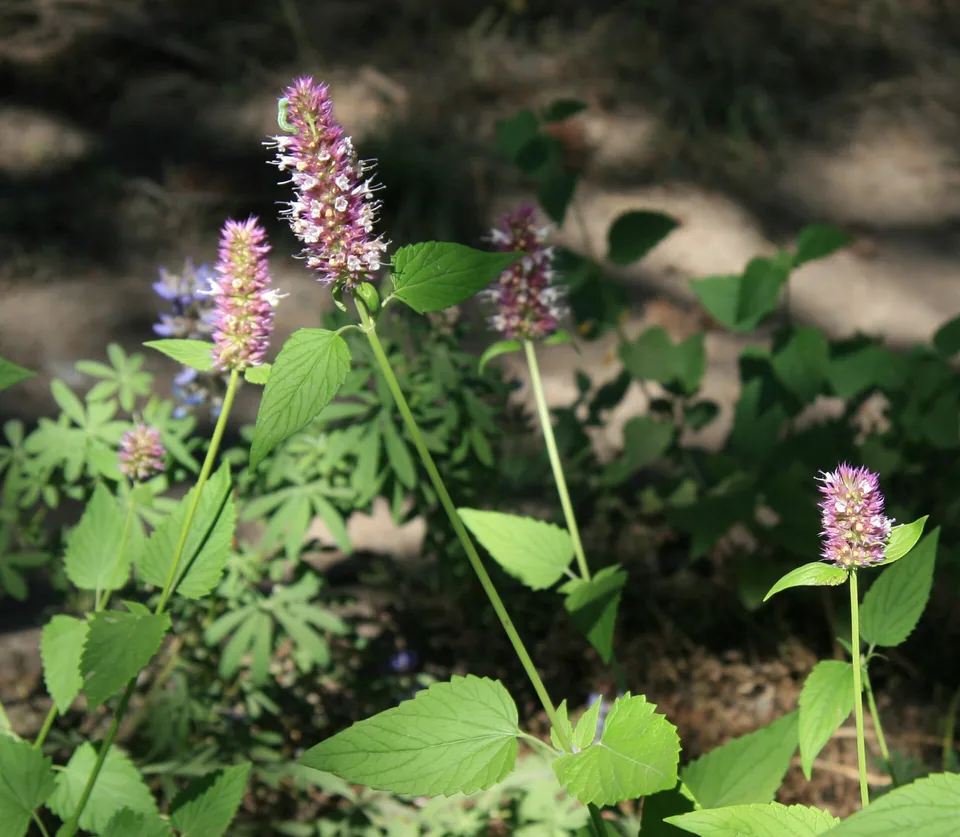
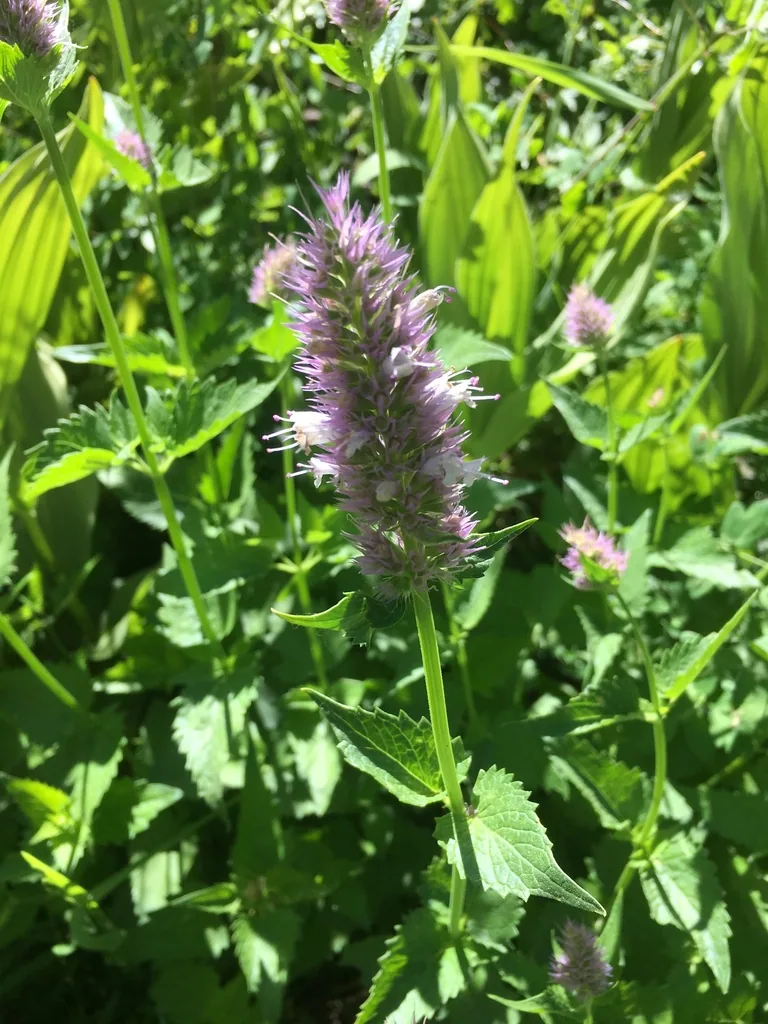

Cómo cultivar y cuidar Nettleleaf giant hyssop
Agastache urticifolia
Escrito por Emilio Marruso · última revisión
De un vistazo
Esta perenne te da mucho más que flores: con sus flores y hojas secas se prepara una infusión, y sus semillas se comen crudas o cocinadas. Dale un riego moderado y un suelo con buen drenaje, y crecerá según su sitio: 30 cm al sol o hasta 1,5 m a la sombra. Además, puedes multiplicarla fácilmente por semilla, división o esquejes.
- Riego
Riego moderado; no aguanta la sequía
Qué dicen las fuentes (3)
Riego: Riego moderado; no tolera la sequía
Shade tolerance no shade Water moderate Hardiness Zone 8+
— Giant Hyssop (Agastache urticifolia) — Practical Plants [6] Soil pH acid, neutral, alkaline Drainage well drained Tolerates Nutritionally Poor Soil No Drought intolerant
— Giant Hyssop (Agastache urticifolia) — Practical Plants [6] Horsemint prefers moist soils on open hillsides, in canyons and mountain valleys, from 6,000-10,000 feet in elevation. It is often found along streambanks. Horsemint is not drought tolerant.
— Horsemint | USU [1] - Frío
Aguanta inviernos de hasta −12,2 °C (10 °F)
Rústica en inviernos fríos · USDA 8 · RHS H5 · Z8
Qué dicen las fuentes (1)
Rusticidad, zona más fría: 8 [mínima invernal de −12,2 a −6,7 °C (de 10 a 20 °F)]
Water moderate Hardiness Zone 8+ Soil textures sandy, loamy
— Giant Hyssop (Agastache urticifolia) — Practical Plants [6] - Suelo
Suelo con buen drenaje
Qué dicen las fuentes (2)
Notas sobre el riego: Prefiere suelo bien drenado
Horsemint is not drought tolerant. Soils: Sandy or loamy soils, well-drained.
— Horsemint | USU [1] Prefers a warm sunny sheltered position and a well-drained soil. Succeeds in most soils. The flowers are very attractive to bees and butterflies.
— Agastache urticifolia - Useful Temperate Plants [5] - Cosecha
Seca las flores y las hojas para infusión; las semillas se comen crudas o cocinadas
- Tamaño
30 cm de alto al sol, hasta 1,5 m a la sombra
Qué dicen las fuentes (1)
Altura adulta: hasta 152 cm (5 pies) en sombra; unos 30 cm (1 pie) en sol
Horsemint grows up to 5 feet tall in shade, up to about 1 foot tall in the sun.
— Horsemint | USU [1] - Multiplicación
Por semilla, dividiendo la mata o con esquejes de la base
Qué dicen las fuentes (3)
Propagación: Semilla, división, esquejes de la base
Seed - sow spring in a greenhouse and only just cover the seed. The seed usually germinates in 1 - 3 months at 13°c [3] .
— Giant Hyssop (Agastache urticifolia) — Practical Plants [6] Division in spring. Fairly simple, if large divisions are used it is possible to plant them straight out into their permanent positions.
— Giant Hyssop (Agastache urticifolia) — Practical Plants [6] Basal cuttings of young shoots in spring [2] . Harvest the young shoots when they are about 10 - 15cm tall
— Giant Hyssop (Agastache urticifolia) — Practical Plants [6]
Resumen
Agastache urticifolia es una herbácea perenne erecta que forma un grupo de tallos ramificados de hasta 200 cm [79 in] de altura a partir de un rizoma subterráneo de crecimiento lento. [5] Prefiere suelos arenosos o francos, húmedos y bien drenados, y no tolera la sequía. [1] Se propaga por semilla, división en primavera o esquejes basales de brotes jóvenes en primavera. [6]
Citado en inglés, como en la fuente.
Esta ficha está incompleta: las fuentes consultadas aún no cubren todos los campos.
Aún no cubierto por nuestras fuentes: Rusticidad, zona más cálida, Poda
Cuidados
Las medidas entre corchetes son nuestra conversión al otro sistema de unidades; el texto citado no cambia.
Riego
Riego
Riego moderado; no tolera la sequía
Qué dicen las fuentes (3)
Shade tolerance
no shade
Water
moderate
Hardiness
Zone 8+Soil pH
acid, neutral, alkaline
Drainage
well drained
Tolerates Nutritionally Poor Soil
No
Drought
intolerantHorsemint prefers moist soils on open hillsides, in canyons and mountain valleys, from 6,000-10,000 feet in elevation. It is often found along streambanks. Horsemint is not drought tolerant.Notas sobre el riego
Prefiere suelo bien drenado
Qué dicen las fuentes (2)
Horsemint is not drought tolerant.
Soils: Sandy or loamy soils, well-drained.Prefers a warm sunny sheltered position and a well-drained soil. Succeeds in most soils.
The flowers are very attractive to bees and butterflies.Luz
Las fuentes dan valores distintos según la región, la zona o las condiciones de cultivo.
Lo que dice cada fuente
Según Practical Plants: Pleno sol; sin sombra
Según Utah State University Extension (wild plants): Sombra o sol
Según Temperate Plants Database: Posición cálida, soleada y resguardada
Qué dicen las fuentes (3)
Según Practical Plants: Light
full sun
Shade tolerance
no shade
Water
moderateSegún Utah State University Extension (wild plants): Horsemint grows up to 5 feet tall in shade, up to about 1 foot tall in the sun. It flowers in the summer, seeds ripen in September.Según Temperate Plants Database: Prefers a warm sunny sheltered position and a well-drained soil. Succeeds in most soils.
The flowers are very attractive to bees and butterflies.Clima y frío
Rusticidad, zona más fría
8 [mínima invernal de −12,2 a −6,7 °C (de 10 a 20 °F)]
Qué dicen las fuentes (1)
Water
moderate
Hardiness
Zone 8+
Soil textures
sandy, loamyRusticidad, zona más cálida
No figura en las fuentes consultadas.
Propagación
Semilla, división, esquejes de la base
Qué dicen las fuentes (3)
Seed - sow spring in a greenhouse and only just cover the seed. The seed usually germinates in 1 - 3 months at 13°c [3] .Division in spring. Fairly simple, if large divisions are used it is possible to plant them straight out into their permanent positions.Basal cuttings of young shoots in spring [2] . Harvest the young shoots when they are about 10 - 15cm tallCultivo
La planta
Ciclo de vida
perenne
Qué dicen las fuentes (1)
Life Span: Perennial
Origin: Native
Growth Characteristics: Horsemint grows up to 5 feet tall in shadeAltura adulta
hasta 152 cm (5 pies) en sombra; unos 30 cm (1 pie) en sol
Qué dicen las fuentes (1)
Horsemint grows up to 5 feet tall in shade, up to about 1 foot tall in the sun.Remedios
Las fuentes consultadas no dan remedios para esta planta.
Calendario
Siembra
Las fuentes dan valores distintos según la región, la zona o las condiciones de cultivo.
Lo que dice cada fuente
Según Practical Plants: Primavera (invernadero)
Según USDA NRCS Pullman Plant Materials Center (container plug production): Enero (invernadero)
Qué dicen las fuentes (4)
Según Practical Plants: Seed - sow spring in a greenhouse and only just cover the seed. The seed usually germinates in 1 - 3 months at 13°c [3] .Según USDA NRCS Pullman Plant Materials Center (container plug production): In January seed is sown in the greenhouse in 10 cu. in. Ray Leach Super cell conetainers filled with Sunshine #4 and covered lightly.Seed - sow spring in a greenhouse and only just cover the seed. The seed usually germinates in 1 - 3 months at 13°c [3] .In January seed is sown in the greenhouse in 10 cu. in. Ray Leach Super cell conetainers filled with Sunshine #4 and covered lightly.Plantación
Las fuentes dan valores distintos según la región, la zona o las condiciones de cultivo.
Lo que dice cada fuente
Según Practical Plants: Finales de primavera o principios de verano
Según USDA NRCS Pullman Plant Materials Center (outdoor-grown plugs): Otoño, o la primavera siguiente
Según University of Washington ESRM 412 protocol (nursery stock): Otoño hasta principios de invierno
Qué dicen las fuentes (5)
Según Practical Plants: grow them on in the greenhouse for their first year. Plant out in late spring or early summer[K].Según USDA NRCS Pullman Plant Materials Center (outdoor-grown plugs): Plants grown outdoors are not ready to be transplanted to the field the same spring and must be held for fall planting or overwintered for transplanting the following spring.Según University of Washington ESRM 412 protocol (nursery stock): Harvest: Mid-October3 Storage Conditions: Outplanted in fall to early wintergrow them on in the greenhouse for their first year. Plant out in late spring or early summer[K].Plants grown outdoors are not ready to be transplanted to the field the same spring and must be held for fall planting or overwintered for transplanting the following spring.Cosecha
Las fuentes dan valores distintos según la región, la zona o las condiciones de cultivo.
Lo que dice cada fuente
Según USDA NRCS Pullman Plant Materials Center: Agosto (semilla)
Según Utah State University Extension: Las semillas maduran en septiembre
Qué dicen las fuentes (3)
Según USDA NRCS Pullman Plant Materials Center: Seed is collected in August when the inflorescence is dry and the seeds are hard. Small amounts are collected by shaking over a paper bag.Según Utah State University Extension: Horsemint grows up to 5 feet tall in shade, up to about 1 foot tall in the sun. It flowers in the summer, seeds ripen in September.Seed is collected in August when the inflorescence is dry and the seeds are hard. Small amounts are collected by shaking over a paper bag.Poda
No figura en las fuentes consultadas.
Meses tal como los dan las fuentes, en su mayoría de Estados Unidos (hemisferio norte). En el hemisferio sur se desplazan unos seis meses.
Comestibilidad
Según la fuente, citada textualmente. No comas una planta basándote solo en esta página: los errores de identificación pueden ser peligrosos.
A decoction is taken internally in the treatment of rheumatism, measles, stomach pains and colds. Externally, a poultice of the mashed leaves is applied to swellings. Seeds cam be eaten raw or cooked.
[1]The seed is very small and fiddly to use[K]. The dried flowers and leaves are used to make a herbal tea [7] .
[6]
Valores orientativos
Valores de una fuente secundaria, no comprobados palabra por palabra como el resto de esta página. Úselos como punto de partida.
- pH del suelo
- 6-7.5Valor orientativo, adáptalo a tu clima · Fuente secundaria
- Nivel de cuidado
- MedioValor orientativo, adáptalo a tu clima · Fuente secundaria
- Crecimiento
- BajoValor orientativo, adáptalo a tu clima · Fuente secundaria
- Poda
- Mayo, junio, julioValor orientativo, adáptalo a tu clima · Fuente secundaria
Plantas similares
- Hyssop Agastache foeniculum
- Hyssop Agastache rupestris
- Menta coreana Agastache rugosa
- Mosquito plant Agastache cana
- Purple giant hyssop Agastache scrophulariifolia
- Hipérico rastrero Hypericum calycinum
- Abeto de Vancuver Abies grandis
- Abraham Trachystemon orientalis
Fuentes
Cada valor anterior se cita de estos documentos. Los enlaces llevan al editor original.
- Horsemint | USU · extension.usu.edu, consultado
- Lamiaceae (Agastache) — Reforestation, Nurseries and Genetics Resources · rngr.net, consultado
- Plant Propagation Protocol for Agastache uticifolia · courses.washington.edu, consultado
-  · env.gov.bc.ca, consultado
- Agastache urticifolia - Useful Temperate Plants · temperate.theferns.info, consultado
- Giant Hyssop (Agastache urticifolia) — Practical Plants · practicalplants.org, consultado
Escrito por Emilio Marruso · última revisión