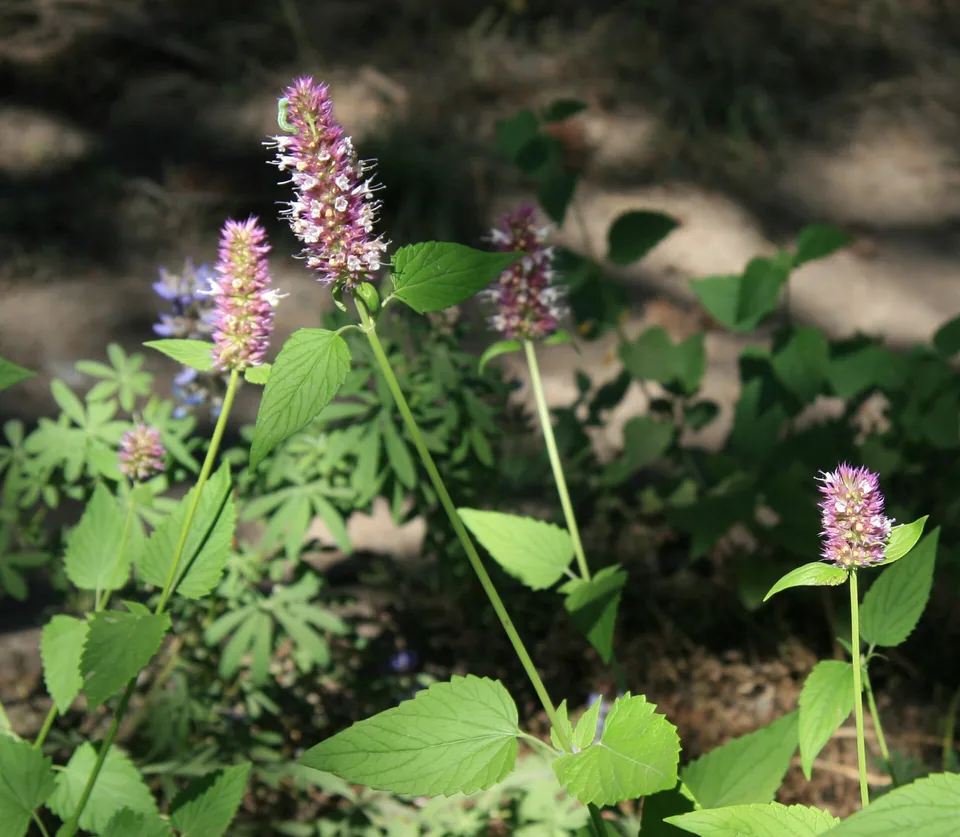
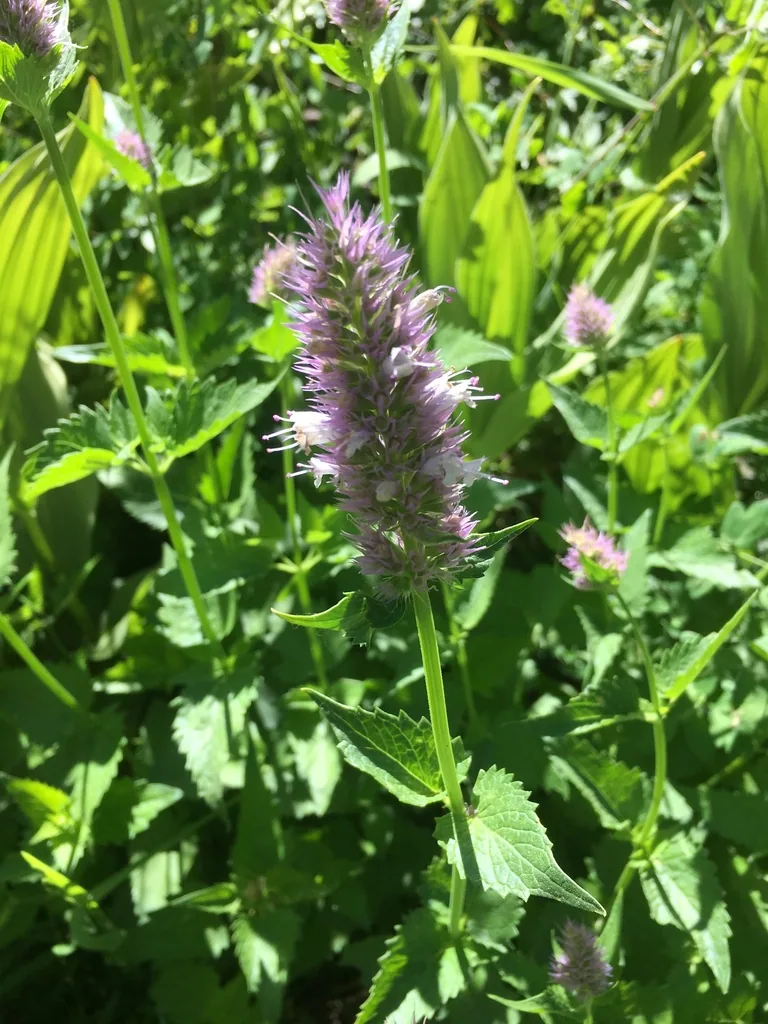

How to Grow and Care for Nettleleaf giant hyssop
Agastache urticifolia
Written by Emilio Marruso · last checked
At a glance
This perennial gives you more than flowers: its dried flowers and leaves make a herbal tea, and its seeds can be eaten raw or cooked. Give it moderate water and well-drained soil, and it grows to suit its spot, staying 1 ft tall in sun or reaching up to 5 ft in shade. You can easily make more plants from seed, division or cuttings.
- Water
Moderate water; it does not handle drought
What the sources say (3)
Watering: Moderate water; not drought tolerant
Shade tolerance no shade Water moderate Hardiness Zone 8+
— Giant Hyssop (Agastache urticifolia) — Practical Plants [6] Soil pH acid, neutral, alkaline Drainage well drained Tolerates Nutritionally Poor Soil No Drought intolerant
— Giant Hyssop (Agastache urticifolia) — Practical Plants [6] Horsemint prefers moist soils on open hillsides, in canyons and mountain valleys, from 6,000-10,000 feet in elevation. It is often found along streambanks. Horsemint is not drought tolerant.
— Horsemint | USU [1] - Cold
Survives winters down to 10 °F (−12.2 °C)
Hardy in cold winters · USDA 8 · RHS H5 · Z8
What the sources say (1)
Hardiness, coldest zone: 8 [winter low −12.2 to −6.7 °C (10 to 20 °F)]
Water moderate Hardiness Zone 8+ Soil textures sandy, loamy
— Giant Hyssop (Agastache urticifolia) — Practical Plants [6] - Soil
Well-drained soil
What the sources say (2)
Watering notes: Prefers well-drained soil
Horsemint is not drought tolerant. Soils: Sandy or loamy soils, well-drained.
— Horsemint | USU [1] Prefers a warm sunny sheltered position and a well-drained soil. Succeeds in most soils. The flowers are very attractive to bees and butterflies.
— Agastache urticifolia - Useful Temperate Plants [5] - Harvest
Dry the flowers and leaves for herbal tea; the seeds can be eaten raw or cooked
- Size
1 ft tall in sun, up to 5 ft in shade
What the sources say (1)
Mature height: up to 152 cm (5 ft) in shade; about 30 cm (1 ft) in sun
Horsemint grows up to 5 feet tall in shade, up to about 1 foot tall in the sun.
— Horsemint | USU [1] - Propagation
From seed, by dividing the clump, or from cuttings taken at the base
What the sources say (3)
Propagation: Seed, division, basal cuttings
Seed - sow spring in a greenhouse and only just cover the seed. The seed usually germinates in 1 - 3 months at 13°c [3] .
— Giant Hyssop (Agastache urticifolia) — Practical Plants [6] Division in spring. Fairly simple, if large divisions are used it is possible to plant them straight out into their permanent positions.
— Giant Hyssop (Agastache urticifolia) — Practical Plants [6] Basal cuttings of young shoots in spring [2] . Harvest the young shoots when they are about 10 - 15cm tall
— Giant Hyssop (Agastache urticifolia) — Practical Plants [6]
Overview
Agastache urticifolia is an erect herbaceous perennial forming a clump of branched stems up to 200 cm [79 in] tall from a slowly spreading rhizomatous rootstock. [5] It prefers moist, well-drained sandy or loamy soils and is not drought tolerant. [1] It is propagated by seed, division in spring, or basal cuttings of young shoots in spring. [6]
This record is incomplete: the sources we read do not cover every field yet.
Not yet covered by our sources: Hardiness, warmest zone, Pruning
Nettleleaf giant hyssop care
Measurements in square brackets are our conversion into the other unit system; the quoted text is unchanged.
How to water Nettleleaf giant hyssop
Watering
Moderate water; not drought tolerant
What the sources say (3)
Shade tolerance
no shade
Water
moderate
Hardiness
Zone 8+Soil pH
acid, neutral, alkaline
Drainage
well drained
Tolerates Nutritionally Poor Soil
No
Drought
intolerantHorsemint prefers moist soils on open hillsides, in canyons and mountain valleys, from 6,000-10,000 feet in elevation. It is often found along streambanks. Horsemint is not drought tolerant.Watering notes
Prefers well-drained soil
What the sources say (2)
Horsemint is not drought tolerant.
Soils: Sandy or loamy soils, well-drained.Prefers a warm sunny sheltered position and a well-drained soil. Succeeds in most soils.
The flowers are very attractive to bees and butterflies.How much light Nettleleaf giant hyssop needs
The sources give different values depending on region, zone or growing conditions.
What each source says
According to Practical Plants: Full sun; no shade
According to Utah State University Extension (wild plants): Shade or sun
According to Temperate Plants Database: Warm sunny sheltered position
What the sources say (3)
According to Practical Plants: Light
full sun
Shade tolerance
no shade
Water
moderateAccording to Utah State University Extension (wild plants): Horsemint grows up to 5 feet tall in shade, up to about 1 foot tall in the sun. It flowers in the summer, seeds ripen in September.According to Temperate Plants Database: Prefers a warm sunny sheltered position and a well-drained soil. Succeeds in most soils.
The flowers are very attractive to bees and butterflies.How much cold Nettleleaf giant hyssop can take
Hardiness, coldest zone
8 [winter low −12.2 to −6.7 °C (10 to 20 °F)]
What the sources say (1)
Water
moderate
Hardiness
Zone 8+
Soil textures
sandy, loamyHardiness, warmest zone
Not stated in the sources we read.
How to propagate Nettleleaf giant hyssop
Seed, division, basal cuttings
What the sources say (3)
Seed - sow spring in a greenhouse and only just cover the seed. The seed usually germinates in 1 - 3 months at 13°c [3] .Division in spring. Fairly simple, if large divisions are used it is possible to plant them straight out into their permanent positions.Basal cuttings of young shoots in spring [2] . Harvest the young shoots when they are about 10 - 15cm tallHow to grow Nettleleaf giant hyssop
The plant
Life cycle
perennial
What the sources say (1)
Life Span: Perennial
Origin: Native
Growth Characteristics: Horsemint grows up to 5 feet tall in shadeMature height
up to 152 cm (5 ft) in shade; about 30 cm (1 ft) in sun
What the sources say (1)
Horsemint grows up to 5 feet tall in shade, up to about 1 foot tall in the sun.Remedies
The sources we checked give no remedies for this plant.
Calendar
Sowing
The sources give different values depending on region, zone or growing conditions.
What each source says
According to Practical Plants: Spring (greenhouse)
According to USDA NRCS Pullman Plant Materials Center (container plug production): January (greenhouse)
What the sources say (4)
According to Practical Plants: Seed - sow spring in a greenhouse and only just cover the seed. The seed usually germinates in 1 - 3 months at 13°c [3] .According to USDA NRCS Pullman Plant Materials Center (container plug production): In January seed is sown in the greenhouse in 10 cu. in. Ray Leach Super cell conetainers filled with Sunshine #4 and covered lightly.Seed - sow spring in a greenhouse and only just cover the seed. The seed usually germinates in 1 - 3 months at 13°c [3] .In January seed is sown in the greenhouse in 10 cu. in. Ray Leach Super cell conetainers filled with Sunshine #4 and covered lightly.Planting
The sources give different values depending on region, zone or growing conditions.
What each source says
According to Practical Plants: Late spring or early summer
According to USDA NRCS Pullman Plant Materials Center (outdoor-grown plugs): Fall, or the following spring
According to University of Washington ESRM 412 protocol (nursery stock): Fall to early winter
What the sources say (5)
According to Practical Plants: grow them on in the greenhouse for their first year. Plant out in late spring or early summer[K].According to USDA NRCS Pullman Plant Materials Center (outdoor-grown plugs): Plants grown outdoors are not ready to be transplanted to the field the same spring and must be held for fall planting or overwintered for transplanting the following spring.According to University of Washington ESRM 412 protocol (nursery stock): Harvest: Mid-October3 Storage Conditions: Outplanted in fall to early wintergrow them on in the greenhouse for their first year. Plant out in late spring or early summer[K].Plants grown outdoors are not ready to be transplanted to the field the same spring and must be held for fall planting or overwintered for transplanting the following spring.Harvest
The sources give different values depending on region, zone or growing conditions.
What each source says
According to USDA NRCS Pullman Plant Materials Center: August (seed)
According to Utah State University Extension: Seeds ripen in September
What the sources say (3)
According to USDA NRCS Pullman Plant Materials Center: Seed is collected in August when the inflorescence is dry and the seeds are hard. Small amounts are collected by shaking over a paper bag.According to Utah State University Extension: Horsemint grows up to 5 feet tall in shade, up to about 1 foot tall in the sun. It flowers in the summer, seeds ripen in September.Seed is collected in August when the inflorescence is dry and the seeds are hard. Small amounts are collected by shaking over a paper bag.Pruning
Not stated in the sources we read.
Months as given by the sources, which are mostly from the United States (northern hemisphere). In the southern hemisphere they shift by about six months.
Edibility
Reported by the source, quoted verbatim. Do not eat a plant on the basis of this page alone: identification mistakes can be dangerous.
A decoction is taken internally in the treatment of rheumatism, measles, stomach pains and colds. Externally, a poultice of the mashed leaves is applied to swellings. Seeds cam be eaten raw or cooked.
[1]The seed is very small and fiddly to use[K]. The dried flowers and leaves are used to make a herbal tea [7] .
[6]
Indicative values
Values from a secondary source, not checked word for word like the rest of this page. Use them as a starting point.
- Soil pH
- 6-7.5Indicative value, adapt it to your climate · Secondary source
- Care level
- MediumIndicative value, adapt it to your climate · Secondary source
- Growth rate
- LowIndicative value, adapt it to your climate · Secondary source
- Pruning
- May, June, JulyIndicative value, adapt it to your climate · Secondary source
Similar plants
- Hyssop Agastache foeniculum
- Hyssop Agastache rupestris
- Korean Mint Agastache rugosa
- Mosquito plant Agastache cana
- Purple giant hyssop Agastache scrophulariifolia
- Aaron's Beard Hypericum calycinum
- Abies grandis Abies grandis
- Abraham Trachystemon orientalis
Sources
Every value above is quoted from these documents. Links lead to the original publisher.
- Horsemint | USU · extension.usu.edu, consulted
- Lamiaceae (Agastache) — Reforestation, Nurseries and Genetics Resources · rngr.net, consulted
- Plant Propagation Protocol for Agastache uticifolia · courses.washington.edu, consulted
-  · env.gov.bc.ca, consulted
- Agastache urticifolia - Useful Temperate Plants · temperate.theferns.info, consulted
- Giant Hyssop (Agastache urticifolia) — Practical Plants · practicalplants.org, consulted
Written by Emilio Marruso · last checked