
How to Grow and Care for Purple giant hyssop
Agastache scrophulariifolia
Written by Emilio Marruso · last checked
At a glance
This agastache is easy to welcome into your garden: it grows in full sun or partial shade and likes soil that stays moist to medium-moist. In autumn, scatter the seeds right on the soil surface, because they need light and 60 days of cold to sprout. Later on, you can also divide the clumps to make new plants to share or spread around.
- Sun
Full sun to partial shade
What the sources say (5)
Light: Full sun to partial shade
According to Friends of the Wildflower Garden: Habitat: Purple Giant Hyssop grows in open woods and thickets in soils that are sandy to loamy, with wet-mesic to dry-mesic moisture conditions and full sun.
— Purple Giant Hyssop, Agastache scrophulariifolia (Willd.) Kuntze [4] According to Minnesota Wildflowers: Life cycle: | perennial | Origin: | native | Habitat: | part shade, sun; woods
— Agastache scrophulariifolia (Purple Giant Hyssop): Minnesota Wildflowers [2] Habitat: Purple Giant Hyssop grows in open woods and thickets in soils that are sandy to loamy, with wet-mesic to dry-mesic moisture conditions and full sun.
— Purple Giant Hyssop, Agastache scrophulariifolia (Willd.) Kuntze [4] Life cycle: | perennial | Origin: | native | Habitat: | part shade, sun; woods
— Agastache scrophulariifolia (Purple Giant Hyssop): Minnesota Wildflowers [2] Growing Conditions Light Requirement: Sun , Shade Soil Moisture: Moist Soil Description: Rich, moist soils
— Lady Bird Johnson Wildflower Center - The University of Texas at Austin [1] - Water
Keep the soil moist to medium-moist
What the sources say (2)
Watering: Moist to mesic soil
Growing Conditions Light Requirement: Sun , Shade Soil Moisture: Moist Soil Description: Rich, moist soils
— Lady Bird Johnson Wildflower Center - The University of Texas at Austin [1] Habitat: Purple Giant Hyssop grows in open woods and thickets in soils that are sandy to loamy, with wet-mesic to dry-mesic moisture conditions and full sun.
— Purple Giant Hyssop, Agastache scrophulariifolia (Willd.) Kuntze [4] - Propagation
Grow new plants from seed or by dividing the clumps
What the sources say (1)
Propagation: Seed (cold stratification); division of clonal plants
Seeds are small and need light and 60 days of cold stratification to germinate.
— Purple Giant Hyssop, Agastache scrophulariifolia (Willd.) Kuntze [4] - Sowing
Sow in autumn on the soil surface, uncovered: seeds need light and 60 days of cold
What the sources say (1)
Sowing: Autumn, sown on the soil surface (needs light and 60 days of cold stratification)
Seeds are small and need light and 60 days of cold stratification to germinate. Put them on the ground or let them fall from the plant in the Autumn and let Winter do the work.
— Purple Giant Hyssop, Agastache scrophulariifolia (Willd.) Kuntze [4]
Overview
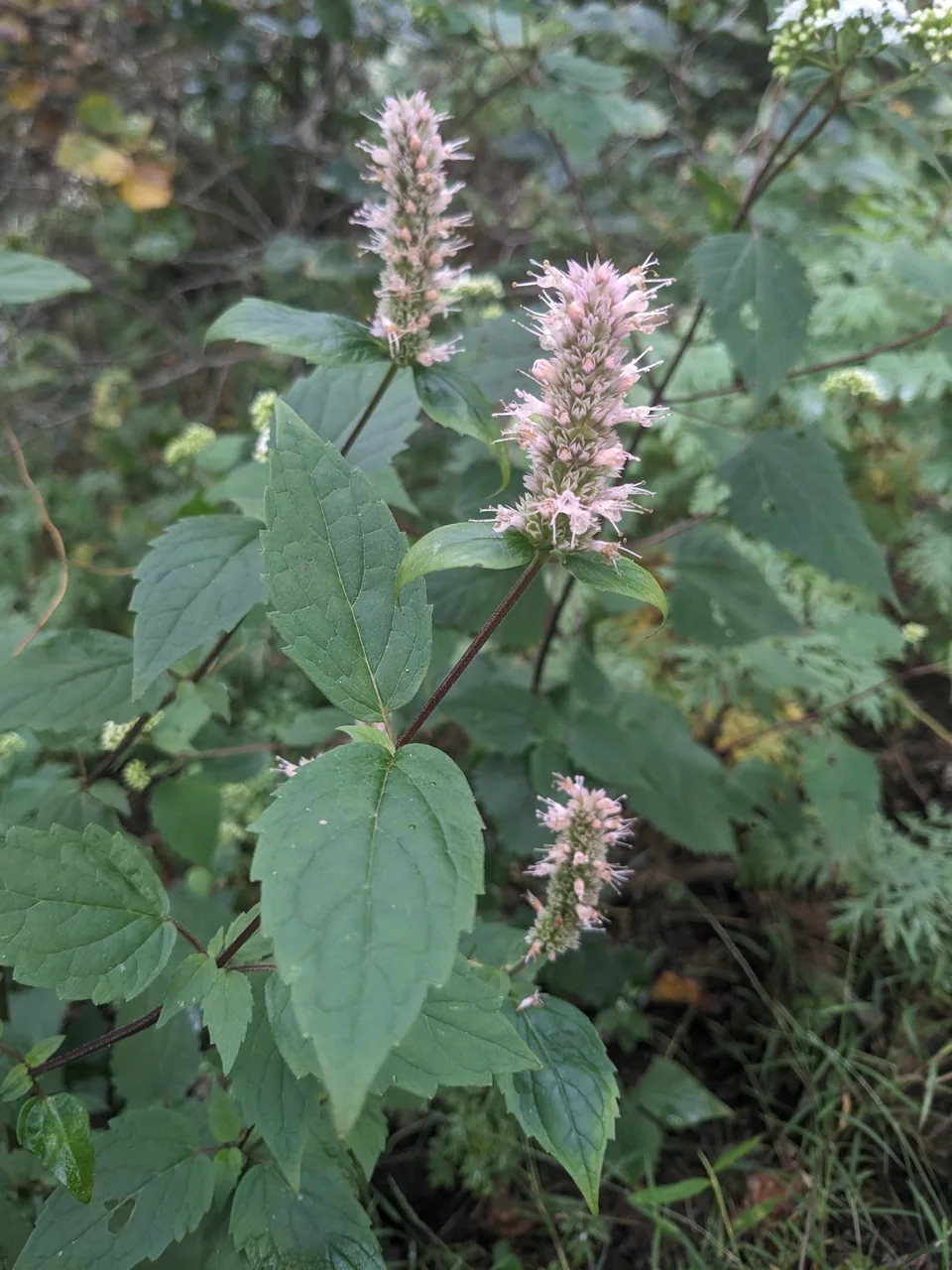
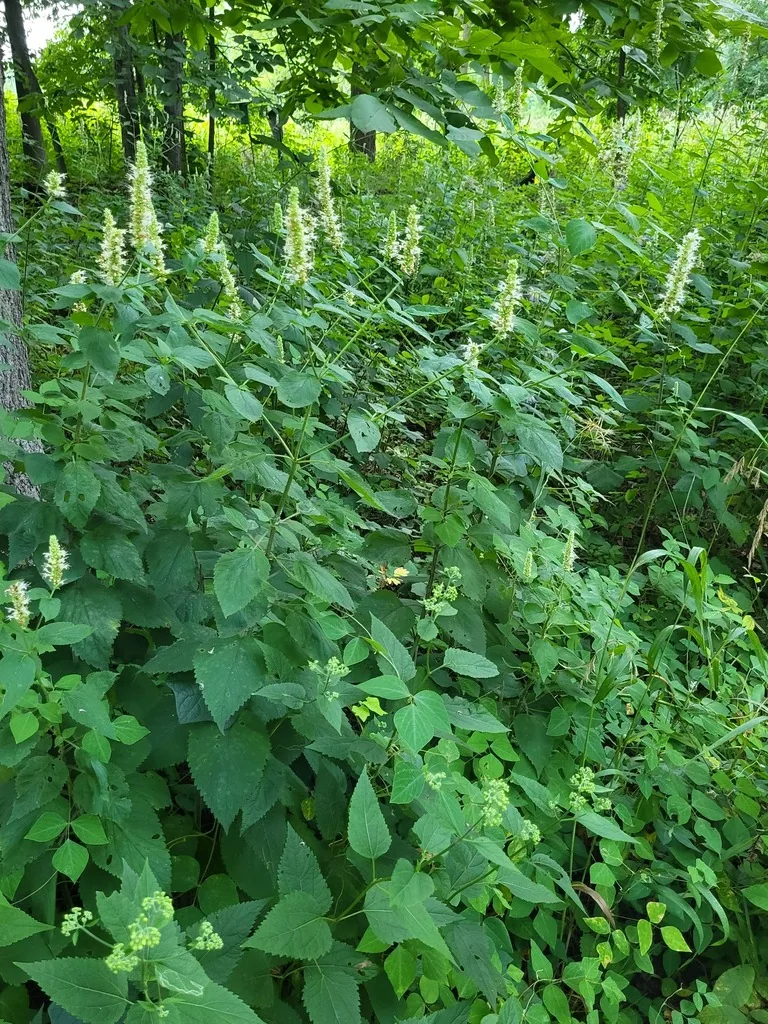
Purple giant hyssop is a native North American perennial of the mint family with square stems and spikes of small whitish to pale purple flowers in mid to late summer. [2] It grows in rich, moist soils of open woods, thickets and woodland edges. [1][4]
This record is incomplete: the sources we read do not cover every field yet.
Not yet covered by our sources: Hardiness, coldest zone, Hardiness, warmest zone, Pruning
Purple giant hyssop care
How to water Purple giant hyssop
Moist to mesic soil
What the sources say (2)
Growing Conditions
Light Requirement: Sun , Shade
Soil Moisture: Moist
Soil Description: Rich, moist soilsHabitat: Purple Giant Hyssop grows in open woods and thickets in soils that are sandy to loamy, with wet-mesic to dry-mesic moisture conditions and full sun.How much light Purple giant hyssop needs
Full sun to partial shade
What each source says
According to Friends of the Wildflower Garden: Full sun; tolerates partial shade
According to Minnesota Wildflowers: Part shade, sun
What the sources say (5)
According to Friends of the Wildflower Garden: Habitat: Purple Giant Hyssop grows in open woods and thickets in soils that are sandy to loamy, with wet-mesic to dry-mesic moisture conditions and full sun.According to Minnesota Wildflowers: Life cycle: | perennial
| Origin: | native
| Habitat: | part shade, sun; woodsHabitat: Purple Giant Hyssop grows in open woods and thickets in soils that are sandy to loamy, with wet-mesic to dry-mesic moisture conditions and full sun.Life cycle: | perennial
| Origin: | native
| Habitat: | part shade, sun; woodsGrowing Conditions
Light Requirement: Sun , Shade
Soil Moisture: Moist
Soil Description: Rich, moist soilsHow much cold Purple giant hyssop can take
Hardiness, coldest zone
Not stated in the sources we read.
Hardiness, warmest zone
Not stated in the sources we read.
How to propagate Purple giant hyssop
Seed (cold stratification); division of clonal plants
What the sources say (1)
Seeds are small and need light and 60 days of cold stratification to germinate.Remedies
Each remedy shows what official sources say about it; traditional remedies without an official source are marked as such. Harmful ones are listed so you know to avoid them.
Treating the plant
root rot
well-drained soil Not verified
Traditional remedy, not verified by an official source.
How: Make sure the soil drains well; the plant tolerates slightly moist to slightly dry conditions but can suffer from root rot.
Getting rid of it
unwanted self-seeding
seed-head removal Not verified
Traditional remedy, not verified by an official source.
How: Remove the seed heads in formal flower beds to prevent unwanted self-seeding.
Calendar
Sowing
Autumn, sown on the soil surface (needs light and 60 days of cold stratification)
What the sources say (1)
Seeds are small and need light and 60 days of cold stratification to germinate. Put them on the ground or let them fall from the plant in the Autumn and let Winter do the work.Pruning
Not stated in the sources we read.
Months as given by the sources, which are mostly from the United States (northern hemisphere). In the southern hemisphere they shift by about six months.
Indicative values
Values from a secondary source, not checked word for word like the rest of this page. Use them as a starting point.
- Mature height
- 60-150 cm [24–59 in]Indicative value, adapt it to your climate · Secondary source
- Hours of sun
- 6-8 hoursIndicative value, adapt it to your climate · Secondary source
- Drought tolerant
- yesIndicative value, adapt it to your climate · Secondary source
- Soil
- Clay, Sand, LoamIndicative value, adapt it to your climate · Secondary source
- Soil pH
- 6-7.5Indicative value, adapt it to your climate · Secondary source
- Care level
- MediumIndicative value, adapt it to your climate · Secondary source
- Growth rate
- LowIndicative value, adapt it to your climate · Secondary source
- Pruning
- AprilIndicative value, adapt it to your climate · Secondary source
Similar plants
- Hyssop Agastache foeniculum
- Hyssop Agastache rupestris
- Korean Mint Agastache rugosa
- Mosquito plant Agastache cana
- Nettleleaf giant hyssop Agastache urticifolia
- Abies grandis Abies grandis
- Abraham Trachystemon orientalis
- Abyssinian banana Ensete ventricosum
Sources
Every value above is quoted from these documents. Links lead to the original publisher.
- Lady Bird Johnson Wildflower Center - The University of Texas at Austin · wildflower.org, consulted
- Agastache scrophulariifolia (Purple Giant Hyssop): Minnesota Wildflowers · minnesotawildflowers.info, consulted
- Agastache scrophulariifolia (purple giant-hyssop): Go Botany · gobotany.nativeplanttrust.org, consulted
- Purple Giant Hyssop, Agastache scrophulariifolia (Willd.) Kuntze · friendsofeloisebutler.org, consulted
Written by Emilio Marruso · last checked