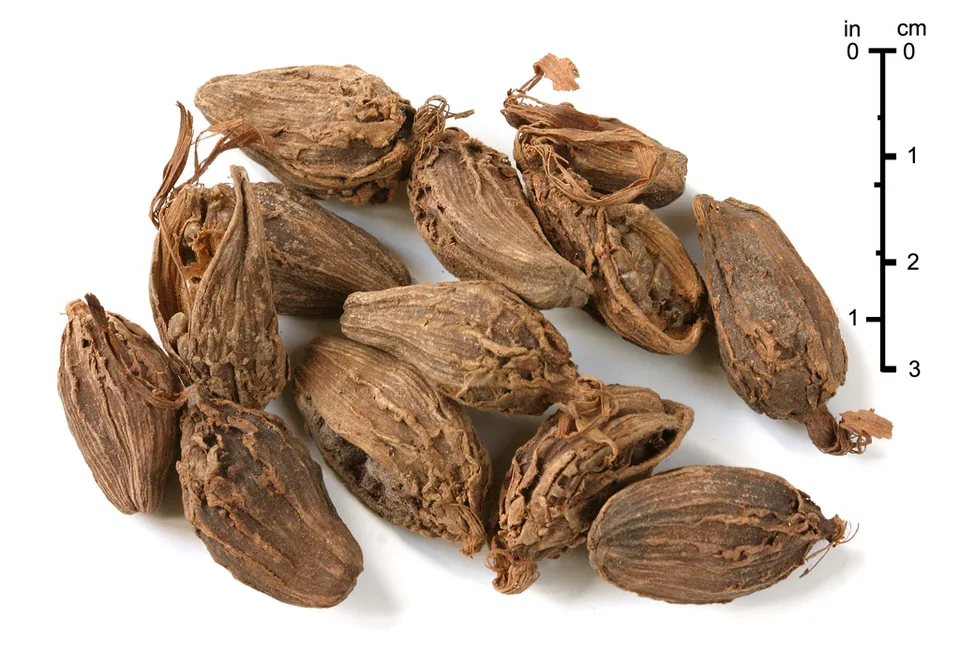

Cómo cultivar y cuidar Cardamomo negro
Amomum subulatum
Escrito por Emilio Marruso · última revisión
De un vistazo
El cardamomo negro adora la sombra: crece desde la luz tamizada hasta la sombra profunda, en el jardín o en maceta, incluso en interior. Mantén la tierra siempre húmeda y ten paciencia, porque pueden pasar hasta cuatro años antes de la primera cosecha. Entonces lo recogerás a mano a finales de otoño, y sus semillas darán sabor a sopas, guisos, lentejas y currys.
- Sol
De luz tamizada a sombra profunda
Qué dicen las fuentes (1)
Luz: Luz filtrada a sombra profunda
Light: Dappled Sunlight (Shade through upper canopy all day) Deep shade (Less than 2 hours to no direct sunlight)
— Amomum subulatum (Bengal Cardamom, Big Cardamon, Black Cardamom, Brown Cardamom, Greater Cardamon, Hill Cardamon, Indian Cardamom, Nepal Cardamom, Winged Cardamom) | North Carolina Extension Gardener Plant Toolbox [1] - Riego
Mantén la tierra siempre húmeda; no dejes que se seque nunca
Qué dicen las fuentes (1)
Riego: Mantén uniformemente húmedo y nunca dejes que se seque
The soil needs to be kept evenly moist, and never allowed to dry out.
— Amomum subulatum (Bengal Cardamom, Big Cardamon, Black Cardamom, Brown Cardamom, Greater Cardamon, Hill Cardamon, Indian Cardamom, Nepal Cardamom, Winged Cardamom) | North Carolina Extension Gardener Plant Toolbox [1] - Frío
Aguanta inviernos de hasta −6,7 °C (20 °F)
Rústica en inviernos normales · USDA 9a · RHS H4 · Z9
Qué dicen las fuentes (2)
Rusticidad, zona más fría: 9a [mínima invernal de −6,7 a −3,9 °C (de 20 a 25 °F)]
USDA Plant Hardiness Zone: 9a, 9b, 10a, 10b, 11a, 11b
— Amomum subulatum (Bengal Cardamom, Big Cardamon, Black Cardamom, Brown Cardamom, Greater Cardamon, Hill Cardamon, Indian Cardamom, Nepal Cardamom, Winged Cardamom) | North Carolina Extension Gardener Plant Toolbox [1] Rusticidad, zona más cálida: 11b [mínima invernal de 7,2 a 10 °C (de 45 a 50 °F)]
USDA Plant Hardiness Zone: 9a, 9b, 10a, 10b, 11a, 11b
— Amomum subulatum (Bengal Cardamom, Big Cardamon, Black Cardamom, Brown Cardamom, Greater Cardamon, Hill Cardamon, Indian Cardamom, Nepal Cardamom, Winged Cardamom) | North Carolina Extension Gardener Plant Toolbox [1] - Suelo
Suelo ácido, pH 6,0 o inferior
Qué dicen las fuentes (1)
pH del suelo, máximo: 6.0
Soil Texture: High Organic Matter Loam (Silt) Sand Soil pH: Acid (<6.0)
— Amomum subulatum (Bengal Cardamom, Big Cardamon, Black Cardamom, Brown Cardamom, Greater Cardamon, Hill Cardamon, Indian Cardamom, Nepal Cardamom, Winged Cardamom) | North Carolina Extension Gardener Plant Toolbox [1] - Distancia
46 cm entre plantas
Qué dicen las fuentes (1)
Distancia de plantación: 45.7 cm (18 in)
To grow from seed, plant 1 to 2 inches deep and 18 inches apart, and fertilize with a high nitrogen, low potassium fertilizer.
— Amomum subulatum (Bengal Cardamom, Big Cardamon, Black Cardamom, Brown Cardamom, Greater Cardamon, Hill Cardamon, Indian Cardamom, Nepal Cardamom, Winged Cardamom) | North Carolina Extension Gardener Plant Toolbox [1] - Abonado
Usa un abono rico en nitrógeno y pobre en potasio
Qué dicen las fuentes (1)
Abonos minerales: Fertilizante con alto contenido de nitrógeno y bajo de potasio
To grow from seed, plant 1 to 2 inches deep and 18 inches apart, and fertilize with a high nitrogen, low potassium fertilizer.
— Amomum subulatum (Bengal Cardamom, Big Cardamon, Black Cardamom, Brown Cardamom, Greater Cardamon, Hill Cardamon, Indian Cardamom, Nepal Cardamom, Winged Cardamom) | North Carolina Extension Gardener Plant Toolbox [1] - Cosecha
Recoge a mano a finales de otoño, cinco meses después de la floración; la primera cosecha puede tardar hasta 4 años
Qué dicen las fuentes (4)
Cosecha: Finales de otoño; la fructificación tarda unos cinco meses desde la floración, y pueden pasar hasta cuatro años antes de la primera cosecha
It takes up to four years to receive a harvest from the plant. Fruiting takes about five months from flowering, making harvesting time in late fall.
— Amomum subulatum (Bengal Cardamom, Big Cardamon, Black Cardamom, Brown Cardamom, Greater Cardamon, Hill Cardamon, Indian Cardamom, Nepal Cardamom, Winged Cardamom) | North Carolina Extension Gardener Plant Toolbox [1] Cómo cosechar: recogido a mano, a fines de otoño, unos cinco meses después de la floración
Fruiting takes about five months from flowering, making harvesting time in late fall.
— Amomum subulatum (Bengal Cardamom, Big Cardamon, Black Cardamom, Brown Cardamom, Greater Cardamon, Hill Cardamon, Indian Cardamom, Nepal Cardamom, Winged Cardamom) | North Carolina Extension Gardener Plant Toolbox [1] Cardamom is harvested by hand, and is the world’s 3rd most expensive spice per weight.
— Amomum subulatum (Bengal Cardamom, Big Cardamon, Black Cardamom, Brown Cardamom, Greater Cardamon, Hill Cardamon, Indian Cardamom, Nepal Cardamom, Winged Cardamom) | North Carolina Extension Gardener Plant Toolbox [1] Años hasta el primer fruto: hasta 4 años para la primera cosecha
It takes up to four years to receive a harvest from the plant.
— Amomum subulatum (Bengal Cardamom, Big Cardamon, Black Cardamom, Brown Cardamom, Greater Cardamon, Hill Cardamon, Indian Cardamom, Nepal Cardamom, Winged Cardamom) | North Carolina Extension Gardener Plant Toolbox [1] - Plagas
Pulgón, cochinilla algodonosa, cochinillas, trips, orugas y barrenadores
Qué dicen las fuentes (1)
Plagas: barrenador del tallo, mosca de los brotes, crisopas, barrenador de la fruta, pulgones, cochinillas, orugas, escamas, saltamontes, gorgojo del rizoma, trips
Susceptible to stem borer, shoot fly, lacewings, fruit borer, aphids, mealy bugs, caterpillars, scale, grasshoppers, rhizome weevil, and thrips.
— Amomum subulatum (Bengal Cardamom, Big Cardamon, Black Cardamom, Brown Cardamom, Greater Cardamon, Hill Cardamon, Indian Cardamom, Nepal Cardamom, Winged Cardamom) | North Carolina Extension Gardener Plant Toolbox [1] - Atención
Fuera del trópico o en maceta puede no florecer ni dar fruto, pero sigue siendo una bonita planta de hoja
- Tamaño
Hasta 1,5 m de alto
Qué dicen las fuentes (1)
Altura adulta: hasta 152 cm (5 pies)
Stem Description: Red stem grow up to 5 feet tall. After a few years the old stems die down.
— Amomum subulatum (Bengal Cardamom, Big Cardamon, Black Cardamom, Brown Cardamom, Greater Cardamon, Hill Cardamon, Indian Cardamom, Nepal Cardamom, Winged Cardamom) | North Carolina Extension Gardener Plant Toolbox [1] - Multiplicación
Divide los tallos subterráneos o siembra semillas
Qué dicen las fuentes (1)
Propagación: División de rizomas; semilla
Propagation is by division of the rhizomes or from seeds. Seed germination is poor,
— Amomum subulatum (Bengal Cardamom, Big Cardamon, Black Cardamom, Brown Cardamom, Greater Cardamon, Hill Cardamon, Indian Cardamom, Nepal Cardamom, Winged Cardamom) | North Carolina Extension Gardener Plant Toolbox [1] - Siembra
Siembra las semillas a 2,5–5 cm de profundidad
Qué dicen las fuentes (1)
Profundidad de siembra: 2.5-5 cm (1 a 2 pulgadas)
To grow from seed, plant 1 to 2 inches deep and 18 inches apart, and fertilize with a high nitrogen, low potassium fertilizer.
— Amomum subulatum (Bengal Cardamom, Big Cardamon, Black Cardamom, Brown Cardamom, Greater Cardamon, Hill Cardamon, Indian Cardamom, Nepal Cardamom, Winged Cardamom) | North Carolina Extension Gardener Plant Toolbox [1] - Maceta
Crece en maceta, incluso en interior
Qué dicen las fuentes (2)
En maceta: Sí
In moderate climates, cardamom can be planted in containers and brought into a greenhouse,
— Amomum subulatum (Bengal Cardamom, Big Cardamon, Black Cardamom, Brown Cardamom, Greater Cardamon, Hill Cardamon, Indian Cardamom, Nepal Cardamom, Winged Cardamom) | North Carolina Extension Gardener Plant Toolbox [1] En interior: Sí
Whole Plant Traits: Plant Type: Edible Herbaceous Perennial Houseplant
— Amomum subulatum (Bengal Cardamom, Big Cardamon, Black Cardamom, Brown Cardamom, Greater Cardamon, Hill Cardamon, Indian Cardamom, Nepal Cardamom, Winged Cardamom) | North Carolina Extension Gardener Plant Toolbox [1]
Resumen
El cardamomo negro es una planta de especias de la familia del jengibre, nativa de las laderas del Himalaya de Sikkim, India y Nepal. [1] Crece mejor en condiciones tropicales cálidas, húmedas y sombreadas, y se puede mantener en contenedores en climas moderados. [1]
Citado en inglés, como en la fuente.
Esta ficha está incompleta: las fuentes consultadas aún no cubren todos los campos.
Aún no cubierto por nuestras fuentes: Siembra / Plantación
Cuidados
Riego
Mantén uniformemente húmedo y nunca dejes que se seque
Qué dicen las fuentes (1)
The soil needs to be kept evenly moist, and never allowed to dry out.Luz
Luz filtrada a sombra profunda
Qué dicen las fuentes (1)
Light:
Dappled Sunlight (Shade through upper canopy all day)
Deep shade (Less than 2 hours to no direct sunlight)Clima y frío
Rusticidad, zona más fría
9a [mínima invernal de −6,7 a −3,9 °C (de 20 a 25 °F)]
Qué dicen las fuentes (1)
USDA Plant Hardiness Zone:
9a, 9b, 10a, 10b, 11a, 11bRusticidad, zona más cálida
11b [mínima invernal de 7,2 a 10 °C (de 45 a 50 °F)]
Qué dicen las fuentes (1)
USDA Plant Hardiness Zone:
9a, 9b, 10a, 10b, 11a, 11bSuelo
6.0
Qué dicen las fuentes (1)
Soil Texture:
High Organic Matter
Loam (Silt)
Sand
Soil pH:
Acid (<6.0)Dónde cultivarla
En interior
Sí
Qué dicen las fuentes (1)
Whole Plant Traits:
Plant Type:
Edible
Herbaceous Perennial
HouseplantEn maceta
Sí
Qué dicen las fuentes (1)
In moderate climates, cardamom can be planted in containers and brought into a greenhouse,Distancia de plantación
45.7 cm (18 in)
Qué dicen las fuentes (1)
To grow from seed, plant 1 to 2 inches deep and 18 inches apart, and fertilize with a high nitrogen, low potassium fertilizer.Propagación
División de rizomas; semilla
Qué dicen las fuentes (1)
Propagation is by division of the rhizomes or from seeds. Seed germination is poor,Cultivo
La planta
Ciclo de vida
perenne
Qué dicen las fuentes (1)
Life Cycle: Perennial Recommended Propagation Strategy: Division Seed Country Or Region Of Origin: Nepal to Central ChinaFamilia
Zingiberaceae
Qué dicen las fuentes (1)
Genus: Amomum Species: subulatum Family: Zingiberaceae Uses (Ethnobotany): Cardamom was used in food preparation as far back as the sixth century BCAltura adulta
hasta 152 cm (5 pies)
Qué dicen las fuentes (1)
Stem Description: Red stem grow up to 5 feet tall. After a few years the old stems die down.Años hasta el primer fruto
hasta 4 años para la primera cosecha
Qué dicen las fuentes (1)
It takes up to four years to receive a harvest from the plant.Siembra y crecimiento
Profundidad de siembra
2.5-5 cm (1 a 2 pulgadas)
Qué dicen las fuentes (1)
To grow from seed, plant 1 to 2 inches deep and 18 inches apart, and fertilize with a high nitrogen, low potassium fertilizer.Cosecha y conservación
Cómo cosechar
recogido a mano, a fines de otoño, unos cinco meses después de la floración
Qué dicen las fuentes (2)
Fruiting takes about five months from flowering, making harvesting time in late fall.Cardamom is harvested by hand, and is the world’s 3rd most expensive spice per weight.Plagas y enfermedades
Plagas
barrenador del tallo, mosca de los brotes, crisopas, barrenador de la fruta, pulgones, cochinillas, orugas, escamas, saltamontes, gorgojo del rizoma, trips
Qué dicen las fuentes (1)
Susceptible to stem borer, shoot fly, lacewings, fruit borer, aphids, mealy bugs, caterpillars, scale, grasshoppers, rhizome weevil, and thrips.Abonado
Abonos minerales
Fertilizante con alto contenido de nitrógeno y bajo de potasio
Qué dicen las fuentes (1)
To grow from seed, plant 1 to 2 inches deep and 18 inches apart, and fertilize with a high nitrogen, low potassium fertilizer.Problemas
Insectos plaga
Síntoma: Susceptible al barrenador del tallo, mosca de los brotes, crisopas, barrenador de la fruta, pulgones, cochinillas, orugas, escamas, saltamontes, gorgojo del rizoma y trips.
Qué dicen las fuentes (1)
Susceptible to stem borer, shoot fly, lacewings, fruit borer, aphids, mealy bugs, caterpillars, scale, grasshoppers, rhizome weevil, and thrips.
— Amomum subulatum (Bengal Cardamom, Big Cardamon, Black Cardamom, Brown Cardamom, Greater Cardamon, Hill Cardamon, Indian Cardamom, Nepal Cardamom, Winged Cardamom) | North Carolina Extension Gardener Plant Toolbox [1] Sin floración ni fructificación fuera de los trópicos
Síntoma: Las plantas pueden no florecer o fructificar en climas menos tropicales o en macetas, pero siguen siendo una planta de follaje interesante.
Qué dicen las fuentes (1)
Plants may not flower or fruit when grown in less that tropical climates or when grown in pots,
— Amomum subulatum (Bengal Cardamom, Big Cardamon, Black Cardamom, Brown Cardamom, Greater Cardamon, Hill Cardamon, Indian Cardamom, Nepal Cardamom, Winged Cardamom) | North Carolina Extension Gardener Plant Toolbox [1]
Remedios
Cada remedio indica qué dicen las fuentes oficiales; los remedios tradicionales sin fuente oficial aparecen marcados. Los perjudiciales están para que sepas evitarlos.
Cuidar la planta
nematodos agalladores
Solariza el suelo Fuente oficial, sin prueba independiente
Cómo: Revisa las raíces de las plantas a mitad de temporada o antes si los síntomas indican nematodos; solariza el suelo para reducir las poblaciones de nematodos en el suelo y los niveles de inóculo de muchos otros patógenos.
solarizing soil can reduce nematode populations in the soil and levels of inoculum of many other pathogens
— plantvillage.psu.edu [5]
pudrición del rizoma
Elimina los grupos infectados Fuente oficial, sin prueba independiente
Cómo: todos los grupos infectados, incluidos los rizomas, deben eliminarse y destruirse
all infected clumps, including rhizomes must be removed and destroyed
— plantvillage.psu.edu [5]
Calendario
Siembra
No figura en las fuentes consultadas.
Plantación
No figura en las fuentes consultadas.
Cosecha
Finales de otoño; la fructificación tarda unos cinco meses desde la floración, y pueden pasar hasta cuatro años antes de la primera cosecha
Qué dicen las fuentes (1)
It takes up to four years to receive a harvest from the plant. Fruiting takes about five months from flowering, making harvesting time in late fall.Meses tal como los dan las fuentes, en su mayoría de Estados Unidos (hemisferio norte). En el hemisferio sur se desplazan unos seis meses.
Comestibilidad
Según la fuente, citada textualmente. No comas una planta basándote solo en esta página: los errores de identificación pueden ser peligrosos.
Cardamom seeds are a popular spice used in flavoring spicy and rustic dishes, such as long simmering soups and stews, lentils, rice, pasta, curries, and meat dishes.
[1]Leaves of the plant can also be cooked and consumed as greens, the roots can be boiled and eaten like potatoes, the flowers can be used as a garnish and the pods are used in beef and chicken curries.
[1]Leaves of the plant can also be cooked and consumed as greens, the roots can be boiled and eaten like potatoes, the flowers can be used as a garnish and the pods are used in beef and chicken curries.
[1]Leaves of the plant can also be cooked and consumed as greens, the roots can be boiled and eaten like potatoes, the flowers can be used as a garnish and the pods are used in beef and chicken curries.
[1]Leaves of the plant can also be cooked and consumed as greens, the roots can be boiled and eaten like potatoes, the flowers can be used as a garnish and the pods are used in beef and chicken curries.
[1]
Plantas similares
- Cardamomo Elettaria cardamomum
- Jengibre Zingiber officinale
- Galanga mayor Alpinia galanga
- Jengibre amargo Zingiber zerumbet
- Butterfly Ginger Hedychium coronarium
- Curcuma petiolata Curcuma petiolata
- Myōga Zingiber mioga
- Jengibre hawaiano Hedychium gardnerianum
Fuentes
Cada valor anterior se cita de estos documentos. Los enlaces llevan al editor original.
- Amomum subulatum (Bengal Cardamom, Big Cardamon, Black Cardamom, Brown Cardamom, Greater Cardamon, Hill Cardamon, Indian Cardamom, Nepal Cardamom, Winged Cardamom) | North Carolina Extension Gardener Plant Toolbox · plants.ces.ncsu.edu, consultado
- Brown Cardamom - Amomum subulatum | North Carolina Extension Gardener Plant Toolbox · plants.ces.ncsu.edu, consultado
- Black Cardamom - Amomum subulatum | North Carolina Extension Gardener Plant Toolbox · plants.ces.ncsu.edu, consultado
- Greater Cardamon - Amomum subulatum | North Carolina Extension Gardener Plant Toolbox · plants.ces.ncsu.edu, consultado
- plantvillage.psu.edu · plantvillage.psu.edu
Escrito por Emilio Marruso · última revisión