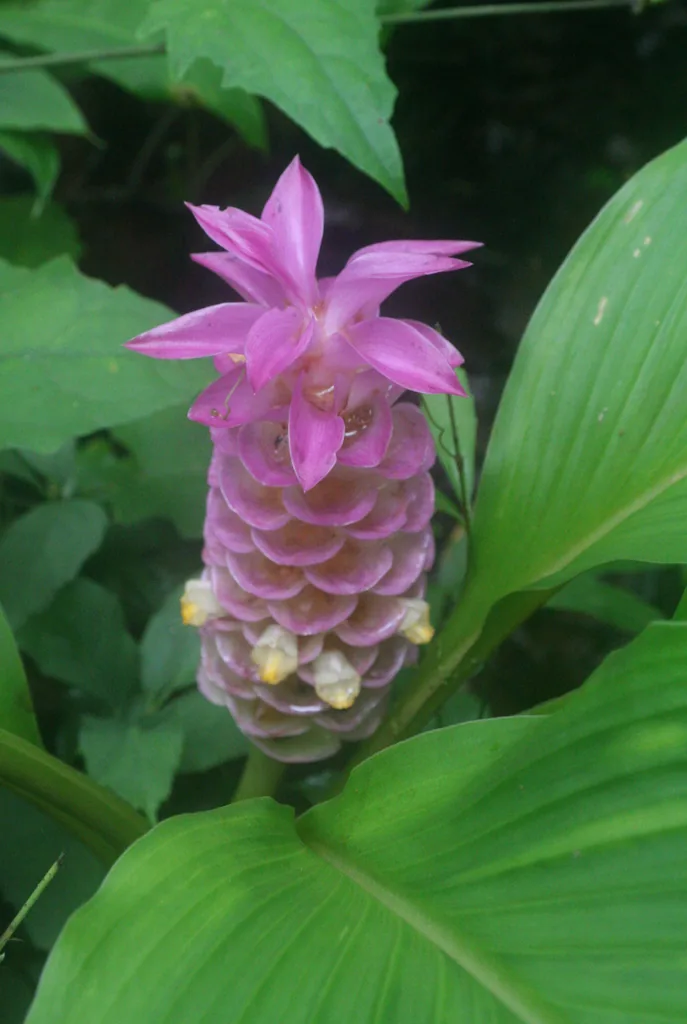
Cómo cultivar y cuidar Curcuma petiolata
Curcuma petiolata
Escrito por Emilio Marruso · última revisión
De un vistazo
Esta cúrcuma es una perenne que florece en verano y se multiplica fácilmente dividiendo sus matas de rizomas. Dale semisombra o sol, con sombra por la tarde en climas cálidos, y mantén la tierra húmeda mientras florece. En invierno descansa: riega menos y corta las hojas cuando amarilleen. Mide 30–91 cm de alto y también crece feliz en maceta.
- Sol
Semisombra o sol; en climas cálidos, sol por la mañana y sombra por la tarde
Qué dicen las fuentes (4)
Luz: Semisombra a sol; sol de la mañana con semisombra por la tarde en climas cálidos.
Carolina del Sur: Due to South Carolina’s hot, humid summers, plant hidden ginger in morning sun with partial shade in the afternoon.
— Hidden Ginger | Home & Garden Information Center [1] Zonas 8 y superiores.: In zones 8 and higher, grow queen lily ginger outside in part-shade to sun (err on the side of shade in hotter climates)
— Queen Lily Ginger (Curcuma petiolata) Flower Care - Birds and Blooms [5] plant hidden ginger in morning sun with partial shade in the afternoon.
— Hidden Ginger | Home & Garden Information Center [1] grow queen lily ginger outside in part-shade to sun (err on the side of shade in hotter climates)
— Queen Lily Ginger (Curcuma petiolata) Flower Care - Birds and Blooms [5] - Riego
Tierra húmeda y riego regular en verano; en invierno, solo lo justo para que no se seque del todo
Qué dicen las fuentes (4)
Riego: Mantén el suelo húmedo; riega regularmente mientras florece en verano
They must be planted in organically rich, well-drained, moist soil.
— Hidden Ginger | Home & Garden Information Center [1] Move it outside for the summer months while it’s flowering and water regularly.
— Queen Lily Ginger (Curcuma petiolata) Flower Care - Birds and Blooms [5] Notas sobre el riego: Pudrición de raíz y marchitez bacteriana si se mantiene demasiado húmedo; en el reposo invernal reduce el riego, solo lo suficiente para evitar que la tierra se seque por completo.
Root rot and bacterial wilt can be a problem if kept too wet.
— Hidden Ginger | Home & Garden Information Center [1] Bring containers indoors for the winter and cut back on watering, providing just enough to keep the soil from drying out entirely.
— Queen Lily Ginger (Curcuma petiolata) Flower Care - Birds and Blooms [5] - Plantación
Planta después de la última helada de primavera
Qué dicen las fuentes (1)
Plantación: Después de la última helada de primavera
Plant the rhizomes after the fear of the last spring frost has passed.
— Hidden Ginger | Home & Garden Information Center [1] - Poda
Corta en invierno, cuando las hojas amarilleen o se sequen
Qué dicen las fuentes (1)
Poda: Reposo invernal, cuando el follaje se amarillea o se marchita.
Foliage may yellow or die back, even in warmer zones, and you can trim it back if you prefer a tidier look.
— Queen Lily Ginger (Curcuma petiolata) Flower Care - Birds and Blooms [5] - Plagas
Babosas y caracoles comen las hojas nuevas; la tierra encharcada provoca podredumbre de raíz y marchitez
Qué dicen las fuentes (2)
Plagas: babosas, caracoles
It is deer-resistant, but slugs and snails may feed on new, tender foliage.
— Hidden Ginger | Home & Garden Information Center [1] Enfermedades: podredumbre de raíces, marchitez bacteriana
Root rot and bacterial wilt can be a problem if kept too wet.
— Hidden Ginger | Home & Garden Information Center [1] - Tamaño
30–91 cm de alto y 30–46 cm de ancho
Qué dicen las fuentes (2)
Altura adulta: 30-91 cm (1-3 pies)
Hidden ginger grows 1 to 3 feet tall and is a slow spreader from 1 to 1 ½ feet wide.
— Hidden Ginger | Home & Garden Information Center [1] Anchura adulta: 30-46 cm (1-1,5 pies)
Hidden ginger grows 1 to 3 feet tall and is a slow spreader from 1 to 1 ½ feet wide.
— Hidden Ginger | Home & Garden Information Center [1] - Multiplicación
Divide las matas de rizomas
Qué dicen las fuentes (1)
Propagación: División de grupos de rizomas
It spreads by rhizomes and clumps may be divided after several years.
— Queen Lily Ginger (Curcuma petiolata) Flower Care - Birds and Blooms [5] - Maceta
Crece también en maceta
Qué dicen las fuentes (2)
En maceta: Sí
Hidden ginger can be mixed in borders or planted in containers to add a tropical flair to your landscape.
— Hidden Ginger | Home & Garden Information Center [1] can be successfully grown as a container plant in colder regions.
— Queen Lily Ginger (Curcuma petiolata) Flower Care - Birds and Blooms [5]
Resumen
El jengibre oculto (lirio de reina) es una herbácea perenne de la familia del jengibre, nativa de Malasia, cultivada como ornamental y descrita como no comestible. [1] Necesita tierra rica, húmeda y bien drenada, y entra en reposo en invierno. [1][5] En regiones más frías se cultiva en contenedores y se lleva al interior durante el invierno. [5]
Citado en inglés, como en la fuente.
Cuidados
Riego
Riego
Mantén el suelo húmedo; riega regularmente mientras florece en verano
Notas sobre el riego
Pudrición de raíz y marchitez bacteriana si se mantiene demasiado húmedo; en el reposo invernal reduce el riego, solo lo suficiente para evitar que la tierra se seque por completo.
Qué dicen las fuentes (2)
Root rot and bacterial wilt can be a problem if kept too wet.Bring containers indoors for the winter and cut back on watering, providing just enough to keep the soil from drying out entirely.Luz
Semisombra a sol; sol de la mañana con semisombra por la tarde en climas cálidos.
Lo que dice cada fuente
Carolina del Sur: Sol de la mañana con semisombra por la tarde.
Zonas 8 y superiores.: Semisombra a sol (más sombra en climas más cálidos).
Qué dicen las fuentes (4)
Carolina del Sur: Due to South Carolina’s hot, humid summers, plant hidden ginger in morning sun with partial shade in the afternoon.Zonas 8 y superiores.: In zones 8 and higher, grow queen lily ginger outside in part-shade to sun (err on the side of shade in hotter climates)plant hidden ginger in morning sun with partial shade in the afternoon.grow queen lily ginger outside in part-shade to sun (err on the side of shade in hotter climates)Clima y frío
Rusticidad, zona más fría
Las fuentes dan valores distintos según la región, la zona o las condiciones de cultivo.
Lo que dice cada fuente
Según Clemson HGIC: 8-10 [mínima invernal de −12,2 a 4,4 °C (de 10 a 40 °F)]
Según UGA CAES: 7 [mínima invernal de −17,8 a −12,2 °C (de 0 a 10 °F)]
Zonas 8 y superiores.: 8 [mínima invernal de −12,2 a −6,7 °C (de 10 a 20 °F)]
Qué dicen las fuentes (3)
Según Clemson HGIC: They will grow well and overwinter in USDA planting zones 8 to 10.Según UGA CAES: There is also a wonderful variegated form called ‘Emperor.’ These two curcumas are cold hardy to Zone 7.Zonas 8 y superiores.: In zones 8 and higher, grow queen lily ginger outside in part-shade to sunRusticidad, zona más cálida
10 [mínima invernal de −1,1 a 4,4 °C (de 30 a 40 °F)]
Qué dicen las fuentes (1)
They will grow well and overwinter in USDA planting zones 8 to 10.Dónde cultivarla
Sí
Qué dicen las fuentes (2)
Hidden ginger can be mixed in borders or planted in containers to add a tropical flair to your landscape.can be successfully grown as a container plant in colder regions.Propagación
División de grupos de rizomas
Qué dicen las fuentes (1)
It spreads by rhizomes and clumps may be divided after several years.Cultivo
La planta
Ciclo de vida
perenne
Qué dicen las fuentes (1)
These tropical beauties are herbaceous perennials that are native to Malaysia.Familia
Zingiberaceae
Qué dicen las fuentes (1)
Hidden ginger is in the Zingiberaceae family. It is in the same genus Curcuma as turmeric but is hardier, non-edible, and used as an ornamental.Altura adulta
30-91 cm (1-3 pies)
Qué dicen las fuentes (1)
Hidden ginger grows 1 to 3 feet tall and is a slow spreader from 1 to 1 ½ feet wide.Anchura adulta
30-46 cm (1-1,5 pies)
Qué dicen las fuentes (1)
Hidden ginger grows 1 to 3 feet tall and is a slow spreader from 1 to 1 ½ feet wide.Plagas y enfermedades
Plagas
babosas, caracoles
Qué dicen las fuentes (1)
It is deer-resistant, but slugs and snails may feed on new, tender foliage.Enfermedades
podredumbre de raíces, marchitez bacteriana
Qué dicen las fuentes (1)
Root rot and bacterial wilt can be a problem if kept too wet.Problemas
Babosas y caracoles
Síntoma: Alimentación en el follaje nuevo y tierno.
Qué dicen las fuentes (1)
It is deer-resistant, but slugs and snails may feed on new, tender foliage.
— Hidden Ginger | Home & Garden Information Center [1] Pudrición de raíz y marchitez bacteriana.
Síntoma: Ocurren cuando la tierra se mantiene demasiado húmeda.
Qué hacer: Evita mantener la tierra demasiado húmeda.
Qué dicen las fuentes (1)
Root rot and bacterial wilt can be a problem if kept too wet.
— Hidden Ginger | Home & Garden Information Center [1]
Remedios
Las fuentes consultadas no dan remedios para esta planta.
Calendario
Plantación
Después de la última helada de primavera
Qué dicen las fuentes (1)
Plant the rhizomes after the fear of the last spring frost has passed.Poda
Reposo invernal, cuando el follaje se amarillea o se marchita.
Qué dicen las fuentes (1)
Foliage may yellow or die back, even in warmer zones, and you can trim it back if you prefer a tidier look.Meses tal como los dan las fuentes, en su mayoría de Estados Unidos (hemisferio norte). En el hemisferio sur se desplazan unos seis meses.
Respecto a las heladas
Estimación menos precisa: no hay ninguna estación meteorológica a menos de 300 km.
Busca las fechas de heladas por código postal o ciudad
Plantación: hacia la última helada
Plant the rhizomes after the fear of the last spring frost has passed.
— Hidden Ginger | Home & Garden Information Center [1]
Cuenta desde las fechas medias de las heladas de tu zona.
Valores orientativos
Valores de una fuente secundaria, no comprobados palabra por palabra como el resto de esta página. Úselos como punto de partida.
- Horas de sol
- 6-8 horasValor orientativo, adáptalo a tu clima · Fuente secundaria
- Resiste la sequía
- SíValor orientativo, adáptalo a tu clima · Fuente secundaria
- pH del suelo
- 6-7Valor orientativo, adáptalo a tu clima · Fuente secundaria
- Nivel de cuidado
- MedioValor orientativo, adáptalo a tu clima · Fuente secundaria
- Crecimiento
- BajoValor orientativo, adáptalo a tu clima · Fuente secundaria
Plantas similares
- Cúrcuma Curcuma longa
- Butterfly Ginger Hedychium coronarium
- Cardamomo Elettaria cardamomum
- Myōga Zingiber mioga
- Jengibre hawaiano Hedychium gardnerianum
- Jengibre amargo Zingiber zerumbet
- Azucena de porcelana Alpinia zerumbet
- Cardamomo negro Amomum subulatum
Fuentes
Cada valor anterior se cita de estos documentos. Los enlaces llevan al editor original.
- Hidden Ginger | Home & Garden Information Center · hgic.clemson.edu, consultado
- Q: Could you identify this plant for me and tell me how to take care of it? - UF/IFAS Extension Nassau County · blogs.ifas.ufl.edu, consultado
- Curcuma petiolata (PROSEA) - Pl@ntUse · uses.plantnet-project.org, consultado
- Curcuma gingers are the crown jewels of the plant world | CAES Field Report · fieldreport.caes.uga.edu, consultado
- Queen Lily Ginger (Curcuma petiolata) Flower Care - Birds and Blooms · birdsandblooms.com, consultado
Escrito por Emilio Marruso · última revisión