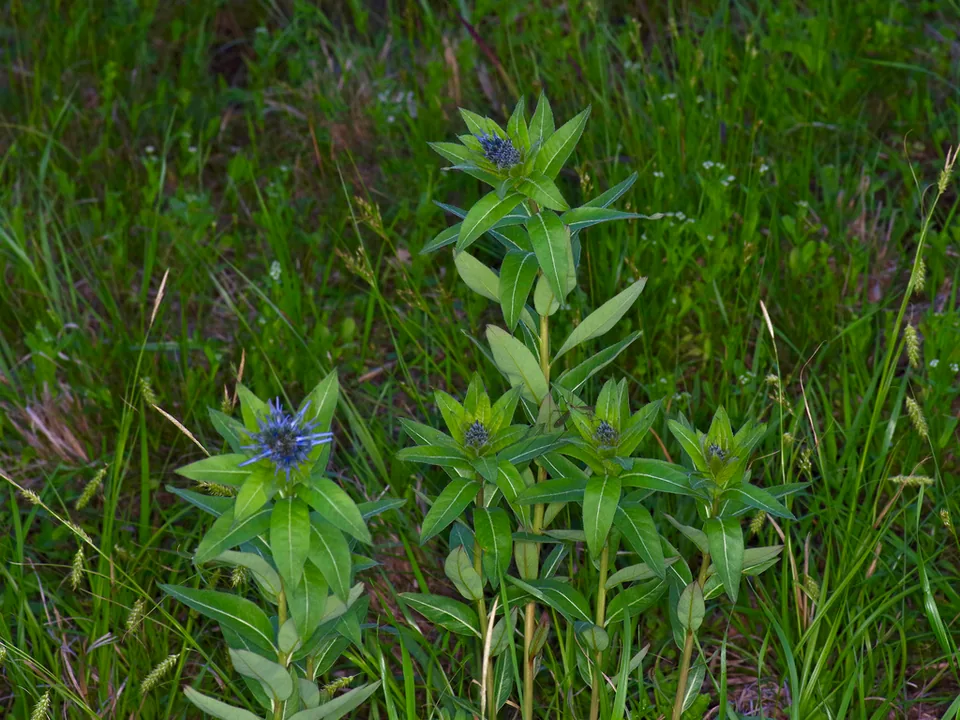
Cómo cultivar y cuidar Eastern Bluestar
Amsonia tabernaemontana
Escrito por Emilio Marruso · última revisión
Tóxica para: Animales, Personas · Por qué
De un vistazo
La amsonia es una vivaz resistente que pide muy poco: tolera muy bien los suelos arcillosos y, una vez establecida, aguanta la sequía. Los ciervos la evitan y la roya es su único problema destacable. Dale sol pleno, no te pases con el abono y recórtala tras la floración: se mantendrá compacta y erguida año tras año.
- Sol
El sol pleno mantiene los tallos erguidos; con demasiada sombra se tumban
- Riego
Prefiere la tierra húmeda de forma constante; una vez establecida aguanta la sequía
Qué dicen las fuentes (3)
Riego: Prefiere suelo uniformemente húmedo; tolerante a la sequía una vez establecida
Soil Prefers evenly-moist
— PED [6] Drought tolerant once established and resistant
— Amsonia tabernaemontana (Blue Dogbane, Blue Star, Blue Star Flower, Eastern Bluestar, Woodland Bluestar) | North Carolina Extension Gardener Plant Toolbox [1] Notas sobre el riego: Tolera muy bien suelos arcillosos y la sequía una vez establecida; prefiere suelo húmedo y franco
Although it prefers moist, loamy soil, this plant can be grown in most soils, tolerating clay soils very well.
— Willowleaf bluestar, Amsonia tabernaemontana – Wisconsin Horticulture [3] - Frío
Aguanta inviernos de hasta −40 °C (−40 °F)
Muy rústica · USDA 3a · RHS H7 · Z3
Qué dicen las fuentes (4)
Rusticidad, zona más fría: 3a [mínima invernal de −40 a −37,2 °C (de −40 a −35 °F)]
USDA Plant Hardiness Zone: 3a, 3b, 4a, 4b, 5a, 5b, 6a, 6b, 7a, 7b, 8a, 8b, 9a, 9b
— Amsonia tabernaemontana (Blue Dogbane, Blue Star, Blue Star Flower, Eastern Bluestar, Woodland Bluestar) | North Carolina Extension Gardener Plant Toolbox [1] this long-lived species is hardy in zones 3a to 9b
— Willowleaf bluestar, Amsonia tabernaemontana – Wisconsin Horticulture [3] Rusticidad, zona más cálida: 9b [mínima invernal de −3,9 a −1,1 °C (de 25 a 30 °F)]
USDA Plant Hardiness Zone: 3a, 3b, 4a, 4b, 5a, 5b, 6a, 6b, 7a, 7b, 8a, 8b, 9a, 9b
— Amsonia tabernaemontana (Blue Dogbane, Blue Star, Blue Star Flower, Eastern Bluestar, Woodland Bluestar) | North Carolina Extension Gardener Plant Toolbox [1] this long-lived species is hardy in zones 3a to 9b
— Willowleaf bluestar, Amsonia tabernaemontana – Wisconsin Horticulture [3] - Suelo
Suelo fresco y franco, pH 6,0–8,0; tolera muy bien el arcilloso
Qué dicen las fuentes (3)
pH del suelo, mínimo: 6.0
Soil pH: Neutral (6.0-8.0)
— Amsonia tabernaemontana (Blue Dogbane, Blue Star, Blue Star Flower, Eastern Bluestar, Woodland Bluestar) | North Carolina Extension Gardener Plant Toolbox [1] pH del suelo, máximo: 8.0
Soil pH: Neutral (6.0-8.0)
— Amsonia tabernaemontana (Blue Dogbane, Blue Star, Blue Star Flower, Eastern Bluestar, Woodland Bluestar) | North Carolina Extension Gardener Plant Toolbox [1] Notas sobre el riego: Tolera muy bien suelos arcillosos y la sequía una vez establecida; prefiere suelo húmedo y franco
Although it prefers moist, loamy soil, this plant can be grown in most soils, tolerating clay soils very well.
— Willowleaf bluestar, Amsonia tabernaemontana – Wisconsin Horticulture [3] - Abonado
Con moderación: demasiado abono hace que la planta se tumbe
Qué dicen las fuentes (2)
Evitar: Exceso de fertilización, que hace que las plantas se caigan
Grow Amsonia tabernaemontana in full sun and avoid over-fertilization to keep the plants from flopping.
— Willowleaf bluestar, Amsonia tabernaemontana – Wisconsin Horticulture [3] Signos de exceso: Hábito abierto y flojo
Over-fertilization will result in an open, floppy habit. The stems can be cut down in fall, or left over the winter.
— Willowleaf bluestar, Amsonia tabernaemontana – Wisconsin Horticulture [3] - Poda
Recórtala tras la floración para darle forma; corta los tallos en otoño o al final del invierno
Qué dicen las fuentes (5)
Poda: Después de la floración para dar forma; los tallos también pueden cortarse en otoño o recortarse en invierno o a principios de primavera
Según NC State Extension: Cutting the stems back after flowing will create a more rounded, neater appearance.
— Amsonia tabernaemontana (Blue Dogbane, Blue Star, Blue Star Flower, Eastern Bluestar, Woodland Bluestar) | North Carolina Extension Gardener Plant Toolbox [1] Según Iowa State Extension: Established plants can be cut back by half after bloom for shorter, more compact habits.
— Bonkers for Bluestars | Yard and Garden [7] Según Wisconsin Horticulture: The stems can be cut down in fall, or left over the winter.
— Willowleaf bluestar, Amsonia tabernaemontana – Wisconsin Horticulture [3] Según Penn State Extension: Routine maintenance in winter or early spring involves cutting back the stems, which are hollow.
— Native Amsonia for the Home Garden [5] Cutting the stems back after flowing will create a more rounded, neater appearance.
— Amsonia tabernaemontana (Blue Dogbane, Blue Star, Blue Star Flower, Eastern Bluestar, Woodland Bluestar) | North Carolina Extension Gardener Plant Toolbox [1] - Plagas
Puede aparecer roya; no tiene otros problemas importantes
Qué dicen las fuentes (1)
Enfermedades: roya
Insects, Diseases, or Other Plant Problems: No significant problems . Rust may occur.
— Amsonia tabernaemontana (Blue Dogbane, Blue Star, Blue Star Flower, Eastern Bluestar, Woodland Bluestar) | North Carolina Extension Gardener Plant Toolbox [1] - Atención
Las vainas pesadas pueden doblar los tallos: quita las flores pasadas o ponle tutor
- Multiplicación
Divide la mata a principios de primavera u otoño, o usa esquejes o semillas (4–6 semanas de frío)
Qué dicen las fuentes (4)
Propagación: División, corte de raíz, semilla, esqueje de tallo
Según NC State Extension: Recommended Propagation Strategy: Division Root Cutting Seed Stem Cutting
— Amsonia tabernaemontana (Blue Dogbane, Blue Star, Blue Star Flower, Eastern Bluestar, Woodland Bluestar) | North Carolina Extension Gardener Plant Toolbox [1] Según Wisconsin Horticulture: Willowleaf bluestar is easily propagated by seed , requiring 4 to 6 weeks of cold, moist stratification for good germination.
— Willowleaf bluestar, Amsonia tabernaemontana – Wisconsin Horticulture [3] Recommended Propagation Strategy: Division Root Cutting Seed Stem Cutting
— Amsonia tabernaemontana (Blue Dogbane, Blue Star, Blue Star Flower, Eastern Bluestar, Woodland Bluestar) | North Carolina Extension Gardener Plant Toolbox [1] It can also be propagated by division of the crowns of established clumps in early spring or fall.
— Willowleaf bluestar, Amsonia tabernaemontana – Wisconsin Horticulture [3] - Maceta
Crece también en maceta
Qué dicen las fuentes (1)
En maceta: Sí
Landscape Location: Coastal Container
— Amsonia tabernaemontana (Blue Dogbane, Blue Star, Blue Star Flower, Eastern Bluestar, Woodland Bluestar) | North Carolina Extension Gardener Plant Toolbox [1] - Seguridad
Usa guantes al podar: la savia lechosa puede irritar la piel sensible
Resumen
La estrella azul oriental es una herbácea perenne nativa de crecimiento compacto, de 2-3 pies [61–91 cm] de altura y ancho, cultivada por sus flores primaverales azul pálido y su follaje otoñal dorado. [1][3] El follaje contiene un látex blanco tóxico que los ciervos evitan y que puede irritar la piel sensible. [3][7]
Citado en inglés, como en la fuente.
Cuidados
Las medidas entre corchetes son nuestra conversión al otro sistema de unidades; el texto citado no cambia.
Riego
Riego
Prefiere suelo uniformemente húmedo; tolerante a la sequía una vez establecida
Notas sobre el riego
Tolera muy bien suelos arcillosos y la sequía una vez establecida; prefiere suelo húmedo y franco
Qué dicen las fuentes (1)
Although it prefers moist, loamy soil, this plant can be grown in most soils, tolerating clay soils very well.Luz
Las fuentes no coinciden:
They prefer part shade, but also do well in full sun.
[7]
Qué dicen las fuentes (2)
Light:
Full sun (6 or more hours of direct sunlight a day)
Partial Shade (Direct sunlight only part of the day, 2-6 hours)Willowleaf bluestar grows best in full sun but tolerates partial shadeClima y frío
Rusticidad, zona más fría
3a [mínima invernal de −40 a −37,2 °C (de −40 a −35 °F)]
Qué dicen las fuentes (2)
USDA Plant Hardiness Zone:
3a, 3b, 4a, 4b, 5a, 5b, 6a, 6b, 7a, 7b, 8a, 8b, 9a, 9bthis long-lived species is hardy in zones 3a to 9bRusticidad, zona más cálida
9b [mínima invernal de −3,9 a −1,1 °C (de 25 a 30 °F)]
Qué dicen las fuentes (2)
USDA Plant Hardiness Zone:
3a, 3b, 4a, 4b, 5a, 5b, 6a, 6b, 7a, 7b, 8a, 8b, 9a, 9bthis long-lived species is hardy in zones 3a to 9bSuelo
pH del suelo, mínimo
6.0
Qué dicen las fuentes (1)
Soil pH:
Neutral (6.0-8.0)pH del suelo, máximo
8.0
Qué dicen las fuentes (1)
Soil pH:
Neutral (6.0-8.0)Dónde cultivarla
Sí
Qué dicen las fuentes (1)
Landscape Location:
Coastal
ContainerPropagación
División, corte de raíz, semilla, esqueje de tallo
Lo que dice cada fuente
Según NC State Extension: División, corte de raíz, semilla, esqueje de tallo
Según Wisconsin Horticulture: Semilla (4 a 6 semanas de estratificación fría y húmeda) y división a principios de primavera u otoño
Qué dicen las fuentes (4)
Según NC State Extension: Recommended Propagation Strategy:
Division
Root Cutting
Seed
Stem CuttingSegún Wisconsin Horticulture: Willowleaf bluestar is easily propagated by seed , requiring 4 to 6 weeks of cold, moist stratification for good germination.Recommended Propagation Strategy:
Division
Root Cutting
Seed
Stem CuttingIt can also be propagated by division of the crowns of established clumps in early spring or fall.Cultivo
La planta
Ciclo de vida
perenne
Qué dicen las fuentes (1)
Eastern bluestar is a native herbaceous perennial in the dogbane family (Apocynaceae) native to central and eastern North America and found most often in wet, sandy, rich, open and rocky woods and thickets.Familia
Apocynaceae
Qué dicen las fuentes (1)
Eastern bluestar is a native herbaceous perennial in the dogbane family (Apocynaceae) native to central and eastern North America and found most often in wet, sandy, rich, open and rocky woods and thickets.Altura adulta
Plagas y enfermedades
Enfermedades
roya
Qué dicen las fuentes (1)
Insects, Diseases, or Other Plant Problems: No significant problems . Rust may occur.Abonado
Evitar
Exceso de fertilización, que hace que las plantas se caigan
Qué dicen las fuentes (1)
Grow Amsonia tabernaemontana in full sun and avoid over-fertilization to keep the plants from flopping.Signos de exceso
Hábito abierto y flojo
Qué dicen las fuentes (1)
Over-fertilization will result in an open, floppy habit. The stems can be cut down in fall, or left over the winter.Problemas
Crecimiento caído
Síntoma: Los tallos se doblan con demasiada sombra o exceso de fertilización; las vainas pesadas de semillas pueden doblar los tallos
Qué hacer: Cultiva a pleno sol, evita la sobrefertilización, retira las flores marchitas después de la floración o entutora.
Qué dicen las fuentes (2)
Too much shade may cause the plant to flop and need staking.
— Amsonia tabernaemontana (Blue Dogbane, Blue Star, Blue Star Flower, Eastern Bluestar, Woodland Bluestar) | North Carolina Extension Gardener Plant Toolbox [1] Over-fertilization will result in an open, floppy habit.
— Willowleaf bluestar, Amsonia tabernaemontana – Wisconsin Horticulture [3] Roya
Síntoma: Puede presentarse roya; no hay otros problemas significativos
Qué hacer: No se indica manejo
Qué dicen las fuentes (1)
No significant problems . Rust may occur.
— Amsonia tabernaemontana (Blue Dogbane, Blue Star, Blue Star Flower, Eastern Bluestar, Woodland Bluestar) | North Carolina Extension Gardener Plant Toolbox [1]
Remedios
Cada remedio indica qué dicen las fuentes oficiales; los remedios tradicionales sin fuente oficial aparecen marcados. Los perjudiciales están para que sepas evitarlos.
Primeros auxilios
Primeros auxilios: no sustituyen al médico
savia irritante
Lava la piel con agua corriente y jabón Fuente oficial, sin prueba independiente
Observe the area for such signs of infection as red streaks around the area, swelling, pus, or a lot of discharge.
— poison.org [8] Cómo: Lava bien la zona con abundante agua corriente y jabón.
Wash the area thoroughly with plenty of running water and soap.
— poison.org [8]
Venenosa para los animales
Según la fuente, citada textualmente. No es un consejo médico ni veterinario: si una persona o un animal pudo haber ingerido esta planta, contacta con un centro de toxicología o con un veterinario.
Animales
Deer avoid bluestars as they produce a potentially toxic milky sap
[7]- Principio tóxico
potentially toxic milky sap
[7]
Personas
Calendario
Poda
Después de la floración para dar forma; los tallos también pueden cortarse en otoño o recortarse en invierno o a principios de primavera
Lo que dice cada fuente
Según NC State Extension: Después de la floración
Según Iowa State Extension: Después de la floración (recorta a la mitad)
Según Wisconsin Horticulture: Otoño, o dejarlos durante el invierno
Según Penn State Extension: Invierno o principios de primavera
Qué dicen las fuentes (5)
Según NC State Extension: Cutting the stems back after flowing will create a more rounded, neater appearance.Según Iowa State Extension: Established plants can be cut back by half after bloom for shorter, more compact habits.Según Wisconsin Horticulture: The stems can be cut down in fall, or left over the winter.Según Penn State Extension: Routine maintenance in winter or early spring involves cutting back the stems, which are hollow.Cutting the stems back after flowing will create a more rounded, neater appearance.Meses tal como los dan las fuentes, en su mayoría de Estados Unidos (hemisferio norte). En el hemisferio sur se desplazan unos seis meses.
Valores orientativos
Valores de una fuente secundaria, no comprobados palabra por palabra como el resto de esta página. Úselos como punto de partida.
- Resiste la sequía
- SíValor orientativo, adáptalo a tu clima · Fuente secundaria
- Nivel de cuidado
- FácilValor orientativo, adáptalo a tu clima · Fuente secundaria
- Crecimiento
- BajoValor orientativo, adáptalo a tu clima · Fuente secundaria
Plantas similares
- Blue Star Amsonia ciliata
- Blue Star Amsonia hubrichtii
- Jazmín de Cuba Allamanda cathartica
- Jazmín asiático Trachelospermum asiaticum
- Jazmín de Tucumán Araujia sericifera
- Bush allamanda Allamanda schottii
- Butterfly Weed Asclepias tuberosa
- Carolina Spinypod Matelea carolinensis
Fuentes
Cada valor anterior se cita de estos documentos. Los enlaces llevan al editor original.
- Amsonia tabernaemontana (Blue Dogbane, Blue Star, Blue Star Flower, Eastern Bluestar, Woodland Bluestar) | North Carolina Extension Gardener Plant Toolbox · plants.ces.ncsu.edu, consultado
- Woodland Bluestar - Amsonia tabernaemontana | North Carolina Extension Gardener Plant Toolbox · plants.ces.ncsu.edu, consultado
- Willowleaf bluestar, Amsonia tabernaemontana – Wisconsin Horticulture · hort.extension.wisc.edu, consultado
- Willow Leaf Bluestar - Amsonia tabernaemontana var. salicifolia | North Carolina Extension Gardener Plant Toolbox · plants.ces.ncsu.edu, consultado
- Native Amsonia for the Home Garden · extension.psu.edu, consultado
- PED · plantsearch.extension.umn.edu, consultado
- Bonkers for Bluestars | Yard and Garden · yardandgarden.extension.iastate.edu, consultado
- poison.org · poison.org
Escrito por Emilio Marruso · última revisión