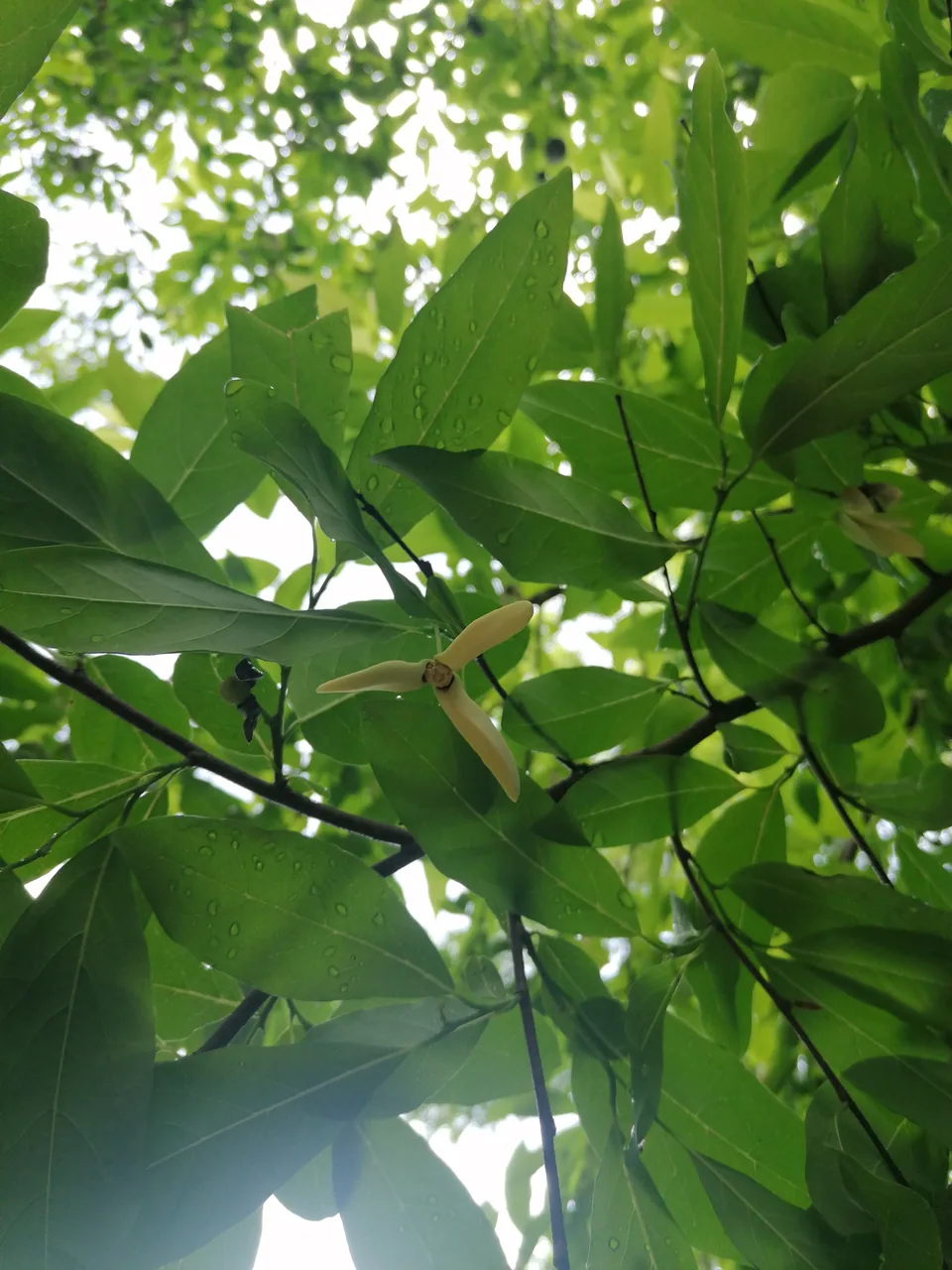
Cómo cultivar y cuidar Chirimoya
Annona reticulata
Escrito por Emilio Marruso · última revisión
Tóxica para: Personas · Por qué
De un vistazo
La anona es un frutal amante del sol que alcanza de 4,6 a 10,7 m de altura. Dale agua abundante, buen drenaje y un acolchado orgánico, y recoge la fruta cuando haya perdido todo el verde. Su pulpa dulce se saca de la piel con una cuchara y se come tal cual, o se añade a batidos, natillas y helados.
- Sol
Sol pleno
Qué dicen las fuentes (1)
Luz: Sol
Light requirement Sun Soil tolerances Does best in low-lying, deep, rich soil with ample moisture
— Custard apple, Annona reticulata [6] - Riego
Riega a menudo si hace seco; no soporta la sequía y le gusta el aire húmedo
Qué dicen las fuentes (5)
Riego: Riega con frecuencia si hay tiempo seco durante el período de crecimiento; no tolera la sequía
responds well to mulching, organic fertilizers and frequent irrigation if there is dry weather during the growing period.
— Annona reticulata, Agroforestree Database [8] This species is not drought-tolerant and prefers a more humid atmosphere.
— Annona reticulata, Agroforestree Database [8] Notas sobre el riego: Tolera menos la sequía que el anón; prefiere un ambiente húmedo; necesita abundante humedad y buen drenaje y no tolera el encharcamiento
It is less drought-tolerant than the sugar apple and prefers a humid atmosphere
— Annona reticulata - Useful Tropical Plants [5] Does best in low-lying, deep, rich soil with ample moisture and good drainage as it will not tolerate waterlogging
— Custard apple, Annona reticulata [6] prefers a deep rich soil with plenty of moisture.
— The Bullock's Heart, Manual Tropical Subtropical Fruits [7] - Suelo
Suelo con buen drenaje que nunca se encharque
Qué dicen las fuentes (3)
Notas sobre el riego: Tolera menos la sequía que el anón; prefiere un ambiente húmedo; necesita abundante humedad y buen drenaje y no tolera el encharcamiento
It is less drought-tolerant than the sugar apple and prefers a humid atmosphere
— Annona reticulata - Useful Tropical Plants [5] Does best in low-lying, deep, rich soil with ample moisture and good drainage as it will not tolerate waterlogging
— Custard apple, Annona reticulata [6] prefers a deep rich soil with plenty of moisture.
— The Bullock's Heart, Manual Tropical Subtropical Fruits [7] - Abonado
Abono orgánico y una capa de acolchado
Qué dicen las fuentes (1)
Abonos naturales: Fertilizantes orgánicos; responde bien al acolchado
Culture The tree is fast-growing and responds well to mulching, organic fertilizers and to frequent irrigation if there is dry weather during the growing period.
— Custard Apple [4] - Cosecha
Recógela cuando no le quede nada de verde; come la pulpa fresca o en helados y bebidas
Qué dicen las fuentes (1)
Cómo cosechar: Recoge cuando la fruta haya perdido todo el color verde
It is picked when it has lost all green color and ripens without splitting so that it is readily sold in local markets.
— Custard Apple [4] - Plagas
Las avispillas calcídidas secan los frutos; la podredumbre carbonosa empieza por el pedúnculo
Qué dicen las fuentes (2)
Plagas: mosca calcídida
The custard apple is heavily attacked by the chalcid fly.
— Custard Apple [4] Enfermedades: podredumbre seca por carbón (Diplodia annonae)
A dry charcoal rot was observed on the fruits in Assam in 1947. In 1957 and 1958 it made its appearance at Saharanpur. The causal fungus was identified as Diplodia annonae .
— Custard Apple [4] - Atención
Raíces superficiales: el árbol puede volcar con viento fuerte
- Tamaño
De 4,6 a 10,7 m de alto
Qué dicen las fuentes (1)
Altura adulta: 457.2-1066.8 cm (15-35 pies)
Height ranges from 15 to 35 ft (4.5-10 m).
— Custard Apple [4] - Multiplicación
Normalmente por semilla; también por esqueje o injerto
Qué dicen las fuentes (1)
Propagación: Semilla (habitual); esquejes semimaduros; injerto de aproximación, injerto de yema o injerto sobre sus propios plantones o sobre portainjertos de guanábana, anón o anón de los pantanos
Seed is the usual means of propagation. Nevertheless, the tree can be multiplied by inarching, or by budding or grafting onto its own seedlings or onto soursop, sugar apple or pond apple rootstocks.
— Custard Apple [4] - Seguridad
El interior de las semillas y todo salvo el fruto son tóxicos; la savia puede dañar los ojos
Resumen
Annona reticulata (anón, corazón de buey) es un árbol tropical de crecimiento rápido y semideciduo que se cultiva por su fruto. [5][7] Necesita un clima tropical y crece mejor en suelo profundo, rico y bien drenado con abundante humedad. [8] Las semillas son muy tóxicas y la savia es irritante. [8]
Citado en inglés, como en la fuente.
Esta ficha está incompleta: las fuentes consultadas aún no cubren todos los campos.
Aún no cubierto por nuestras fuentes: Plantación, Distancia de plantación
Cuidados
Riego
Riego
Riega con frecuencia si hay tiempo seco durante el período de crecimiento; no tolera la sequía
Qué dicen las fuentes (2)
responds well to mulching, organic fertilizers
and frequent irrigation if there is dry weather during the growing
period.This species is not
drought-tolerant and prefers a more humid atmosphere.Notas sobre el riego
Tolera menos la sequía que el anón; prefiere un ambiente húmedo; necesita abundante humedad y buen drenaje y no tolera el encharcamiento
Qué dicen las fuentes (3)
It is less drought-tolerant than the sugar apple and prefers a humid atmosphereDoes best in low-lying, deep, rich soil with ample moisture and good
drainage as it will not tolerate waterloggingprefers a deep rich soil with plenty of moisture.Luz
Sol
Qué dicen las fuentes (1)
Light requirement
Sun
Soil tolerances
Does best in low-lying, deep, rich soil with ample moistureSuelo
pH del suelo, mínimo
Las fuentes dan valores distintos según la región, la zona o las condiciones de cultivo.
Lo que dice cada fuente
Según Growables: 7.0-8.0
Según Useful Tropical Plants: alrededor de 6
pH del suelo, máximo
Las fuentes dan valores distintos según la región, la zona o las condiciones de cultivo.
Lo que dice cada fuente
Según Growables: 7.0-8.0
Según Useful Tropical Plants: alrededor de 6
Dónde cultivarla
No figura en las fuentes consultadas.
Propagación
Semilla (habitual); esquejes semimaduros; injerto de aproximación, injerto de yema o injerto sobre sus propios plantones o sobre portainjertos de guanábana, anón o anón de los pantanos
Qué dicen las fuentes (1)
Seed is the usual means of propagation. Nevertheless, the tree can be multiplied by inarching, or by budding or grafting onto its own seedlings or onto soursop, sugar apple or pond apple rootstocks.Cultivo
La planta
Altura adulta
457.2-1066.8 cm (15-35 pies)
Qué dicen las fuentes (1)
Height ranges from 15 to 35 ft (4.5-10 m).Cosecha y conservación
Cómo cosechar
Recoge cuando la fruta haya perdido todo el color verde
Qué dicen las fuentes (1)
It is picked when it has lost all green color and ripens without splitting so that it is readily sold in local markets.Plagas y enfermedades
Plagas
mosca calcídida
Qué dicen las fuentes (1)
The custard apple is heavily attacked by the chalcid fly.Enfermedades
podredumbre seca por carbón (Diplodia annonae)
Qué dicen las fuentes (1)
A dry charcoal rot was observed on the fruits in Assam in 1947. In 1957 and 1958 it made its appearance at Saharanpur. The causal fungus was identified as Diplodia annonae .Abonado
Abonos naturales
Fertilizantes orgánicos; responde bien al acolchado
Qué dicen las fuentes (1)
Culture The tree is fast-growing and responds well to mulching, organic fertilizers and to frequent irrigation if there is dry weather during the growing period.Problemas
Mosca chalcid
Síntoma: Muchos, si no todos, los frutos de un árbol pueden secarse antes de la madurez.
Qué dicen las fuentes (1)
The custard apple is heavily attacked by the chalcid fly. Many, if not all of the fruits on a tree may be dried up before maturity.
— Annona reticulata, Agroforestree Database [8] Murciélagos frugívoros
Síntoma: Los frutos maduros son dañados por los murciélagos frugívoros.
Qué hacer: En la India, los frutos en maduración se cubren con bolsas o redes.
Qué dicen las fuentes (1)
In India, the ripening fruits are covered with bags or nets to avoid damage from fruit bats.
— Custard apple, Annona reticulata [6] Barrenador de la semilla del anón
Síntoma: El barrenador de la semilla de anona ataca el fruto y pasa el invierno en el anón.
Qué hacer: Envuelve el fruto cuando es muy pequeño, usando una bolsa grande.
Carbón seco (Diplodia annonae)
Síntoma: La infección comienza en el extremo del tallo del fruto y se extiende gradualmente hasta cubrir todo el fruto.
Qué dicen las fuentes (1)
The infection begins at the stem end of the fruit and gradually spreads until it covers the entire fruit.
— Custard apple, Annona reticulata [6] Raíces superficiales
Síntoma: Los árboles se caen en condiciones de viento.
Qué dicen las fuentes (1)
Shallow root system tends to develop unevenly and trees topple over in windy conditions
— Custard apple, Annona reticulata [6]
Remedios
Cada remedio indica qué dicen las fuentes oficiales; los remedios tradicionales sin fuente oficial aparecen marcados. Los perjudiciales están para que sepas evitarlos.
Primeros auxilios
Primeros auxilios: no sustituyen al médico
savia en el ojo
enjuaga el ojo con agua Fuente oficial, sin prueba independiente
After the 15 to 20 minute irrigation, let the eye rest while you use the web POISON CONTROL tool or call your poison center at 1-800-222-1222 for additional help.
— poison.org [9] Cómo: Enjuaga el ojo expuesto con abundante agua a temperatura ambiente durante al menos 15 a 20 minutos.
Use lots of room temperature water and irrigate for at least 15 to 20 minutes.
— poison.org [9]
Cuidar la planta
barrenador de semillas de anona
embolsa la fruta Funciona
However, bagging encourages the growth of mealybugs on some fruits, probably because natural enemies are excluded.
— ask.ifas.ufl.edu [10] Cómo: Embosa la fruta cuando sea muy pequeña para evitar que el barrenador de la semilla de anona la ataque.
He suggests to bag the fruit when very small to prevent the annona seed borer from attaking the fruit.
— Custard apple, Annona reticulata [6] Qué dicen las pruebas Fruit bagging is considered one of the best methods to prevent infestation by B. cubensis by several researchers.
— ask.ifas.ufl.edu [10]
murciélagos frugívoros
Cubre la fruta madura con bolsas o redes. Fuente oficial, sin prueba independiente
Cómo: Cubre las frutas maduras con bolsas o redes para evitar daños por murciélagos frugívoros.
In India, the ripening fruits must be covered with bags or nets to avoid damage from fruit bats.
— Custard Apple [4]
Toxicidad
Según la fuente, citada textualmente. No es un consejo médico ni veterinario: si una persona o un animal pudo haber ingerido esta planta, contacta con un centro de toxicología o con un veterinario.
The seeds are so hard that they may be swallowed whole with no ill effects but the kernels are very toxic.
[8]- Partes venenosas
The seeds are so hard that they may be swallowed whole with no ill effects but the kernels are very toxic.
[8]
Sap from cut branches is acrid and irritant and can severely injure the eyes.
[8]Known hazard The hard seeds are very toxic, but can be swallowed whole with no ill effects; all non-fruit parts of the plant are quite toxic
[6]- Principio tóxico
The root bark has yielded 3 alkaloids: anonaine, liriodenine and reticuline (muricinine).
[8]
Calendario
Plantación
No figura en las fuentes consultadas.
Cosecha
Las fuentes dan valores distintos según la región, la zona o las condiciones de cultivo.
Lo que dice cada fuente
Según Agroforestree Database: Finales de invierno y primavera
Florida: La fructificación se produce de septiembre a noviembre; los frutos permanecen en los árboles hasta mayo
Según Growables: Temporada de septiembre a noviembre; el fruto permanece en el árbol hasta mayo
Qué dicen las fuentes (4)
Según Agroforestree Database: The
custard apple has the advantage of cropping in late winter and spring
when the preferred members of the genus are not in season.Florida: In Florida, custard apple (A. reticulata) sets fruit in September–November, and fruits remain on the trees as late as May.Según Growables: Season
Sept. to Nov.; fruit remains on tree as late as May 11
USDA Nutrient
ContentThe
custard apple has the advantage of cropping in late winter and spring
when the preferred members of the genus are not in season.Meses tal como los dan las fuentes, en su mayoría de Estados Unidos (hemisferio norte). En el hemisferio sur se desplazan unos seis meses.
Comestibilidad
Según la fuente, citada textualmente. No comas una planta basándote solo en esta página: los errores de identificación pueden ser peligrosos.
The flesh may be scooped from the skin and eaten as is or served with light cream and a sprinkling of sugar. Often it is pressed through a sieve and added to milk shakes, custards or ice cream.
[8]The sweetish flesh of a fully ripe fruit varies considerably in quality; some are eaten raw but most often they are used in preserves, drinks, ice cream, puddings etc
[5]
Valores orientativos
Valores de una fuente secundaria, no comprobados palabra por palabra como el resto de esta página. Úselos como punto de partida.
- Ciclo de vida
- PerenneValor orientativo, adáptalo a tu clima · Fuente secundaria
- Horas de sol
- 6-8 horasValor orientativo, adáptalo a tu clima · Fuente secundaria
- Zonas de rusticidad USDA
- 10-11 [mínima invernal de −1,1 a 10 °C (de 30 a 50 °F)]Valor orientativo, adáptalo a tu clima · Fuente secundaria
- Nivel de cuidado
- MedioValor orientativo, adáptalo a tu clima · Fuente secundaria
- Crecimiento
- AltaValor orientativo, adáptalo a tu clima · Fuente secundaria
- Poda
- mayo, agostoValor orientativo, adáptalo a tu clima · Fuente secundaria
Plantas similares
- Guanábana Annona muricata
- Hipérico rastrero Hypericum calycinum
- Acónito común Aconitum napellus
- Palma de aguja Yucca flaccida
- Afghan Cherry Prunus jacquemontii
- African Blood Lily Scadoxus multiflorus
- Agapanto Agapanthus praecox
- Cempasúchil Tagetes erecta
Fuentes
Cada valor anterior se cita de estos documentos. Los enlaces llevan al editor original.
- Archival copy: for current recommendations see http://edis.ifas.ufl.edu or your local extension office. · journals.flvc.org, consultado
- ENY-834 · edis.ifas.ufl.edu, consultado
- Atemoya – Gardening Solutions · gardeningsolutions.ifas.ufl.edu, consultado
- Custard Apple · hort.purdue.edu, consultado
- Annona reticulata - Useful Tropical Plants · tropical.theferns.info, consultado
- Custard apple, Annona reticulata · growables.org, consultado
- The Bullock's Heart, Manual Tropical Subtropical Fruits · growables.org, consultado
- Annona reticulata, Agroforestree Database · growables.org, consultado
- poison.org · poison.org
- ask.ifas.ufl.edu · ask.ifas.ufl.edu
Escrito por Emilio Marruso · última revisión