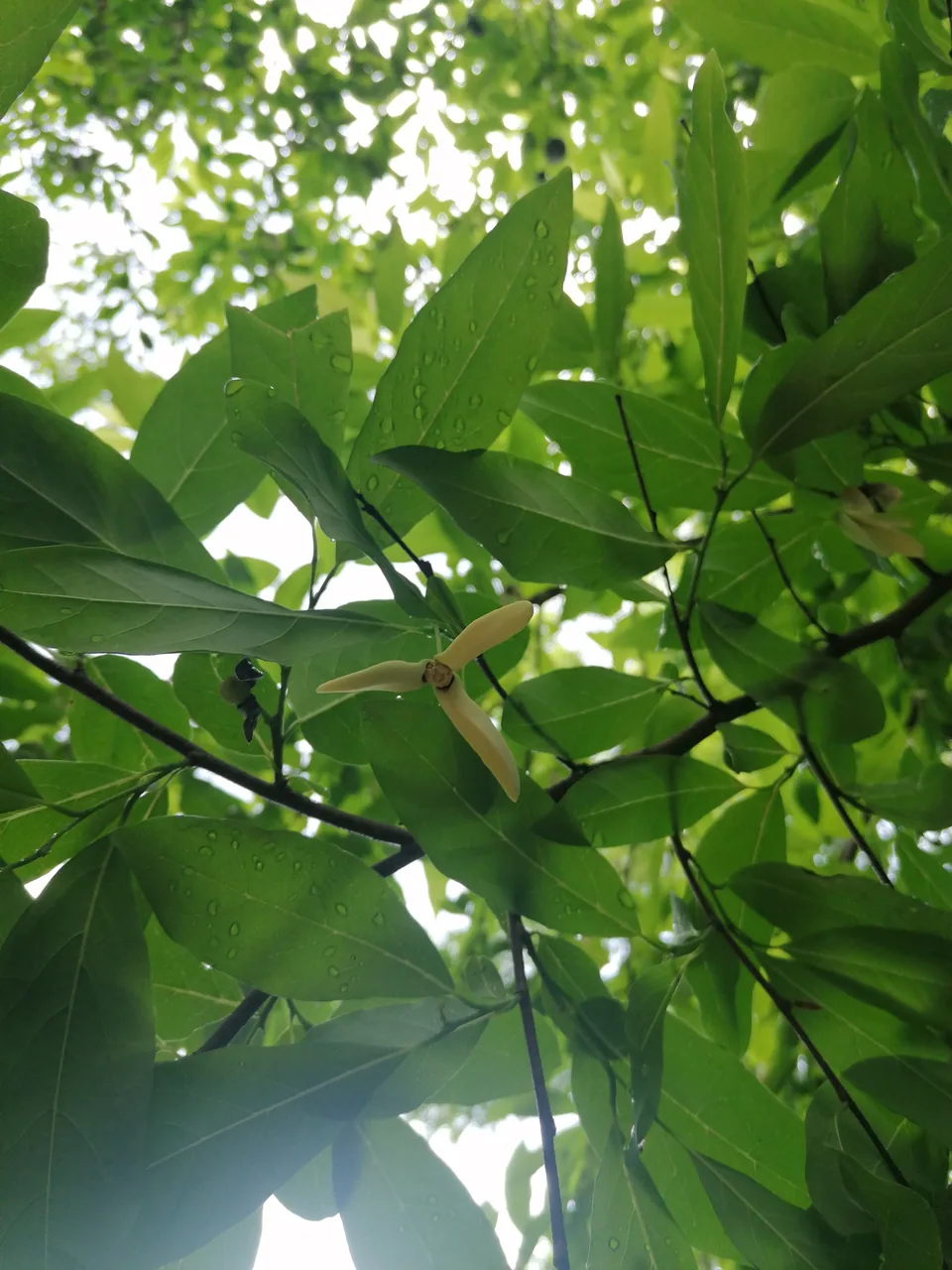
How to Grow and Care for Custard apple
Annona reticulata
Written by Emilio Marruso · last checked
Toxic to: People · Why
At a glance
Custard apple is a sun-loving fruit tree that grows 15–35 ft tall. Give it plenty of water, good drainage and organic mulch, and pick the fruit once all the green is gone. The sweet flesh can be scooped from the skin and eaten as is, or blended into milk shakes, custards and ice cream.
- Sun
Full sun
What the sources say (1)
Light: Sun
Light requirement Sun Soil tolerances Does best in low-lying, deep, rich soil with ample moisture
— Custard apple, Annona reticulata [6] - Water
Water often in dry spells; it can't handle drought and likes humid air
What the sources say (5)
Watering: Frequent irrigation if there is dry weather during the growing period; not drought tolerant
responds well to mulching, organic fertilizers and frequent irrigation if there is dry weather during the growing period.
— Annona reticulata, Agroforestree Database [8] This species is not drought-tolerant and prefers a more humid atmosphere.
— Annona reticulata, Agroforestree Database [8] Watering notes: Less drought-tolerant than sugar apple; prefers a humid atmosphere; needs ample moisture and good drainage and does not tolerate waterlogging
It is less drought-tolerant than the sugar apple and prefers a humid atmosphere
— Annona reticulata - Useful Tropical Plants [5] Does best in low-lying, deep, rich soil with ample moisture and good drainage as it will not tolerate waterlogging
— Custard apple, Annona reticulata [6] prefers a deep rich soil with plenty of moisture.
— The Bullock's Heart, Manual Tropical Subtropical Fruits [7] - Soil
Well-drained soil that never stays soggy
What the sources say (3)
Watering notes: Less drought-tolerant than sugar apple; prefers a humid atmosphere; needs ample moisture and good drainage and does not tolerate waterlogging
It is less drought-tolerant than the sugar apple and prefers a humid atmosphere
— Annona reticulata - Useful Tropical Plants [5] Does best in low-lying, deep, rich soil with ample moisture and good drainage as it will not tolerate waterlogging
— Custard apple, Annona reticulata [6] prefers a deep rich soil with plenty of moisture.
— The Bullock's Heart, Manual Tropical Subtropical Fruits [7] - Feeding
Organic fertilizer and a layer of mulch
What the sources say (1)
Natural fertilizers: Organic fertilizers; responds well to mulching
Culture The tree is fast-growing and responds well to mulching, organic fertilizers and to frequent irrigation if there is dry weather during the growing period.
— Custard Apple [4] - Harvest
Pick when no green is left; eat the sweet flesh fresh or in ice cream and drinks
What the sources say (1)
How to harvest: Pick when the fruit has lost all green color
It is picked when it has lost all green color and ripens without splitting so that it is readily sold in local markets.
— Custard Apple [4] - Pests
Chalcid flies can dry up the fruit; a charcoal rot starts at the stem end
What the sources say (2)
Pests: chalcid fly
The custard apple is heavily attacked by the chalcid fly.
— Custard Apple [4] Diseases: dry charcoal rot (Diplodia annonae)
A dry charcoal rot was observed on the fruits in Assam in 1947. In 1957 and 1958 it made its appearance at Saharanpur. The causal fungus was identified as Diplodia annonae .
— Custard Apple [4] - Watch out
Shallow roots: the tree can topple over in strong wind
- Size
15–35 ft tall
What the sources say (1)
Mature height: 457.2-1066.8 cm (15-35 ft)
Height ranges from 15 to 35 ft (4.5-10 m).
— Custard Apple [4] - Propagation
Usually from seed; also from cuttings or by grafting
What the sources say (1)
Propagation: Seed (usual); semi-ripe cuttings; inarching, budding or grafting onto its own seedlings or onto soursop, sugar apple or pond apple rootstocks
Seed is the usual means of propagation. Nevertheless, the tree can be multiplied by inarching, or by budding or grafting onto its own seedlings or onto soursop, sugar apple or pond apple rootstocks.
— Custard Apple [4] - Safety
Seed kernels and every part except the fruit are toxic; the sap can hurt the eyes
Overview
Annona reticulata (custard apple, bullock's heart) is a fast-growing, semi-deciduous tropical tree grown for its fruit. [5][7] It needs a tropical climate and does best in deep, rich, well-drained soil with ample moisture. [8] The seed kernels are very toxic and the sap is an irritant. [8]
This record is incomplete: the sources we read do not cover every field yet.
Not yet covered by our sources: Planting, Spacing
Custard apple care
How to water Custard apple
Watering
Frequent irrigation if there is dry weather during the growing period; not drought tolerant
What the sources say (2)
responds well to mulching, organic fertilizers
and frequent irrigation if there is dry weather during the growing
period.This species is not
drought-tolerant and prefers a more humid atmosphere.Watering notes
Less drought-tolerant than sugar apple; prefers a humid atmosphere; needs ample moisture and good drainage and does not tolerate waterlogging
What the sources say (3)
It is less drought-tolerant than the sugar apple and prefers a humid atmosphereDoes best in low-lying, deep, rich soil with ample moisture and good
drainage as it will not tolerate waterloggingprefers a deep rich soil with plenty of moisture.How much light Custard apple needs
Sun
What the sources say (1)
Light requirement
Sun
Soil tolerances
Does best in low-lying, deep, rich soil with ample moistureBest soil for Custard apple
Soil pH, minimum
The sources give different values depending on region, zone or growing conditions.
What each source says
According to Growables: 7.0-8.0
According to Useful Tropical Plants: around 6
Soil pH, maximum
The sources give different values depending on region, zone or growing conditions.
What each source says
According to Growables: 7.0-8.0
According to Useful Tropical Plants: around 6
Where to grow Custard apple
Not stated in the sources we read.
How to propagate Custard apple
Seed (usual); semi-ripe cuttings; inarching, budding or grafting onto its own seedlings or onto soursop, sugar apple or pond apple rootstocks
What the sources say (1)
Seed is the usual means of propagation. Nevertheless, the tree can be multiplied by inarching, or by budding or grafting onto its own seedlings or onto soursop, sugar apple or pond apple rootstocks.How to grow Custard apple
The plant
Mature height
457.2-1066.8 cm (15-35 ft)
What the sources say (1)
Height ranges from 15 to 35 ft (4.5-10 m).Harvest and storage
How to harvest
Pick when the fruit has lost all green color
What the sources say (1)
It is picked when it has lost all green color and ripens without splitting so that it is readily sold in local markets.Pests and diseases
Pests
chalcid fly
What the sources say (1)
The custard apple is heavily attacked by the chalcid fly.Diseases
dry charcoal rot (Diplodia annonae)
What the sources say (1)
A dry charcoal rot was observed on the fruits in Assam in 1947. In 1957 and 1958 it made its appearance at Saharanpur. The causal fungus was identified as Diplodia annonae .Fertilizing
Natural fertilizers
Organic fertilizers; responds well to mulching
What the sources say (1)
Culture The tree is fast-growing and responds well to mulching, organic fertilizers and to frequent irrigation if there is dry weather during the growing period.Custard apple pests and problems
Chalcid fly
Symptom: Many, if not all of the fruits on a tree may be dried up before maturity.
What the sources say (1)
The custard apple is heavily attacked by the chalcid fly. Many, if not all of the fruits on a tree may be dried up before maturity.
— Annona reticulata, Agroforestree Database [8] Fruit bats
Symptom: Ripening fruits are damaged by fruit bats.
What to do: In India, ripening fruits are covered with bags or nets.
What the sources say (1)
In India, the ripening fruits are covered with bags or nets to avoid damage from fruit bats.
— Custard apple, Annona reticulata [6] Annona seed borer
Symptom: The annona seed borer attacks the fruit and over-winters in the custard apple.
What to do: Bag the fruit when very small, using a large bag.
Dry charcoal rot (Diplodia annonae)
Symptom: Infection begins at the stem end of the fruit and gradually spreads until it covers the entire fruit.
What the sources say (1)
The infection begins at the stem end of the fruit and gradually spreads until it covers the entire fruit.
— Custard apple, Annona reticulata [6] Shallow roots
Symptom: Trees topple over in windy conditions.
What the sources say (1)
Shallow root system tends to develop unevenly and trees topple over in windy conditions
— Custard apple, Annona reticulata [6]
Remedies
Each remedy shows what official sources say about it; traditional remedies without an official source are marked as such. Harmful ones are listed so you know to avoid them.
First aid
First aid: not a substitute for a doctor
sap in the eye
rinse the eye with water Official source, not independently tested
After the 15 to 20 minute irrigation, let the eye rest while you use the web POISON CONTROL tool or call your poison center at 1-800-222-1222 for additional help.
— poison.org [9] How: Irrigate the exposed eye with lots of room temperature water for at least 15 to 20 minutes.
Use lots of room temperature water and irrigate for at least 15 to 20 minutes.
— poison.org [9]
Treating the plant
annona seed borer
bagging the fruit Works
However, bagging encourages the growth of mealybugs on some fruits, probably because natural enemies are excluded.
— ask.ifas.ufl.edu [10] How: Bag the fruit when very small to keep the annona seed borer from attacking it.
He suggests to bag the fruit when very small to prevent the annona seed borer from attaking the fruit.
— Custard apple, Annona reticulata [6] What the evidence says Fruit bagging is considered one of the best methods to prevent infestation by B. cubensis by several researchers.
— ask.ifas.ufl.edu [10]
fruit bats
covering ripening fruit with bags or nets Official source, not independently tested
How: Cover the ripening fruits with bags or nets to avoid damage from fruit bats.
In India, the ripening fruits must be covered with bags or nets to avoid damage from fruit bats.
— Custard Apple [4]
Is Custard apple poisonous?
Reported by the source, quoted verbatim. This is not medical or veterinary advice: if a person or an animal may have eaten this plant, contact a poison control centre or a veterinarian.
The seeds are so hard that they may be swallowed whole with no ill effects but the kernels are very toxic.
[8]- Poisonous parts
The seeds are so hard that they may be swallowed whole with no ill effects but the kernels are very toxic.
[8]
Sap from cut branches is acrid and irritant and can severely injure the eyes.
[8]Known hazard The hard seeds are very toxic, but can be swallowed whole with no ill effects; all non-fruit parts of the plant are quite toxic
[6]- Toxic principle
The root bark has yielded 3 alkaloids: anonaine, liriodenine and reticuline (muricinine).
[8]
Calendar
Planting
Not stated in the sources we read.
Harvest
The sources give different values depending on region, zone or growing conditions.
What each source says
According to Agroforestree Database: Late winter and spring
Florida: Fruit set September-November; fruits remain on the trees as late as May
According to Growables: Season September to November; fruit remains on tree as late as May
What the sources say (4)
According to Agroforestree Database: The
custard apple has the advantage of cropping in late winter and spring
when the preferred members of the genus are not in season.Florida: In Florida, custard apple (A. reticulata) sets fruit in September–November, and fruits remain on the trees as late as May.According to Growables: Season
Sept. to Nov.; fruit remains on tree as late as May 11
USDA Nutrient
ContentThe
custard apple has the advantage of cropping in late winter and spring
when the preferred members of the genus are not in season.Months as given by the sources, which are mostly from the United States (northern hemisphere). In the southern hemisphere they shift by about six months.
Edibility
Reported by the source, quoted verbatim. Do not eat a plant on the basis of this page alone: identification mistakes can be dangerous.
The flesh may be scooped from the skin and eaten as is or served with light cream and a sprinkling of sugar. Often it is pressed through a sieve and added to milk shakes, custards or ice cream.
[8]The sweetish flesh of a fully ripe fruit varies considerably in quality; some are eaten raw but most often they are used in preserves, drinks, ice cream, puddings etc
[5]
Indicative values
Values from a secondary source, not checked word for word like the rest of this page. Use them as a starting point.
- Life cycle
- PerennialIndicative value, adapt it to your climate · Secondary source
- Hours of sun
- 6-8 hoursIndicative value, adapt it to your climate · Secondary source
- USDA hardiness zones
- 10-11 [winter low −1.1 to 10 °C (30 to 50 °F)]Indicative value, adapt it to your climate · Secondary source
- Care level
- MediumIndicative value, adapt it to your climate · Secondary source
- Growth rate
- HighIndicative value, adapt it to your climate · Secondary source
- Pruning
- May, AugustIndicative value, adapt it to your climate · Secondary source
Similar plants
- Soursop Annona muricata
- Aaron's Beard Hypericum calycinum
- Aconite Aconitum napellus
- Adam's Needle Yucca flaccida
- Afghan Cherry Prunus jacquemontii
- African Blood Lily Scadoxus multiflorus
- African Blue Lily Agapanthus praecox
- African Marigold Tagetes erecta
Sources
Every value above is quoted from these documents. Links lead to the original publisher.
- Archival copy: for current recommendations see http://edis.ifas.ufl.edu or your local extension office. · journals.flvc.org, consulted
- ENY-834 · edis.ifas.ufl.edu, consulted
- Atemoya – Gardening Solutions · gardeningsolutions.ifas.ufl.edu, consulted
- Custard Apple · hort.purdue.edu, consulted
- Annona reticulata - Useful Tropical Plants · tropical.theferns.info, consulted
- Custard apple, Annona reticulata · growables.org, consulted
- The Bullock's Heart, Manual Tropical Subtropical Fruits · growables.org, consulted
- Annona reticulata, Agroforestree Database · growables.org, consulted
- poison.org · poison.org
- ask.ifas.ufl.edu · ask.ifas.ufl.edu
Written by Emilio Marruso · last checked