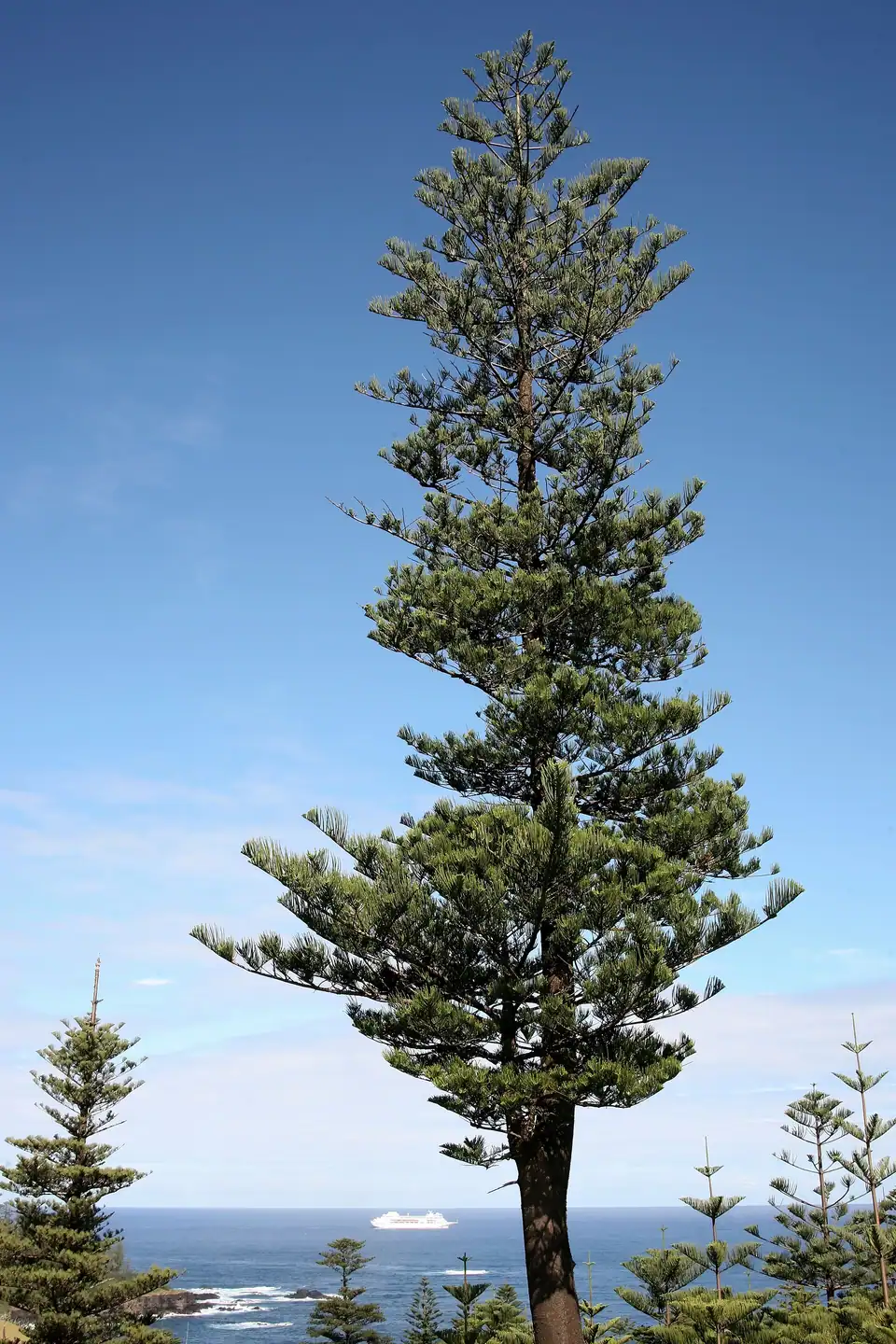


Cómo cultivar y cuidar Araucaria excelsa
Araucaria heterophylla
Escrito por Emilio Marruso · última revisión
No tóxica para gatos y perros, según las fuentes · Fuentes
De un vistazo
La araucaria es una compañera tranquila y agradecida que crece feliz en maceta, incluso dentro de casa. Dale mucha luz, abónala con suavidad de primavera a otoño y riégala poco en invierno. Al aire libre puede convertirse en un árbol majestuoso de 18 a 24 m, y no es tóxica para gatos, perros ni caballos.
- Sol
Mucha luz; con muy poca luz pierde hojas y ramas bajas
- Riego
Riega poco en invierno y tira el agua sobrante a los 15 minutos; el exceso de riego le hace perder ramas
Qué dicen las fuentes (3)
Notas sobre el riego: En invierno, rocía con agua en habitaciones con calefacción y riega con moderación; usa una maceta con agujeros de drenaje y desecha el agua drenada después de unos 15 minutos; el exceso de riego puede provocar la pérdida de ramas
Water regularly spring to autumn, avoiding soil that is too wet. In winter, mist in heated rooms and water sparingly.
— Araucaria heterophylla (Australian Pine, House Pine, Living Christmas Tree, Norfolk Island Pine, Norfolk-Island-Pine, Norfolk Pine, Polynesian Pine, Star Pine, Triangle Tree) | North Carolina Extension Gardener Plant Toolbox [1] After about 15 minutes, discard the water that has drained from the pot.
— Norfolk Island Pines | Good Growing | Illinois Extension | Illinois [2] If the plant is overwatered, it can lead to the loss of branches.
— Norfolk Island Pines | Good Growing | Illinois Extension | Illinois [2] - Abonado
Abono líquido diluido para plantas de interior cada 1–2 semanas, de marzo a septiembre; nunca en invierno
Qué dicen las fuentes (8)
Cuándo: Mientras crece activamente, desde primavera hasta otoño (de marzo a septiembre); no en invierno
Consider weekly or biweekly applications of dilute liquid fertilizer from spring through fall.
— Araucaria heterophylla (Australian Pine, House Pine, Living Christmas Tree, Norfolk Island Pine, Norfolk-Island-Pine, Norfolk Pine, Polynesian Pine, Star Pine, Triangle Tree) | North Carolina Extension Gardener Plant Toolbox [1] A diluted liquid house plant fertilizer can be used every two weeks while they are growing (usually March – September).
— Norfolk Island Pines | Good Growing | Illinois Extension | Illinois [2] They often don’t grow much during the winter, so there is no need to fertilize then.
— Norfolk Island Pines | Good Growing | Illinois Extension | Illinois [2] Frecuencia: Cada 1 a 2 semanas durante la temporada de crecimiento
Consider weekly or biweekly applications of dilute liquid fertilizer from spring through fall.
— Araucaria heterophylla (Australian Pine, House Pine, Living Christmas Tree, Norfolk Island Pine, Norfolk-Island-Pine, Norfolk Pine, Polynesian Pine, Star Pine, Triangle Tree) | North Carolina Extension Gardener Plant Toolbox [1] A diluted liquid house plant fertilizer can be used every two weeks while they are growing (usually March – September).
— Norfolk Island Pines | Good Growing | Illinois Extension | Illinois [2] Abonos minerales: Fertilizante líquido diluido para plantas de interior
Consider weekly or biweekly applications of dilute liquid fertilizer from spring through fall.
— Araucaria heterophylla (Australian Pine, House Pine, Living Christmas Tree, Norfolk Island Pine, Norfolk-Island-Pine, Norfolk Pine, Polynesian Pine, Star Pine, Triangle Tree) | North Carolina Extension Gardener Plant Toolbox [1] A diluted liquid house plant fertilizer can be used every two weeks while they are growing (usually March – September).
— Norfolk Island Pines | Good Growing | Illinois Extension | Illinois [2] Evitar: Fertilizar en invierno, cuando la planta crece poco
They often don’t grow much during the winter, so there is no need to fertilize then.
— Norfolk Island Pines | Good Growing | Illinois Extension | Illinois [2] - Cosecha
Sus semillas son comestibles: los pueblos indígenas las recolectaban
- Plagas
Suele estar sana, pero puede tener cochinilla, negrilla y manchas en las hojas
Qué dicen las fuentes (2)
Plagas: cochinilla
This tree is generally pest free but is susceptible to scale, sooty mold and leaf spot.
— Araucaria heterophylla (Australian Pine, House Pine, Living Christmas Tree, Norfolk Island Pine, Norfolk-Island-Pine, Norfolk Pine, Polynesian Pine, Star Pine, Triangle Tree) | North Carolina Extension Gardener Plant Toolbox [1] Enfermedades: moho fuliginoso, mancha foliar
This tree is generally pest free but is susceptible to scale, sooty mold and leaf spot.
— Araucaria heterophylla (Australian Pine, House Pine, Living Christmas Tree, Norfolk Island Pine, Norfolk-Island-Pine, Norfolk Pine, Polynesian Pine, Star Pine, Triangle Tree) | North Carolina Extension Gardener Plant Toolbox [1] - Atención
El aire seco o la tierra seca le hacen perder agujas: pulverízala en habitaciones con calefacción
Qué dicen las fuentes (3)
Notas sobre el riego: En invierno, rocía con agua en habitaciones con calefacción y riega con moderación; usa una maceta con agujeros de drenaje y desecha el agua drenada después de unos 15 minutos; el exceso de riego puede provocar la pérdida de ramas
Water regularly spring to autumn, avoiding soil that is too wet. In winter, mist in heated rooms and water sparingly.
— Araucaria heterophylla (Australian Pine, House Pine, Living Christmas Tree, Norfolk Island Pine, Norfolk-Island-Pine, Norfolk Pine, Polynesian Pine, Star Pine, Triangle Tree) | North Carolina Extension Gardener Plant Toolbox [1] After about 15 minutes, discard the water that has drained from the pot.
— Norfolk Island Pines | Good Growing | Illinois Extension | Illinois [2] If the plant is overwatered, it can lead to the loss of branches.
— Norfolk Island Pines | Good Growing | Illinois Extension | Illinois [2] - Tamaño
Al aire libre, 18–24 m de alto y 3,7–6,1 m de ancho
Qué dicen las fuentes (3)
Altura adulta: 1829-2438 cm (60-80 pies) al aire libre
en interiores como planta de casa: They typically will reach heights of six to eight feet when grown as a houseplant (they can get larger though).
— Norfolk Island Pines | Good Growing | Illinois Extension | Illinois [2] Dimensions: Height: 60 ft. 0 in. - 80 ft. 0 in. Width: 12 ft. 0 in. - 20 ft. 0 in.
— Araucaria heterophylla (Australian Pine, House Pine, Living Christmas Tree, Norfolk Island Pine, Norfolk-Island-Pine, Norfolk Pine, Polynesian Pine, Star Pine, Triangle Tree) | North Carolina Extension Gardener Plant Toolbox [1] Anchura adulta: 366-610 cm (12-20 pies) al aire libre
Dimensions: Height: 60 ft. 0 in. - 80 ft. 0 in. Width: 12 ft. 0 in. - 20 ft. 0 in.
— Araucaria heterophylla (Australian Pine, House Pine, Living Christmas Tree, Norfolk Island Pine, Norfolk-Island-Pine, Norfolk Pine, Polynesian Pine, Star Pine, Triangle Tree) | North Carolina Extension Gardener Plant Toolbox [1] - Multiplicación
Se multiplica por semilla
Qué dicen las fuentes (1)
Propagación: Semilla
Life Cycle: Perennial Woody Recommended Propagation Strategy: Seed
— Araucaria heterophylla (Australian Pine, House Pine, Living Christmas Tree, Norfolk Island Pine, Norfolk-Island-Pine, Norfolk Pine, Polynesian Pine, Star Pine, Triangle Tree) | North Carolina Extension Gardener Plant Toolbox [1] - Maceta
Ideal en maceta con agujeros de drenaje, incluso como planta de interior
Qué dicen las fuentes (5)
En maceta: Sí
Allow the soil to dry out some between waterings and make sure your pot has drainage holes.
— Norfolk Island Pines | Good Growing | Illinois Extension | Illinois [2] En interior: Sí
It is not native to North America, but is suitable for growing indoors as a houseplant.
— Araucaria heterophylla (Australian Pine, House Pine, Living Christmas Tree, Norfolk Island Pine, Norfolk-Island-Pine, Norfolk Pine, Polynesian Pine, Star Pine, Triangle Tree) | North Carolina Extension Gardener Plant Toolbox [1] Notas sobre el riego: En invierno, rocía con agua en habitaciones con calefacción y riega con moderación; usa una maceta con agujeros de drenaje y desecha el agua drenada después de unos 15 minutos; el exceso de riego puede provocar la pérdida de ramas
Water regularly spring to autumn, avoiding soil that is too wet. In winter, mist in heated rooms and water sparingly.
— Araucaria heterophylla (Australian Pine, House Pine, Living Christmas Tree, Norfolk Island Pine, Norfolk-Island-Pine, Norfolk Pine, Polynesian Pine, Star Pine, Triangle Tree) | North Carolina Extension Gardener Plant Toolbox [1] After about 15 minutes, discard the water that has drained from the pot.
— Norfolk Island Pines | Good Growing | Illinois Extension | Illinois [2] If the plant is overwatered, it can lead to the loss of branches.
— Norfolk Island Pines | Good Growing | Illinois Extension | Illinois [2] - Seguridad
No es tóxica para gatos, perros ni caballos
Resumen
El pino de la Isla Norfolk es una conífera perenne con agujas endémica de la Isla Norfolk que se cultiva ampliamente como planta de interior. [1][3] En interiores prefiere luz brillante y una habitación fresca, con riego regular en la temporada de crecimiento y riego escaso en invierno. [1]
Citado en inglés, como en la fuente.
Cuidados
Riego
Riego
Las fuentes dan valores distintos según la región, la zona o las condiciones de cultivo.
Lo que dice cada fuente
Según NC State Extension: Riega regularmente desde primavera hasta otoño, evitando suelo demasiado húmedo
Según Illinois Extension (Good Growing): Deja que el suelo se seque un poco entre riegos
Según Illinois Extension (Garden Scoop): Deja que el suelo se seque completamente entre riegos
Qué dicen las fuentes (5)
Según NC State Extension: Water regularly spring to autumn, avoiding soil that is too wet.Según Illinois Extension (Good Growing): Allow the soil to dry out some between waterings and make sure your pot has drainage holes.Según Illinois Extension (Garden Scoop): When watering, allow soil to completely dry out between watering.Water regularly spring to autumn, avoiding soil that is too wet. In winter, mist in heated rooms and water sparingly.Allow the soil to dry out some between waterings and make sure your pot has drainage holes.Notas sobre el riego
En invierno, rocía con agua en habitaciones con calefacción y riega con moderación; usa una maceta con agujeros de drenaje y desecha el agua drenada después de unos 15 minutos; el exceso de riego puede provocar la pérdida de ramas
Qué dicen las fuentes (3)
Water regularly spring to autumn, avoiding soil that is too wet. In winter, mist in heated rooms and water sparingly.After about 15 minutes, discard the water that has drained from the pot.If the plant is overwatered, it can lead to the loss of branches.Luz
Las fuentes dan valores distintos según la región, la zona o las condiciones de cultivo.
Lo que dice cada fuente
Según NC State Extension: Pleno sol; puede ser necesaria una ligera sombra por la tarde en interiores.
Se traslada al exterior en clima cálido (fuente: Illinois Extension).: Sombra brillante, protegida del sol de la tarde.
Qué dicen las fuentes (3)
Según NC State Extension: Full sun is normally best for developing compact symmetrical growth, but light afternoon shade may be needed to avoid possible foliage bleach (yellow tints).Se traslada al exterior en clima cálido (fuente: Illinois Extension).: It is generally recommended to place them in bright shade and to make sure they are protected from the afternoon sun.Full sun is normally best for developing compact symmetrical growth, but light afternoon shade may be needed to avoid possible foliage bleach (yellow tints).Clima y frío
Rusticidad, zona más fría
Las fuentes dan valores distintos según la región, la zona o las condiciones de cultivo.
Lo que dice cada fuente
Según NC State Extension: 9a [mínima invernal de −6,7 a −3,9 °C (de 20 a 25 °F)]
Según Illinois Extension (Garden Scoop): 10 [mínima invernal de −1,1 a 4,4 °C (de 30 a 40 °F)]
Qué dicen las fuentes (2)
Según NC State Extension: USDA Plant Hardiness Zone:
9a, 9b, 10a, 10b, 11a, 11bSegún Illinois Extension (Garden Scoop): Here in the US, it is considered hardy in Zone 10 and 11, which limits its use as a landscape plantRusticidad, zona más cálida
11b [mínima invernal de 7,2 a 10 °C (de 45 a 50 °F)]
Qué dicen las fuentes (1)
USDA Plant Hardiness Zone:
9a, 9b, 10a, 10b, 11a, 11bDónde cultivarla
En interior
Sí
Qué dicen las fuentes (1)
It is not native to North America, but is suitable for growing indoors as a houseplant.En maceta
Sí
Qué dicen las fuentes (1)
Allow the soil to dry out some between waterings and make sure your pot has drainage holes.Propagación
Semilla
Qué dicen las fuentes (1)
Life Cycle:
Perennial
Woody
Recommended Propagation Strategy:
SeedCultivo
La planta
Ciclo de vida
perenne
Qué dicen las fuentes (1)
Life Cycle: Perennial Woody Recommended Propagation Strategy: Seed Country Or Region Of Origin: Norfolk IslandFamilia
Araucariáceas
Qué dicen las fuentes (1)
Despite their name, these evergreens are not actually pine trees. Instead, they belong to an ancient plant family named Araucariaceae (pines are in the Pinaceae).Altura adulta
1829-2438 cm (60-80 pies) al aire libre
Lo que dice cada fuente
en interiores como planta de casa:
Qué dicen las fuentes (2)
en interiores como planta de casa: They typically will reach heights of six to eight feet when grown as a houseplant (they can get larger though).Dimensions: Height: 60 ft. 0 in. - 80 ft. 0 in. Width: 12 ft. 0 in. - 20 ft. 0 in.Anchura adulta
366-610 cm (12-20 pies) al aire libre
Qué dicen las fuentes (1)
Dimensions: Height: 60 ft. 0 in. - 80 ft. 0 in. Width: 12 ft. 0 in. - 20 ft. 0 in.Plagas y enfermedades
Plagas
cochinilla
Qué dicen las fuentes (1)
This tree is generally pest free but is susceptible to scale, sooty mold and leaf spot.Enfermedades
moho fuliginoso, mancha foliar
Qué dicen las fuentes (1)
This tree is generally pest free but is susceptible to scale, sooty mold and leaf spot.Abonado
Cuándo
Mientras crece activamente, desde primavera hasta otoño (de marzo a septiembre); no en invierno
Qué dicen las fuentes (3)
Consider weekly or biweekly applications of dilute liquid fertilizer from spring through fall.A diluted liquid house plant fertilizer can be used every two weeks while they are growing (usually March – September).They often don’t grow much during the winter, so there is no need to fertilize then.Frecuencia
Cada 1 a 2 semanas durante la temporada de crecimiento
Qué dicen las fuentes (2)
Consider weekly or biweekly applications of dilute liquid fertilizer from spring through fall.A diluted liquid house plant fertilizer can be used every two weeks while they are growing (usually March – September).Abonos minerales
Fertilizante líquido diluido para plantas de interior
Qué dicen las fuentes (2)
Consider weekly or biweekly applications of dilute liquid fertilizer from spring through fall.A diluted liquid house plant fertilizer can be used every two weeks while they are growing (usually March – September).Evitar
Fertilizar en invierno, cuando la planta crece poco
Qué dicen las fuentes (1)
They often don’t grow much during the winter, so there is no need to fertilize then.Problemas
Escama, fumagina y mancha foliar
Síntoma: Susceptible a escama, fumagina y mancha foliar
Qué hacer: El árbol generalmente no tiene plagas
Qué dicen las fuentes (1)
This tree is generally pest free but is susceptible to scale, sooty mold and leaf spot.
— Araucaria heterophylla (Australian Pine, House Pine, Living Christmas Tree, Norfolk Island Pine, Norfolk-Island-Pine, Norfolk Pine, Polynesian Pine, Star Pine, Triangle Tree) | North Carolina Extension Gardener Plant Toolbox [1] Caída de agujas
Síntoma: Las agujas se caen
Qué hacer: Aumenta la humedad alrededor de la planta y evita el aire seco o el suelo seco
Qué dicen las fuentes (1)
One of the most common problems with Norfolk Island pines is needle drop. This often occurs because the plants have been exposed to dry air or dry soil.
— Norfolk Island Pines | Good Growing | Illinois Extension | Illinois [2] Decaimiento por poca luz
Síntoma: Caída de hojas y pérdida de ramas inferiores después de 2-3 años en muy poca luz
Qué hacer: Proporciona luz brillante
Qué dicen las fuentes (1)
Indoor plants, tolerate very low light for 2-3 years but may then display leaf drop and loss of lower branches.
— Araucaria heterophylla (Australian Pine, House Pine, Living Christmas Tree, Norfolk Island Pine, Norfolk-Island-Pine, Norfolk Pine, Polynesian Pine, Star Pine, Triangle Tree) | North Carolina Extension Gardener Plant Toolbox [1]
Remedios
Cada remedio indica qué dicen las fuentes oficiales; los remedios tradicionales sin fuente oficial aparecen marcados. Los perjudiciales están para que sepas evitarlos.
Cuidar la planta
plagas
aceite de neem Funciona
Despite these being biological pesticides, it is important to read the directions on the label and wear safety equipment.
— extension.illinois.edu [6] Cómo: Usa aceite de neem para el control de plagas.
For pest control , you can use soap, neem oil, or just wipe pests off manually with a damp cloth.
— ai-plantfinder.com [5] Qué dicen las pruebas Neem oil is found in the seeds of the neem tree. The active component found in this biological pesticide reduces insect feeding, interferes with hormones -- making it hard to grow or lay eggs -- and acts as a repellent.
— extension.illinois.edu [6] Limpia las plagas con un paño húmedo No verificado
Remedio tradicional, no verificado por una fuente oficial.
Cómo: Limpia las plagas manualmente con un paño húmedo.
ácaros araña
ducha No verificado
Remedio tradicional, no verificado por una fuente oficial.
Cómo: Si la infección es leve, una ducha puede ayudar.
Toxicidad
Según la fuente, citada textualmente. No es un consejo médico ni veterinario: si una persona o un animal pudo haber ingerido esta planta, contacta con un centro de toxicología o con un veterinario.
#Christmas trees #non-toxic for cats #non-toxic for horses #non-toxic for dogs #tropical feel #fpp
[1]La fuente señala el riesgo para este animal pero no explica por qué.
Comestibilidad
Según la fuente, citada textualmente. No comas una planta basándote solo en esta página: los errores de identificación pueden ser peligrosos.
Indigenous people harvested edible seeds and utilized this tree
[1]
Valores orientativos
Valores de una fuente secundaria, no comprobados palabra por palabra como el resto de esta página. Úselos como punto de partida.
- Horas de sol
- 6-8 horasValor orientativo, adáptalo a tu clima · Fuente secundaria
- Resiste la sequía
- SíValor orientativo, adáptalo a tu clima · Fuente secundaria
- Suelo
- Bien drenadoValor orientativo, adáptalo a tu clima · Fuente secundaria
- pH del suelo
- 5.5-6.5Valor orientativo, adáptalo a tu clima · Fuente secundaria
- Nivel de cuidado
- ModeradoValor orientativo, adáptalo a tu clima · Fuente secundaria
- Crecimiento
- BajoValor orientativo, adáptalo a tu clima · Fuente secundaria
- Poda
- mayo, diciembre, enero, febreroValor orientativo, adáptalo a tu clima · Fuente secundaria
Plantas similares
- Araucaria Araucaria araucana
- Araucaria columnar Araucaria columnaris
- Pino Wollemi Wollemia nobilis
- Hipérico rastrero Hypericum calycinum
- Abeto de Vancuver Abies grandis
- Abraham Trachystemon orientalis
- Bananero de Etiopía Ensete ventricosum
- Acacia longifolia Acacia longifolia
Fuentes
Cada valor anterior se cita de estos documentos. Los enlaces llevan al editor original.
- Araucaria heterophylla (Australian Pine, House Pine, Living Christmas Tree, Norfolk Island Pine, Norfolk-Island-Pine, Norfolk Pine, Polynesian Pine, Star Pine, Triangle Tree) | North Carolina Extension Gardener Plant Toolbox · plants.ces.ncsu.edu, consultado
- Norfolk Island Pines | Good Growing | Illinois Extension | Illinois · extension.illinois.edu, consultado
- The Norfolk Island Pine | The Garden Scoop | Illinois Extension | Illinois · extension.illinois.edu, consultado
- House Pine - Araucaria heterophylla | North Carolina Extension Gardener Plant Toolbox · plants.ces.ncsu.edu, consultado
- ai-plantfinder.com · ai-plantfinder.com
- extension.illinois.edu · extension.illinois.edu
Escrito por Emilio Marruso · última revisión