
Cómo cultivar y cuidar Alfiler
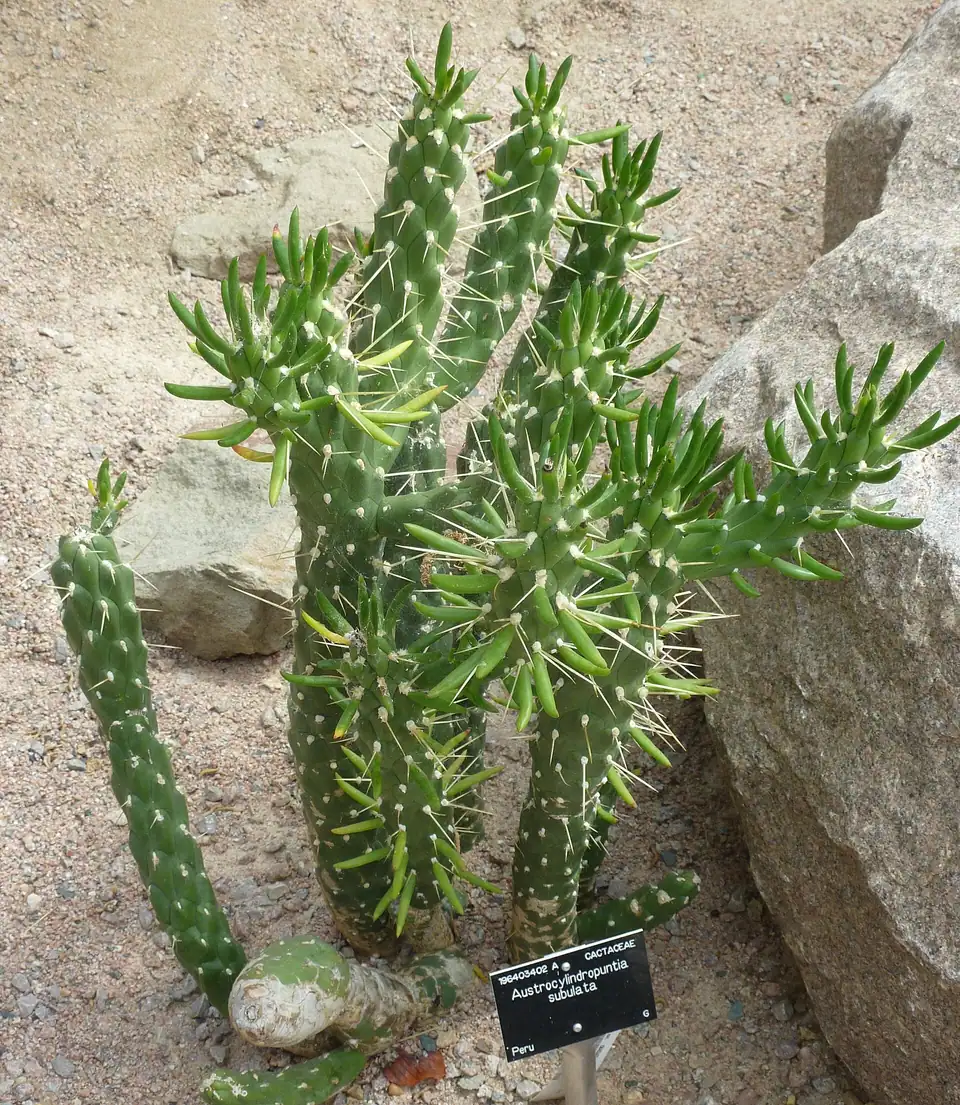
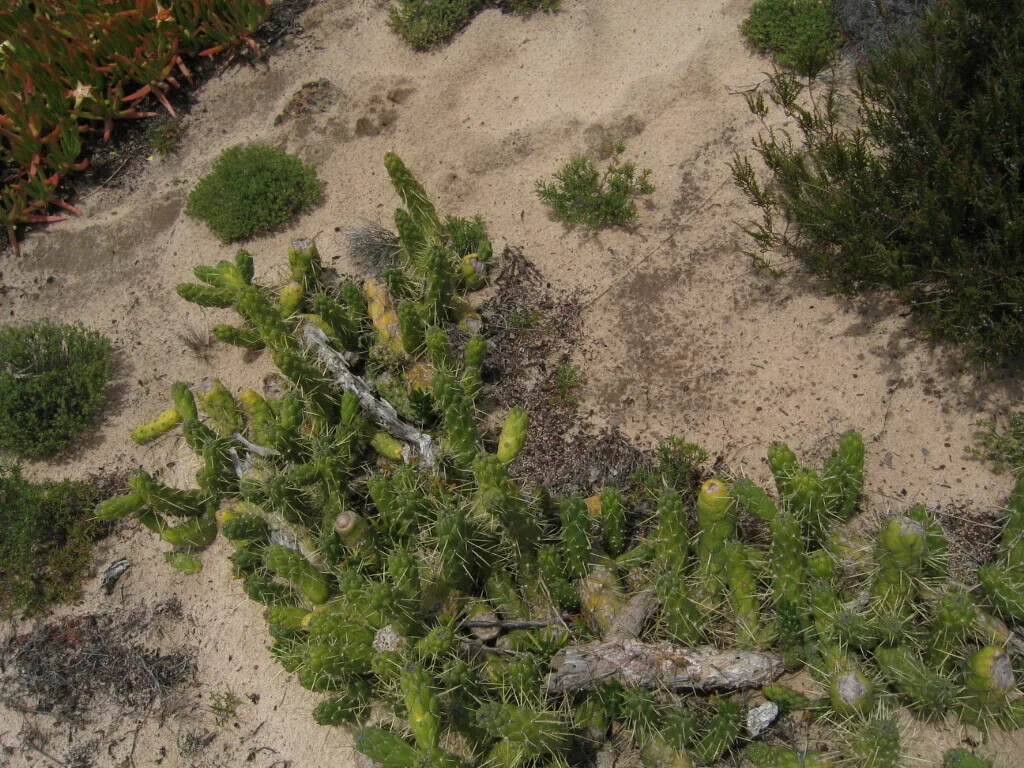
Austrocylindropuntia subulata
Escrito por Emilio Marruso · última revisión
Tóxica para: Gatos, Perros, Personas · Por qué
De un vistazo
Este cactus escultural es fácil de querer: crece a pleno sol o en semisombra, y en interior se conforma con un rincón luminoso. Riégalo a fondo y deja que la tierra se seque por completo antes de volver a regar. Vive feliz en maceta y hasta puede darte frutos comestibles, que incluso se fermentan para hacer vino de cactus.
- Sol
Sol pleno o semisombra; mucha luz en interior
Qué dicen las fuentes (2)
Luz: Pleno sol a semisombra; luz brillante en interiores
This plant requires full sun or bright indoor light, good drainage, and infrequent watering.
— Austrocylindropuntia subulata (Eve's Needle, Eve's Needle Cactus, Eve's Pin, Eve's Pin Cactus, Eve's-Pin Prickleypear, Long Spine Cactus) | North Carolina Extension Gardener Plant Toolbox [1] Light: Full sun (6 or more hours of direct sunlight a day) Partial Shade (Direct sunlight only part of the day, 2-6 hours)
— Austrocylindropuntia subulata (Eve's Needle, Eve's Needle Cactus, Eve's Pin, Eve's Pin Cactus, Eve's-Pin Prickleypear, Long Spine Cactus) | North Carolina Extension Gardener Plant Toolbox [1] - Riego
Riega a fondo y deja secar la tierra del todo; el exceso de agua pudre las raíces
Qué dicen las fuentes (3)
Riego: Riega con poca frecuencia; riega bien y deja que el suelo se seque completamente entre riegos
Water the plant well and allow the soil to completely dry out between waterings.
— Austrocylindropuntia subulata (Eve's Needle, Eve's Needle Cactus, Eve's Pin, Eve's Pin Cactus, Eve's-Pin Prickleypear, Long Spine Cactus) | North Carolina Extension Gardener Plant Toolbox [1] This plant requires full sun or bright indoor light, good drainage, and infrequent watering.
— Eve's Needle - Austrocylindropuntia subulata | North Carolina Extension Gardener Plant Toolbox [2] Notas sobre el riego: El riego excesivo o un drenaje inadecuado pueden causar pudrición de raíces; la alta humedad puede causar pudrición del tallo
Overwatering or inadequate drainage can result in root rot, and high humidity can causes stem rot.
— Austrocylindropuntia subulata (Eve's Needle, Eve's Needle Cactus, Eve's Pin, Eve's Pin Cactus, Eve's-Pin Prickleypear, Long Spine Cactus) | North Carolina Extension Gardener Plant Toolbox [1] - Frío
Aguanta inviernos de hasta −6,7 °C (20 °F)
Rústica en inviernos normales · USDA 9a · RHS H4 · Z9
Qué dicen las fuentes (2)
Rusticidad, zona más fría: 9a [mínima invernal de −6,7 a −3,9 °C (de 20 a 25 °F)]
USDA Plant Hardiness Zone: 9a, 9b, 10a, 10b, 11a, 11b
— Austrocylindropuntia subulata (Eve's Needle, Eve's Needle Cactus, Eve's Pin, Eve's Pin Cactus, Eve's-Pin Prickleypear, Long Spine Cactus) | North Carolina Extension Gardener Plant Toolbox [1] Rusticidad, zona más cálida: 11b [mínima invernal de 7,2 a 10 °C (de 45 a 50 °F)]
USDA Plant Hardiness Zone: 9a, 9b, 10a, 10b, 11a, 11b
— Austrocylindropuntia subulata (Eve's Needle, Eve's Needle Cactus, Eve's Pin, Eve's Pin Cactus, Eve's-Pin Prickleypear, Long Spine Cactus) | North Carolina Extension Gardener Plant Toolbox [1] - Cosecha
El fruto es comestible y se puede fermentar para hacer vino de cactus
- Plagas
Vigila la cochinilla algodonosa y la cochinilla; el exceso de agua o humedad pudre raíces y tallos
Qué dicen las fuentes (2)
Plagas: cochinillas, escamas
Eve's needle cactus is usually resistant to most pests and diseases; however, monitor the plant for mealybugs and scale.
— Austrocylindropuntia subulata (Eve's Needle, Eve's Needle Cactus, Eve's Pin, Eve's Pin Cactus, Eve's-Pin Prickleypear, Long Spine Cactus) | North Carolina Extension Gardener Plant Toolbox [1] Enfermedades: pudrición de raíz, pudrición del tallo
Overwatering or inadequate drainage can result in root rot, and high humidity can causes stem rot.
— Austrocylindropuntia subulata (Eve's Needle, Eve's Needle Cactus, Eve's Pin, Eve's Pin Cactus, Eve's-Pin Prickleypear, Long Spine Cactus) | North Carolina Extension Gardener Plant Toolbox [1] - Tamaño
Hasta 4 m de alto en su hábitat natural; la variedad 'Monstruosa', hasta 1 m
Qué dicen las fuentes (2)
Altura adulta: 396 cm (13 pies) en hábitat nativo
cultivar 'Monstruosa': smaller habit, up to 3.3 feet tall, densely branched, has a main stem and many upright cylinder-like shoots
— Austrocylindropuntia subulata (Eve's Needle, Eve's Needle Cactus, Eve's Pin, Eve's Pin Cactus, Eve's-Pin Prickleypear, Long Spine Cactus) | North Carolina Extension Gardener Plant Toolbox [1] Eve's needle cactus may grow up to 13 feet tall in its native habitat, but is much smaller in cultivation.
— Austrocylindropuntia subulata (Eve's Needle, Eve's Needle Cactus, Eve's Pin, Eve's Pin Cactus, Eve's-Pin Prickleypear, Long Spine Cactus) | North Carolina Extension Gardener Plant Toolbox [1] - Multiplicación
Se multiplica por esquejes de tallo o por acodo
Qué dicen las fuentes (1)
Propagación: Acodo, esqueje de tallo
Recommended Propagation Strategy: Layering Stem Cutting
— Austrocylindropuntia subulata (Eve's Needle, Eve's Needle Cactus, Eve's Pin, Eve's Pin Cactus, Eve's-Pin Prickleypear, Long Spine Cactus) | North Carolina Extension Gardener Plant Toolbox [1] - Maceta
Crece bien en maceta, también en interior
Qué dicen las fuentes (2)
En maceta: Sí
If used as a container or houseplant make sure the container or clay pot has adequate drainage holes.
— Austrocylindropuntia subulata (Eve's Needle, Eve's Needle Cactus, Eve's Pin, Eve's Pin Cactus, Eve's-Pin Prickleypear, Long Spine Cactus) | North Carolina Extension Gardener Plant Toolbox [1] En interior: Sí
For cactus enthusiasts, it could be used as an indoor houseplant.
— Austrocylindropuntia subulata (Eve's Needle, Eve's Needle Cactus, Eve's Pin, Eve's Pin Cactus, Eve's-Pin Prickleypear, Long Spine Cactus) | North Carolina Extension Gardener Plant Toolbox [1] - Seguridad
No es tóxico para gatos, perros ni caballos, pero sus espinas pueden herir a niños y mascotas
Resumen
El cactus aguja de Eva es un cactus espinoso, arbustivo o similar a un árbol, nativo de los Andes, que es adecuado para entusiastas de los cactus como planta de interior. [1] Necesita pleno sol o luz interior brillante, buen drenaje y riego poco frecuente, y no sobrevivirá a temperaturas bajo cero ni a alta humedad. [1]
Citado en inglés, como en la fuente.
Cuidados
Riego
Riego
Riega con poca frecuencia; riega bien y deja que el suelo se seque completamente entre riegos
Qué dicen las fuentes (2)
Water the plant well and allow the soil to completely dry out between waterings.This plant requires full sun or bright indoor light, good drainage, and infrequent watering.Notas sobre el riego
El riego excesivo o un drenaje inadecuado pueden causar pudrición de raíces; la alta humedad puede causar pudrición del tallo
Qué dicen las fuentes (1)
Overwatering or inadequate drainage can result in root rot, and high humidity can causes stem rot.Luz
Pleno sol a semisombra; luz brillante en interiores
Qué dicen las fuentes (2)
This plant requires full sun or bright indoor light, good drainage, and infrequent watering.Light:
Full sun (6 or more hours of direct sunlight a day)
Partial Shade (Direct sunlight only part of the day, 2-6 hours)Clima y frío
Rusticidad, zona más fría
9a [mínima invernal de −6,7 a −3,9 °C (de 20 a 25 °F)]
Qué dicen las fuentes (1)
USDA Plant Hardiness Zone:
9a, 9b, 10a, 10b, 11a, 11bRusticidad, zona más cálida
11b [mínima invernal de 7,2 a 10 °C (de 45 a 50 °F)]
Qué dicen las fuentes (1)
USDA Plant Hardiness Zone:
9a, 9b, 10a, 10b, 11a, 11bDónde cultivarla
En interior
Sí
Qué dicen las fuentes (1)
For cactus enthusiasts, it could be used as an indoor houseplant.En maceta
Sí
Qué dicen las fuentes (1)
If used as a container or houseplant make sure the container or clay pot has adequate drainage holes.Propagación
Acodo, esqueje de tallo
Qué dicen las fuentes (1)
Recommended Propagation Strategy:
Layering
Stem CuttingCultivo
La planta
Familia
Cactaceae
Qué dicen las fuentes (1)
It has long, slender stems with sharp spines and thrives in arid, desert-like conditions, and it is a member of the cactus family (Cactaceae).Altura adulta
396 cm (13 pies) en hábitat nativo
Lo que dice cada fuente
cultivar 'Monstruosa': hasta 100 cm (3.3 pies)
Qué dicen las fuentes (2)
cultivar 'Monstruosa': smaller habit, up to 3.3 feet tall, densely branched, has a main stem and many upright cylinder-like shootsEve's needle cactus may grow up to 13 feet tall in its native habitat, but is much smaller in cultivation.Plagas y enfermedades
Plagas
cochinillas, escamas
Qué dicen las fuentes (1)
Eve's needle cactus is usually resistant to most pests and diseases; however, monitor the plant for mealybugs and scale.Enfermedades
pudrición de raíz, pudrición del tallo
Qué dicen las fuentes (1)
Overwatering or inadequate drainage can result in root rot, and high humidity can causes stem rot.Problemas
Podredumbre de la raíz
Síntoma: El riego excesivo o un drenaje inadecuado pueden causar pudrición de la raíz
Qué hacer: Evita el exceso de riego y proporciona un drenaje adecuado; deja que el suelo se seque por completo entre riegos
Qué dicen las fuentes (2)
Overwatering or inadequate drainage can result in root rot, and high humidity can causes stem rot.
— Austrocylindropuntia subulata (Eve's Needle, Eve's Needle Cactus, Eve's Pin, Eve's Pin Cactus, Eve's-Pin Prickleypear, Long Spine Cactus) | North Carolina Extension Gardener Plant Toolbox [1] Water the plant well and allow the soil to completely dry out between waterings.
— Austrocylindropuntia subulata (Eve's Needle, Eve's Needle Cactus, Eve's Pin, Eve's Pin Cactus, Eve's-Pin Prickleypear, Long Spine Cactus) | North Carolina Extension Gardener Plant Toolbox [1] Cochinillas harinosas y cochinillas
Síntoma: La planta generalmente es resistente a la mayoría de plagas y enfermedades, pero pueden aparecer cochinillas harinosas y cochinillas
Qué hacer: Supervisa la planta para detectar cochinillas harinosas y escamas
Qué dicen las fuentes (1)
usually resistant to most pests and diseases; however, monitor the plant for mealybugs and scale.
— Austrocylindropuntia subulata (Eve's Needle, Eve's Needle Cactus, Eve's Pin, Eve's Pin Cactus, Eve's-Pin Prickleypear, Long Spine Cactus) | North Carolina Extension Gardener Plant Toolbox [1]
Remedios
Cada remedio indica qué dicen las fuentes oficiales; los remedios tradicionales sin fuente oficial aparecen marcados. Los perjudiciales están para que sepas evitarlos.
Primeros auxilios
Primeros auxilios: no sustituyen al médico
contacto de la piel con los gloquidios
retira un solo gloquidio con pinzas Fuente oficial, sin prueba independiente
do not bring the injured part of your body anywhere near your mouth.
— pbssocal.org [4] Cómo: Para un solo gloquidio, la extracción se puede hacer con pinzas.
For a single glochid, removal can be done with tweezers.
— pmc.ncbi.nlm.nih.gov [3] pelado con pegamento doméstico Fuente oficial, sin prueba independiente
Thus the best approach for deeply lodged spines you can't remove on your own is to see a doctor, trained First Aid provider, or other person who knows what she's doing to remove those spines for you.
— pbssocal.org [4] Cómo: Aplica una capa de pegamento doméstico sobre el área afectada y luego retírala.
For injuries with multiple glochidia, the removal can be done by applying a layer of household glue over the site of injury and then peeling it away, hopefully taking the spines with it.
— pmc.ncbi.nlm.nih.gov [3]
Cuidar la planta
cochinillas harinosas
hisopo con alcohol isopropílico No verificado
Remedio tradicional, no verificado por una fuente oficial.
Cómo: Usa un hisopo de algodón o un pincel para aplicar alcohol isopropílico sobre las cochinillas, luego retira los insectos muertos.
spray de agua con jabón para platos Funciona en parte
Spot-treat a small part of your cactus before spraying the entire plant. Some cacti are sensitive to soap and water solutions.
— plantcaretoday.com [5] Cómo: Comienza con aproximadamente una cucharada por galón de agua; vuelve a aplicar cada dos días.
Soaps containing vegetable oil or animal fat can be mixed with water to create a spray that breaks down mealybugs’ fuzzy defenses and smothers them.
— plantcaretoday.com [5] Qué dicen las pruebas Despite being made of common household materials like dish soap and vinegar and having seemingly fewer risks, these concoctions may have unforeseen consequences and cannot be relied upon to have the same effectiveness as a registered pesticide.
— extension.unh.edu [6] spray de aceite de neem Funciona en parte
Remove your cactus from direct sunlight when you apply this product mixture because the oil can magnify the sun’s rays and cause burning.
— plantcaretoday.com [5] Cómo: Diluye según las instrucciones del envase; generalmente alrededor de una onza de concentrado de aceite de neem por galón de agua.
Neem Oil contains a natural insecticide for plants called Azadirachtin, which does have a residual effect. One application will last about a week.
— plantcaretoday.com [5] Qué dicen las pruebas However, neem oil is not effective against every insect and disease, and often must be frequently reapplied to reach the desired outcome.
— extension.unh.edu [6] chorro de agua fuerte No verificado
Remedio tradicional, no verificado por una fuente oficial.
Cactus and succulents that tend to drop leaves or plantlets might not respond well to this sort of aggressive treatment, but those that don’t can benefit from it.
— plantcaretoday.com [5] Cómo: Rocía las plagas con un fuerte chorro de agua; luego saca la planta de la maceta, lávala bien incluyendo las raíces, y vuelve a plantarla en un sustrato limpio.
Venenosa para los animales
Según la fuente, citada textualmente. No es un consejo médico ni veterinario: si una persona o un animal pudo haber ingerido esta planta, contacta con un centro de toxicología o con un veterinario.
Animales
#non-toxic for cats
[1]La fuente señala el riesgo para este animal pero no explica por qué.
#non-toxic for dogs
[1]La fuente señala el riesgo para este animal pero no explica por qué.
#non-toxic for horses
[1]La fuente señala el riesgo para este animal pero no explica por qué.
Problems: Problem for Cats Problem for Children Problem for Dogs Spines/Thorns
[1]- Partes venenosas
The fruits are dark green to red, 5 inches long, egg-shaped, and have fine irritating hairs (glochids).
[1]
Problem for Dogs Spines/Thorns
[1]- Partes venenosas
The fruits are dark green to red, 5 inches long, egg-shaped, and have fine irritating hairs (glochids).
[1]
Personas
Comestibilidad
Según la fuente, citada textualmente. No comas una planta basándote solo en esta página: los errores de identificación pueden ser peligrosos.
The fruit is edible and can also be fermented to make cactus wine.
[1]
Plantas similares
- Nopal Cegador Opuntia microdasys
- Nopal del Este Opuntia humifusa
- Pitahaya Selenicereus undatus
- Cacto erizo sudamericano Echinopsis oxygona
- Disciplinaria de Cuba Rhipsalis baccifera
- Cactus viejo Cephalocereus senilis
- Cactus de Pascua Rhipsalidopsis rosea
- Nopal Raizudo Opuntia macrorhiza
Fuentes
Cada valor anterior se cita de estos documentos. Los enlaces llevan al editor original.
- Austrocylindropuntia subulata (Eve's Needle, Eve's Needle Cactus, Eve's Pin, Eve's Pin Cactus, Eve's-Pin Prickleypear, Long Spine Cactus) | North Carolina Extension Gardener Plant Toolbox · plants.ces.ncsu.edu, consultado
- Eve's Needle - Austrocylindropuntia subulata | North Carolina Extension Gardener Plant Toolbox · plants.ces.ncsu.edu, consultado
- pmc.ncbi.nlm.nih.gov · pmc.ncbi.nlm.nih.gov
- pbssocal.org · pbssocal.org
- plantcaretoday.com · plantcaretoday.com
- extension.unh.edu · extension.unh.edu
Escrito por Emilio Marruso · última revisión