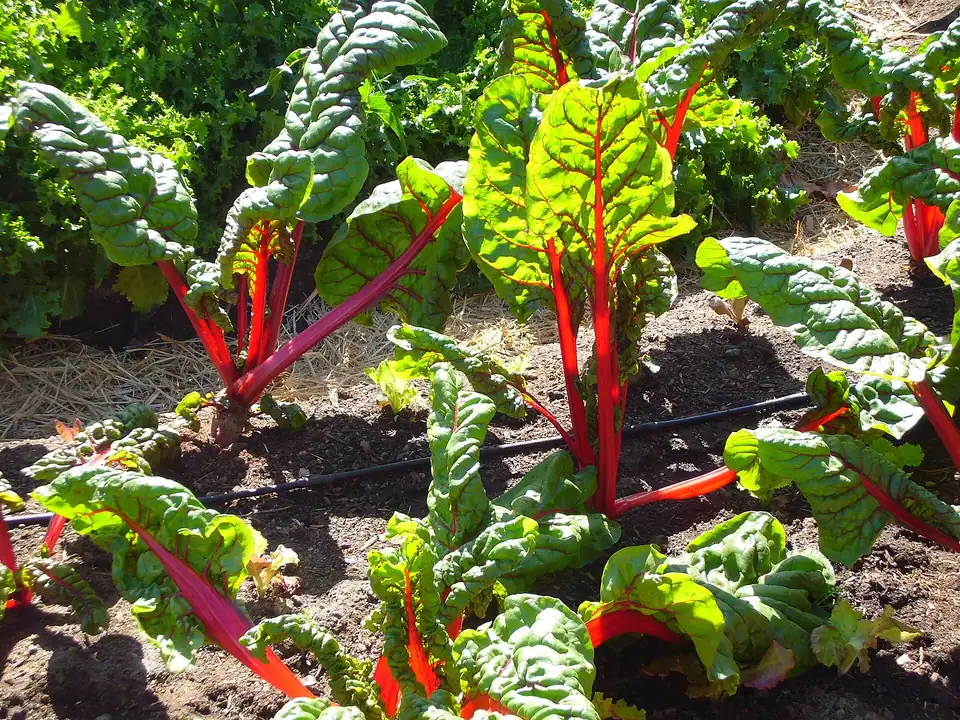

Cómo cultivar y cuidar Common beet
Beta vulgaris
Escrito por Emilio Marruso · última revisión
De un vistazo
La remolacha te da dos cosechas en una: las hojas, para cocinar o comer frescas como verdura, y las raíces, para encurtir o cocinar enteras. Siembra las semillas a 1 cm de profundidad en un lugar soleado, riega de forma regular y en 6–8 semanas podrás sacar raíces del tamaño de una pelota de golf. También crece en maceta.
- Sol
Un lugar soleado
Qué dicen las fuentes (1)
Luz: Lugares soleados
Beets are cool season vegetables that prefer sunny locations and fertile, deep, well-drained soils. Incorporate plenty of organic matter and
— How to Grow Beets in Your Garden | USU [3] - Riego
Riega de forma regular y uniforme; los cambios de humedad agrietan las raíces. Acolchar ayuda
Qué dicen las fuentes (4)
Riego: Riega regularmente y de manera uniforme; bien regado pero con buen drenaje
Water beets regularly. Water requirements depend on soil type. Mulching around the plants helps to conserve soil moisture. Use drip
— How to Grow Beets in Your Garden | USU [3] - Beets need to be well-irrigated for best quality, but they should also have good drainage.
— Beets: How to Grow It [2] Notas sobre el riego: Evita las fluctuaciones de humedad, que causan agrietamiento de las raíces y bajos rendimientos; cubre con mantillo para conservar la humedad
Moisture fluctuations cause root cracking, slow leaf development, and contribute to low yields. Water stress during the first 6 weeks
— How to Grow Beets in Your Garden | USU [3] Water beets regularly. Water requirements depend on soil type. Mulching around the plants helps to conserve soil moisture. Use drip
— How to Grow Beets in Your Garden | USU [3] - Suelo
Suelo con buen drenaje y mucho compost incorporado
Qué dicen las fuentes (5)
Riego: Riega regularmente y de manera uniforme; bien regado pero con buen drenaje
Water beets regularly. Water requirements depend on soil type. Mulching around the plants helps to conserve soil moisture. Use drip
— How to Grow Beets in Your Garden | USU [3] - Beets need to be well-irrigated for best quality, but they should also have good drainage.
— Beets: How to Grow It [2] Abonos naturales: Abundante materia orgánica o compost incorporado antes de plantar, especialmente en suelos arcillosos pesados; con compost, una capa de no más de 2.54 cm [1 in] de materia orgánica bien compostada
Heavy clay soil should be amended with compost or other organic matter.
— Beets: How to Grow It [2] Incorporate plenty of organic matter and a complete fertilizer into the area before planting.
— How to Grow Beets in Your Garden | USU [3] If you fertilize with compost, apply no more than 1 inch of well-composted organic matter per 100 square feet of garden area.
— How to Grow Beets in Your Garden | USU [3] - Distancia
30–46 cm entre hileras
Qué dicen las fuentes (1)
Distancia entre hileras: 30.5-45.7 cm (12-18 pulgadas)
Seeded beets should be spaced 3-4 inches between plants in the row with rows 12-18 inches apart.
— How to Grow Beets in Your Garden | USU [3] - Abonado
Compost antes de plantar y nitrógeno 6 semanas después de nacer; el exceso da hojas y no raíces
Qué dicen las fuentes (6)
Cuándo: Antes de plantar, luego un abono nitrogenado de cobertura 6 semanas después de la emergencia
Incorporate plenty of organic matter and a complete fertilizer into the area before planting.
— How to Grow Beets in Your Garden | USU [3] Apply ¼ cup per 10 foot of row of a nitrogen-based fertilizer (21-0-0) 6 weeks after emergence to encourage rapid plant growth.
— How to Grow Beets in Your Garden | USU [3] Abonos naturales: Abundante materia orgánica o compost incorporado antes de plantar, especialmente en suelos arcillosos pesados; con compost, una capa de no más de 2.54 cm [1 in] de materia orgánica bien compostada
Heavy clay soil should be amended with compost or other organic matter.
— Beets: How to Grow It [2] Incorporate plenty of organic matter and a complete fertilizer into the area before planting.
— How to Grow Beets in Your Garden | USU [3] If you fertilize with compost, apply no more than 1 inch of well-composted organic matter per 100 square feet of garden area.
— How to Grow Beets in Your Garden | USU [3] Signos de exceso: Crecimiento extenso de la parte aérea a costa del crecimiento de la raíz (exceso de nitrógeno)
Excessive nitrogen fertilization can also contribute to extensive top growth at the expense of root growth.
— Beets: How to Grow It [2] - Cosecha
Saca las raíces del tamaño de una pelota de golf, 6–8 semanas después de plantar; las hojas también se comen
Qué dicen las fuentes (1)
Cómo cosechar: extrae las raíces con un tenedor de papa o herramienta similar cuando tengan el tamaño de una pelota de golf, de 6 a 8 semanas después de la siembra
Mature roots are generally ready to harvest 6-to-8 weeks after planting, when they have reached the size of a golf ball. They can be dug with a potato fork or similar tool.
— Beets: How to Grow It [2] - Plagas
Pulguilla, minadores y cercosporiosis; no la plantes en el mismo sitio dos años seguidos
Qué dicen las fuentes (6)
Plagas: escarabajos pulga, minadores de hoja, chicharritas
Flea Beetles: Flea beetles chew small, round holes in leaves (Figure 4-A). They can heavily damage the crop, especially when the plants are very young.
— Beets: How to Grow It [2] Small white maggots that burrow and feed in the leaves. Leave a lacy trail.
— How to Grow Beets in Your Garden | USU [3] Carried by leafhoppers. Cover plants with fabric mulch. No known control.
— How to Grow Beets in Your Garden | USU [3] Enfermedades: mancha foliar por cercospora, manchas foliares, pudriciones de raíz
Cercospora Leaf Spot: Avoid this disease by not planting beets in the same spot two years in a row and by removing any remaining plant debris after harvest.
— Beets: How to Grow It [2] Fungal diseases that cause circular spotting on infected leaves.
— How to Grow Beets in Your Garden | USU [3] Fungal diseases that cause decay and rotting of the root. May affect plant stands
— How to Grow Beets in Your Garden | USU [3] - Multiplicación
Se multiplica por semilla
Qué dicen las fuentes (1)
Propagación: Semilla
Beets are always grown from seed. Beets can be sown after soils reach 40°F. Seeds germinate best at 55-75°F and require 7-14 days to emerge.
— How to Grow Beets in Your Garden | USU [3] - Siembra
Siembra a 1 cm de profundidad; las semillas nacen en 7–14 días
Qué dicen las fuentes (3)
Profundidad de siembra: 1.3 cm (1/2 pulgada)
Plant seeds about 1/2 inch deep and one inch apart.
— Beet | Home Vegetable Gardening | Illinois Extension | Illinois [4] Plant seeds ½ inch deep and one inch apart. Each beet seed will produce 2-to-6 plants, which will need to be thinned.
— Beets: How to Grow It [2] Días de germinación: 7-14 días
Seeds germinate best at 55-75°F and require 7-14 days to emerge.
— How to Grow Beets in Your Garden | USU [3] - Maceta
Crece también en maceta
Qué dicen las fuentes (1)
En maceta: Sí
In gardens, beet roots can grow 3-to-4 feet deep in good soil. However, because of their small size, beets can easily be grown in containers or raised beds.
— Beets: How to Grow It [2]
Resumen
Las remolachas son hierbas bienales que generalmente se cultivan como anuales por su raíz engrosada, y las puntas también se pueden comer como verdura. [1] Son hortalizas de estación fría que aman el sol y necesitan riego regular y uniforme y un suelo bien drenado. [3]
Citado en inglés, como en la fuente.
Cuidados
Las medidas entre corchetes son nuestra conversión al otro sistema de unidades; el texto citado no cambia.
Riego
Riego
Riega regularmente y de manera uniforme; bien regado pero con buen drenaje
Qué dicen las fuentes (2)
Water beets regularly. Water requirements depend on soil type. Mulching around the plants helps to conserve soil moisture. Use drip- Beets need to be well-irrigated for best quality, but they should also have good drainage.Notas sobre el riego
Evita las fluctuaciones de humedad, que causan agrietamiento de las raíces y bajos rendimientos; cubre con mantillo para conservar la humedad
Qué dicen las fuentes (2)
Moisture fluctuations cause root cracking, slow leaf development, and contribute to low yields. Water stress during the first 6 weeksWater beets regularly. Water requirements depend on soil type. Mulching around the plants helps to conserve soil moisture. Use dripLuz
Lugares soleados
Qué dicen las fuentes (1)
Beets are cool season vegetables that prefer sunny locations and fertile, deep, well-drained soils. Incorporate plenty of organic matter andDónde cultivarla
En maceta
Sí
Qué dicen las fuentes (1)
In gardens, beet roots can grow 3-to-4 feet deep in good soil. However, because of their small size, beets can easily be grown in containers or raised beds.Distancia de plantación
Las fuentes dan valores distintos según la región, la zona o las condiciones de cultivo.
Lo que dice cada fuente
Según SDSU Extension: 5.1-7.6 cm (2-3 pulgadas)
Según USU Extension: 7.6-10.2 cm (3-4 pulgadas)
Según Illinois Extension: 2.5-7.6 cm (1-3 pulgadas)
Qué dicen las fuentes (3)
Según SDSU Extension: The plants should be thinned to 2-to-3 inches apart.Según USU Extension: Seeded beets should be spaced 3-4 inches between plants in the row with rows 12-18 inches apart.Según Illinois Extension: The seedlings should be thinned to 1 to 3 inches apart. If thinning is delayed until the plants are 3Propagación
Semilla
Qué dicen las fuentes (1)
Beets are always grown from seed. Beets can be sown after soils reach 40°F. Seeds germinate best at 55-75°F and require 7-14 days to emerge.Cultivo
La planta
Ciclo de vida
bianual (generalmente cultivada como anual)
Qué dicen las fuentes (1)
Beet plants are biennial herbs that are usually grown as annuals. They form a large
inflated tap root and leafy rosette of leaves that bolt in the early summer of the
second seasonFamilia
familia de las amarantáceas (antes clasificada en la familia de las quenopodiáceas)
Qué dicen las fuentes (1)
The plant has long been classified
as belonging to the chenopod family, the same family to which spinach belongs, but
new classification schemes using DNA data have moved this whole family into the amaranth
family.Siembra y crecimiento
Días de germinación
7-14 días
Qué dicen las fuentes (1)
Seeds germinate best at 55-75°F and require 7-14 days to emerge.Profundidad de siembra
1.3 cm (1/2 pulgada)
Distancia entre hileras
30.5-45.7 cm (12-18 pulgadas)
Qué dicen las fuentes (1)
Seeded beets should be spaced 3-4 inches between plants in the row with rows 12-18 inches apart.Cosecha y conservación
Cómo cosechar
extrae las raíces con un tenedor de papa o herramienta similar cuando tengan el tamaño de una pelota de golf, de 6 a 8 semanas después de la siembra
Qué dicen las fuentes (1)
Mature roots are generally ready to harvest 6-to-8 weeks after planting, when they have reached the size of a golf ball. They can be dug with a potato fork or similar tool.Conservación
lugar fresco y húmedo a 0-4.4 °C (32-40 °F) con las puntas cortadas; no permitas que se congelen
Qué dicen las fuentes (1)
Cut off tops and store beets in a cool, humid place with temperatures ranging from 32°to 40° Farenheit. Do not allow them to freeze.Plagas y enfermedades
Plagas
escarabajos pulga, minadores de hoja, chicharritas
Qué dicen las fuentes (3)
Flea Beetles: Flea beetles chew small, round holes in leaves (Figure 4-A). They can heavily damage the crop, especially when the plants are very young.Small white maggots that burrow and feed in the leaves. Leave a lacy trail.Carried by leafhoppers. Cover plants with fabric mulch. No known control.Enfermedades
mancha foliar por cercospora, manchas foliares, pudriciones de raíz
Qué dicen las fuentes (3)
Cercospora Leaf Spot: Avoid this disease by not planting beets in the same spot two years in a row and by removing any remaining plant debris after harvest.Fungal diseases that cause circular spotting on infected leaves.Fungal diseases that cause decay and rotting of the root. May affect plant standsAbonado
Cuándo
Antes de plantar, luego un abono nitrogenado de cobertura 6 semanas después de la emergencia
Qué dicen las fuentes (2)
Incorporate plenty of organic matter and a complete fertilizer into the area before planting.Apply ¼ cup per 10 foot of row of a nitrogen-based fertilizer (21-0-0) 6 weeks after emergence to encourage rapid plant growth.Abonos naturales
Abundante materia orgánica o compost incorporado antes de plantar, especialmente en suelos arcillosos pesados; con compost, una capa de no más de 2.54 cm [1 in] de materia orgánica bien compostada
Qué dicen las fuentes (3)
Heavy clay soil should be amended with compost or other organic matter.Incorporate plenty of organic matter and a complete fertilizer into the area before planting.If you fertilize with compost, apply no more than 1 inch of well-composted organic matter per 100 square feet of garden area.Abonos minerales
Fertilizante completo incorporado en los 15.2 cm [6 in] superiores del suelo antes de plantar, siguiendo el análisis del suelo; nitrógeno como urea, 19.1–25.5 mL/m², o como fertilizante 21-0-0, 59.3 mL por 3.05 m [10 ft] de hilera, colocado junto a las plantas y regado; fósforo y potasio según el análisis del suelo, en un suelo alto en potasio
Qué dicen las fuentes (6)
If fertilizer applications are warranted, work the fertilizer into the top 6 inches of soil.Nitrogen: Apply ¾ to 1 cup of urea per 100 square-feet.Apply ¼ cup per 10 foot of row of a nitrogen-based fertilizer (21-0-0) 6 weeks after emergence to encourage rapid plant growth.Place the fertilizer to the side of the plants and irrigate it into the soil.Phosphorus and Potassium: Apply according to soil test recommendations.Like most root crops, beets need a fertile soil (especially high in potassium) for vigorous growth.Microelementos
Boro: se necesitan cantidades adecuadas para un desarrollo radicular correcto
Qué dicen las fuentes (1)
Beets require adequate amounts of boron to develop properly. Black, sunken spots on or in the root generally indicate low boron levels in the soil.Evitar
Exceso de nitrógeno; estrés por agua o fertilizante durante el crecimiento
Qué dicen las fuentes (2)
Excessive nitrogen fertilization can also contribute to extensive top growth at the expense of root growth.Avoid water or fertilizer stress during growth. Irrigation should be frequent and uniform to ensure good growth.Signos de carencia
Bajo contenido de boro: manchas negras y hundidas en la raíz o dentro de ella; las plantas con deficiencia de boro son más susceptibles a las enfermedades comunes de la raíz
Qué dicen las fuentes (2)
Beets require adequate amounts of boron to develop properly. Black, sunken spots on or in the root generally indicate low boron levels in the soil.Boron deficient plants are more susceptible to many of the more common root diseases.Signos de exceso
Crecimiento extenso de la parte aérea a costa del crecimiento de la raíz (exceso de nitrógeno)
Qué dicen las fuentes (1)
Excessive nitrogen fertilization can also contribute to extensive top growth at the expense of root growth.Problemas
Escarabajos de la pulga
Síntoma: Los escarabajos pulga mastican pequeños agujeros redondos en las hojas.
Qué hacer: Planta hojas de mostaza, como la rúcula o los rábanos, cerca de los remolachas y a veces puede actuar como cultivo trampa.
Qué dicen las fuentes (1)
- Flea Beetles: Flea beetles chew small, round holes in leaves (Figure 4-A). They can heavily damage the crop, especially when the plants are very young. Planting mustard greens, such as arugula or radishes near the beets can sometimes act
— Beets: How to Grow It [2] Mancha foliar por Cercospora
Síntoma: La mancha foliar por Cercospora es una enfermedad importante de las remolachas.
Qué hacer: Evita esta enfermedad no plantando remolachas en el mismo lugar dos años seguidos y eliminando cualquier residuo vegetal restante después de la cosecha.
Qué dicen las fuentes (1)
- Cercospora Leaf Spot: Avoid this disease by not planting beets in the same spot two years in a row and by removing any remaining plant debris after harvest.
— Beets: How to Grow It [2]
Remedios
Cada remedio indica qué dicen las fuentes oficiales; los remedios tradicionales sin fuente oficial aparecen marcados. Los perjudiciales están para que sepas evitarlos.
Cuidar la planta
minador de la hoja del betabel
Pellizca las hojas infestadas Fuente oficial, sin prueba independiente
Cómo: Pellizca las hojas para matar las larvas en el interior y retira las hojas infestadas cuando las notes.
Pinch leaves to kill larvae inside. - Pick out infested leaves when noticed. Discard leaves in garbage.
— hortsense.cahnrs.wsu.edu [5] cobertura flotante de hileras Fuente oficial, sin prueba independiente
Do not cover crops in fields where susceptible crops were grown previously, as adult flies may emerge from the soil underneath the cover.
— umass.edu [6] Cómo: Protege las plantas con una cubierta flotante para hileras antes de la aparición de las moscas en primavera.
Screen plants with a floating row cover prior to emergence of flies in spring (April-May).
— hortsense.cahnrs.wsu.edu [5] control de malezas alrededor de los bancales Fuente oficial, sin prueba independiente
Cómo: Controla las malezas que pueden servir como hospederas de los minadores de la espinaca y del betabel.
Control weeds which can serve as hosts of spinach and beet leafminers. These include chickweed, lambquarters, and nightshades.
— umass.edu [6]
escarabajos de la pulga
cultivo trampa de mostaza o rábanos Funciona en parte
Cómo: Planta mostaza, como rúcula o rábanos, cerca de los remolachas.
Planting mustard greens, such as arugula or radishes near the beets can sometimes act as a trap crop.
— Beets: How to Grow It [2] Qué dicen las pruebas Planting mustard greens, such as arugula or radishes near the beets can sometimes act as a trap crop.
— Beets: How to Grow It [2]
mancha foliar por cercospora
rotación de cultivos y eliminación de residuos vegetales Fuente oficial, sin prueba independiente
Cómo: No plantes remolachas en el mismo lugar dos años seguidos y elimina los residuos vegetales restantes después de la cosecha.
Cercospora Leaf Spot: Avoid this disease by not planting beets in the same spot two years in a row and by removing any remaining plant debris after harvest.
— Beets: How to Grow It [2] enterramiento profundo de residuos vegetales Fuente oficial, sin prueba independiente
Cómo: Entierra los residuos vegetales con labranza profunda y rota con cultivos no hospedantes durante al menos 3 años.
Rotate with non-host crops for at least 3 years. - Bury plant debris using deep tillage.
— vegetables.cornell.edu [7]
Calendario
Siembra
Las fuentes dan valores distintos según la región, la zona o las condiciones de cultivo.
Lo que dice cada fuente
Según SDSU Extension: Una vez que la temperatura del suelo alcance los 45 F; nuevamente a mediados o finales de agosto para una cosecha de otoño.
Según USU Extension: 2-3 semanas antes de la última helada
Según Illinois Extension: 30 días antes de la fecha sin heladas
Qué dicen las fuentes (3)
Según SDSU Extension: Plant beet seed directly into the soil once soil temperatures have reached 45° Fahrenheit. Light or loamy soil is preferred.Según USU Extension: Plant 2-3 weeks before the last frost. Beets taste best when plants have been exposed to several weeks of coolSegún Illinois Extension: Beets are fairly frost hardy and can be planted in the garden 30 days before the frost-free date for your area. Although beets grow wellPlantación
No figura en las fuentes consultadas.
Cosecha
Las fuentes dan valores distintos según la región, la zona o las condiciones de cultivo.
Lo que dice cada fuente
Según SDSU Extension: 6-8 semanas después de la siembra
Según USU Extension: 60-80 días desde la siembra
Según Illinois Extension: Alrededor de 60 días para alcanzar 1 1/2 pulgadas [3,8 cm] de diámetro
Qué dicen las fuentes (3)
Según SDSU Extension: Mature roots are generally ready to harvest 6-to-8 weeks after planting, when they have reached the size of a golfSegún USU Extension: Generally roots are mature 60-80 days from seeding, depending on variety. As the roots get larger they tend to getSegún Illinois Extension: About 60 days are required for beets to reach 1 1/2 inches in diameter, the size often used for cooking, pickling or canning as wholeMeses tal como los dan las fuentes, en su mayoría de Estados Unidos (hemisferio norte). En el hemisferio sur se desplazan unos seis meses.
Respecto a las heladas
Estimación menos precisa: no hay ninguna estación meteorológica a menos de 300 km.
Busca las fechas de heladas por código postal o ciudad
Siembra al aire libre: de 2 a 3 semanas antes de la última helada
Plant seeds ¼-½ inch deep. Thin seedling beets to 3 inches apart in the row with rows 12-18 inches apart. Plant 2-3 weeks before the last frost.
— How to Grow Beets in Your Garden | USU [3]
Cuenta desde las fechas medias de las heladas de tu zona.
Comestibilidad
Según la fuente, citada textualmente. No comas una planta basándote solo en esta página: los errores de identificación pueden ser peligrosos.
- The tops are cooked or served fresh as greens and the roots may be pickled for salads or cooked whole, then sliced or diced.
[4]
Valores orientativos
Valores de una fuente secundaria, no comprobados palabra por palabra como el resto de esta página. Úselos como punto de partida.
- Altura adulta
- 30.5-45.7 cm (1-1.5 pies)Valor orientativo, adáptalo a tu clima · Fuente secundaria
- Resiste la sequía
- SíValor orientativo, adáptalo a tu clima · Fuente secundaria
- pH del suelo
- 6-7.5Valor orientativo, adáptalo a tu clima · Fuente secundaria
- Zonas de rusticidad USDA
- 2-11 [mínima invernal de −45,6 a 10 °C (de −50 a 50 °F)]Valor orientativo, adáptalo a tu clima · Fuente secundaria
- Nivel de cuidado
- MedioValor orientativo, adáptalo a tu clima · Fuente secundaria
- Crecimiento
- BajoValor orientativo, adáptalo a tu clima · Fuente secundaria
- Poda
- Marzo, abril, mayo, junio, julio, agosto, septiembreValor orientativo, adáptalo a tu clima · Fuente secundaria
Plantas similares
- Bananero de Etiopía Ensete ventricosum
- Agretti Soda inermis
- Ají Capsicum chinense
- Apio caballar Smyrnium olusatrum
- Allium senescens Allium senescens
- Allium triquetrum Allium triquetrum
- Alpine dock Rumex alpinus
- Alpine mountain-sorrel Oxyria digyna
Fuentes
Cada valor anterior se cita de estos documentos. Los enlaces llevan al editor original.
- Beets · uaex.uada.edu, consultado
- Beets: How to Grow It · extension.sdstate.edu, consultado
- How to Grow Beets in Your Garden | USU · extension.usu.edu, consultado
- Beet | Home Vegetable Gardening | Illinois Extension | Illinois · extension.illinois.edu, consultado
- hortsense.cahnrs.wsu.edu · hortsense.cahnrs.wsu.edu
- umass.edu · umass.edu
- vegetables.cornell.edu · vegetables.cornell.edu
Escrito por Emilio Marruso · última revisión