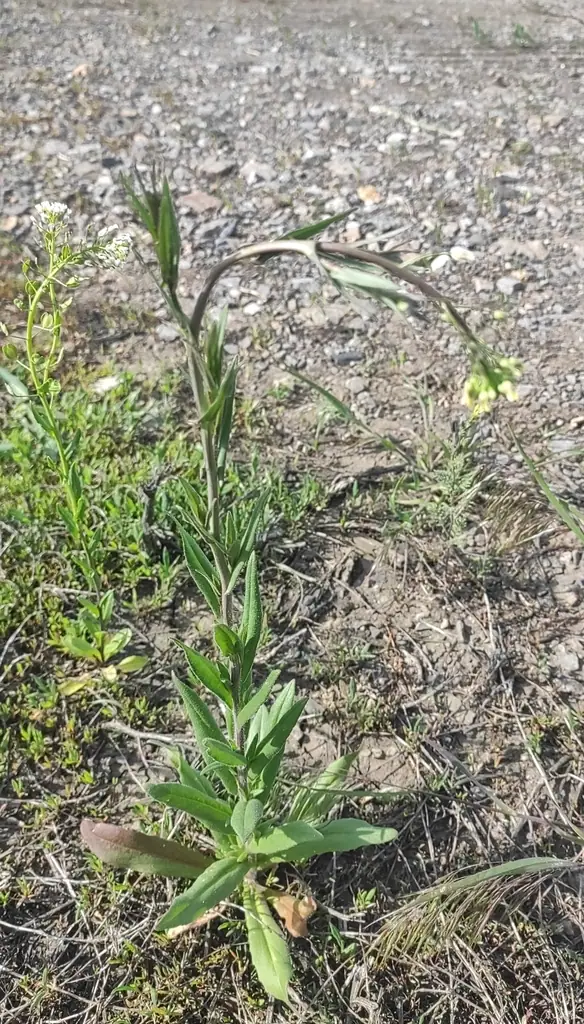
Cómo cultivar y cuidar Sésamo bastardo
Camelina sativa
Escrito por Emilio Marruso · última revisión
De un vistazo
La camelina es una anual agradecida para un rincón soleado: aguanta bien la sequía y pide poco abono. Siembra las variedades de primavera lo antes posible en primavera, o las de invierno de septiembre a principios de octubre. En 85–100 días las plantas están listas y de sus semillas se obtiene un aceite comestible: un cultivo curioso que merece la pena probar.
- Sol
Un lugar soleado
Qué dicen las fuentes (1)
Luz: Posición soleada
An easily grown plant, succeeding in most well-drained soils and preferring a sunny position
— Camelina sativa - Useful Temperate Plants [4] - Riego
Aguanta bien la sequía; necesita poco riego
Qué dicen las fuentes (1)
Riego: Tolerante a la sequía; se desempeña bien bajo estrés por sequía.
The plant performs well under drought stress conditions and may be better suited to low rainfall regions than most other oilseed crops.
— Camelina Production and Potential in Pennsylvania [1] - Suelo
Evita los suelos encharcados y con mal drenaje
Qué dicen las fuentes (1)
Notas sobre el riego: No se desempeña bien en suelos húmedos y con mal drenaje (ensayos en Pensilvania).
However, in initial trials in Pennsylvania, it has not performed well on wet and poorly drained soils.
— Camelina Production and Potential in Pennsylvania [1] - Abonado
Pide poco: abona antes de plantar; el exceso de nitrógeno hace que las plantas se tumben
Qué dicen las fuentes (5)
Cuándo: Antes de plantar, o con la semilla al sembrar a voleo
Fertilizer can be applied prior to planting or included with the seed if broadcasting. Camelina has generally low fertility requirements.
— Camelina Production and Potential in Pennsylvania [1] Abonos minerales: Requerimientos bajos: nitrógeno 39.2–44.8 kg [86,4–98,8 lb]/ha donde se esperan rendimientos de semilla de 1,350–1,680 kg [2976,2–3703,8 lb]/ha, 44.8–56.0 kg [98,8–123,5 lb]/ha para rendimientos más altos; fosfato (P₂O₅) 28.0–33.6 kg [61,7–74 lb]/ha y azufre 22.4 kg [49,4 lb]/ha en algunas situaciones; sulfato de amonio a 112 kg [246,9 lb]/ha aporta el azufre y 23.5 kg [51,8 lb]/ha de nitrógeno
Typical recommendations from Montana are 35-40 pounds of nitrogen (N), where yields ranging from 1,200-1,500 pounds per acre are expected and 40-50 pounds per acre where higher yields are expected.
— Camelina Production and Potential in Pennsylvania [1] In addition, a recommendation for 25-30 pounds P (phosphorus) (P 2 O 5 ) per acre and 20 pounds S (sulfur) per acre may be justified in some situations.
— Camelina Production and Potential in Pennsylvania [1] Ammonium sulfate (21-0-0-24S) at 100 pounds per acre could supply the sulfur needs and provide 21 pounds N per acre.
— Camelina Production and Potential in Pennsylvania [1] Evitar: Aplicaciones de nitrógeno superpuestas (el exceso de nitrógeno causa acame)
In 2009, most producers applied urea at 100 pounds per acre, but yields were similar to those from 2008. Excessive nitrogen (application overlaps) caused some lodging.
— Camelina Production and Potential in Pennsylvania [1] - Cosecha
Cosecha en julio (las de invierno, de finales de junio a principios de julio) con las vainas color paja; aceite comestible
Qué dicen las fuentes (6)
Cosecha: Julio (cultivo de primavera sembrado temprano); finales de junio a principios de julio (camelina de invierno)
Según Penn State Extension (early-planted spring crop): Harvest of early-planted camelina typically occurs in July.
— Camelina Production and Potential in Pennsylvania [1] Wisconsin (camelina de invierno): The camelina is then harvested with a combine in late June to early July when the soybeans are still small, avoiding damage.
— Winter Camelina – Crops and Soils [2] Harvest of early-planted camelina typically occurs in July.
— Camelina Production and Potential in Pennsylvania [1] The camelina is then harvested with a combine in late June to early July when the soybeans are still small, avoiding damage.
— Winter Camelina – Crops and Soils [2] Cómo cosechar: Deja el cultivo en pie hasta que las vainas estén color paja o marrón; si hay acame, corta en hileras cuando aproximadamente dos tercios de las vainas pasen de verde a amarillo.
Barring high wind damage, the crop can be left to stand until pods are a straw to tan color.
— Camelina Production and Potential in Pennsylvania [1] Swathing should be started when about two-thirds of the pods turn from green to yellow.
— Camelina Production and Potential in Pennsylvania [1] - Plagas
Vigila el mildiu
Qué dicen las fuentes (1)
Enfermedades: mildiú velloso
Downy mildew (fungus) is a concern and has been found in some experimental trials.
— Camelina Production and Potential in Pennsylvania [1] - Tamaño
De 30 a 91 cm de alto
Qué dicen las fuentes (1)
Altura adulta: 30.48-91.44 cm (12-36 pulgadas)
The plants grow 12-36 inches tall and have branched stems that become stiff as they mature.
— Camelina Production and Potential in Pennsylvania [1] - Multiplicación
Se multiplica por semilla
Qué dicen las fuentes (1)
Propagación: Semilla
There is no known seed dormancy in camelina, and seed lost during harvest generally germinates soon thereafter.
— Camelina Production and Potential in Pennsylvania [1] - Siembra
De primavera: lo antes posible en primavera; de invierno: de septiembre a principios de octubre
Qué dicen las fuentes (4)
Siembra: Tipo de primavera: lo antes posible en primavera; tipo de invierno: de septiembre a principios de octubre
Según Penn State Extension (spring type): The crop should be planted as early as possible in the spring--as is recommended for oats and/or cool-season forage seedings.
— Camelina Production and Potential in Pennsylvania [1] Wisconsin (camelina de invierno): In Wisconsin, winter camelina is best sown in September to early October after harvesting crops like silage corn, sweet corn, or spring wheat.
— Winter Camelina – Crops and Soils [2] The crop should be planted as early as possible in the spring--as is recommended for oats and/or cool-season forage seedings.
— Camelina Production and Potential in Pennsylvania [1] In Wisconsin, winter camelina is best sown in September to early October after harvesting crops like silage corn, sweet corn, or spring wheat.
— Winter Camelina – Crops and Soils [2]
Resumen
La Camelina sativa es una oleaginosa de la familia Brassicaceae, originaria de Europa y Asia Central, conocida como falso lino. [2] Es un cultivo de temporada corta adaptado a la sequía y a climas frescos. [1]
Citado en inglés, como en la fuente.
Esta ficha está incompleta: las fuentes consultadas aún no cubren todos los campos.
Aún no cubierto por nuestras fuentes: Rusticidad, zona más fría, Rusticidad, zona más cálida
Cuidados
Riego
Riego
Tolerante a la sequía; se desempeña bien bajo estrés por sequía.
Qué dicen las fuentes (1)
The plant performs well under drought stress conditions and may be better suited to low rainfall regions than most other oilseed crops.Notas sobre el riego
No se desempeña bien en suelos húmedos y con mal drenaje (ensayos en Pensilvania).
Qué dicen las fuentes (1)
However, in initial trials in Pennsylvania, it has not performed well on wet and poorly drained soils.Luz
Posición soleada
Qué dicen las fuentes (1)
An easily grown plant, succeeding in most well-drained soils and preferring a sunny positionClima y frío
Rusticidad, zona más fría
No figura en las fuentes consultadas.
Rusticidad, zona más cálida
No figura en las fuentes consultadas.
Propagación
Semilla
Qué dicen las fuentes (1)
There is no known seed dormancy in camelina, and seed lost during harvest generally germinates soon thereafter.Cultivo
La planta
Ciclo de vida
anual
Qué dicen las fuentes (1)
Camelina ( Camelina sativa L. ) is an annual oilseed plant that belongs to the Brassicaceae family.Familia
Brassicaceae
Qué dicen las fuentes (1)
Camelina ( Camelina sativa L. ) is an annual oilseed plant that belongs to the Brassicaceae family.Altura adulta
30.48-91.44 cm (12-36 pulgadas)
Qué dicen las fuentes (1)
The plants grow 12-36 inches tall and have branched stems that become stiff as they mature.Siembra y crecimiento
Días hasta la madurez
85-100 días
Qué dicen las fuentes (1)
Camelina is a short-season, cool-climate-adapted crop that matures in 85-100 days, comparable in development and maturity to oats.Cosecha y conservación
Cómo cosechar
Deja el cultivo en pie hasta que las vainas estén color paja o marrón; si hay acame, corta en hileras cuando aproximadamente dos tercios de las vainas pasen de verde a amarillo.
Qué dicen las fuentes (2)
Barring high wind damage, the crop can be left to stand until pods are a straw to tan color.Swathing should be started when about two-thirds of the pods turn from green to yellow.Conservación
Almacena la semilla con un 8 por ciento de humedad o menos
Qué dicen las fuentes (1)
Ideally, seed should be stored at 8 percent moisture or less.Plagas y enfermedades
Enfermedades
mildiú velloso
Qué dicen las fuentes (1)
Downy mildew (fungus) is a concern and has been found in some experimental trials.Abonado
Cuándo
Antes de plantar, o con la semilla al sembrar a voleo
Qué dicen las fuentes (1)
Fertilizer can be applied prior to planting or included with the seed if broadcasting. Camelina has generally low fertility requirements.Abonos minerales
Requerimientos bajos: nitrógeno 39.2–44.8 kg [86,4–98,8 lb]/ha donde se esperan rendimientos de semilla de 1,350–1,680 kg [2976,2–3703,8 lb]/ha, 44.8–56.0 kg [98,8–123,5 lb]/ha para rendimientos más altos; fosfato (P₂O₅) 28.0–33.6 kg [61,7–74 lb]/ha y azufre 22.4 kg [49,4 lb]/ha en algunas situaciones; sulfato de amonio a 112 kg [246,9 lb]/ha aporta el azufre y 23.5 kg [51,8 lb]/ha de nitrógeno
Qué dicen las fuentes (3)
Typical recommendations from Montana are 35-40 pounds of nitrogen (N), where yields ranging from 1,200-1,500 pounds per acre are expected and 40-50 pounds per acre where higher yields are expected.In addition, a recommendation for 25-30 pounds P (phosphorus) (P 2 O 5 ) per acre and 20 pounds S (sulfur) per acre may be justified in some situations.Ammonium sulfate (21-0-0-24S) at 100 pounds per acre could supply the sulfur needs and provide 21 pounds N per acre.Microelementos
Azufre, 22,4 kg [49,4 lb]/ha en algunas situaciones
Qué dicen las fuentes (1)
In addition, a recommendation for 25-30 pounds P (phosphorus) (P 2 O 5 ) per acre and 20 pounds S (sulfur) per acre may be justified in some situations.Evitar
Aplicaciones de nitrógeno superpuestas (el exceso de nitrógeno causa acame)
Qué dicen las fuentes (1)
In 2009, most producers applied urea at 100 pounds per acre, but yields were similar to those from 2008. Excessive nitrogen (application overlaps) caused some lodging.Signos de carencia
El color verde pálido natural no es por sí mismo un signo de deficiencia de nutrientes
Qué dicen las fuentes (1)
Camelina has a natural pale green color, which should not necessarily be interpreted as a nutrient deficiency.Signos de exceso
Vuelco
Qué dicen las fuentes (1)
In 2009, most producers applied urea at 100 pounds per acre, but yields were similar to those from 2008. Excessive nitrogen (application overlaps) caused some lodging.Remedios
Las fuentes consultadas no dan remedios para esta planta.
Calendario
Siembra
Tipo de primavera: lo antes posible en primavera; tipo de invierno: de septiembre a principios de octubre
Lo que dice cada fuente
Según Penn State Extension (spring type): Lo antes posible en primavera
Wisconsin (camelina de invierno): Septiembre a principios de octubre
Qué dicen las fuentes (4)
Según Penn State Extension (spring type): The crop should be planted as early as possible in the spring--as is recommended for oats and/or cool-season forage seedings.Wisconsin (camelina de invierno): In Wisconsin, winter camelina is best sown in September to early October after harvesting crops like silage corn, sweet corn, or spring wheat.The crop should be planted as early as possible in the spring--as is recommended for oats and/or cool-season forage seedings.In Wisconsin, winter camelina is best sown in September to early October after harvesting crops like silage corn, sweet corn, or spring wheat.Cosecha
Julio (cultivo de primavera sembrado temprano); finales de junio a principios de julio (camelina de invierno)
Lo que dice cada fuente
Según Penn State Extension (early-planted spring crop): Julio
Wisconsin (camelina de invierno): Desde finales de junio hasta principios de julio
Qué dicen las fuentes (4)
Según Penn State Extension (early-planted spring crop): Harvest of early-planted camelina typically occurs in July.Wisconsin (camelina de invierno): The camelina is then harvested with a combine in late June to early July when the soybeans are still small, avoiding damage.Harvest of early-planted camelina typically occurs in July.The camelina is then harvested with a combine in late June to early July when the soybeans are still small, avoiding damage.Meses tal como los dan las fuentes, en su mayoría de Estados Unidos (hemisferio norte). En el hemisferio sur se desplazan unos seis meses.
Comestibilidad
Según la fuente, citada textualmente. No comas una planta basándote solo en esta página: los errores de identificación pueden ser peligrosos.
An edible oil is obtained from the seed
[4]
Valores orientativos
Valores de una fuente secundaria, no comprobados palabra por palabra como el resto de esta página. Úselos como punto de partida.
- Horas de sol
- 6-8 horasValor orientativo, adáptalo a tu clima · Fuente secundaria
- pH del suelo
- 5.8-7.5Valor orientativo, adáptalo a tu clima · Fuente secundaria
- Crecimiento
- BajoValor orientativo, adáptalo a tu clima · Fuente secundaria
- Poda
- Marzo, abrilValor orientativo, adáptalo a tu clima · Fuente secundaria
Plantas similares
- Mastuerzo menor Cardamine hirsuta
- Mostaza negra Brassica nigra
- Mastuerzo silvestre Lepidium latifolium
- Mostaza castaña Brassica juncea
- Muñidor Bunias erucago
- Juliana Hesperis matronalis
- Early yellowrocket Barbarea verna
- Field Pennycress Thlaspi arvense
Fuentes
Cada valor anterior se cita de estos documentos. Los enlaces llevan al editor original.
- Camelina Production and Potential in Pennsylvania · extension.psu.edu, consultado
- Winter Camelina – Crops and Soils · cropsandsoils.extension.wisc.edu, consultado
- Properties of oils produced from uncommon oilseed crops part I: Camelina, Crambe and Meadowfoam | Oklahoma State University · extension.okstate.edu, consultado
- Camelina sativa - Useful Temperate Plants · temperate.theferns.info, consultado
Escrito por Emilio Marruso · última revisión