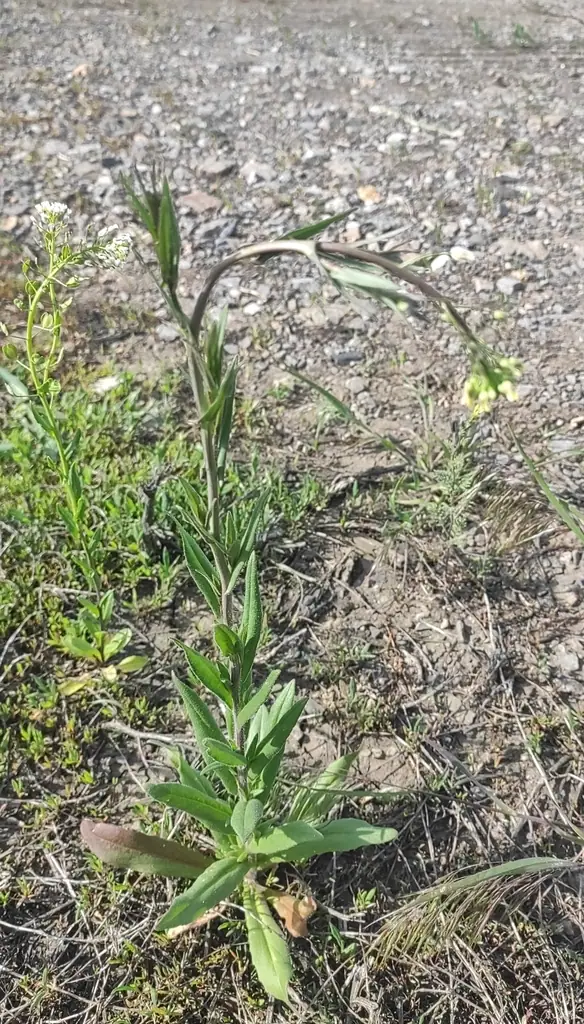
How to Grow and Care for Gold-of-pleasure
Camelina sativa
Written by Emilio Marruso · last checked
At a glance
Camelina is an easygoing annual for a sunny spot: it handles drought well and needs little feeding. Sow spring types as early as possible in spring, or winter types from September to early October. In 85–100 days the plants are ready, and their seeds give an edible oil, a fun crop to try from just a handful of seeds.
- Sun
A sunny spot
What the sources say (1)
Light: Sunny position
An easily grown plant, succeeding in most well-drained soils and preferring a sunny position
— Camelina sativa - Useful Temperate Plants [4] - Water
Handles drought well; needs little watering
What the sources say (1)
Watering: Drought tolerant; performs well under drought stress
The plant performs well under drought stress conditions and may be better suited to low rainfall regions than most other oilseed crops.
— Camelina Production and Potential in Pennsylvania [1] - Soil
Avoid wet soil that drains poorly
What the sources say (1)
Watering notes: Does not perform well on wet and poorly drained soils (Pennsylvania trials)
However, in initial trials in Pennsylvania, it has not performed well on wet and poorly drained soils.
— Camelina Production and Potential in Pennsylvania [1] - Feeding
Needs little: feed before planting; too much nitrogen makes the plants flop over
What the sources say (5)
When: Before planting, or with the seed when broadcasting
Fertilizer can be applied prior to planting or included with the seed if broadcasting. Camelina has generally low fertility requirements.
— Camelina Production and Potential in Pennsylvania [1] Mineral fertilizers: Low requirements: nitrogen 39.2–44.8 kg [86.4–98.8 lb]/ha where seed yields of 1,350–1,680 kg [2,976.2–3,703.8 lb]/ha are expected, 44.8–56.0 kg [98.8–123.5 lb]/ha for higher yields; phosphate (P₂O₅) 28.0–33.6 kg [61.7–74 lb]/ha and sulfur 22.4 kg [49.4 lb]/ha in some situations; ammonium sulfate at 112 kg [246.9 lb]/ha supplies the sulfur and 23.5 kg [51.8 lb]/ha of nitrogen
Typical recommendations from Montana are 35-40 pounds of nitrogen (N), where yields ranging from 1,200-1,500 pounds per acre are expected and 40-50 pounds per acre where higher yields are expected.
— Camelina Production and Potential in Pennsylvania [1] In addition, a recommendation for 25-30 pounds P (phosphorus) (P 2 O 5 ) per acre and 20 pounds S (sulfur) per acre may be justified in some situations.
— Camelina Production and Potential in Pennsylvania [1] Ammonium sulfate (21-0-0-24S) at 100 pounds per acre could supply the sulfur needs and provide 21 pounds N per acre.
— Camelina Production and Potential in Pennsylvania [1] Avoid: Overlapping nitrogen applications (excess nitrogen causes lodging)
In 2009, most producers applied urea at 100 pounds per acre, but yields were similar to those from 2008. Excessive nitrogen (application overlaps) caused some lodging.
— Camelina Production and Potential in Pennsylvania [1] - Harvest
Harvest in July (winter types late June to early July) when pods turn straw to tan; seeds give an edible oil
What the sources say (6)
Harvest: July (early-planted spring crop); late June to early July (winter camelina)
According to Penn State Extension (early-planted spring crop): Harvest of early-planted camelina typically occurs in July.
— Camelina Production and Potential in Pennsylvania [1] Wisconsin (winter camelina): The camelina is then harvested with a combine in late June to early July when the soybeans are still small, avoiding damage.
— Winter Camelina – Crops and Soils [2] Harvest of early-planted camelina typically occurs in July.
— Camelina Production and Potential in Pennsylvania [1] The camelina is then harvested with a combine in late June to early July when the soybeans are still small, avoiding damage.
— Winter Camelina – Crops and Soils [2] How to harvest: Leave the crop standing until pods are straw to tan; swath if lodging occurs, starting when about two-thirds of the pods turn from green to yellow
Barring high wind damage, the crop can be left to stand until pods are a straw to tan color.
— Camelina Production and Potential in Pennsylvania [1] Swathing should be started when about two-thirds of the pods turn from green to yellow.
— Camelina Production and Potential in Pennsylvania [1] - Pests
Watch out for downy mildew
What the sources say (1)
Diseases: downy mildew
Downy mildew (fungus) is a concern and has been found in some experimental trials.
— Camelina Production and Potential in Pennsylvania [1] - Size
12 to 36 in tall
What the sources say (1)
Mature height: 30.48-91.44 cm (12-36 in)
The plants grow 12-36 inches tall and have branched stems that become stiff as they mature.
— Camelina Production and Potential in Pennsylvania [1] - Propagation
Grows from seed
What the sources say (1)
Propagation: Seed
There is no known seed dormancy in camelina, and seed lost during harvest generally germinates soon thereafter.
— Camelina Production and Potential in Pennsylvania [1] - Sowing
Spring types: as early as possible in spring; winter types: September to early October
What the sources say (4)
Sowing: Spring type: as early as possible in spring; winter type: September to early October
According to Penn State Extension (spring type): The crop should be planted as early as possible in the spring--as is recommended for oats and/or cool-season forage seedings.
— Camelina Production and Potential in Pennsylvania [1] Wisconsin (winter camelina): In Wisconsin, winter camelina is best sown in September to early October after harvesting crops like silage corn, sweet corn, or spring wheat.
— Winter Camelina – Crops and Soils [2] The crop should be planted as early as possible in the spring--as is recommended for oats and/or cool-season forage seedings.
— Camelina Production and Potential in Pennsylvania [1] In Wisconsin, winter camelina is best sown in September to early October after harvesting crops like silage corn, sweet corn, or spring wheat.
— Winter Camelina – Crops and Soils [2]
Overview
Camelina sativa is an oilseed in the Brassicaceae family, native to Europe and Central Asia and known as false flax. [2] It is a short-season crop adapted to drought and cool climates. [1]
This record is incomplete: the sources we read do not cover every field yet.
Not yet covered by our sources: Hardiness, coldest zone, Hardiness, warmest zone
Gold-of-pleasure care
How to water Gold-of-pleasure
Watering
Drought tolerant; performs well under drought stress
What the sources say (1)
The plant performs well under drought stress conditions and may be better suited to low rainfall regions than most other oilseed crops.Watering notes
Does not perform well on wet and poorly drained soils (Pennsylvania trials)
What the sources say (1)
However, in initial trials in Pennsylvania, it has not performed well on wet and poorly drained soils.How much light Gold-of-pleasure needs
Sunny position
What the sources say (1)
An easily grown plant, succeeding in most well-drained soils and preferring a sunny positionHow much cold Gold-of-pleasure can take
Hardiness, coldest zone
Not stated in the sources we read.
Hardiness, warmest zone
Not stated in the sources we read.
How to propagate Gold-of-pleasure
Seed
What the sources say (1)
There is no known seed dormancy in camelina, and seed lost during harvest generally germinates soon thereafter.How to grow Gold-of-pleasure
The plant
Life cycle
annual
What the sources say (1)
Camelina ( Camelina sativa L. ) is an annual oilseed plant that belongs to the Brassicaceae family.Family
Brassicaceae
What the sources say (1)
Camelina ( Camelina sativa L. ) is an annual oilseed plant that belongs to the Brassicaceae family.Mature height
30.48-91.44 cm (12-36 in)
What the sources say (1)
The plants grow 12-36 inches tall and have branched stems that become stiff as they mature.Sowing and growth
Days to maturity
85-100 days
What the sources say (1)
Camelina is a short-season, cool-climate-adapted crop that matures in 85-100 days, comparable in development and maturity to oats.Harvest and storage
How to harvest
Leave the crop standing until pods are straw to tan; swath if lodging occurs, starting when about two-thirds of the pods turn from green to yellow
What the sources say (2)
Barring high wind damage, the crop can be left to stand until pods are a straw to tan color.Swathing should be started when about two-thirds of the pods turn from green to yellow.Storage
Store seed at 8 percent moisture or less
What the sources say (1)
Ideally, seed should be stored at 8 percent moisture or less.Pests and diseases
Diseases
downy mildew
What the sources say (1)
Downy mildew (fungus) is a concern and has been found in some experimental trials.Fertilizing
When
Before planting, or with the seed when broadcasting
What the sources say (1)
Fertilizer can be applied prior to planting or included with the seed if broadcasting. Camelina has generally low fertility requirements.Mineral fertilizers
Low requirements: nitrogen 39.2–44.8 kg [86.4–98.8 lb]/ha where seed yields of 1,350–1,680 kg [2,976.2–3,703.8 lb]/ha are expected, 44.8–56.0 kg [98.8–123.5 lb]/ha for higher yields; phosphate (P₂O₅) 28.0–33.6 kg [61.7–74 lb]/ha and sulfur 22.4 kg [49.4 lb]/ha in some situations; ammonium sulfate at 112 kg [246.9 lb]/ha supplies the sulfur and 23.5 kg [51.8 lb]/ha of nitrogen
What the sources say (3)
Typical recommendations from Montana are 35-40 pounds of nitrogen (N), where yields ranging from 1,200-1,500 pounds per acre are expected and 40-50 pounds per acre where higher yields are expected.In addition, a recommendation for 25-30 pounds P (phosphorus) (P 2 O 5 ) per acre and 20 pounds S (sulfur) per acre may be justified in some situations.Ammonium sulfate (21-0-0-24S) at 100 pounds per acre could supply the sulfur needs and provide 21 pounds N per acre.Micronutrients
Sulfur, 22.4 kg [49.4 lb]/ha in some situations
What the sources say (1)
In addition, a recommendation for 25-30 pounds P (phosphorus) (P 2 O 5 ) per acre and 20 pounds S (sulfur) per acre may be justified in some situations.Avoid
Overlapping nitrogen applications (excess nitrogen causes lodging)
What the sources say (1)
In 2009, most producers applied urea at 100 pounds per acre, but yields were similar to those from 2008. Excessive nitrogen (application overlaps) caused some lodging.Signs of deficiency
The natural pale green color is not by itself a sign of nutrient deficiency
What the sources say (1)
Camelina has a natural pale green color, which should not necessarily be interpreted as a nutrient deficiency.Signs of excess
Lodging
What the sources say (1)
In 2009, most producers applied urea at 100 pounds per acre, but yields were similar to those from 2008. Excessive nitrogen (application overlaps) caused some lodging.Remedies
The sources we checked give no remedies for this plant.
Calendar
Sowing
Spring type: as early as possible in spring; winter type: September to early October
What each source says
According to Penn State Extension (spring type): As early as possible in spring
Wisconsin (winter camelina): September to early October
What the sources say (4)
According to Penn State Extension (spring type): The crop should be planted as early as possible in the spring--as is recommended for oats and/or cool-season forage seedings.Wisconsin (winter camelina): In Wisconsin, winter camelina is best sown in September to early October after harvesting crops like silage corn, sweet corn, or spring wheat.The crop should be planted as early as possible in the spring--as is recommended for oats and/or cool-season forage seedings.In Wisconsin, winter camelina is best sown in September to early October after harvesting crops like silage corn, sweet corn, or spring wheat.Harvest
July (early-planted spring crop); late June to early July (winter camelina)
What each source says
According to Penn State Extension (early-planted spring crop): July
Wisconsin (winter camelina): Late June to early July
What the sources say (4)
According to Penn State Extension (early-planted spring crop): Harvest of early-planted camelina typically occurs in July.Wisconsin (winter camelina): The camelina is then harvested with a combine in late June to early July when the soybeans are still small, avoiding damage.Harvest of early-planted camelina typically occurs in July.The camelina is then harvested with a combine in late June to early July when the soybeans are still small, avoiding damage.Months as given by the sources, which are mostly from the United States (northern hemisphere). In the southern hemisphere they shift by about six months.
Edibility
Reported by the source, quoted verbatim. Do not eat a plant on the basis of this page alone: identification mistakes can be dangerous.
An edible oil is obtained from the seed
[4]
Indicative values
Values from a secondary source, not checked word for word like the rest of this page. Use them as a starting point.
- Hours of sun
- 6-8 hoursIndicative value, adapt it to your climate · Secondary source
- Soil pH
- 5.8-7.5Indicative value, adapt it to your climate · Secondary source
- Growth rate
- LowIndicative value, adapt it to your climate · Secondary source
- Pruning
- March, AprilIndicative value, adapt it to your climate · Secondary source
Similar plants
- Bittercress Cardamine hirsuta
- Black Mustard Brassica nigra
- Broadleaved pepperweed Lepidium latifolium
- Brown Mustard Brassica juncea
- Crested wartycabbage Bunias erucago
- Dame's Rocket Hesperis matronalis
- Early yellowrocket Barbarea verna
- Field Pennycress Thlaspi arvense
Sources
Every value above is quoted from these documents. Links lead to the original publisher.
- Camelina Production and Potential in Pennsylvania · extension.psu.edu, consulted
- Winter Camelina – Crops and Soils · cropsandsoils.extension.wisc.edu, consulted
- Properties of oils produced from uncommon oilseed crops part I: Camelina, Crambe and Meadowfoam | Oklahoma State University · extension.okstate.edu, consulted
- Camelina sativa - Useful Temperate Plants · temperate.theferns.info, consulted
Written by Emilio Marruso · last checked