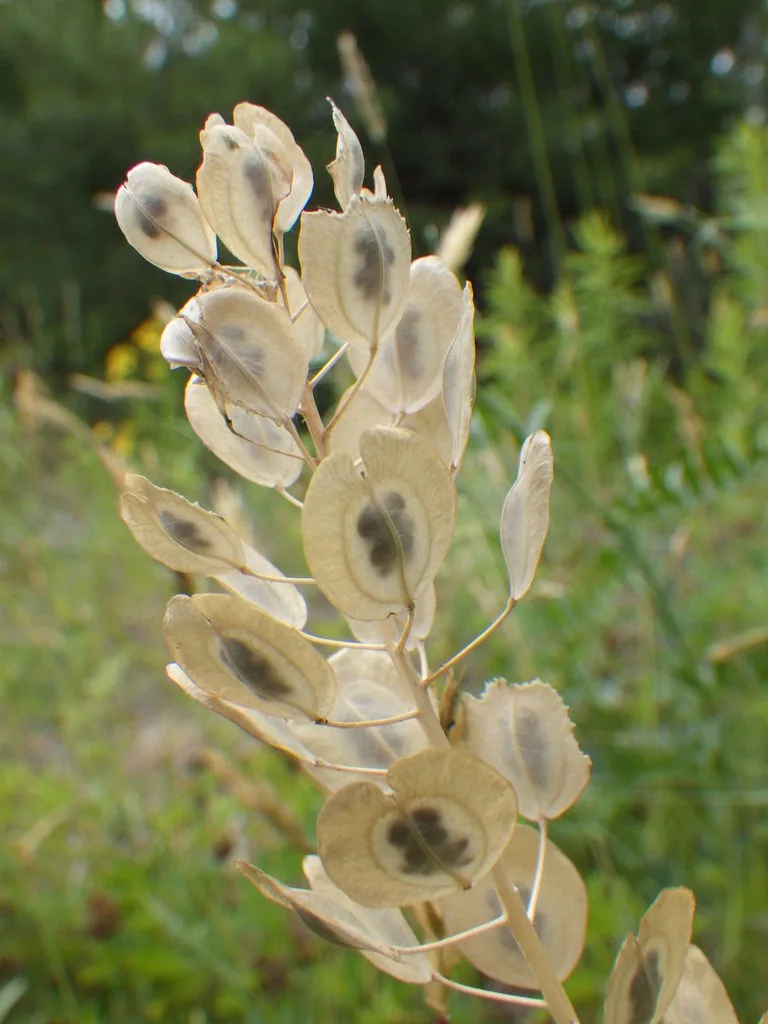
How to Grow and Care for Field Pennycress
Thlaspi arvense
Written by Emilio Marruso · last checked
Toxic to: Horses, Animals · Why
At a glance
Field pennycress is an annual that grows from seed and reaches 1 to 2 feet tall. It's happy anywhere from full sun to partial shade, it gives its fruit in summer, and in Europe it is sometimes grown as a food crop. Just keep an eye on it: the ripe seedpods burst open easily, so it can spread around your garden.
- Sun
Full sun to partial shade
What the sources say (2)
Light: Full sun to partial shade
Light: Full sun (6 or more hours of direct sunlight a day) Partial Shade (Direct sunlight only part of the day, 2-6 hours)
— Thlaspi arvense (Field Pennycress) | North Carolina Extension Gardener Plant Toolbox [1] gardens with full sun and moderate moisture ,
— Field Pennycress, Thlaspi arvense – Wisconsin Horticulture [2] - Soil
Soil with a pH no higher than 6.0
What the sources say (1)
Soil pH, maximum: 6.0
Soil Texture: Clay Sand Shallow Rocky Soil pH: Acid (<6.0) Soil Drainage:
— Thlaspi arvense (Field Pennycress) | North Carolina Extension Gardener Plant Toolbox [1] - Harvest
Fruit in summer; in Europe it is sometimes grown as a food crop
What the sources say (1)
Harvest: Summer (fruit)
Display/Harvest Time: Summer Fruit Type: Capsule Fruit Length:
— Thlaspi arvense (Field Pennycress) | North Carolina Extension Gardener Plant Toolbox [1] - Watch out
Spreads like a weed: pull it by hand before it flowers, as ripe pods burst open
- Size
1 to 2 ft tall
What the sources say (1)
Mature height: 30-61 cm (1-2 ft)
A member of the mustard family (Brassicaceae), field pennycress is a summer or winter annual that grows 1 to 2 feet tall
— Field Pennycress, Thlaspi arvense – Wisconsin Horticulture [2] - Propagation
Grows from seed
What the sources say (1)
Propagation: Seed
Recommended Propagation Strategy: Seed Country Or Region Of Origin: Eurasia
— Thlaspi arvense (Field Pennycress) | North Carolina Extension Gardener Plant Toolbox [1] - Safety
Seeds are poisonous to animals, horses included, and taint the milk of cows that eat them
Overview
Field pennycress is an annual Eurasian weed in the mustard family that occurs throughout North America. [2][1] It has a shallow root system and is easy to control by hand pulling before flowering. [1][2] The seeds contain a glucoside that is poisonous to animals and taints the milk of cows that eat it. [2]
This record is incomplete: the sources we read do not cover every field yet.
Not yet covered by our sources: Hardiness, coldest zone, Hardiness, warmest zone
Field Pennycress care
How much light Field Pennycress needs
Full sun to partial shade
What the sources say (2)
Light:
Full sun (6 or more hours of direct sunlight a day)
Partial Shade (Direct sunlight only part of the day, 2-6 hours)gardens with full sun and moderate moisture ,How much cold Field Pennycress can take
Hardiness, coldest zone
Not stated in the sources we read.
Hardiness, warmest zone
Not stated in the sources we read.
Best soil for Field Pennycress
6.0
What the sources say (1)
Soil Texture:
Clay
Sand
Shallow Rocky
Soil pH:
Acid (<6.0)
Soil Drainage:How to propagate Field Pennycress
Seed
What the sources say (1)
Recommended Propagation Strategy:
Seed
Country Or Region Of Origin:
EurasiaHow to grow Field Pennycress
The plant
Life cycle
annual (summer or winter annual)
What the sources say (1)
A member of the mustard family (Brassicaceae), field pennycress is a summer or winter annual that grows 1 to 2 feet tallFamily
Brassicaceae
What the sources say (1)
A member of the mustard family (Brassicaceae), field pennycress is a summer or winter annual that grows 1 to 2 feet tallMature height
30-61 cm (1-2 ft)
What the sources say (1)
A member of the mustard family (Brassicaceae), field pennycress is a summer or winter annual that grows 1 to 2 feet tallField Pennycress pests and problems
Weedy spread
Symptom: Overwintered plants grow early in spring and produce lots of foliage; seedpods shatter readily when mature
What to do: Hand pull before the plant goes to flower
What the sources say (1)
This annual weed is easily controlled in gardens by hand pulling before it goes to flower.
— Field Pennycress, Thlaspi arvense – Wisconsin Horticulture [2]
Remedies
Each remedy shows what official sources say about it; traditional remedies without an official source are marked as such. Harmful ones are listed so you know to avoid them.
Getting rid of it
field pennycress weed
hand pulling with a spade Works
How: pull the plants manually in small areas, using a spade to get out all the roots
Pulling the plants manually has success in small areas as long as you use a spade to get out all the roots.
— gardeningknowhow.com [3] What the evidence says Hand-pull to eliminate weeds.
— hortsense.cahnrs.wsu.edu [4] mowing before seed set Works
How: mow or till before the plant produces seed
Mowing or tilling before the plant produces seed is also a viable option but difficult to do in cropland, as seeds mature before crops have developed to harvest.
— gardeningknowhow.com [3] What the evidence says Mowing to prevent seed production is a very effective means of management.
— hortsense.cahnrs.wsu.edu [4] careful digging Partly works
How: dig out the plants when they are more established
Careful digging is useful to manage weed populations. However, digging can carry undesirable weed seed to the surface and foster further germination.
— hortsense.cahnrs.wsu.edu [4] What the evidence says Careful digging is useful to manage weed populations. However, digging can carry undesirable weed seed to the surface and foster further germination.
— hortsense.cahnrs.wsu.edu [4]
Is Field Pennycress toxic to pets?
Reported by the source, quoted verbatim. This is not medical or veterinary advice: if a person or an animal may have eaten this plant, contact a poison control centre or a veterinarian.
Calendar
Harvest
Summer (fruit)
What the sources say (1)
Display/Harvest Time:
Summer
Fruit Type:
Capsule
Fruit Length:Months as given by the sources, which are mostly from the United States (northern hemisphere). In the southern hemisphere they shift by about six months.
Edibility
Reported by the source, quoted verbatim. Do not eat a plant on the basis of this page alone: identification mistakes can be dangerous.
This plant is sometimes cultivated as a food crop in Europe.
[2]
Similar plants
- American Yellow Rocket Barbarea orthoceras
- Annual Candytuft Iberis umbellata
- Basket-of-Gold Aurinia saxatilis
- Black Mustard Brassica nigra
- Broadleaved pepperweed Lepidium latifolium
- Brown Mustard Brassica juncea
- Cabbage Brassica oleracea
- Candytuft Iberis amara
Sources
Every value above is quoted from these documents. Links lead to the original publisher.
- Thlaspi arvense (Field Pennycress) | North Carolina Extension Gardener Plant Toolbox · plants.ces.ncsu.edu, consulted
- Field Pennycress, Thlaspi arvense – Wisconsin Horticulture · hort.extension.wisc.edu, consulted
- gardeningknowhow.com · gardeningknowhow.com
- hortsense.cahnrs.wsu.edu · hortsense.cahnrs.wsu.edu
Written by Emilio Marruso · last checked