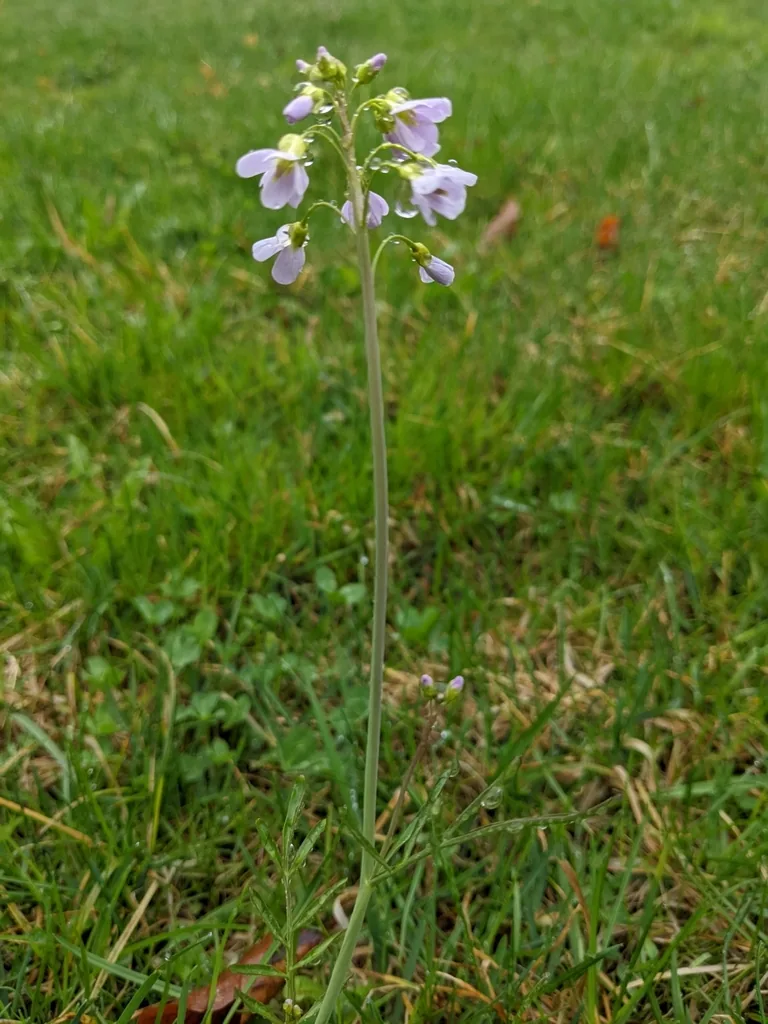
Cómo cultivar y cuidar Berro de prado
Cardamine pratensis
Escrito por Emilio Marruso · última revisión
De un vistazo
El berro de prado adora la tierra húmeda: mantén el suelo siempre húmedo, sobre todo durante la floración, y prosperará en casi cualquier suelo. En primavera, recoge las hojas y los brotes tiernos para comerlos crudos o cocinados; tienen un sabor picante que recuerda al berro. Las flores también se comen y dan un toque delicioso a las ensaladas.
- Riego
Mantén la tierra siempre húmeda, sobre todo en flor; no tolera la sequía
Qué dicen las fuentes (4)
Riego: Mantén el suelo constantemente húmedo, especialmente durante la floración.
Make sure you keep the soil consistently moist, especially during the flowering season. Watering in the morning or evening is ideal to prevent the soil from drying out too quickly.
— How to Grow Cuckoo Flower | BBC Gardeners World Magazine [7] Notas sobre el riego: Mantén el suelo constantemente húmedo hasta que se establezca; riega por la mañana o por la tarde; prospera en la mayoría de los suelos siempre que estén húmedos o mojados; no tolera la sequía.
Sow seeds in either spring or autumn and keep the soil consistently moist until the plant is established.
— How to Grow Cuckoo Flower | BBC Gardeners World Magazine [7] Succeeds in most soils [1] [2] so long as they are moist or wet [9] [10] . Prefers a cool damp soil [2] .
— Cuckoo Flower (Cardamine pratensis) — Practical Plants [4] Soil pH acid, neutral, alkaline Tolerates Nutritionally Poor Soil No Drought intolerant
— Cuckoo Flower (Cardamine pratensis) — Practical Plants [4] - Frío
Aguanta inviernos de hasta −34,4 °C (−30 °F)
Muy rústica · USDA 4 · RHS H7 · Z4
Qué dicen las fuentes (1)
Rusticidad, zona más fría: 4 [mínima invernal de −34,4 a −28,9 °C (de −30 a −20 °F)]
Water high Hardiness Zone 4+ Soil textures sandy, loamy, clay
— Cuckoo Flower (Cardamine pratensis) — Practical Plants [4] - Suelo
Crece en casi cualquier suelo si está húmedo o mojado, pH 5,0–7,5
Qué dicen las fuentes (5)
Notas sobre el riego: Mantén el suelo constantemente húmedo hasta que se establezca; riega por la mañana o por la tarde; prospera en la mayoría de los suelos siempre que estén húmedos o mojados; no tolera la sequía.
Sow seeds in either spring or autumn and keep the soil consistently moist until the plant is established.
— How to Grow Cuckoo Flower | BBC Gardeners World Magazine [7] Succeeds in most soils [1] [2] so long as they are moist or wet [9] [10] . Prefers a cool damp soil [2] .
— Cuckoo Flower (Cardamine pratensis) — Practical Plants [4] Soil pH acid, neutral, alkaline Tolerates Nutritionally Poor Soil No Drought intolerant
— Cuckoo Flower (Cardamine pratensis) — Practical Plants [4] pH del suelo, mínimo: 5.0
They are commonly found forested swamps and wet meadows with acidic to neutral soils (pH 5.0-7.5).
— Plant [1] pH del suelo, máximo: 7.5
They are commonly found forested swamps and wet meadows with acidic to neutral soils (pH 5.0-7.5).
— Plant [1] - Plantación
Planta en primavera o en otoño
Qué dicen las fuentes (2)
Plantación: Primavera u otoño.
Alternatively, you can plant young plants in spring or autumn. Dig a hole that's slightly deeper than the pot
— How to Grow Cuckoo Flower | BBC Gardeners World Magazine [7] Seed - sow outdoors in a seedbed in a shady position in mid spring. Plant out in autumn or spring.
— Cardamine pratensis - Useful Temperate Plants [2] - Poda
Opcional: tras la floración, recorta la planta a 5 cm
Qué dicen las fuentes (1)
Poda: Después de la floración (opcional, corta a 5 cm [2 in]).
Cuckoo flower does not require regular pruning. You may want to cut the plant back to about 5cm above the ground after it has finished flowering.
— How to Grow Cuckoo Flower | BBC Gardeners World Magazine [7] - Cosecha
Recoge hojas y brotes tiernos en primavera; las flores también se comen y tienen sabor picante
Qué dicen las fuentes (1)
Cosecha: Primavera (hojas y brotes jóvenes).
The leaves and young shoots are harvested in the spring and taste rather like water cress [21] .
— Cuckoo Flower (Cardamine pratensis) — Practical Plants [4] - Plagas
Las palomas torcaces se comen los capullos tiernos en primavera; protege las plantas
- Multiplicación
Por semilla, por división en primavera u otoño o con las plantitas que salen en la base de las hojas
Qué dicen las fuentes (3)
Propagación: Semilla; división en primavera u otoño; plántulas formadas en la base de los folíolos.
To propagate through division, dig up an established plant in spring or autumn and gently separate the clumps of roots.
— How to Grow Cuckoo Flower | BBC Gardeners World Magazine [7] The plant produces young plants at the base of its leaflets. When large enough, these can be easily separated from the main plant and grown on as individual plants[K].
— Cuckoo Flower (Cardamine pratensis) — Practical Plants [4] The species reproduces both sexually in the wild through seed production and vegetatively through rhizome branching and plantlets that can develop on leaves.
— Plant [1]
Resumen
Cardamine pratensis es una planta perenne de prados húmedos, marismas y bordes de arroyos, que florece de abril a junio. [5][7] Es una planta alimenticia para las orugas de las mariposas de la punta anaranjada y la blanca de venas verdes. [8]
Citado en inglés, como en la fuente.
Esta ficha está incompleta: las fuentes consultadas aún no cubren todos los campos.
Aún no cubierto por nuestras fuentes: Rusticidad, zona más cálida
Cuidados
Las medidas entre corchetes son nuestra conversión al otro sistema de unidades; el texto citado no cambia.
Riego
Riego
Mantén el suelo constantemente húmedo, especialmente durante la floración.
Qué dicen las fuentes (1)
Make sure you keep the soil consistently moist, especially during the flowering season. Watering in the morning or evening is ideal to prevent the soil from drying out too quickly.Notas sobre el riego
Mantén el suelo constantemente húmedo hasta que se establezca; riega por la mañana o por la tarde; prospera en la mayoría de los suelos siempre que estén húmedos o mojados; no tolera la sequía.
Qué dicen las fuentes (3)
Sow seeds in either spring or autumn and keep the soil consistently moist until the plant is established.Succeeds in most soils [1] [2] so long as they are moist or wet [9] [10] . Prefers a cool damp soil [2] .Soil pH
acid, neutral, alkaline
Tolerates Nutritionally Poor Soil
No
Drought
intolerantLuz
Las fuentes dan valores distintos según la región, la zona o las condiciones de cultivo.
Lo que dice cada fuente
Según BBC Gardeners' World: Semisombra a pleno sol
Según University of Washington ESRM 412: Semisombra a sombra completa
Qué dicen las fuentes (5)
Según BBC Gardeners' World: Grow cuckoo flower in moist soil in partial shade to full sun.Según University of Washington ESRM 412: Thrives in part shade to full shade, in moist to wet climate conditions.Succeeds in full sun or partial shade[ 238 Title
Encyclopaedia of Herbs and their Uses.Grow cuckoo flower in moist soil in partial shade to full sun.Succeeds in most soils [1] [2] so long as they are moist or wet [9] [10] . Prefers a cool damp soil [2] . Succeeds in full sun or partial shade [13] .Clima y frío
Rusticidad, zona más fría
4 [mínima invernal de −34,4 a −28,9 °C (de −30 a −20 °F)]
Qué dicen las fuentes (1)
Water
high
Hardiness
Zone 4+
Soil textures
sandy, loamy, clayRusticidad, zona más cálida
No figura en las fuentes consultadas.
Suelo
pH del suelo, mínimo
5.0
Qué dicen las fuentes (1)
They are commonly found forested swamps and wet meadows with acidic to neutral soils (pH 5.0-7.5).pH del suelo, máximo
7.5
Qué dicen las fuentes (1)
They are commonly found forested swamps and wet meadows with acidic to neutral soils (pH 5.0-7.5).Propagación
Semilla; división en primavera u otoño; plántulas formadas en la base de los folíolos.
Qué dicen las fuentes (3)
To propagate through division, dig up an established plant in spring or autumn and gently separate the clumps of roots.The plant produces young plants at the base of its leaflets. When large enough, these can be easily separated from the main plant and grown on as individual plants[K].The species reproduces both sexually in the wild through seed production and vegetatively through rhizome branching and plantlets that can develop on leaves.Problemas
Palomas torcaces.
Síntoma: Los brotes jóvenes se comen en primavera
Qué hacer: Protección contra las palomas torcaces
Qué dicen las fuentes (1)
A very ornamental plant, non-invasive and well suited to the wild garden though it may require protection from wood pigeons who eat out the young buds in spring
— Cardamine pratensis - Useful Temperate Plants [2]
Remedios
Las fuentes consultadas no dan remedios para esta planta.
Calendario
Siembra
Las fuentes dan valores distintos según la región, la zona o las condiciones de cultivo.
Lo que dice cada fuente
Según Useful Temperate Plants (Ken Fern): Mediados de primavera
Según Practical Plants: abril
Según BBC Gardeners' World: Otoño, o principios de primavera.
Qué dicen las fuentes (3)
Según Useful Temperate Plants (Ken Fern): Seed - sow outdoors in a seedbed in a shady position in mid spring. Plant out in autumn or spring.Según Practical Plants: Seed - sow outdoors in a seedbed in a shady position in April. Plant out in autumn or spring.Según BBC Gardeners' World: The best time to sow seeds is in autumn, but they can also be sown in early spring.Plantación
Primavera u otoño.
Qué dicen las fuentes (2)
Alternatively, you can plant young plants in spring or autumn. Dig a hole that's slightly deeper than the potSeed - sow outdoors in a seedbed in a shady position in mid spring. Plant out in autumn or spring.Cosecha
Primavera (hojas y brotes jóvenes).
Qué dicen las fuentes (1)
The leaves and young shoots are harvested in the spring and taste rather like water cress [21] .Poda
Después de la floración (opcional, corta a 5 cm [2 in]).
Qué dicen las fuentes (1)
Cuckoo flower does not require regular pruning. You may want to cut the plant back to about 5cm above the ground after it has finished flowering.Meses tal como los dan las fuentes, en su mayoría de Estados Unidos (hemisferio norte). En el hemisferio sur se desplazan unos seis meses.
Comestibilidad
Según la fuente, citada textualmente. No comas una planta basándote solo en esta página: los errores de identificación pueden ser peligrosos.
Leaves and young shoots - raw or cooked [11] [19] [4] [20] [3] . Rich in vitamins and minerals [16] , especially vitamin C [13] , but with a bitter and pungent flavour [17] .
[4]Flowers and flower buds - raw. A pungent cress-like flavour[183, K]. The white flowers are very attractive, they make a pleasant nibble and also add a delicious flavour to salads[K].
[4]Young leaves and shoots are edible and have a peppery flavor similar to watercress or wasabi. Flowers are also edible.
[1]Young leaves of the Cuckooflower have a rather peppery taste and can be a useful substitute for cress in sandwiches and salads.
[8]
Plantas similares
- Cut-leafed Toothwort Cardamine concatenata
- Two-leaf Toothwort Cardamine diphylla
- Mastuerzo menor Cardamine hirsuta
- New Zealand Bittercress Cardamine corymbosa
- Wavy Bittercress Cardamine flexuosa
- Hipérico rastrero Hypericum calycinum
- Abeto de Vancuver Abies grandis
- Abraham Trachystemon orientalis
Fuentes
Cada valor anterior se cita de estos documentos. Los enlaces llevan al editor original.
- Plant · courses.washington.edu, consultado
- Cardamine pratensis - Useful Temperate Plants · temperate.theferns.info, consultado
- Cuckoo Flower | Floodplain Meadows Partnership · floodplainmeadows.org.uk, consultado
- Cuckoo Flower (Cardamine pratensis) — Practical Plants · practicalplants.org, consultado
- Cuckooflower | NatureSpot · mail.naturespot.org, consultado
- Cardamine pratensis, Cuckooflower: identification, distribution, habitat · first-nature.com, consultado
- How to Grow Cuckoo Flower | BBC Gardeners World Magazine · gardenersworld.com, consultado
- Cuckooflower - Plantlife · plantlife.org.uk, consultado
Escrito por Emilio Marruso · última revisión