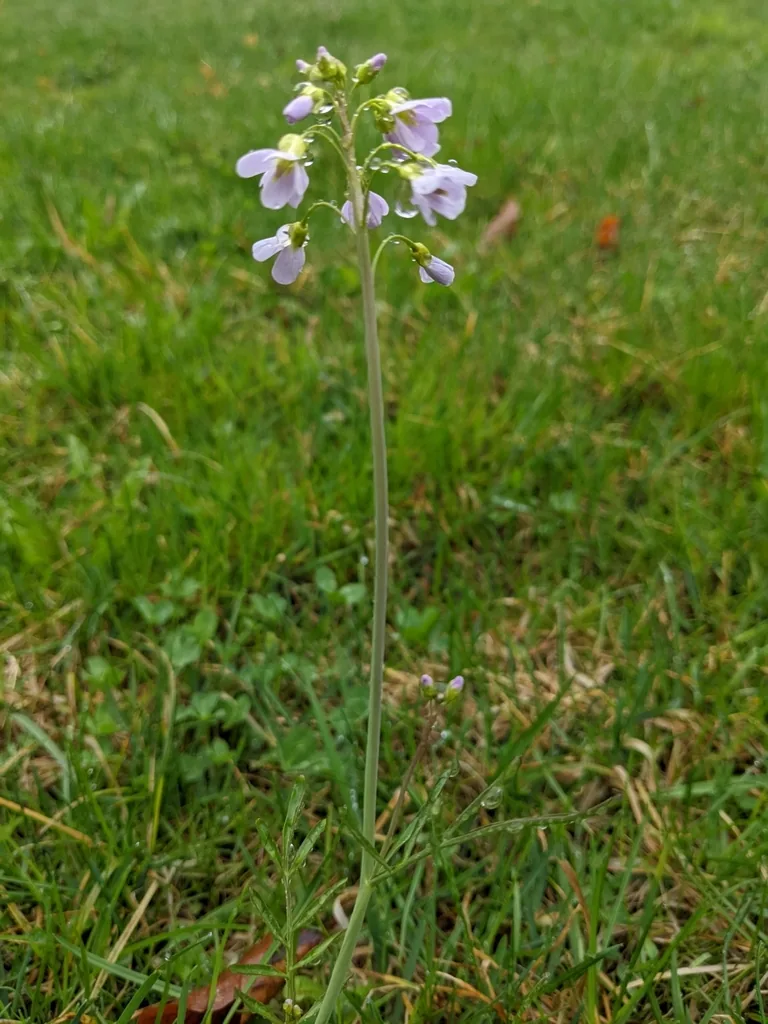
How to Grow and Care for Cuckoo flower
Cardamine pratensis
Written by Emilio Marruso · last checked
At a glance
Cuckooflower loves damp ground: keep the soil consistently moist, especially while it blooms, and it will thrive in most soils. In spring, pick the young leaves and shoots to eat raw or cooked; they have a peppery flavor like watercress. The flowers are edible too, a pleasant nibble that adds a lovely flavor to salads.
- Water
Keep the soil moist at all times, especially in bloom; it can't handle drought
What the sources say (4)
Watering: Keep soil consistently moist, especially during flowering
Make sure you keep the soil consistently moist, especially during the flowering season. Watering in the morning or evening is ideal to prevent the soil from drying out too quickly.
— How to Grow Cuckoo Flower | BBC Gardeners World Magazine [7] Watering notes: Keep soil consistently moist until established; water in the morning or evening; succeeds in most soils so long as they are moist or wet; drought intolerant
Sow seeds in either spring or autumn and keep the soil consistently moist until the plant is established.
— How to Grow Cuckoo Flower | BBC Gardeners World Magazine [7] Succeeds in most soils [1] [2] so long as they are moist or wet [9] [10] . Prefers a cool damp soil [2] .
— Cuckoo Flower (Cardamine pratensis) — Practical Plants [4] Soil pH acid, neutral, alkaline Tolerates Nutritionally Poor Soil No Drought intolerant
— Cuckoo Flower (Cardamine pratensis) — Practical Plants [4] - Cold
Survives winters down to −30 °F (−34.4 °C)
Very hardy · USDA 4 · RHS H7 · Z4
What the sources say (1)
Hardiness, coldest zone: 4 [winter low −34.4 to −28.9 °C (−30 to −20 °F)]
Water high Hardiness Zone 4+ Soil textures sandy, loamy, clay
— Cuckoo Flower (Cardamine pratensis) — Practical Plants [4] - Soil
Grows in most soils as long as they stay moist or wet, pH 5.0–7.5
What the sources say (5)
Watering notes: Keep soil consistently moist until established; water in the morning or evening; succeeds in most soils so long as they are moist or wet; drought intolerant
Sow seeds in either spring or autumn and keep the soil consistently moist until the plant is established.
— How to Grow Cuckoo Flower | BBC Gardeners World Magazine [7] Succeeds in most soils [1] [2] so long as they are moist or wet [9] [10] . Prefers a cool damp soil [2] .
— Cuckoo Flower (Cardamine pratensis) — Practical Plants [4] Soil pH acid, neutral, alkaline Tolerates Nutritionally Poor Soil No Drought intolerant
— Cuckoo Flower (Cardamine pratensis) — Practical Plants [4] Soil pH, minimum: 5.0
They are commonly found forested swamps and wet meadows with acidic to neutral soils (pH 5.0-7.5).
— Plant [1] Soil pH, maximum: 7.5
They are commonly found forested swamps and wet meadows with acidic to neutral soils (pH 5.0-7.5).
— Plant [1] - Planting
Plant in spring or fall
What the sources say (2)
Planting: Spring or autumn
Alternatively, you can plant young plants in spring or autumn. Dig a hole that's slightly deeper than the pot
— How to Grow Cuckoo Flower | BBC Gardeners World Magazine [7] Seed - sow outdoors in a seedbed in a shady position in mid spring. Plant out in autumn or spring.
— Cardamine pratensis - Useful Temperate Plants [2] - Pruning
Optional: after flowering, cut the plant back to 2 inches
What the sources say (1)
Pruning: After flowering (optional cut back to 5 cm [2 in])
Cuckoo flower does not require regular pruning. You may want to cut the plant back to about 5cm above the ground after it has finished flowering.
— How to Grow Cuckoo Flower | BBC Gardeners World Magazine [7] - Harvest
Pick young leaves and shoots in spring; the flowers are edible too, with a peppery taste
What the sources say (1)
Harvest: Spring (leaves and young shoots)
The leaves and young shoots are harvested in the spring and taste rather like water cress [21] .
— Cuckoo Flower (Cardamine pratensis) — Practical Plants [4] - Pests
Wood pigeons eat the young buds in spring; protect the plants
- Propagation
From seed, by dividing in spring or fall, or from the little plants at the base of the leaves
What the sources say (3)
Propagation: Seed; division in spring or autumn; plantlets formed at the base of leaflets
To propagate through division, dig up an established plant in spring or autumn and gently separate the clumps of roots.
— How to Grow Cuckoo Flower | BBC Gardeners World Magazine [7] The plant produces young plants at the base of its leaflets. When large enough, these can be easily separated from the main plant and grown on as individual plants[K].
— Cuckoo Flower (Cardamine pratensis) — Practical Plants [4] The species reproduces both sexually in the wild through seed production and vegetatively through rhizome branching and plantlets that can develop on leaves.
— Plant [1]
Overview
Cardamine pratensis is a perennial of damp meadows, marshes and stream margins, flowering from April to June. [5][7] It is a food plant for the caterpillars of the orange-tip and green-veined white butterflies. [8]
This record is incomplete: the sources we read do not cover every field yet.
Not yet covered by our sources: Hardiness, warmest zone
Cuckoo flower care
Measurements in square brackets are our conversion into the other unit system; the quoted text is unchanged.
How to water Cuckoo flower
Watering
Keep soil consistently moist, especially during flowering
What the sources say (1)
Make sure you keep the soil consistently moist, especially during the flowering season. Watering in the morning or evening is ideal to prevent the soil from drying out too quickly.Watering notes
Keep soil consistently moist until established; water in the morning or evening; succeeds in most soils so long as they are moist or wet; drought intolerant
What the sources say (3)
Sow seeds in either spring or autumn and keep the soil consistently moist until the plant is established.Succeeds in most soils [1] [2] so long as they are moist or wet [9] [10] . Prefers a cool damp soil [2] .Soil pH
acid, neutral, alkaline
Tolerates Nutritionally Poor Soil
No
Drought
intolerantHow much light Cuckoo flower needs
The sources give different values depending on region, zone or growing conditions.
What each source says
According to BBC Gardeners' World: Partial shade to full sun
According to University of Washington ESRM 412: Part shade to full shade
What the sources say (5)
According to BBC Gardeners' World: Grow cuckoo flower in moist soil in partial shade to full sun.According to University of Washington ESRM 412: Thrives in part shade to full shade, in moist to wet climate conditions.Succeeds in full sun or partial shade[ 238 Title
Encyclopaedia of Herbs and their Uses.Grow cuckoo flower in moist soil in partial shade to full sun.Succeeds in most soils [1] [2] so long as they are moist or wet [9] [10] . Prefers a cool damp soil [2] . Succeeds in full sun or partial shade [13] .How much cold Cuckoo flower can take
Hardiness, coldest zone
4 [winter low −34.4 to −28.9 °C (−30 to −20 °F)]
What the sources say (1)
Water
high
Hardiness
Zone 4+
Soil textures
sandy, loamy, clayHardiness, warmest zone
Not stated in the sources we read.
Best soil for Cuckoo flower
Soil pH, minimum
5.0
What the sources say (1)
They are commonly found forested swamps and wet meadows with acidic to neutral soils (pH 5.0-7.5).Soil pH, maximum
7.5
What the sources say (1)
They are commonly found forested swamps and wet meadows with acidic to neutral soils (pH 5.0-7.5).How to propagate Cuckoo flower
Seed; division in spring or autumn; plantlets formed at the base of leaflets
What the sources say (3)
To propagate through division, dig up an established plant in spring or autumn and gently separate the clumps of roots.The plant produces young plants at the base of its leaflets. When large enough, these can be easily separated from the main plant and grown on as individual plants[K].The species reproduces both sexually in the wild through seed production and vegetatively through rhizome branching and plantlets that can develop on leaves.Cuckoo flower pests and problems
Wood pigeons
Symptom: Young buds eaten in spring
What to do: Protection from wood pigeons
What the sources say (1)
A very ornamental plant, non-invasive and well suited to the wild garden though it may require protection from wood pigeons who eat out the young buds in spring
— Cardamine pratensis - Useful Temperate Plants [2]
Remedies
The sources we checked give no remedies for this plant.
Calendar
Sowing
The sources give different values depending on region, zone or growing conditions.
What each source says
According to Useful Temperate Plants (Ken Fern): Mid spring
According to Practical Plants: April
According to BBC Gardeners' World: Autumn, or early spring
What the sources say (3)
According to Useful Temperate Plants (Ken Fern): Seed - sow outdoors in a seedbed in a shady position in mid spring. Plant out in autumn or spring.According to Practical Plants: Seed - sow outdoors in a seedbed in a shady position in April. Plant out in autumn or spring.According to BBC Gardeners' World: The best time to sow seeds is in autumn, but they can also be sown in early spring.Planting
Spring or autumn
What the sources say (2)
Alternatively, you can plant young plants in spring or autumn. Dig a hole that's slightly deeper than the potSeed - sow outdoors in a seedbed in a shady position in mid spring. Plant out in autumn or spring.Harvest
Spring (leaves and young shoots)
What the sources say (1)
The leaves and young shoots are harvested in the spring and taste rather like water cress [21] .Pruning
After flowering (optional cut back to 5 cm [2 in])
What the sources say (1)
Cuckoo flower does not require regular pruning. You may want to cut the plant back to about 5cm above the ground after it has finished flowering.Months as given by the sources, which are mostly from the United States (northern hemisphere). In the southern hemisphere they shift by about six months.
Edibility
Reported by the source, quoted verbatim. Do not eat a plant on the basis of this page alone: identification mistakes can be dangerous.
Leaves and young shoots - raw or cooked [11] [19] [4] [20] [3] . Rich in vitamins and minerals [16] , especially vitamin C [13] , but with a bitter and pungent flavour [17] .
[4]Flowers and flower buds - raw. A pungent cress-like flavour[183, K]. The white flowers are very attractive, they make a pleasant nibble and also add a delicious flavour to salads[K].
[4]Young leaves and shoots are edible and have a peppery flavor similar to watercress or wasabi. Flowers are also edible.
[1]Young leaves of the Cuckooflower have a rather peppery taste and can be a useful substitute for cress in sandwiches and salads.
[8]
Similar plants
- Cut-leafed Toothwort Cardamine concatenata
- Two-leaf Toothwort Cardamine diphylla
- Bittercress Cardamine hirsuta
- New Zealand Bittercress Cardamine corymbosa
- Wavy Bittercress Cardamine flexuosa
- Aaron's Beard Hypericum calycinum
- Abies grandis Abies grandis
- Abraham Trachystemon orientalis
Sources
Every value above is quoted from these documents. Links lead to the original publisher.
- Plant · courses.washington.edu, consulted
- Cardamine pratensis - Useful Temperate Plants · temperate.theferns.info, consulted
- Cuckoo Flower | Floodplain Meadows Partnership · floodplainmeadows.org.uk, consulted
- Cuckoo Flower (Cardamine pratensis) — Practical Plants · practicalplants.org, consulted
- Cuckooflower | NatureSpot · mail.naturespot.org, consulted
- Cardamine pratensis, Cuckooflower: identification, distribution, habitat · first-nature.com, consulted
- How to Grow Cuckoo Flower | BBC Gardeners World Magazine · gardenersworld.com, consulted
- Cuckooflower - Plantlife · plantlife.org.uk, consulted
Written by Emilio Marruso · last checked