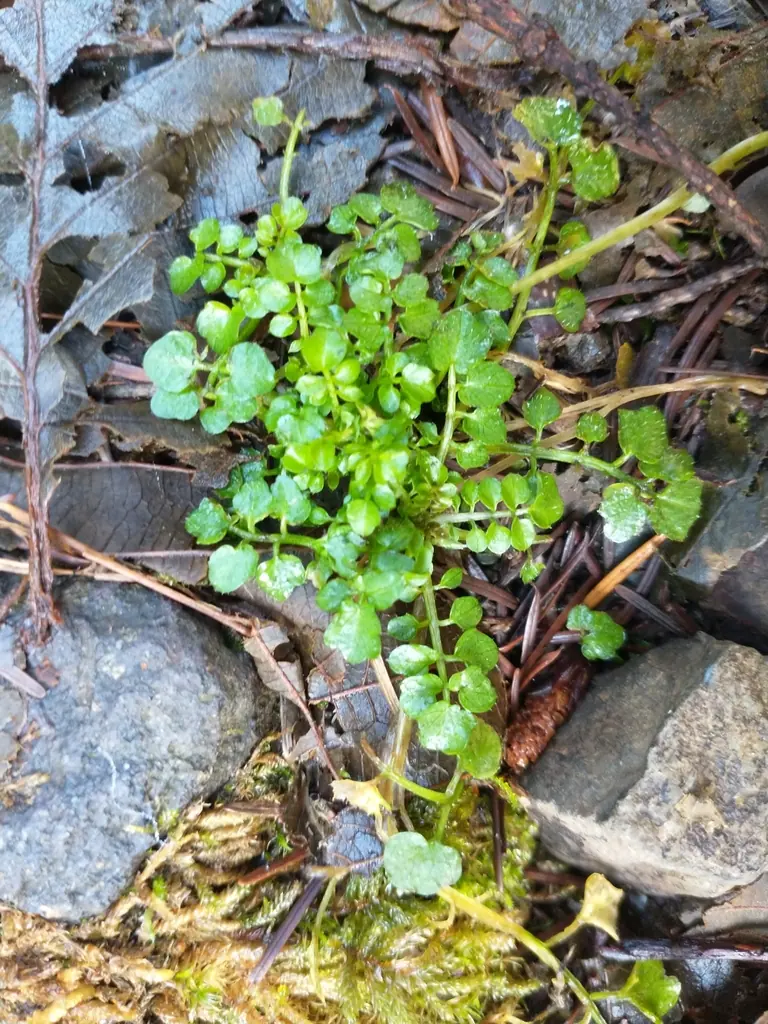
How to Grow and Care for Wavy Bittercress
Cardamine flexuosa
Written by Emilio Marruso · last checked
At a glance
Wavy bittercress is a little salad green with a hot, peppery, cress-like flavor, and its leaves are usually ready to pick all year round. Sow it right where it will grow in spring or fall, keep the soil moist, and it will practically look after itself. Eat the leaves and roots raw or cooked, but pull plants before they set seed.
- Water
Keep the soil moist or even wet
What the sources say (1)
Watering notes: Requires moist or wet soil
Capable of growing in a variety of soil types and acidities but requires it to be moist or wet.
— GISD [8] - Harvest
Leaves all year round; eat leaves and roots raw or cooked, with a peppery taste
What the sources say (1)
Harvest: Leaves usually available all year round
Nice as a flavouring in salads, it is usually available all year round.
— Cardamine flexuosa - Useful Temperate Plants [3] - Pests
Often hosts whiteflies and mites
What the sources say (1)
Pests: whitefly, mites
Plants often harbor whitefly and mites and have been implicated as alternative hosts for some nursery crop diseases.
— Cardamine sp. [1] - Watch out
Shoots its seeds up to 3 ft away: pull plants before they set seed
- Size
Up to 20 in tall in damp soil, shorter in dry soil
What the sources say (1)
Mature height: 50 cm (20 in) in damp conditions, shorter on dry soils
Wavy bittercress ( C. flexuosa ) can reach a height of around 50cm (20in) in damp conditions, but is shorter on dry soils.
— Bittercress: Removal Tips | RHS Advice [2] - Propagation
By seed; it lives one or two years and sows itself freely
What the sources say (2)
Propagation: Seed, sown in situ; self-sows freely
Seed - sow spring or autumn in situ. This species needs very little encouragement and is quite capable of sowing itself, often too freely.
— Cardamine flexuosa - Useful Temperate Plants [3] Life cycle: annual or biennial
This bittercress can also live longer, growing as an annual or biennial
— Bittercress: Removal Tips | RHS Advice [2] - Sowing
Sow right where it will grow, in spring or fall
What the sources say (1)
Sowing: Spring or autumn (sow in situ)
Seed - sow spring or autumn in situ.
— Cardamine flexuosa - Useful Temperate Plants [3]
Overview
Wavy bittercress can reach 50 cm (20 in) in damp conditions and is shorter on dry soils. [2] It spreads by seed and is treated as a weed of nurseries and gardens. [2][1] The leaves are eaten raw or cooked. [8]
This record is incomplete: the sources we read do not cover every field yet.
Not yet covered by our sources: Light, Hardiness, coldest zone, Hardiness, warmest zone
Wavy Bittercress care
How to water Wavy Bittercress
Requires moist or wet soil
What the sources say (1)
Capable of growing in a variety of soil types and acidities but requires it to be moist or wet.How much light Wavy Bittercress needs
Not stated in the sources we read.
How much cold Wavy Bittercress can take
Hardiness, coldest zone
Not stated in the sources we read.
Hardiness, warmest zone
Not stated in the sources we read.
How to propagate Wavy Bittercress
Seed, sown in situ; self-sows freely
What the sources say (1)
Seed - sow spring or autumn in situ. This species needs very little encouragement and is quite capable of sowing itself, often too freely.How to grow Wavy Bittercress
The plant
Life cycle
annual or biennial
What the sources say (1)
This bittercress can also live longer, growing as an annual or biennialFamily
Brassicaceae
What the sources say (1)
Bittercresses ( Cardamine spp., Brassicaceae) are the most common cool-season weeds in nurseries, but can persist and spread year round in shaded, moist environments.Mature height
50 cm (20 in) in damp conditions, shorter on dry soils
What the sources say (1)
Wavy bittercress ( C. flexuosa ) can reach a height of around 50cm (20in) in damp conditions, but is shorter on dry soils.Pests and diseases
Pests
whitefly, mites
What the sources say (1)
Plants often harbor whitefly and mites and have been implicated as alternative hosts for some nursery crop diseases.Wavy Bittercress pests and problems
Prolific seeding
Symptom: Seeds are propelled up to 1 m (3 ft) from the parent plant and germinate on bare moist soil.
What to do: Removing plants before they set seed clears an area.
Alternative host for pests and diseases
Symptom: Plants often harbor whitefly and mites.
What to do: Do not let plants go to seed.
Remedies
Each remedy shows what official sources say about it; traditional remedies without an official source are marked as such. Harmful ones are listed so you know to avoid them.
Getting rid of it
weed infestation
hoeing Official source, not independently tested
How: Sharply slide the blade of a hoe just under the rosette of leaves to kill the whole plant; hoe on a warm, dry or windy day so exposed roots dry out quickly.
Hoe off plants – sharply slide the blade of a hoe just under the rosette of leaves to kill the whole plant. Hoe on a warm, dry or windy day, so exposed roots dry out quickly.
— Bittercress: Removal Tips | RHS Advice [2] hand pulling Official source, not independently tested
How: Hand pulling is usually easy; on compacted soil a hand fork may be needed.
Hand pulling is usually easy, but on compacted soil you may need to use a hand fork.
— Bittercress: Removal Tips | RHS Advice [2] organic mulch smothering Official source, not independently tested
How: Cover the soil with a mulch of organic matter about 8cm (3in) deep, or a mat of ground cover plants, to prevent seeds from germinating and growing.
prevent seeds from germinating and growing by covering the soil with a mulch of organic matter about 8cm (3in) deep, or a mat of ground cover plants
— Bittercress: Removal Tips | RHS Advice [2] removal before seed set Official source, not independently tested
How: Do not let plants go to seed; control bittercress around the property to prevent spread.
Do not let plants go to seed. Control bittercress around the property to prevent spread.
— Cardamine sp. [1]
Calendar
Sowing
Spring or autumn (sow in situ)
What the sources say (1)
Seed - sow spring or autumn in situ.Harvest
Leaves usually available all year round
What the sources say (1)
Nice as a flavouring in salads, it is usually available all year round.Months as given by the sources, which are mostly from the United States (northern hemisphere). In the southern hemisphere they shift by about six months.
Edibility
Reported by the source, quoted verbatim. Do not eat a plant on the basis of this page alone: identification mistakes can be dangerous.
The leaves and roots of Cardamine flexuosa can be eaten raw or cooked
[8]A hot cress-like flavour. Nice as a flavouring in salads, it is usually available all year round.
[3]bittercress is also a useful edible plant for humans – the leaves have a peppery, cress-like flavour and make a good addition to salads.
[2]
Similar plants
- Bittercress Cardamine hirsuta
- New Zealand Bittercress Cardamine corymbosa
- Cut-leafed Toothwort Cardamine concatenata
- Two-leaf Toothwort Cardamine diphylla
- Cuckoo flower Cardamine pratensis
- Black Mustard Brassica nigra
- Broadleaved pepperweed Lepidium latifolium
- Brown Mustard Brassica juncea
Sources
Every value above is quoted from these documents. Links lead to the original publisher.
- Cardamine sp. · herbarium.ncsu.edu, consulted
- Bittercress: Removal Tips | RHS Advice · rhs.org.uk, consulted
- Cardamine flexuosa - Useful Temperate Plants · temperate.theferns.info, consulted
- Cardamine flexuosa (wavy bitter-cress): Go Botany · gobotany.nativeplanttrust.org, consulted
- Cardamine flexuosa • New Zealand Plant Conservation Network · nzpcn.org.nz, consulted
- Cardamine flexuosa - Leon Levy Native Plant Preserve · levypreserve.org, consulted
- Search for species - Wald-Schaumkraut (Cardamine flexuosa With.) · i-flora.com, consulted
- GISD · iucngisd.org, consulted
Written by Emilio Marruso · last checked