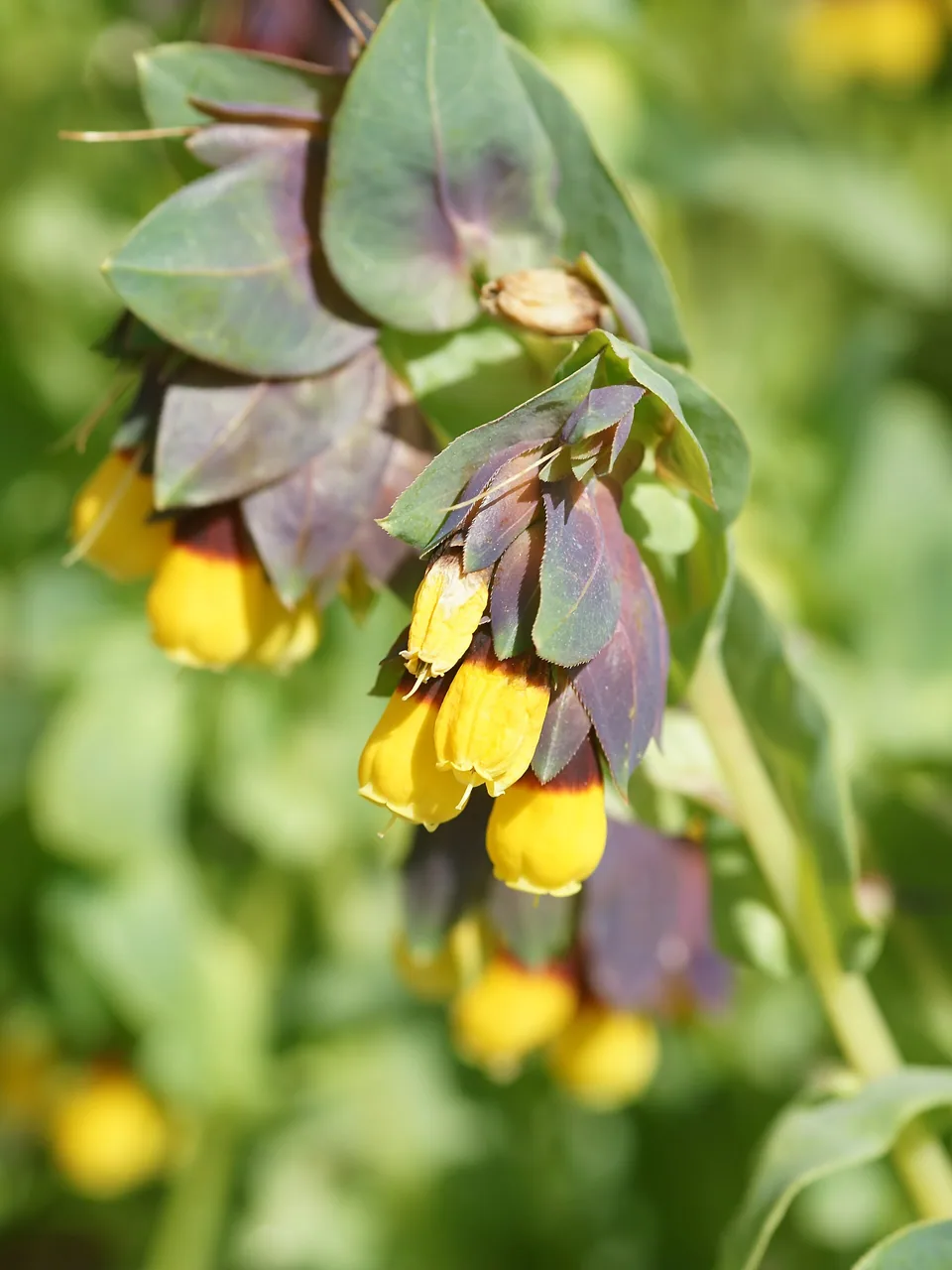
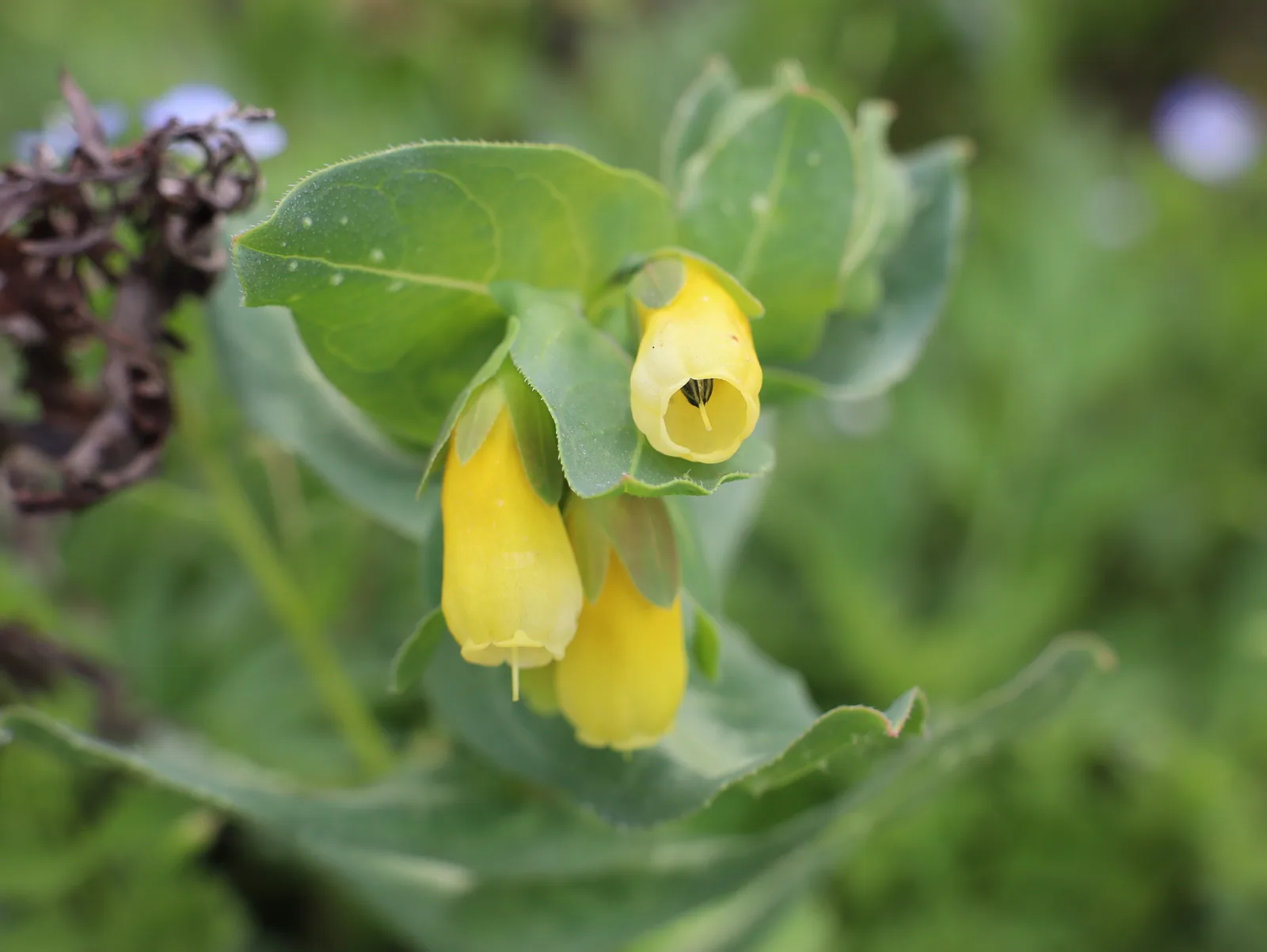

Cómo cultivar y cuidar Ceriflor
Cerinthe major
Escrito por Emilio Marruso · última revisión
De un vistazo
La ceriflor es una anual fácil que puedes cultivar desde semilla, a pleno sol o con algo de sombra. Una vez asentada aguanta bien la sequía, aunque florece todavía más si la riegas bien. Alcanza de 46 cm a 1,2 m de alto, se da bien en maceta y te permite guardar sus semillas para el año siguiente.
- Sol
De pleno sol a sombra ligera
Qué dicen las fuentes (2)
- Riego
Aguanta la sequía una vez asentada; florece más si la riegas bien, pero no quiere la tierra encharcada
Qué dicen las fuentes (1)
Riego: Relativamente tolerante a la sequía una vez establecida; florece más cuando se riega bien, pero no le gusta el suelo demasiado húmedo.
Once established it is relatively drought tolerant but it becomes fuller and blooms more when well watered (but dislikes overly moist soil).
— Honeywort, Cerinthe major – Wisconsin Horticulture [2] - Plantación
Trasplanta a mediados de primavera
Qué dicen las fuentes (2)
Plantación: Mediados de primavera (Arkansas).
Arkansas: But in Arkansas it is best treated as a cool season annual, planting out in mid spring and pulling out by early summer.
— Cerinthe major var. purpurescens; Honeywort, Blue Shrimp Plant, “Kiwi Blue” [3] But in Arkansas it is best treated as a cool season annual, planting out in mid spring and pulling out by early summer.
— Cerinthe major var. purpurescens; Honeywort, Blue Shrimp Plant, “Kiwi Blue” [3] - Tamaño
De 46 cm a 1,2 m de alto
Qué dicen las fuentes (2)
Altura adulta: 46-122 cm (18 pulgadas a 4 pies)
In full sun and rich soils they can grow tall enough (2-4 feet) to require staking to keep them upright.
— Honeywort, Cerinthe major – Wisconsin Horticulture [2] In drier and less fertile soil or in light shade the plants tend to be more compact, reaching only about 18” tall.
— Honeywort, Cerinthe major – Wisconsin Horticulture [2] - Multiplicación
Por semilla; ponlas en remojo una noche para que germinen antes y guarda las que caen para el año siguiente
Qué dicen las fuentes (2)
Propagación: Semilla (remojar las semillas toda la noche acelera la germinación; las semillas se pueden recolectar y almacenar)
Soaking the seeds overnight before planting will speed germination. Seed can be collected and stored for the following year.
— Honeywort, Cerinthe major – Wisconsin Horticulture [2] Guardar semillas: La semilla se puede recolectar y almacenar para el año siguiente; recolecta las semillas a medida que caen debajo de las plantas grandes.
Seed can be collected and stored for the following year. Check the ground beneath large plants every few days to collect, gathering the seeds as they fall
— Honeywort, Cerinthe major – Wisconsin Horticulture [2] - Siembra
Siembra en interior 4–6 semanas antes de la última helada, o fuera en primavera sin riesgo de heladas
Qué dicen las fuentes (3)
Siembra: En interiores, de 4 a 6 semanas antes de la última helada promedio, o al aire libre en primavera después de que haya pasado el peligro de heladas.
Según University of Wisconsin Extension: Start honeywort from seed indoors 4-6 weeks before the average last frost or outdoors in spring after the danger of frost has passed.
— Honeywort, Cerinthe major – Wisconsin Horticulture [2] Arkansas: Plant the seeds inside in late winter and grow transplants with the aim of planting them out once the coldest weather of winter is past.
— Cerinthe major var. purpurescens; Honeywort, Blue Shrimp Plant, “Kiwi Blue” [3] Start honeywort from seed indoors 4-6 weeks before the average last frost or outdoors in spring after the danger of frost has passed.
— Honeywort, Cerinthe major – Wisconsin Horticulture [2] - Maceta
Crece también en maceta, pero ahí necesita mucha agua y abono
Qué dicen las fuentes (2)
En maceta: Sí
C. major also grows well in containers, where the plants will drape gracefully over the sides – but they need lots of water and fertilizer to thrive.
— Honeywort, Cerinthe major – Wisconsin Horticulture [2] Notas sobre el riego: En contenedores necesita mucha agua y fertilizante.
C. major also grows well in containers, where the plants will drape gracefully over the sides – but they need lots of water and fertilizer to thrive.
— Honeywort, Cerinthe major – Wisconsin Horticulture [2]
Resumen
La honeywort crece a pleno sol o semisombra y es relativamente tolerante a la sequía una vez establecida. [2] Se inicia a partir de semilla, en interiores antes de la última helada o al aire libre en primavera. [2]
Citado en inglés, como en la fuente.
Esta ficha está incompleta: las fuentes consultadas aún no cubren todos los campos.
Aún no cubierto por nuestras fuentes: Rusticidad, zona más fría, Rusticidad, zona más cálida, Poda
Cuidados
Riego
Riego
Relativamente tolerante a la sequía una vez establecida; florece más cuando se riega bien, pero no le gusta el suelo demasiado húmedo.
Qué dicen las fuentes (1)
Once established it is relatively drought tolerant but it becomes fuller and blooms more when well watered (but dislikes overly moist soil).Notas sobre el riego
En contenedores necesita mucha agua y fertilizante.
Qué dicen las fuentes (1)
C. major also grows well in containers, where the plants will drape gracefully over the sides – but they need lots of water and fertilizer to thrive.Luz
Pleno sol a semisombra
Clima y frío
Rusticidad, zona más fría
No figura en las fuentes consultadas.
Rusticidad, zona más cálida
No figura en las fuentes consultadas.
Dónde cultivarla
Sí
Qué dicen las fuentes (1)
C. major also grows well in containers, where the plants will drape gracefully over the sides – but they need lots of water and fertilizer to thrive.Propagación
Semilla (remojar las semillas toda la noche acelera la germinación; las semillas se pueden recolectar y almacenar)
Qué dicen las fuentes (1)
Soaking the seeds overnight before planting will speed germination. Seed can be collected and stored for the following year.Cultivo
La planta
Ciclo de vida
anual
Qué dicen las fuentes (1)
It is an annual and grows primarily in the subtropical biome.Familia
Boraginaceae
Qué dicen las fuentes (1)
This species is an unusual member of the borage family (Boraginaceae) in that it does not have hairy foliage like most family members do.Altura adulta
46-122 cm (18 pulgadas a 4 pies)
Qué dicen las fuentes (2)
In full sun and rich soils they can grow tall enough (2-4 feet) to require staking to keep them upright.In drier and less fertile soil or in light shade the plants tend to be more compact, reaching only about 18” tall.Cosecha y conservación
Guardar semillas
La semilla se puede recolectar y almacenar para el año siguiente; recolecta las semillas a medida que caen debajo de las plantas grandes.
Qué dicen las fuentes (1)
Seed can be collected and stored for the following year. Check the ground beneath large plants every few days to collect, gathering the seeds as they fallAbonado
Frecuencia
Las fuentes dan valores distintos según la región, la zona o las condiciones de cultivo.
Lo que dice cada fuente
en contenedores: Abundante fertilizante
Qué dicen las fuentes (1)
en contenedores: C. major also grows well in containers, where the plants will drape gracefully over the sides – but they need lots of water and fertilizer to thrive.Remedios
Las fuentes consultadas no dan remedios para esta planta.
Calendario
Siembra
En interiores, de 4 a 6 semanas antes de la última helada promedio, o al aire libre en primavera después de que haya pasado el peligro de heladas.
Lo que dice cada fuente
Según University of Wisconsin Extension: En interiores, de 4 a 6 semanas antes de la última helada promedio, o al aire libre en primavera después de que haya pasado el peligro de heladas.
Arkansas: En interiores a fines del invierno
Qué dicen las fuentes (3)
Según University of Wisconsin Extension: Start honeywort from seed indoors 4-6 weeks before the average last frost or outdoors in spring after the danger of frost has passed.Arkansas: Plant the seeds inside in late winter and grow transplants with the aim of planting them out once the coldest weather of winter is past.Start honeywort from seed indoors 4-6 weeks before the average last frost or outdoors in spring after the danger of frost has passed.Plantación
Mediados de primavera (Arkansas).
Lo que dice cada fuente
Arkansas: Mediados de primavera
Qué dicen las fuentes (2)
Arkansas: But in Arkansas it is best treated as a cool season annual, planting out in mid spring and pulling out by early summer.But in Arkansas it is best treated as a cool season annual, planting out in mid spring and pulling out by early summer.Poda
No figura en las fuentes consultadas.
Meses tal como los dan las fuentes, en su mayoría de Estados Unidos (hemisferio norte). En el hemisferio sur se desplazan unos seis meses.
Respecto a las heladas
Estimación menos precisa: no hay ninguna estación meteorológica a menos de 300 km.
Busca las fechas de heladas por código postal o ciudad
Siembra en interior: de 4 a 6 semanas antes de la última helada
Start honeywort from seed indoors 4-6 weeks before the average last frost or outdoors in spring after the danger of frost has passed.
— Honeywort, Cerinthe major – Wisconsin Horticulture [2] Siembra al aire libre: hacia la última helada
Start honeywort from seed indoors 4-6 weeks before the average last frost or outdoors in spring after the danger of frost has passed.
— Honeywort, Cerinthe major – Wisconsin Horticulture [2]
Cuenta desde las fechas medias de las heladas de tu zona.
Plantas similares
- Abraham Trachystemon orientalis
- Lengua de vaca Anchusa azurea
- Blue Showers Cynoglossum amabile
- Viperina Echium vulgare
- Borraja Borago officinalis
- Bugloss Anchusa capensis
- Clasping Heliotrope Heliotropium amplexicaule
- Comfrey Symphytum grandiflorum
Fuentes
Cada valor anterior se cita de estos documentos. Los enlaces llevan al editor original.
- Cerinthe major L. | Plants of the World Online | Kew Science · powo.science.kew.org, consultado
- Honeywort, Cerinthe major – Wisconsin Horticulture · hort.extension.wisc.edu, consultado
- Cerinthe major var. purpurescens; Honeywort, Blue Shrimp Plant, “Kiwi Blue” · uaex.uada.edu, consultado
Escrito por Emilio Marruso · última revisión