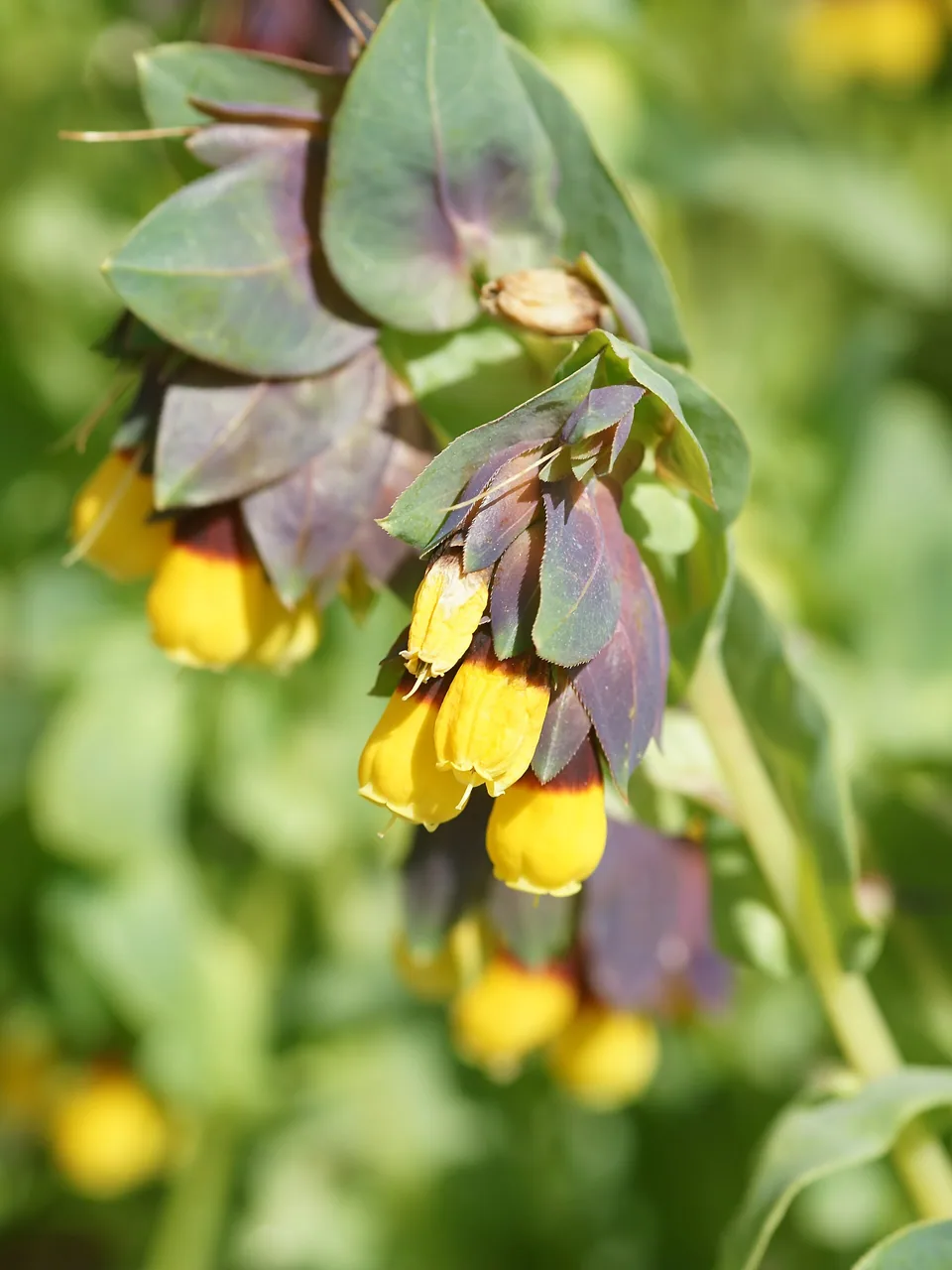
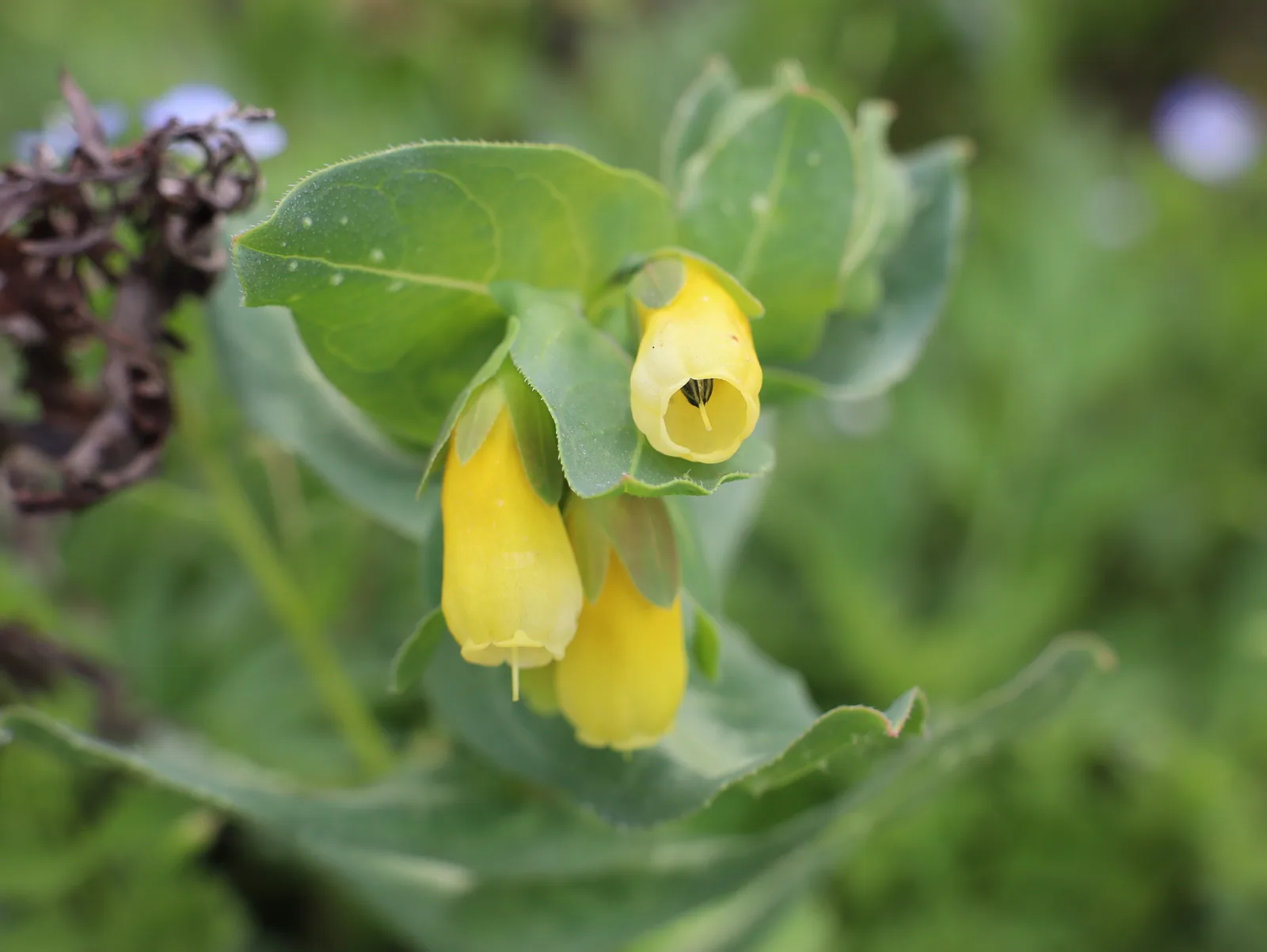

How to Grow and Care for Honeywort
Cerinthe major
Written by Emilio Marruso · last checked
At a glance
Cerinthe major is an easy annual you can grow from seed, in full sun or light shade. Once settled, it copes well with dry spells, yet it blooms even more when you water it well. It grows 18 inches to 4 feet tall, is happy in containers, and lets you save its seeds for next year.
- Sun
Full sun to light shade
What the sources say (2)
- Water
Handles dry spells once settled; blooms more when well watered, but avoid soggy soil
What the sources say (1)
Watering: Relatively drought tolerant once established; blooms more when well watered but dislikes overly moist soil
Once established it is relatively drought tolerant but it becomes fuller and blooms more when well watered (but dislikes overly moist soil).
— Honeywort, Cerinthe major – Wisconsin Horticulture [2] - Planting
Plant out in mid spring
What the sources say (2)
Planting: Mid spring (Arkansas)
Arkansas: But in Arkansas it is best treated as a cool season annual, planting out in mid spring and pulling out by early summer.
— Cerinthe major var. purpurescens; Honeywort, Blue Shrimp Plant, “Kiwi Blue” [3] But in Arkansas it is best treated as a cool season annual, planting out in mid spring and pulling out by early summer.
— Cerinthe major var. purpurescens; Honeywort, Blue Shrimp Plant, “Kiwi Blue” [3] - Size
18 inches to 4 feet tall
What the sources say (2)
Mature height: 46-122 cm (18 in to 4 ft)
In full sun and rich soils they can grow tall enough (2-4 feet) to require staking to keep them upright.
— Honeywort, Cerinthe major – Wisconsin Horticulture [2] In drier and less fertile soil or in light shade the plants tend to be more compact, reaching only about 18” tall.
— Honeywort, Cerinthe major – Wisconsin Horticulture [2] - Propagation
From seed; soak seeds overnight to sprout faster, and save fallen seeds for next year
What the sources say (2)
Propagation: Seed (soaking the seeds overnight speeds germination; seed can be collected and stored)
Soaking the seeds overnight before planting will speed germination. Seed can be collected and stored for the following year.
— Honeywort, Cerinthe major – Wisconsin Horticulture [2] Saving seeds: Seed can be collected and stored for the following year; collect seeds as they fall beneath large plants.
Seed can be collected and stored for the following year. Check the ground beneath large plants every few days to collect, gathering the seeds as they fall
— Honeywort, Cerinthe major – Wisconsin Horticulture [2] - Sowing
Sow indoors 4–6 weeks before the last frost, or outdoors in spring once frost danger has passed
What the sources say (3)
Sowing: Indoors 4-6 weeks before the average last frost, or outdoors in spring after the danger of frost has passed
According to University of Wisconsin Extension: Start honeywort from seed indoors 4-6 weeks before the average last frost or outdoors in spring after the danger of frost has passed.
— Honeywort, Cerinthe major – Wisconsin Horticulture [2] Arkansas: Plant the seeds inside in late winter and grow transplants with the aim of planting them out once the coldest weather of winter is past.
— Cerinthe major var. purpurescens; Honeywort, Blue Shrimp Plant, “Kiwi Blue” [3] Start honeywort from seed indoors 4-6 weeks before the average last frost or outdoors in spring after the danger of frost has passed.
— Honeywort, Cerinthe major – Wisconsin Horticulture [2] - Containers
Grows in containers too, but there it needs lots of water and fertilizer
What the sources say (2)
In containers: Yes
C. major also grows well in containers, where the plants will drape gracefully over the sides – but they need lots of water and fertilizer to thrive.
— Honeywort, Cerinthe major – Wisconsin Horticulture [2] Watering notes: In containers it needs lots of water and fertilizer
C. major also grows well in containers, where the plants will drape gracefully over the sides – but they need lots of water and fertilizer to thrive.
— Honeywort, Cerinthe major – Wisconsin Horticulture [2]
Overview
Honeywort grows in full sun to light shade and is relatively drought tolerant once established. [2] It is started from seed, indoors before the last frost or outdoors in spring. [2]
This record is incomplete: the sources we read do not cover every field yet.
Not yet covered by our sources: Hardiness, coldest zone, Hardiness, warmest zone, Pruning
Honeywort care
How to water Honeywort
Watering
Relatively drought tolerant once established; blooms more when well watered but dislikes overly moist soil
What the sources say (1)
Once established it is relatively drought tolerant but it becomes fuller and blooms more when well watered (but dislikes overly moist soil).Watering notes
In containers it needs lots of water and fertilizer
What the sources say (1)
C. major also grows well in containers, where the plants will drape gracefully over the sides – but they need lots of water and fertilizer to thrive.How much light Honeywort needs
Full sun to light shade
How much cold Honeywort can take
Hardiness, coldest zone
Not stated in the sources we read.
Hardiness, warmest zone
Not stated in the sources we read.
Where to grow Honeywort
Yes
What the sources say (1)
C. major also grows well in containers, where the plants will drape gracefully over the sides – but they need lots of water and fertilizer to thrive.How to propagate Honeywort
Seed (soaking the seeds overnight speeds germination; seed can be collected and stored)
What the sources say (1)
Soaking the seeds overnight before planting will speed germination. Seed can be collected and stored for the following year.How to grow Honeywort
The plant
Life cycle
annual
What the sources say (1)
It is an annual and grows primarily in the subtropical biome.Family
Boraginaceae
What the sources say (1)
This species is an unusual member of the borage family (Boraginaceae) in that it does not have hairy foliage like most family members do.Mature height
46-122 cm (18 in to 4 ft)
What the sources say (2)
In full sun and rich soils they can grow tall enough (2-4 feet) to require staking to keep them upright.In drier and less fertile soil or in light shade the plants tend to be more compact, reaching only about 18” tall.Harvest and storage
Saving seeds
Seed can be collected and stored for the following year; collect seeds as they fall beneath large plants.
What the sources say (1)
Seed can be collected and stored for the following year. Check the ground beneath large plants every few days to collect, gathering the seeds as they fallFertilizing
How often
The sources give different values depending on region, zone or growing conditions.
What each source says
in containers: Plenty of fertilizer
What the sources say (1)
in containers: C. major also grows well in containers, where the plants will drape gracefully over the sides – but they need lots of water and fertilizer to thrive.Remedies
The sources we checked give no remedies for this plant.
Calendar
Sowing
Indoors 4-6 weeks before the average last frost, or outdoors in spring after the danger of frost has passed
What each source says
According to University of Wisconsin Extension: Indoors 4-6 weeks before the average last frost, or outdoors in spring after the danger of frost has passed
Arkansas: Indoors in late winter
What the sources say (3)
According to University of Wisconsin Extension: Start honeywort from seed indoors 4-6 weeks before the average last frost or outdoors in spring after the danger of frost has passed.Arkansas: Plant the seeds inside in late winter and grow transplants with the aim of planting them out once the coldest weather of winter is past.Start honeywort from seed indoors 4-6 weeks before the average last frost or outdoors in spring after the danger of frost has passed.Planting
Mid spring (Arkansas)
What each source says
Arkansas: Mid spring
What the sources say (2)
Arkansas: But in Arkansas it is best treated as a cool season annual, planting out in mid spring and pulling out by early summer.But in Arkansas it is best treated as a cool season annual, planting out in mid spring and pulling out by early summer.Pruning
Not stated in the sources we read.
Months as given by the sources, which are mostly from the United States (northern hemisphere). In the southern hemisphere they shift by about six months.
Relative to frost
Less precise estimate: there is no weather station within 300 km.
Find frost dates by ZIP code or city
Sow indoors: 4 to 6 weeks before the last frost
Start honeywort from seed indoors 4-6 weeks before the average last frost or outdoors in spring after the danger of frost has passed.
— Honeywort, Cerinthe major – Wisconsin Horticulture [2] Sow outdoors: around the last frost
Start honeywort from seed indoors 4-6 weeks before the average last frost or outdoors in spring after the danger of frost has passed.
— Honeywort, Cerinthe major – Wisconsin Horticulture [2]
Count from the average frost dates where you live.
Similar plants
- Abraham Trachystemon orientalis
- Alkanet Anchusa azurea
- Blue Showers Cynoglossum amabile
- Blueweed Echium vulgare
- Borage Borago officinalis
- Bugloss Anchusa capensis
- Clasping Heliotrope Heliotropium amplexicaule
- Comfrey Symphytum grandiflorum
Sources
Every value above is quoted from these documents. Links lead to the original publisher.
- Cerinthe major L. | Plants of the World Online | Kew Science · powo.science.kew.org, consulted
- Honeywort, Cerinthe major – Wisconsin Horticulture · hort.extension.wisc.edu, consulted
- Cerinthe major var. purpurescens; Honeywort, Blue Shrimp Plant, “Kiwi Blue” · uaex.uada.edu, consulted
Written by Emilio Marruso · last checked