
Cómo cultivar y cuidar Jesamina
Cestrum elegans
Escrito por Emilio Marruso · última revisión
Tóxica para: Caballos, Ganado vacuno, Ganado, Personas · Por qué
De un vistazo
El cestrum rojo es un miembro agradecido de la familia de las solanáceas que crece a gusto desde el sol pleno hasta la semisombra. Aguanta la sequía, pero florece mejor si le das humedad regular cuando hace calor y tiempo seco. Eso sí, plántalo donde niños, mascotas y ganado no puedan mordisquearlo, porque todas sus partes son venenosas.
- Sol
Sol pleno o semisombra
Qué dicen las fuentes (4)
Luz: Pleno sol a semisombra
Según Texas Master Gardeners (Henderson County), from Missouri Botanical Garden Plant Finder: Bloom Time: May to September Flower: Showy, Good Cut Sun: Full sun to part shade
— PURPLE JASMINE [6] Según NSW WeedWise: Red cestrum can grow in a wide range of climate and soil conditions. It is drought tolerant and grows in shade and full sun.
— NSW WeedWise [1] Bloom Time: May to September Flower: Showy, Good Cut Sun: Full sun to part shade
— PURPLE JASMINE [6] Red cestrum can grow in a wide range of climate and soil conditions. It is drought tolerant and grows in shade and full sun.
— NSW WeedWise [1] - Riego
Aguanta la sequía, pero riega con regularidad cuando haga calor y seco para que florezca mejor
Qué dicen las fuentes (2)
Notas sobre el riego: Tolerante a la sequía; mejor floración con humedad regular durante clima caluroso y seco
Red cestrum can grow in a wide range of climate and soil conditions. It is drought tolerant and grows in shade and full sun.
— NSW WeedWise [1] Best flowering with regular moisture during hot, dry weather and plenty of fertilizer during growing periods.
— PURPLE JASMINE [6] - Frío
Aguanta inviernos de hasta −12,2 °C (10 °F)
Rústica en inviernos fríos · USDA 8 · RHS H5 · Z8
Qué dicen las fuentes (2)
Rusticidad, zona más fría: 8 [mínima invernal de −12,2 a −6,7 °C (de 10 a 20 °F)]
Best flowering with regular moisture during hot, dry weather and plenty of fertilizer during growing periods. Hardy from Zones 8-11.
— PURPLE JASMINE [6] Rusticidad, zona más cálida: 11 [mínima invernal de 4,4 a 10 °C (de 40 a 50 °F)]
Best flowering with regular moisture during hot, dry weather and plenty of fertilizer during growing periods. Hardy from Zones 8-11.
— PURPLE JASMINE [6] - Seguridad
Toda la planta es venenosa para personas, mascotas y ganado; también puede causar erupciones en la piel
Resumen
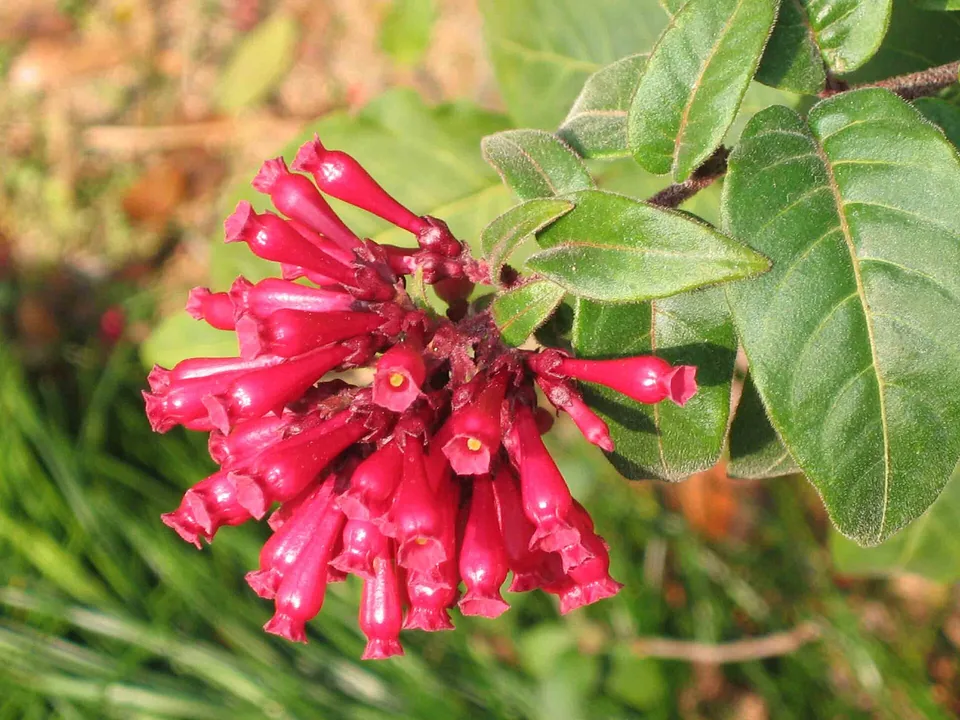
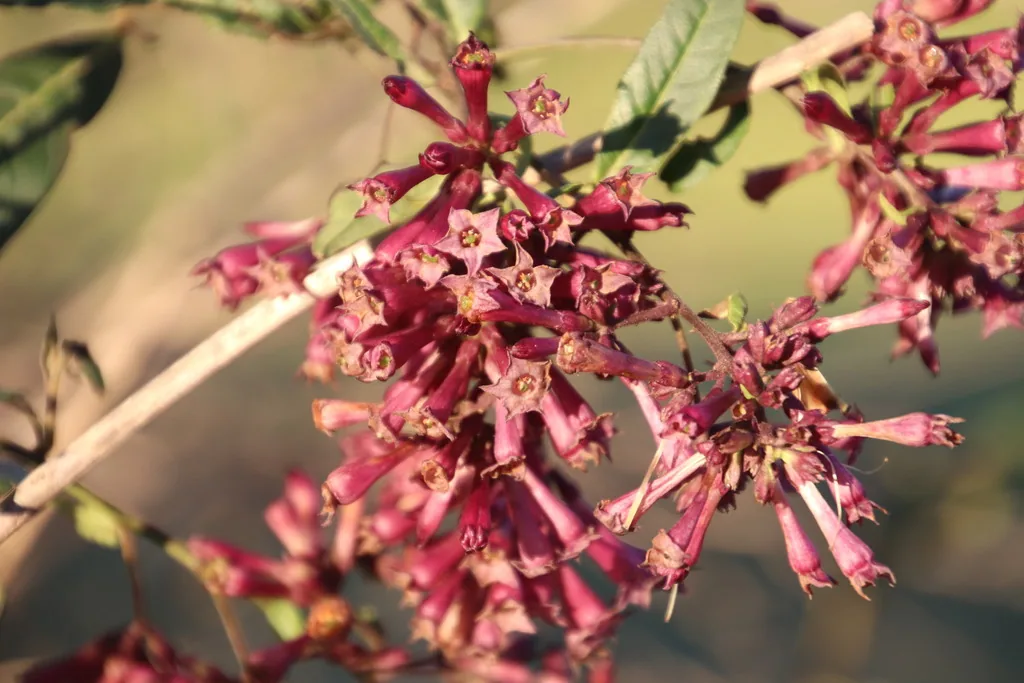
Cestrum elegans (cestrum púrpura o rojo) es una perenne trepadora, similar a un arbusto, del sur de México con tallos arqueados y vellosos que alcanzan 6-10 pies [1,8–3 m]. [6] Ha escapado del cultivo donde es resistente y es una maleza ambiental en márgenes de bosques y sitios perturbados. [6][7] Todas las partes de la planta son venenosas para personas y animales. [1]
Citado en inglés, como en la fuente.
Esta ficha está incompleta: las fuentes consultadas aún no cubren todos los campos.
Aún no cubierto por nuestras fuentes: Riego, Poda, Propagación
Cuidados
Las medidas entre corchetes son nuestra conversión al otro sistema de unidades; el texto citado no cambia.
Riego
Riego
Las fuentes dan valores distintos según la región, la zona o las condiciones de cultivo.
Lo que dice cada fuente
Según Texas Master Gardeners (Henderson County), from Missouri Botanical Garden Plant Finder: Humedad media a seca; tolera suelo seco ocasional
Qué dicen las fuentes (1)
Según Texas Master Gardeners (Henderson County), from Missouri Botanical Garden Plant Finder: Easily grown in average, medium to dry moisture, well-draining soils in full sun to part shade. Can tolerate occasional dry soil conditions.Notas sobre el riego
Tolerante a la sequía; mejor floración con humedad regular durante clima caluroso y seco
Luz
Pleno sol a semisombra
Lo que dice cada fuente
Según Texas Master Gardeners (Henderson County), from Missouri Botanical Garden Plant Finder: Pleno sol a semisombra
Según NSW WeedWise: Sombra y pleno sol
Qué dicen las fuentes (4)
Según Texas Master Gardeners (Henderson County), from Missouri Botanical Garden Plant Finder: Bloom Time: May to September Flower: Showy, Good Cut Sun: Full sun to part shadeSegún NSW WeedWise: Red cestrum can grow in a wide range of climate and soil conditions. It is drought tolerant and grows in shade and full sun.Bloom Time: May to September Flower: Showy, Good Cut Sun: Full sun to part shadeRed cestrum can grow in a wide range of climate and soil conditions. It is drought tolerant and grows in shade and full sun.Clima y frío
Rusticidad, zona más fría
8 [mínima invernal de −12,2 a −6,7 °C (de 10 a 20 °F)]
Qué dicen las fuentes (1)
Best flowering with regular moisture during hot, dry weather and plenty of fertilizer during growing periods. Hardy from Zones 8-11.Rusticidad, zona más cálida
11 [mínima invernal de 4,4 a 10 °C (de 40 a 50 °F)]
Qué dicen las fuentes (1)
Best flowering with regular moisture during hot, dry weather and plenty of fertilizer during growing periods. Hardy from Zones 8-11.Propagación
No figura en las fuentes consultadas.
Cultivo
La planta
Familia
Solanáceas
Qué dicen las fuentes (1)
Order Solanales ( 1SOLO ) Family Solanaceae ( 1SOLF ) Genus Cestrum ( 1CEMG )Remedios
Cada remedio indica qué dicen las fuentes oficiales; los remedios tradicionales sin fuente oficial aparecen marcados. Los perjudiciales están para que sepas evitarlos.
Primeros auxilios
Primeros auxilios: no sustituyen al médico
contacto con la piel
lavado de la piel Fuente oficial, sin prueba independiente
If the patient is unconscious, unresponsive or having difficulty breathing dial 000 or get to the emergency section of a hospital immediately.
— NSW WeedWise [1] If the patient is conscious and responsive call the Poisons Information Centre on 13 11 26 or your doctor.
— NSW WeedWise [1] Cómo: Evita tocar la planta con la piel desnuda; si la planta se toca accidentalmente, lava la piel a fondo.
Avoid touching the plant with bare skin and if the plant is accidentally touched wash the skin thoroughly.
— NSW WeedWise [1]
Cómo eliminarla
cestrum rojo
Arranca o desentierra las plántulas a mano. Funciona en parte
Wear gloves and other personal protective clothing when controlling red cestrum to prevent coming into contact with the plant.
— NSW WeedWise [1] Cómo: Arranca a mano las plantas pequeñas, o excava la planta entera incluyendo las raíces, todo el año. Usa guantes al manipularla.
Physical removal - Hand pull small plants, or dig out entire plant including roots (all year round).
— weedbusters.org.nz [8] Qué dicen las pruebas Seedlings can be pulled or dug out when small. Larger plants are difficult to remove due to their extensive roots and because it is difficult to limit contact with the larger plants.
— NSW WeedWise [1] desecha los tallos cortados Funciona
Cómo: Elimina todas las partes de la planta y llévalas al vertedero de residuos verdes o al vertedero si es posible; los tallos cortados pueden rebrotar.
Plant parts requiring disposal: All parts. Disposal options: Remove to greenwaste or landfill if practical. Cut stems can resprout.
— tiakitamakimakaurau.nz [9] Qué dicen las pruebas Dispose of plants carefully as stems can reshoot if left touching the soil.
— NSW WeedWise [1] Revisando si hay nuevas plántulas Fuente oficial, sin prueba independiente
Cómo: Sigue revisando si hay nuevas plántulas durante muchos años, porque las semillas pueden permanecer latentes en el suelo.
keep checking for new seedlings for many years because seeds can remain dormant in the soil.
— NSW WeedWise [1] Replantando las zonas tratadas No verificado
Remedio tradicional, no verificado por una fuente oficial.
Cómo: Haz seguimiento a las zonas tratadas 3 veces al año; favorece la regeneración natural de las plantas nativas o replanta las zonas tratadas después de 2-3 tratamientos para establecer una cobertura vegetal densa.
Venenosa para los animales
Según la fuente, citada textualmente. No es un consejo médico ni veterinario: si una persona o un animal pudo haber ingerido esta planta, contacta con un centro de toxicología o con un veterinario.
Animales
All parts of the plant are poisonous to humans, and animals-livestock can die within an hour of consuming the plant.
[2]Red cestrum contains alkaloids that are poisonous and can cause animal deaths. Plants are poisonous to livestock including cattle and horses.
[1]- Principio tóxico
Red cestrum contains alkaloids that are poisonous and can cause animal deaths. Plants are poisonous to livestock including cattle and horses.
[1]
Personas
is poisonous to people, pets, livestock and native animals - can cause skin rashes
[1]- Partes venenosas
All parts of the plant are toxic, especially the berries. Avoid touching the plant with bare skin and if the plant is accidentally touched wash the skin thoroughly.
[1]- Síntomas
Injurious to people? | All parts of this plant are highly toxic (O’Hara, undated) if ingested (Dave’s garden website) Some people develop skin rash from handling plant parts
[4]
Calendario
Poda
No figura en las fuentes consultadas.
Meses tal como los dan las fuentes, en su mayoría de Estados Unidos (hemisferio norte). En el hemisferio sur se desplazan unos seis meses.
Valores orientativos
Valores de una fuente secundaria, no comprobados palabra por palabra como el resto de esta página. Úselos como punto de partida.
- Ciclo de vida
- PerenneValor orientativo, adáptalo a tu clima · Fuente secundaria
- Altura adulta
- 182.9-304.8 cm (6-10 pies)Valor orientativo, adáptalo a tu clima · Fuente secundaria
- Resiste la sequía
- SíValor orientativo, adáptalo a tu clima · Fuente secundaria
- pH del suelo
- 6-7.5Valor orientativo, adáptalo a tu clima · Fuente secundaria
- Nivel de cuidado
- MedioValor orientativo, adáptalo a tu clima · Fuente secundaria
- Crecimiento
- BajoValor orientativo, adáptalo a tu clima · Fuente secundaria
- Poda
- Marzo, abrilValor orientativo, adáptalo a tu clima · Fuente secundaria
- Propagación
- Esqueje, propagación por acodo, propagación por injerto, división, propagación por semillaValor orientativo, adáptalo a tu clima · Fuente secundaria
Plantas similares
- Orange Cestrum Cestrum aurantiacum
- Trompetero Brugmansia suaveolens
- Bufera Withania somnifera
- Belladona Atropa belladonna
- Dulcamara Solanum dulcamara
- Alquequenje Alkekengi officinarum
- Brazilian nightshade Solanum seaforthianum
- Brunfelsia Brunfelsia pauciflora
Fuentes
Cada valor anterior se cita de estos documentos. Los enlaces llevan al editor original.
- NSW WeedWise · weeds.dpi.nsw.gov.au, consultado
- Cestrum elegans | Plant Pono · plantpono.org, consultado
- Cestrum elegans (CEMEL)[Overview]| EPPO Global Database · gd.eppo.int, consultado
- Red cestrum (Cestrum elegans) · soilhealth.ccmaknowledgebase.vic.gov.au, consultado
- Red cestrum • Weedbusters · weedbusters.org.nz, consultado
- PURPLE JASMINE · txmg.org, consultado
- Red cestrum · weeds.brisbane.qld.gov.au, consultado
- weedbusters.org.nz · weedbusters.org.nz
- tiakitamakimakaurau.nz · tiakitamakimakaurau.nz
Escrito por Emilio Marruso · última revisión