
How to Grow and Care for Purple cestrum
Cestrum elegans
Written by Emilio Marruso · last checked
Toxic to: Horses, Cattle, Livestock, People · Why
At a glance
Red cestrum is an easygoing member of the nightshade family that grows happily anywhere from full sun to part shade. It tolerates drought, yet it flowers best when you give it regular moisture during hot, dry weather. Just plant it where children, pets and livestock can't nibble it, because every part of the plant is poisonous.
- Sun
Full sun to part shade
What the sources say (4)
Light: Full sun to part shade
According to Texas Master Gardeners (Henderson County), from Missouri Botanical Garden Plant Finder: Bloom Time: May to September Flower: Showy, Good Cut Sun: Full sun to part shade
— PURPLE JASMINE [6] According to NSW WeedWise: Red cestrum can grow in a wide range of climate and soil conditions. It is drought tolerant and grows in shade and full sun.
— NSW WeedWise [1] Bloom Time: May to September Flower: Showy, Good Cut Sun: Full sun to part shade
— PURPLE JASMINE [6] Red cestrum can grow in a wide range of climate and soil conditions. It is drought tolerant and grows in shade and full sun.
— NSW WeedWise [1] - Water
Handles drought, but water regularly in hot, dry weather for the best flowers
What the sources say (2)
Watering notes: Drought tolerant; best flowering with regular moisture during hot, dry weather
Red cestrum can grow in a wide range of climate and soil conditions. It is drought tolerant and grows in shade and full sun.
— NSW WeedWise [1] Best flowering with regular moisture during hot, dry weather and plenty of fertilizer during growing periods.
— PURPLE JASMINE [6] - Cold
Survives winters down to 10 °F (−12.2 °C)
Hardy in cold winters · USDA 8 · RHS H5 · Z8
What the sources say (2)
Hardiness, coldest zone: 8 [winter low −12.2 to −6.7 °C (10 to 20 °F)]
Best flowering with regular moisture during hot, dry weather and plenty of fertilizer during growing periods. Hardy from Zones 8-11.
— PURPLE JASMINE [6] Hardiness, warmest zone: 11 [winter low 4.4 to 10 °C (40 to 50 °F)]
Best flowering with regular moisture during hot, dry weather and plenty of fertilizer during growing periods. Hardy from Zones 8-11.
— PURPLE JASMINE [6] - Safety
Every part is poisonous to people, pets and livestock; it can also cause skin rashes
Overview
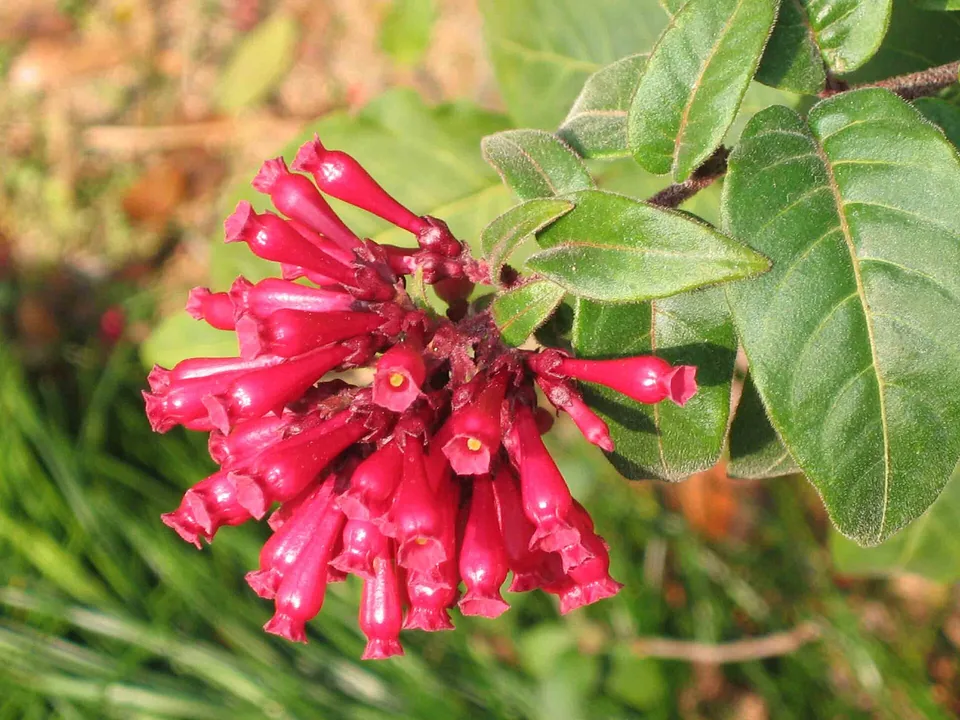
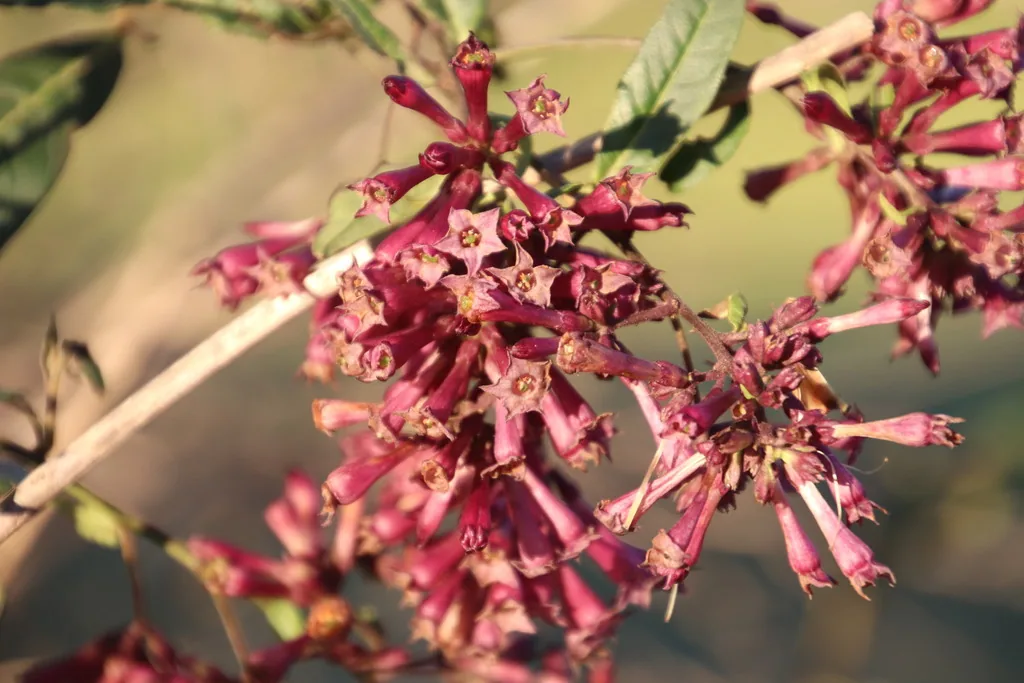
Cestrum elegans (purple or red cestrum) is a climbing, shrub-like perennial from southern Mexico with arching hairy stems reaching 6-10 ft [1.8–3 m]. [6] It has escaped cultivation where hardy and is an environmental weed in forest margins and disturbed sites. [6][7] All parts of the plant are poisonous to people and animals. [1]
This record is incomplete: the sources we read do not cover every field yet.
Not yet covered by our sources: Watering, Pruning, Propagation
Purple cestrum care
Measurements in square brackets are our conversion into the other unit system; the quoted text is unchanged.
How to water Purple cestrum
Watering
The sources give different values depending on region, zone or growing conditions.
What each source says
According to Texas Master Gardeners (Henderson County), from Missouri Botanical Garden Plant Finder: Medium to dry moisture; tolerates occasional dry soil
What the sources say (1)
According to Texas Master Gardeners (Henderson County), from Missouri Botanical Garden Plant Finder: Easily grown in average, medium to dry moisture, well-draining soils in full sun to part shade. Can tolerate occasional dry soil conditions.Watering notes
Drought tolerant; best flowering with regular moisture during hot, dry weather
How much light Purple cestrum needs
Full sun to part shade
What each source says
According to Texas Master Gardeners (Henderson County), from Missouri Botanical Garden Plant Finder: Full sun to part shade
According to NSW WeedWise: Shade and full sun
What the sources say (4)
According to Texas Master Gardeners (Henderson County), from Missouri Botanical Garden Plant Finder: Bloom Time: May to September Flower: Showy, Good Cut Sun: Full sun to part shadeAccording to NSW WeedWise: Red cestrum can grow in a wide range of climate and soil conditions. It is drought tolerant and grows in shade and full sun.Bloom Time: May to September Flower: Showy, Good Cut Sun: Full sun to part shadeRed cestrum can grow in a wide range of climate and soil conditions. It is drought tolerant and grows in shade and full sun.How much cold Purple cestrum can take
Hardiness, coldest zone
8 [winter low −12.2 to −6.7 °C (10 to 20 °F)]
What the sources say (1)
Best flowering with regular moisture during hot, dry weather and plenty of fertilizer during growing periods. Hardy from Zones 8-11.Hardiness, warmest zone
11 [winter low 4.4 to 10 °C (40 to 50 °F)]
What the sources say (1)
Best flowering with regular moisture during hot, dry weather and plenty of fertilizer during growing periods. Hardy from Zones 8-11.How to propagate Purple cestrum
Not stated in the sources we read.
How to grow Purple cestrum
The plant
Family
Solanaceae
What the sources say (1)
Order Solanales ( 1SOLO ) Family Solanaceae ( 1SOLF ) Genus Cestrum ( 1CEMG )Remedies
Each remedy shows what official sources say about it; traditional remedies without an official source are marked as such. Harmful ones are listed so you know to avoid them.
First aid
First aid: not a substitute for a doctor
skin contact
washing the skin Official source, not independently tested
If the patient is unconscious, unresponsive or having difficulty breathing dial 000 or get to the emergency section of a hospital immediately.
— NSW WeedWise [1] If the patient is conscious and responsive call the Poisons Information Centre on 13 11 26 or your doctor.
— NSW WeedWise [1] How: Avoid touching the plant with bare skin; if the plant is accidentally touched, wash the skin thoroughly.
Avoid touching the plant with bare skin and if the plant is accidentally touched wash the skin thoroughly.
— NSW WeedWise [1]
Getting rid of it
red cestrum
hand pulling or digging out seedlings Partly works
Wear gloves and other personal protective clothing when controlling red cestrum to prevent coming into contact with the plant.
— NSW WeedWise [1] How: Hand pull small plants, or dig out the entire plant including roots, all year round. Wear gloves when handling.
Physical removal - Hand pull small plants, or dig out entire plant including roots (all year round).
— weedbusters.org.nz [8] What the evidence says Seedlings can be pulled or dug out when small. Larger plants are difficult to remove due to their extensive roots and because it is difficult to limit contact with the larger plants.
— NSW WeedWise [1] dispose of cut stems Works
How: Remove all plant parts to greenwaste or landfill if practical; cut stems can resprout.
Plant parts requiring disposal: All parts. Disposal options: Remove to greenwaste or landfill if practical. Cut stems can resprout.
— tiakitamakimakaurau.nz [9] What the evidence says Dispose of plants carefully as stems can reshoot if left touching the soil.
— NSW WeedWise [1] checking for new seedlings Official source, not independently tested
How: Keep checking for new seedlings for many years, because seeds can remain dormant in the soil.
keep checking for new seedlings for many years because seeds can remain dormant in the soil.
— NSW WeedWise [1] replanting treated areas Not verified
Traditional remedy, not verified by an official source.
How: Follow up treated areas 3 times per year; encourage natural regeneration of native plants or replant treated areas after 2-3 treatments to establish dense ground cover.
Is Purple cestrum toxic to pets?
Reported by the source, quoted verbatim. This is not medical or veterinary advice: if a person or an animal may have eaten this plant, contact a poison control centre or a veterinarian.
Animals
All parts of the plant are poisonous to humans, and animals-livestock can die within an hour of consuming the plant.
[2]Red cestrum contains alkaloids that are poisonous and can cause animal deaths. Plants are poisonous to livestock including cattle and horses.
[1]- Toxic principle
Red cestrum contains alkaloids that are poisonous and can cause animal deaths. Plants are poisonous to livestock including cattle and horses.
[1]
People
is poisonous to people, pets, livestock and native animals - can cause skin rashes
[1]- Poisonous parts
All parts of the plant are toxic, especially the berries. Avoid touching the plant with bare skin and if the plant is accidentally touched wash the skin thoroughly.
[1]- Symptoms
Injurious to people? | All parts of this plant are highly toxic (O’Hara, undated) if ingested (Dave’s garden website) Some people develop skin rash from handling plant parts
[4]
Calendar
Pruning
Not stated in the sources we read.
Months as given by the sources, which are mostly from the United States (northern hemisphere). In the southern hemisphere they shift by about six months.
Indicative values
Values from a secondary source, not checked word for word like the rest of this page. Use them as a starting point.
- Life cycle
- PerennialIndicative value, adapt it to your climate · Secondary source
- Mature height
- 182.9-304.8 cm (6-10 ft)Indicative value, adapt it to your climate · Secondary source
- Drought tolerant
- yesIndicative value, adapt it to your climate · Secondary source
- Soil pH
- 6-7.5Indicative value, adapt it to your climate · Secondary source
- Care level
- MediumIndicative value, adapt it to your climate · Secondary source
- Growth rate
- LowIndicative value, adapt it to your climate · Secondary source
- Pruning
- March, AprilIndicative value, adapt it to your climate · Secondary source
- Propagation
- Cutting, Layering Propagation, Grafting Propagation, Division, Seed PropagationIndicative value, adapt it to your climate · Secondary source
Similar plants
- Orange Cestrum Cestrum aurantiacum
- Angel's-tears Brugmansia suaveolens
- Ashwagandha Withania somnifera
- Belladonna Atropa belladonna
- Bittersweet Solanum dulcamara
- Bladder cherry Alkekengi officinarum
- Brazilian nightshade Solanum seaforthianum
- Brunfelsia Brunfelsia pauciflora
Sources
Every value above is quoted from these documents. Links lead to the original publisher.
- NSW WeedWise · weeds.dpi.nsw.gov.au, consulted
- Cestrum elegans | Plant Pono · plantpono.org, consulted
- Cestrum elegans (CEMEL)[Overview]| EPPO Global Database · gd.eppo.int, consulted
- Red cestrum (Cestrum elegans) · soilhealth.ccmaknowledgebase.vic.gov.au, consulted
- Red cestrum • Weedbusters · weedbusters.org.nz, consulted
- PURPLE JASMINE · txmg.org, consulted
- Red cestrum · weeds.brisbane.qld.gov.au, consulted
- weedbusters.org.nz · weedbusters.org.nz
- tiakitamakimakaurau.nz · tiakitamakimakaurau.nz
Written by Emilio Marruso · last checked