
Cómo cultivar y cuidar Bleeding Glory-bower
Clerodendrum thomsoniae
Escrito por Emilio Marruso · última revisión
De un vistazo
Esta planta vigorosa puede alcanzar de 3 a 4,6 m, y se siente igual de bien en interior que en maceta. Mantén la tierra húmeda pero no encharcada mientras crece, abónala con regularidad y pódala después de la floración. Si pierde las hojas con el fresco, no te preocupes: en primavera vuelven a brotar desde las raíces.
- Riego
Húmeda pero no encharcada mientras crece; si reposa en invierno, riega solo para que la tierra no se seque
Qué dicen las fuentes (3)
Riego: Mantén húmedo pero no mojado; riega regularmente cuando esté creciendo activamente.
Water and fertilize regularly when actively growing. Use an organic-rich but well-drained potting medium, and keep it moist but not wet.
— Bleeding Heart Vine, Clerodendrum thomsoniae – Wisconsin Horticulture [1] Water the plant frequently during dry weather; the plant requires consistently moist, but not soggy soil.
— Bleeding Heart Information - Tips On Growing Clerodendrum Bleeding Heart Vines | Gardening Know How [3] Notas sobre el riego: Si la planta entra en reposo en invierno, suspende el riego hasta que comience el nuevo crecimiento, regando solo lo suficiente para evitar que el suelo se seque.
If bleeding heart vine goes dormant in the winter, withhold water until the new growth starts , watering just enough to keep the soil from drying out and don’t fertilize.
— Bleeding Heart Vine, Clerodendrum thomsoniae – Wisconsin Horticulture [1] - Frío
Con el fresco pierde las hojas; en primavera rebrotan desde las raíces
- Suelo
Suelo con pH de 5,5 o más
Qué dicen las fuentes (1)
pH del suelo, mínimo: 5.5
pH Range: 5.5 to 6.5
— Clerodendrum thomsoniae ( Bleeding Heart Glorybower Clerodenrum ) - Professional Gardening Tips [5] - Distancia
50–60 cm entre plantas
Qué dicen las fuentes (1)
Distancia de plantación: 50-60 cm (0.5-0.6 m)
with 0.5 - 0.6 m of space between individuals.
— NParks | Clerodendrum thomsoniae [2] - Abonado
Abona con regularidad mientras crece; nunca durante el reposo invernal
Qué dicen las fuentes (4)
Cuándo: Mientras crece activamente; no durante el reposo invernal
a sunny window may be sufficient if you don’t move the container outdoors for the season. Water and fertilize regularly when actively growing.
— Bleeding Heart Vine, Clerodendrum thomsoniae – Wisconsin Horticulture [1] If bleeding heart vine goes dormant in the winter, withhold water until the new growth starts , watering just enough to keep the soil from drying out and don’t fertilize.
— Bleeding Heart Vine, Clerodendrum thomsoniae – Wisconsin Horticulture [1] Frecuencia: Regularmente mientras crece activamente
a sunny window may be sufficient if you don’t move the container outdoors for the season. Water and fertilize regularly when actively growing.
— Bleeding Heart Vine, Clerodendrum thomsoniae – Wisconsin Horticulture [1] Evitar: Fertilizar durante la dormancia invernal
If bleeding heart vine goes dormant in the winter, withhold water until the new growth starts , watering just enough to keep the soil from drying out and don’t fertilize.
— Bleeding Heart Vine, Clerodendrum thomsoniae – Wisconsin Horticulture [1] - Poda
Poda después de la floración; quita lo dañado por el invierno antes de que brote en primavera
Qué dicen las fuentes (2)
Poda: Después de la floración; elimina los daños del invierno antes de que aparezca el nuevo crecimiento en primavera
Since C. thomsoniae blooms on new growth, it is best to cut the plant back after blooming .
— Bleeding Heart Vine, Clerodendrum thomsoniae – Wisconsin Horticulture [1] Prune Clerodendrum bleeding heart vine by removing wayward growth and winter damage before new growth appears in spring.
— Bleeding Heart Information - Tips On Growing Clerodendrum Bleeding Heart Vines | Gardening Know How [3] - Plagas
Cochinilla algodonosa y araña roja: pulveriza jabón insecticida cada 7–10 días hasta eliminarlas
Qué dicen las fuentes (1)
Plagas: cochinillas harinosas, arañitas rojas
Bleeding heart vine has few pests but mealybugs and spider mites can occasionally be problems.
— Bleeding Heart Vine, Clerodendrum thomsoniae – Wisconsin Horticulture [1] - Tamaño
De 3 a 4,6 m de alto
Qué dicen las fuentes (1)
Altura adulta: 305-457 cm (10-15 pies)
In its native habitat it can grow 10 to 15 feet tall, but as a container plant will remain much smaller
— Bleeding Heart Vine, Clerodendrum thomsoniae – Wisconsin Horticulture [1] - Multiplicación
Por esquejes de punta, acodo, semilla o hijuelos
Qué dicen las fuentes (2)
Propagación: Esquejes (esquejes de punta semileñosos), acodo serpentino, semillas, retoños
Bleeding heart vine is easy to propagate by cuttings or serpentine layering
— Bleeding Heart Vine, Clerodendrum thomsoniae – Wisconsin Horticulture [1] Propagate by woody stem cuttings or suckers.
— NParks | Clerodendrum thomsoniae [2] - Siembra
Siembra en interior en primavera, a 1 cm de profundidad
Qué dicen las fuentes (2)
Siembra: En interiores en primavera
Seeds can also be planted indoors spring.
— Bleeding Heart Vine, Clerodendrum thomsoniae – Wisconsin Horticulture [1] Profundidad de siembra: 1.3 cm [0,5 in] (½ pulgada)
Plant seeds about ½ inch deep in moist, well-drained potting media.
— Bleeding Heart Vine, Clerodendrum thomsoniae – Wisconsin Horticulture [1] - Maceta
Crece bien en maceta y en interior
Qué dicen las fuentes (2)
En maceta: Sí
Clerodendrum thomsoniae is easily grown in containers
— Bleeding Heart Vine, Clerodendrum thomsoniae – Wisconsin Horticulture [1] En interior: Sí
In cooler climates, it is commonly grown as a houseplant.
— Bleeding Heart Information - Tips On Growing Clerodendrum Bleeding Heart Vines | Gardening Know How [3]
Resumen
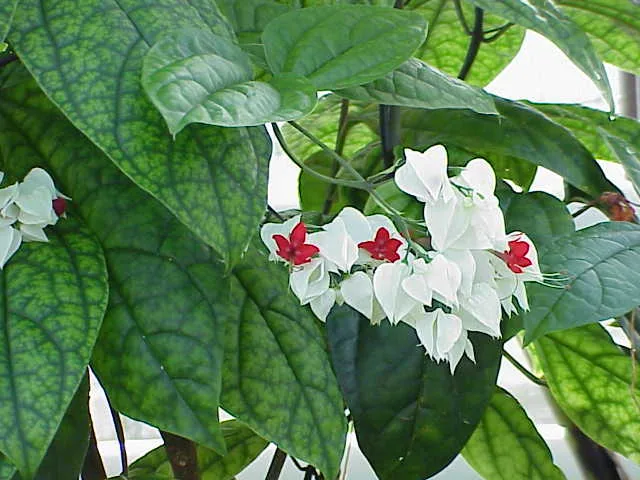
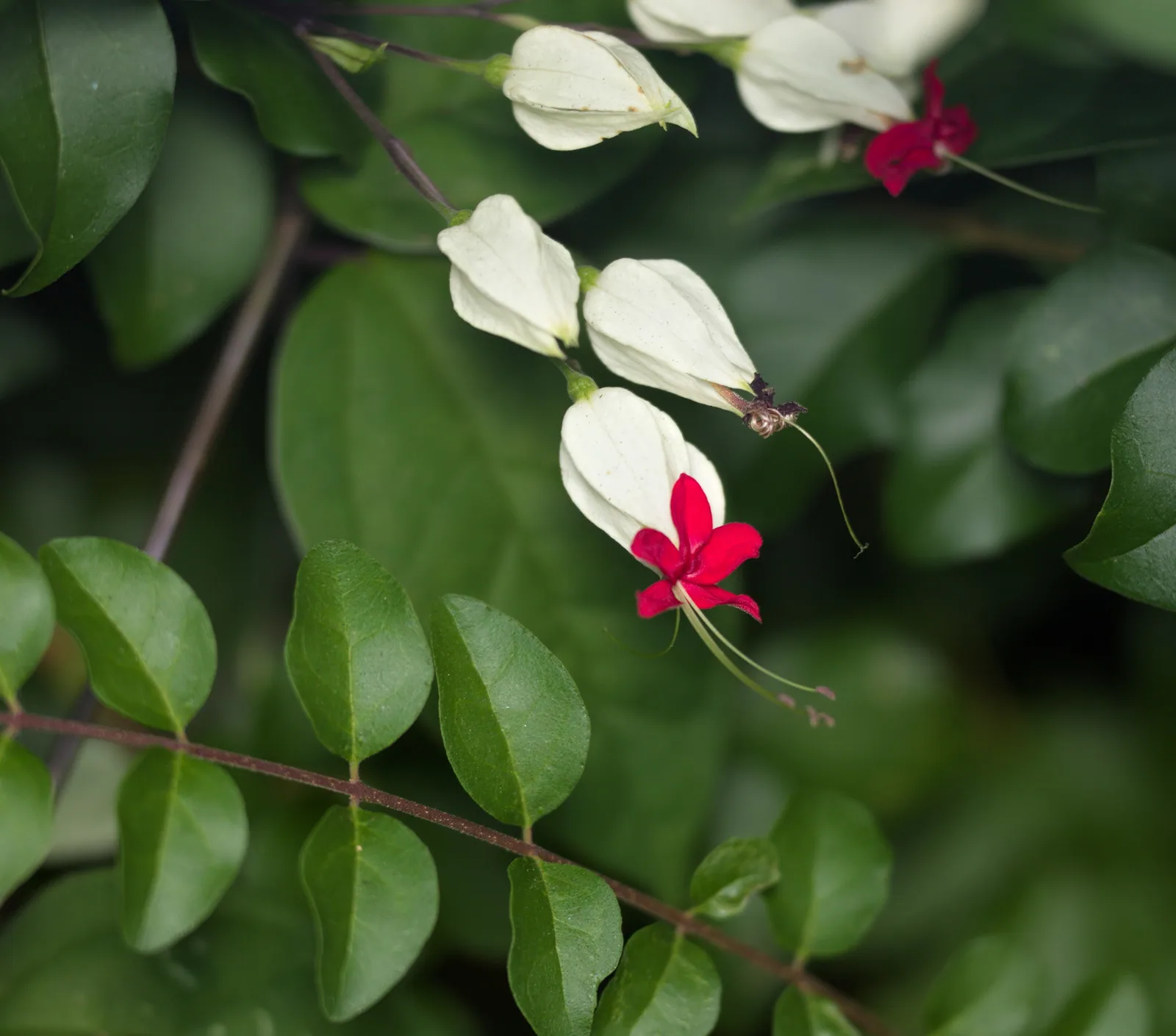
La planta de corazón sangrante es una enredadera perenne de hoja perenne de África occidental tropical con cáliz blanco y corolas carmesí. [1] Se cultiva en suelo rico en materia orgánica y bien drenado, mantenido húmedo pero no empapado, con riego y fertilización regulares mientras crece activamente. [1][3] Es una planta tropical que necesita protección contra las heladas y se cultiva fácilmente en contenedores. [1]
Citado en inglés, como en la fuente.
Cuidados
Riego
Riego
Mantén húmedo pero no mojado; riega regularmente cuando esté creciendo activamente.
Qué dicen las fuentes (2)
Water and fertilize regularly when actively growing.
Use an organic-rich but well-drained potting medium, and keep it moist but not wet.Water the plant frequently during dry weather; the plant requires consistently moist, but not soggy soil.Notas sobre el riego
Si la planta entra en reposo en invierno, suspende el riego hasta que comience el nuevo crecimiento, regando solo lo suficiente para evitar que el suelo se seque.
Qué dicen las fuentes (1)
If bleeding heart vine goes dormant in the winter, withhold water until the new growth starts , watering just enough to keep the soil from drying out and don’t fertilize.Luz
Las fuentes dan valores distintos según la región, la zona o las condiciones de cultivo.
Lo que dice cada fuente
Según University of Wisconsin-Madison Extension: Se necesita sol directo para florecer bien.
Según Gardening Know How: Mejor en semisombra o luz filtrada; puede tolerar pleno sol con mucha humedad.
Según NParks Flora and Fauna Web: Pleno sol
Qué dicen las fuentes (5)
Según University of Wisconsin-Madison Extension: This plant needs direct sun in order to bloom well ; a sunny window may be sufficient if you don’t move the container outdoors for the season.Según Gardening Know How: Clerodendrum bleeding heart performs best in partial shade or dappled sunlight, but it may tolerate full sunlight with plenty of moisture.Según NParks Flora and Fauna Web: Light Preference
| Full SunLight Range:
Part Shade to Full SunThis plant needs direct sun in order to bloom well ; a sunny window may be sufficient if you don’t move the container outdoors for the season.Clima y frío
Rusticidad, zona más fría
Las fuentes dan valores distintos según la región, la zona o las condiciones de cultivo.
Lo que dice cada fuente
Según University of Wisconsin-Madison Extension: 9a [mínima invernal de −6,7 a −3,9 °C (de 20 a 25 °F)] (resistencia)
Según Gardening Know How: 9 [mínima invernal de −6,7 a −1,1 °C (de 20 a 30 °F)]
Según Backyard Gardener: 10 [mínima invernal de −1,1 a 4,4 °C (de 30 a 40 °F)]
Qué dicen las fuentes (3)
Según University of Wisconsin-Madison Extension: Although it is root hardy to zone 9aSegún Gardening Know How: Clerodendrum bleeding heart is suitable for growing in USDA zones 9 and aboveSegún Backyard Gardener: USDA Hardiness Zone:
10 to 11Rusticidad, zona más cálida
11 [mínima invernal de 4,4 a 10 °C (de 40 a 50 °F)]
Qué dicen las fuentes (1)
USDA Hardiness Zone:
10 to 11Suelo
5.5
Qué dicen las fuentes (1)
pH Range:
5.5 to 6.5Dónde cultivarla
En interior
Sí
Qué dicen las fuentes (1)
In cooler climates, it is commonly grown as a houseplant.En maceta
Sí
Qué dicen las fuentes (1)
Clerodendrum thomsoniae is easily grown in containersDistancia de plantación
50-60 cm (0.5-0.6 m)
Qué dicen las fuentes (1)
with 0.5 - 0.6 m of space between individuals.Propagación
Esquejes (esquejes de punta semileñosos), acodo serpentino, semillas, retoños
Cultivo
La planta
Familia
Lamiaceae
Qué dicen las fuentes (1)
a member of the mint family (Lamiaceae), but some references still include it in the verbena family (Verbenaceae)Altura adulta
305-457 cm (10-15 pies)
Qué dicen las fuentes (1)
In its native habitat it can grow 10 to 15 feet tall, but as a container plant will remain much smallerSiembra y crecimiento
Profundidad de siembra
1.3 cm [0,5 in] (½ pulgada)
Qué dicen las fuentes (1)
Plant seeds about ½ inch deep in moist, well-drained potting media.Plagas y enfermedades
Plagas
cochinillas harinosas, arañitas rojas
Qué dicen las fuentes (1)
Bleeding heart vine has few pests but mealybugs and spider mites can occasionally be problems.Abonado
Cuándo
Mientras crece activamente; no durante el reposo invernal
Qué dicen las fuentes (2)
a sunny window may be sufficient if you don’t move the container outdoors for the season. Water and fertilize regularly when actively growing.If bleeding heart vine goes dormant in the winter, withhold water until the new growth starts , watering just enough to keep the soil from drying out and don’t fertilize.Frecuencia
Regularmente mientras crece activamente
Qué dicen las fuentes (1)
a sunny window may be sufficient if you don’t move the container outdoors for the season. Water and fertilize regularly when actively growing.Evitar
Fertilizar durante la dormancia invernal
Qué dicen las fuentes (1)
If bleeding heart vine goes dormant in the winter, withhold water until the new growth starts , watering just enough to keep the soil from drying out and don’t fertilize.Problemas
Cochinillas harinosas y arañitas rojas
Síntoma: Problemas ocasionales de plagas
Qué hacer: Rocía con jabón insecticida y reaplícalo cada siete a diez días hasta eliminar los insectos.
Qué dicen las fuentes (2)
Bleeding heart vine has few pests but mealybugs and spider mites can occasionally be problems.
— Bleeding Heart Vine, Clerodendrum thomsoniae – Wisconsin Horticulture [1] Insecticidal soap spray is generally sufficient to keep the pests in check.
— Bleeding Heart Information - Tips On Growing Clerodendrum Bleeding Heart Vines | Gardening Know How [3] Caída de hojas en temperaturas frescas
Síntoma: La planta pierde sus hojas
Qué hacer: Las hojas nuevas vuelven a brotar desde las raíces en primavera; no riegues mientras esté en reposo
Qué dicen las fuentes (1)
When temperatures are cool (even indoors), the plant will shed its leaves.
— Bleeding Heart Vine, Clerodendrum thomsoniae – Wisconsin Horticulture [1]
Remedios
Las fuentes consultadas no dan remedios para esta planta.
Calendario
Siembra
En interiores en primavera
Qué dicen las fuentes (1)
Seeds can also be planted indoors spring.Poda
Después de la floración; elimina los daños del invierno antes de que aparezca el nuevo crecimiento en primavera
Qué dicen las fuentes (2)
Since C. thomsoniae blooms on new growth, it is best to cut the plant back after blooming .Prune Clerodendrum bleeding heart vine by removing wayward growth and winter damage before new growth appears in spring.Meses tal como los dan las fuentes, en su mayoría de Estados Unidos (hemisferio norte). En el hemisferio sur se desplazan unos seis meses.
Valores orientativos
Valores de una fuente secundaria, no comprobados palabra por palabra como el resto de esta página. Úselos como punto de partida.
- Ciclo de vida
- PerenneValor orientativo, adáptalo a tu clima · Fuente secundaria
- Horas de sol
- 4-6 horasValor orientativo, adáptalo a tu clima · Fuente secundaria
- Nivel de cuidado
- MedioValor orientativo, adáptalo a tu clima · Fuente secundaria
- Crecimiento
- BajoValor orientativo, adáptalo a tu clima · Fuente secundaria
Plantas similares
- Harlequin Glorybower Clerodendrum trichotomum
- Rose glorybower Clerodendrum bungei
- Clerodendrum splendens Clerodendrum splendens
- Anise Sage Salvia guaranitica
- Mastranzo Mentha suaveolens
- Salvia real Salvia sagittata
- Autumn Sage Salvia greggii
- Beach Vitex Vitex rotundifolia
Fuentes
Cada valor anterior se cita de estos documentos. Los enlaces llevan al editor original.
- Bleeding Heart Vine, Clerodendrum thomsoniae – Wisconsin Horticulture · hort.extension.wisc.edu, consultado
- NParks | Clerodendrum thomsoniae · nparks.gov.sg, consultado
- Bleeding Heart Information - Tips On Growing Clerodendrum Bleeding Heart Vines | Gardening Know How · gardeningknowhow.com, consultado
- How to Grow Clerodendrum - Bleeding Heart Vine · harvesttotable.com, consultado
- Clerodendrum thomsoniae ( Bleeding Heart Glorybower Clerodenrum ) - Professional Gardening Tips · backyardgardener.com, consultado
Escrito por Emilio Marruso · última revisión