
How to Grow and Care for Bleeding Glory-bower
Clerodendrum thomsoniae
Written by Emilio Marruso · last checked
At a glance
This vigorous plant can reach 10 to 15 feet, and it is just as happy indoors or in a container. Keep the soil moist but not wet while it grows, feed it regularly, and prune after blooming. If it drops its leaves in cool weather, don't worry: new leaves sprout again from the roots in spring.
- Water
Keep moist but not wet while growing; if it rests in winter, water just enough to keep soil from drying
What the sources say (3)
Watering: Keep moist but not wet; water regularly when actively growing
Water and fertilize regularly when actively growing. Use an organic-rich but well-drained potting medium, and keep it moist but not wet.
— Bleeding Heart Vine, Clerodendrum thomsoniae – Wisconsin Horticulture [1] Water the plant frequently during dry weather; the plant requires consistently moist, but not soggy soil.
— Bleeding Heart Information - Tips On Growing Clerodendrum Bleeding Heart Vines | Gardening Know How [3] Watering notes: If the plant goes dormant in winter, withhold water until new growth starts, watering just enough to keep the soil from drying out
If bleeding heart vine goes dormant in the winter, withhold water until the new growth starts , watering just enough to keep the soil from drying out and don’t fertilize.
— Bleeding Heart Vine, Clerodendrum thomsoniae – Wisconsin Horticulture [1] - Cold
Drops its leaves in cool weather; new leaves sprout from the roots in spring
- Soil
Soil with a pH of 5.5 or higher
What the sources say (1)
Soil pH, minimum: 5.5
pH Range: 5.5 to 6.5
— Clerodendrum thomsoniae ( Bleeding Heart Glorybower Clerodenrum ) - Professional Gardening Tips [5] - Spacing
20–24 in between plants
What the sources say (1)
Spacing: 50-60 cm (0.5-0.6 m)
with 0.5 - 0.6 m of space between individuals.
— NParks | Clerodendrum thomsoniae [2] - Feeding
Feed regularly while it grows; never during its winter rest
What the sources say (4)
When: While actively growing; not during winter dormancy
a sunny window may be sufficient if you don’t move the container outdoors for the season. Water and fertilize regularly when actively growing.
— Bleeding Heart Vine, Clerodendrum thomsoniae – Wisconsin Horticulture [1] If bleeding heart vine goes dormant in the winter, withhold water until the new growth starts , watering just enough to keep the soil from drying out and don’t fertilize.
— Bleeding Heart Vine, Clerodendrum thomsoniae – Wisconsin Horticulture [1] How often: Regularly while actively growing
a sunny window may be sufficient if you don’t move the container outdoors for the season. Water and fertilize regularly when actively growing.
— Bleeding Heart Vine, Clerodendrum thomsoniae – Wisconsin Horticulture [1] Avoid: Fertilizing during winter dormancy
If bleeding heart vine goes dormant in the winter, withhold water until the new growth starts , watering just enough to keep the soil from drying out and don’t fertilize.
— Bleeding Heart Vine, Clerodendrum thomsoniae – Wisconsin Horticulture [1] - Pruning
Prune after blooming; cut off winter damage before new growth appears in spring
What the sources say (2)
Pruning: After blooming; remove winter damage before new growth appears in spring
Since C. thomsoniae blooms on new growth, it is best to cut the plant back after blooming .
— Bleeding Heart Vine, Clerodendrum thomsoniae – Wisconsin Horticulture [1] Prune Clerodendrum bleeding heart vine by removing wayward growth and winter damage before new growth appears in spring.
— Bleeding Heart Information - Tips On Growing Clerodendrum Bleeding Heart Vines | Gardening Know How [3] - Pests
Mealybugs and spider mites: spray insecticidal soap every 7–10 days until they're gone
What the sources say (1)
Pests: mealybugs, spider mites
Bleeding heart vine has few pests but mealybugs and spider mites can occasionally be problems.
— Bleeding Heart Vine, Clerodendrum thomsoniae – Wisconsin Horticulture [1] - Size
10 to 15 ft tall
What the sources say (1)
Mature height: 305-457 cm (10-15 ft)
In its native habitat it can grow 10 to 15 feet tall, but as a container plant will remain much smaller
— Bleeding Heart Vine, Clerodendrum thomsoniae – Wisconsin Horticulture [1] - Propagation
From tip cuttings, layering, seed or suckers
What the sources say (2)
Propagation: Cuttings (semi-woody tip cuttings), serpentine layering, seed, suckers
Bleeding heart vine is easy to propagate by cuttings or serpentine layering
— Bleeding Heart Vine, Clerodendrum thomsoniae – Wisconsin Horticulture [1] Propagate by woody stem cuttings or suckers.
— NParks | Clerodendrum thomsoniae [2] - Sowing
Sow indoors in spring, ½ inch deep
What the sources say (2)
Sowing: Indoors in spring
Seeds can also be planted indoors spring.
— Bleeding Heart Vine, Clerodendrum thomsoniae – Wisconsin Horticulture [1] Sowing depth: 1.3 cm [0.5 in] (½ in)
Plant seeds about ½ inch deep in moist, well-drained potting media.
— Bleeding Heart Vine, Clerodendrum thomsoniae – Wisconsin Horticulture [1] - Containers
Grows well in containers and indoors
What the sources say (2)
In containers: Yes
Clerodendrum thomsoniae is easily grown in containers
— Bleeding Heart Vine, Clerodendrum thomsoniae – Wisconsin Horticulture [1] Indoors: Yes
In cooler climates, it is commonly grown as a houseplant.
— Bleeding Heart Information - Tips On Growing Clerodendrum Bleeding Heart Vines | Gardening Know How [3]
Overview
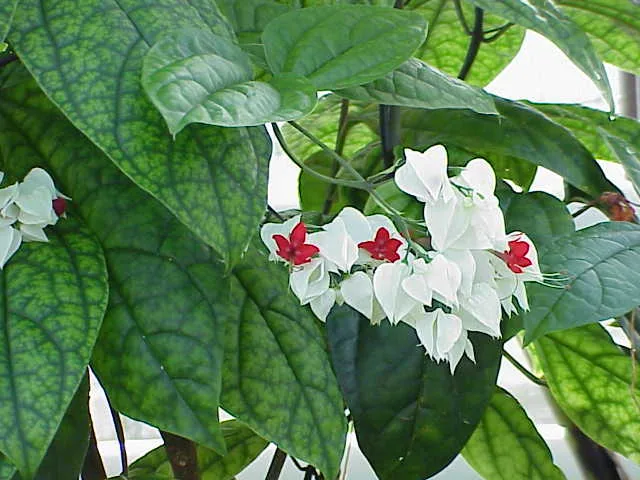
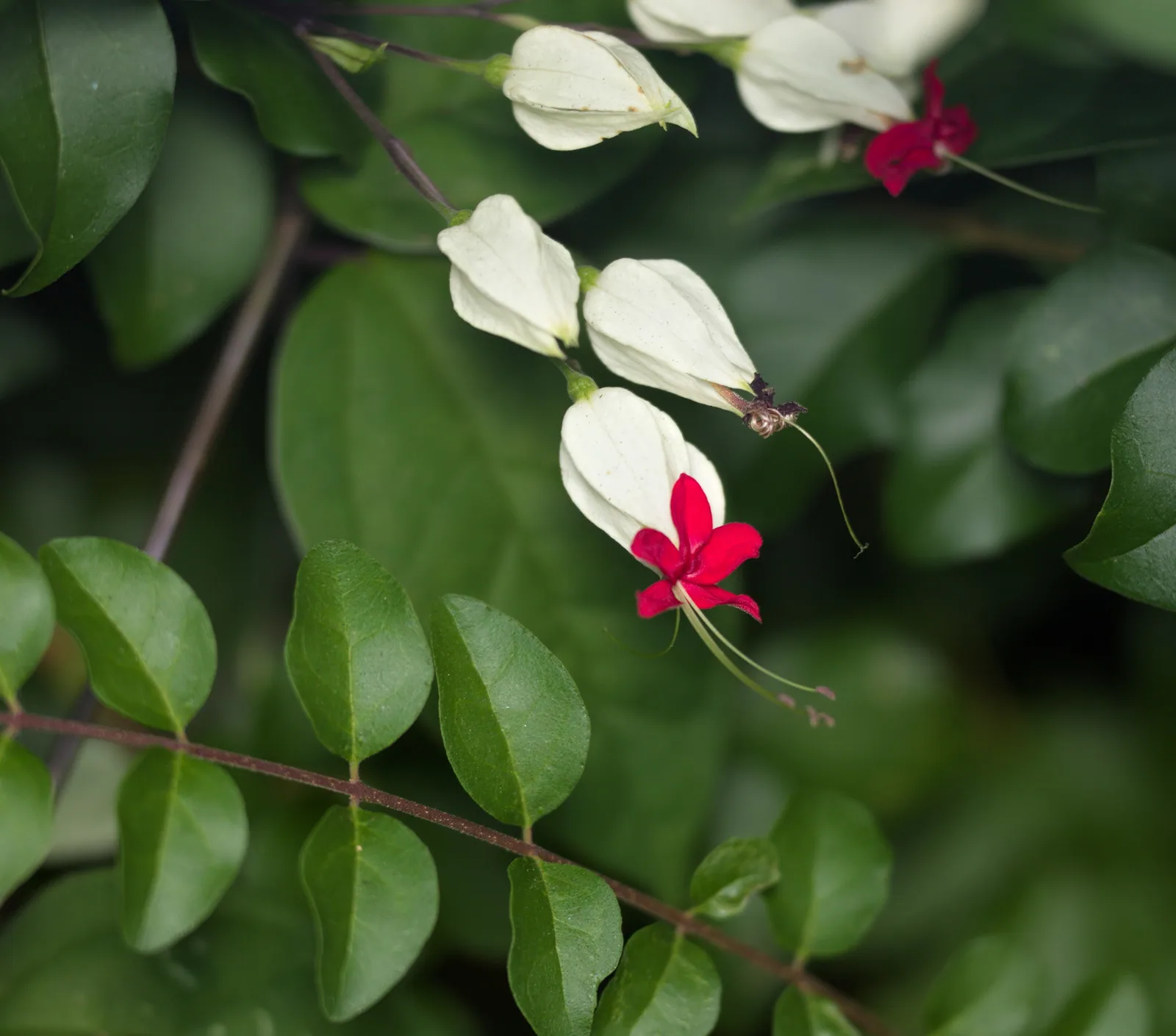
Bleeding heart vine is a twining evergreen vine from tropical west Africa with white calyxes and crimson corollas. [1] It is grown in organic-rich, well-drained soil kept moist but not wet, with regular water and fertilizer while actively growing. [1][3] It is a tropical plant that needs protection from freezing and is easily grown in containers. [1]
Bleeding Glory-bower care
How to water Bleeding Glory-bower
Watering
Keep moist but not wet; water regularly when actively growing
What the sources say (2)
Water and fertilize regularly when actively growing.
Use an organic-rich but well-drained potting medium, and keep it moist but not wet.Water the plant frequently during dry weather; the plant requires consistently moist, but not soggy soil.Watering notes
If the plant goes dormant in winter, withhold water until new growth starts, watering just enough to keep the soil from drying out
What the sources say (1)
If bleeding heart vine goes dormant in the winter, withhold water until the new growth starts , watering just enough to keep the soil from drying out and don’t fertilize.How much light Bleeding Glory-bower needs
The sources give different values depending on region, zone or growing conditions.
What each source says
According to University of Wisconsin-Madison Extension: Direct sun needed to bloom well
According to Gardening Know How: Best in partial shade or dappled sunlight, may tolerate full sun with plenty of moisture
According to NParks Flora and Fauna Web: Full sun
What the sources say (5)
According to University of Wisconsin-Madison Extension: This plant needs direct sun in order to bloom well ; a sunny window may be sufficient if you don’t move the container outdoors for the season.According to Gardening Know How: Clerodendrum bleeding heart performs best in partial shade or dappled sunlight, but it may tolerate full sunlight with plenty of moisture.According to NParks Flora and Fauna Web: Light Preference
| Full SunLight Range:
Part Shade to Full SunThis plant needs direct sun in order to bloom well ; a sunny window may be sufficient if you don’t move the container outdoors for the season.How much cold Bleeding Glory-bower can take
Hardiness, coldest zone
The sources give different values depending on region, zone or growing conditions.
What each source says
According to University of Wisconsin-Madison Extension: 9a [winter low −6.7 to −3.9 °C (20 to 25 °F)] (root hardy)
According to Gardening Know How: 9 [winter low −6.7 to −1.1 °C (20 to 30 °F)]
According to Backyard Gardener: 10 [winter low −1.1 to 4.4 °C (30 to 40 °F)]
What the sources say (3)
According to University of Wisconsin-Madison Extension: Although it is root hardy to zone 9aAccording to Gardening Know How: Clerodendrum bleeding heart is suitable for growing in USDA zones 9 and aboveAccording to Backyard Gardener: USDA Hardiness Zone:
10 to 11Hardiness, warmest zone
11 [winter low 4.4 to 10 °C (40 to 50 °F)]
What the sources say (1)
USDA Hardiness Zone:
10 to 11Best soil for Bleeding Glory-bower
5.5
What the sources say (1)
pH Range:
5.5 to 6.5Where to grow Bleeding Glory-bower
Indoors
Yes
What the sources say (1)
In cooler climates, it is commonly grown as a houseplant.In containers
Yes
What the sources say (1)
Clerodendrum thomsoniae is easily grown in containersSpacing
50-60 cm (0.5-0.6 m)
What the sources say (1)
with 0.5 - 0.6 m of space between individuals.How to propagate Bleeding Glory-bower
Cuttings (semi-woody tip cuttings), serpentine layering, seed, suckers
How to grow Bleeding Glory-bower
The plant
Family
Lamiaceae
What the sources say (1)
a member of the mint family (Lamiaceae), but some references still include it in the verbena family (Verbenaceae)Mature height
305-457 cm (10-15 ft)
What the sources say (1)
In its native habitat it can grow 10 to 15 feet tall, but as a container plant will remain much smallerSowing and growth
Sowing depth
1.3 cm [0.5 in] (½ in)
What the sources say (1)
Plant seeds about ½ inch deep in moist, well-drained potting media.Pests and diseases
Pests
mealybugs, spider mites
What the sources say (1)
Bleeding heart vine has few pests but mealybugs and spider mites can occasionally be problems.Fertilizing
When
While actively growing; not during winter dormancy
What the sources say (2)
a sunny window may be sufficient if you don’t move the container outdoors for the season. Water and fertilize regularly when actively growing.If bleeding heart vine goes dormant in the winter, withhold water until the new growth starts , watering just enough to keep the soil from drying out and don’t fertilize.How often
Regularly while actively growing
What the sources say (1)
a sunny window may be sufficient if you don’t move the container outdoors for the season. Water and fertilize regularly when actively growing.Avoid
Fertilizing during winter dormancy
What the sources say (1)
If bleeding heart vine goes dormant in the winter, withhold water until the new growth starts , watering just enough to keep the soil from drying out and don’t fertilize.Bleeding Glory-bower pests and problems
Mealybugs and spider mites
Symptom: Occasional pest problems
What to do: Insecticidal soap spray, reapplied every seven to ten days until the insects are eliminated
What the sources say (2)
Bleeding heart vine has few pests but mealybugs and spider mites can occasionally be problems.
— Bleeding Heart Vine, Clerodendrum thomsoniae – Wisconsin Horticulture [1] Insecticidal soap spray is generally sufficient to keep the pests in check.
— Bleeding Heart Information - Tips On Growing Clerodendrum Bleeding Heart Vines | Gardening Know How [3] Leaf shed in cool temperatures
Symptom: The plant sheds its leaves
What to do: New leaves resprout from the roots in spring; withhold water while dormant
What the sources say (1)
When temperatures are cool (even indoors), the plant will shed its leaves.
— Bleeding Heart Vine, Clerodendrum thomsoniae – Wisconsin Horticulture [1]
Remedies
The sources we checked give no remedies for this plant.
Calendar
Sowing
Indoors in spring
What the sources say (1)
Seeds can also be planted indoors spring.Pruning
After blooming; remove winter damage before new growth appears in spring
What the sources say (2)
Since C. thomsoniae blooms on new growth, it is best to cut the plant back after blooming .Prune Clerodendrum bleeding heart vine by removing wayward growth and winter damage before new growth appears in spring.Months as given by the sources, which are mostly from the United States (northern hemisphere). In the southern hemisphere they shift by about six months.
Indicative values
Values from a secondary source, not checked word for word like the rest of this page. Use them as a starting point.
- Life cycle
- PerennialIndicative value, adapt it to your climate · Secondary source
- Hours of sun
- 4-6 hoursIndicative value, adapt it to your climate · Secondary source
- Care level
- MediumIndicative value, adapt it to your climate · Secondary source
- Growth rate
- LowIndicative value, adapt it to your climate · Secondary source
Similar plants
- Harlequin Glorybower Clerodendrum trichotomum
- Rose glorybower Clerodendrum bungei
- Clerodendrum splendens Clerodendrum splendens
- Anise Sage Salvia guaranitica
- Apple mint Mentha suaveolens
- Arrowleaf Sage Salvia sagittata
- Autumn Sage Salvia greggii
- Beach Vitex Vitex rotundifolia
Sources
Every value above is quoted from these documents. Links lead to the original publisher.
- Bleeding Heart Vine, Clerodendrum thomsoniae – Wisconsin Horticulture · hort.extension.wisc.edu, consulted
- NParks | Clerodendrum thomsoniae · nparks.gov.sg, consulted
- Bleeding Heart Information - Tips On Growing Clerodendrum Bleeding Heart Vines | Gardening Know How · gardeningknowhow.com, consulted
- How to Grow Clerodendrum - Bleeding Heart Vine · harvesttotable.com, consulted
- Clerodendrum thomsoniae ( Bleeding Heart Glorybower Clerodenrum ) - Professional Gardening Tips · backyardgardener.com, consulted
Written by Emilio Marruso · last checked