
How to Grow and Care for Rose glorybower
Clerodendrum bungei
Written by Emilio Marruso · last checked
At a glance
This cheerful plant loves a sunny spot and grows up to 4 feet tall. Plant it in late spring or early summer, once the last frosts are over, and keep the soil from drying out while it grows. It spreads eagerly by underground shoots, so a container keeps it tidy, and those shoots give you new plants to share.
- Sun
Partly to very sunny spot
What the sources say (1)
Light: Moderately to very sunny position
Succeeds in a moderately to very sunny position in ordinary garden soil
— Clerodendrum bungei - Useful Temperate Plants [1] - Water
Never let the soil dry out while the plant is growing
What the sources say (1)
Watering: Soil must not be allowed to dry out in the growing season
The soil must not be allowed to dry out in the growing season
— Clerodendrum bungei - Useful Temperate Plants [1] - Cold
Survives winters down to 0 °F (−17.8 °C)
Hardy in very cold winters · USDA 7 · RHS H6 · Z7
What the sources say (1)
Hardiness, coldest zone: 7 [winter low −17.8 to −12.2 °C (0 to 10 °F)]
Light full sun Shade tolerance no shade Water moderate Hardiness Zone 7+
— Glory Flower (Clerodendrum bungei) — Practical Plants [2] - Planting
Plant in late spring or early summer, after the last frosts
What the sources say (1)
Planting: Late spring or early summer, after the last expected frosts
Plant them out in late spring or early summer after the last expected frosts.
— Clerodendrum bungei - Useful Temperate Plants [1] - Pruning
Prune while the plant is resting
What the sources say (1)
Pruning: When the plant is dormant
any pruning is best carried out when the plant is dormant
— Clerodendrum bungei - Useful Temperate Plants [1] - Watch out
Spreads fast by underground shoots; pull them up with every bit of root
- Size
Up to 4 ft tall
What the sources say (1)
Mature height: up to 121.9 cm (4 ft)
Species Characteristics Family: Lamiaceae Habit: Deciduous shrub up to 4 feet tall
— | Center for Aquatic and Invasive Plants | University of Florida, IFAS [5] - Propagation
From seed, root cuttings or by dividing the shoots from the roots
What the sources say (3)
Propagation: Seed; root cuttings; division of suckers
Seed - best sown as soon as possible in a greenhouse. Germination can be erratic
— Clerodendrum bungei - Useful Temperate Plants [1] Root cuttings, 6 - 8cm long, early winter in a greenhouse. High percentage
— Clerodendrum bungei - Useful Temperate Plants [1] Division of suckers in the dormant season. Very easy
— Clerodendrum bungei - Useful Temperate Plants [1] - Containers
Grow it in a container to stop it from spreading
Overview
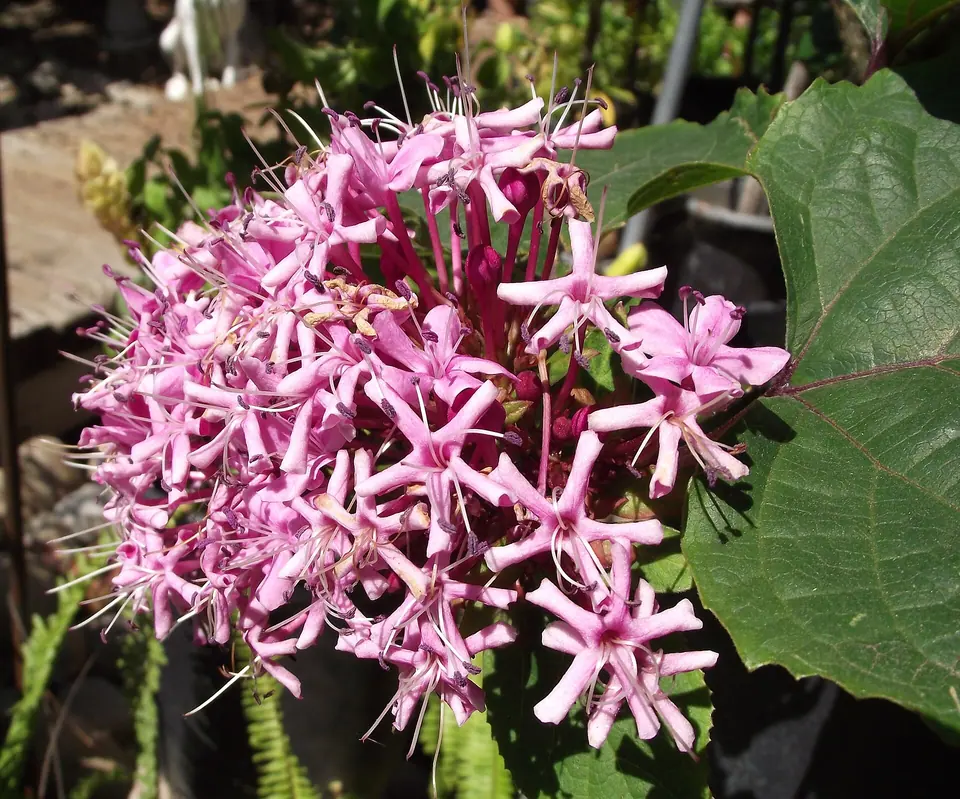
Clerodendrum bungei is an erect, semideciduous shrub up to 2 metres [6.6 ft] tall that spreads at the roots to form thickets. [1] It is grown as an ornamental for its scented flowers but spreads aggressively by suckers and can escape cultivation. [1]
This record is incomplete: the sources we read do not cover every field yet.
Not yet covered by our sources: Hardiness, warmest zone
Rose glorybower care
Measurements in square brackets are our conversion into the other unit system; the quoted text is unchanged.
How to water Rose glorybower
Soil must not be allowed to dry out in the growing season
What the sources say (1)
The soil must not be allowed to dry out in the growing seasonHow much light Rose glorybower needs
Moderately to very sunny position
What the sources say (1)
Succeeds in a moderately to very sunny position in ordinary garden soilHow much cold Rose glorybower can take
Hardiness, coldest zone
7 [winter low −17.8 to −12.2 °C (0 to 10 °F)]
What the sources say (1)
Light
full sun
Shade tolerance
no shade
Water
moderate
Hardiness
Zone 7+Hardiness, warmest zone
Not stated in the sources we read.
How to propagate Rose glorybower
Seed; root cuttings; division of suckers
What the sources say (3)
Seed - best sown as soon as possible in a greenhouse. Germination can be erraticRoot cuttings, 6 - 8cm long, early winter in a greenhouse. High percentageDivision of suckers in the dormant season. Very easyHow to grow Rose glorybower
The plant
Family
Lamiaceae
What the sources say (1)
Species Characteristics Family: Lamiaceae Habit: Deciduous shrub up to 4 feet tallMature height
up to 121.9 cm (4 ft)
What the sources say (1)
Species Characteristics Family: Lamiaceae Habit: Deciduous shrub up to 4 feet tallRose glorybower pests and problems
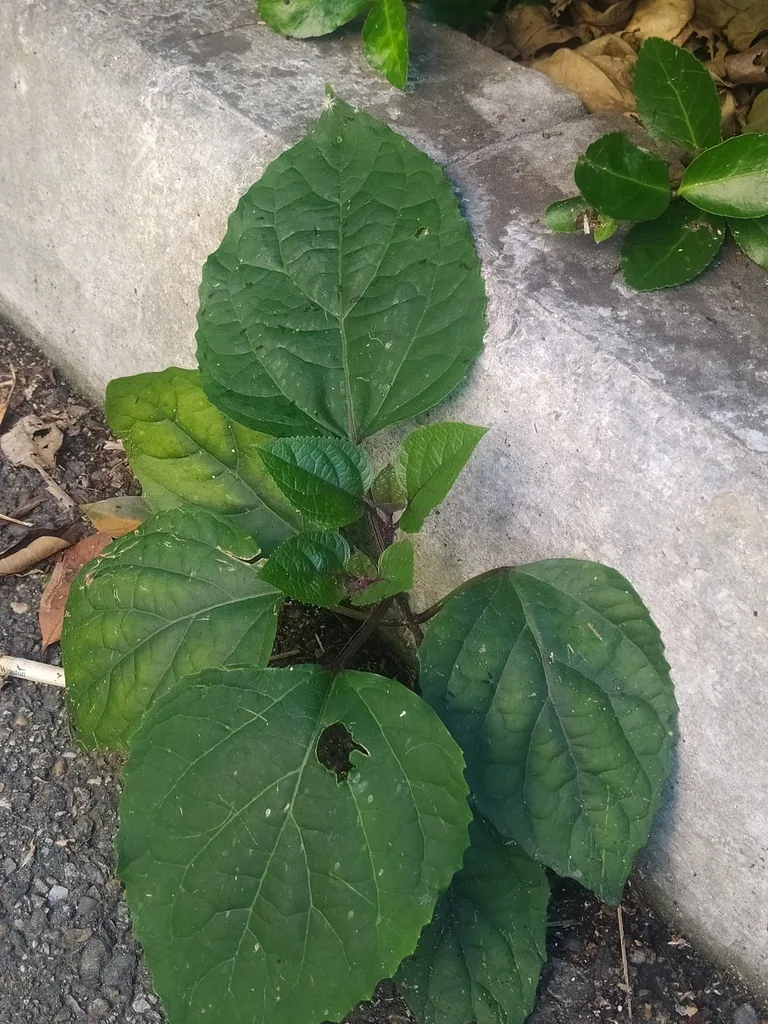
Spreading by root suckers
Symptom: Can spread rapidly by underground shoots forming dense stands
What to do: Plant in containers to prevent spreading via root suckers; hand pull removing all root fragments
What the sources say (2)
Can spread rapidly by underground shoots forming dense stands.
— | Center for Aquatic and Invasive Plants | University of Florida, IFAS [5] It is recommended to plant in containers to prevent it from spreading via root suckers.
— | Center for Aquatic and Invasive Plants | University of Florida, IFAS [5]
Remedies
Each remedy shows what official sources say about it; traditional remedies without an official source are marked as such. Harmful ones are listed so you know to avoid them.
Treating the plant
whiteflies
horticultural oil spray Works
How: foliar sprays with horticultural oil; the immatures on the undersides of the leaves must be controlled
Soil treatments with the systemic insecticide imidacloprid, foliar sprays with horticultural oil, or both are the most effective treatments for whiteflies.
— extension.msstate.edu [7] What the evidence says Soil treatments with the systemic insecticide imidacloprid, foliar sprays with horticultural oil, or both are the most effective treatments for whiteflies.
— extension.msstate.edu [7] azadirachtin (neem) Works
How: several successive treatments with excellent coverage of the undersides of the leaves
Azadirachtin is an effective organic treatment that works by disrupting the growth of the immatures.
— extension.msstate.edu [7] What the evidence says Azadirachtin is an effective organic treatment that works by disrupting the growth of the immatures.
— extension.msstate.edu [7]
mealybugs
hand-picking with alcohol swab Partly works
How: use tweezers or a cotton swab dipped in alcohol to remove mealybugs and their cottony egg sacs; check the plant regularly
Use tweezers or a cotton swab dipped in alcohol to remove large soft scales or mealybugs and their cottony egg sacs.
— extension.msstate.edu [7] What the evidence says If you are thorough and persistent, you can eliminate mealybugs from a small plant by hand-picking, but you will have to use insecticides to control larger infestations.
— extension.msstate.edu [7] horticultural oil spray Works
Some plants can be injured by oil sprays. Read the label carefully before treating.
— extension.msstate.edu [7] How: foliar sprays with good coverage, several times
Foliar sprays of horticultural oil will control mealybugs if you do a good job with spray coverage, but you may need to spray several times.
— extension.msstate.edu [7] What the evidence says Foliar sprays of horticultural oil will control mealybugs if you do a good job with spray coverage, but you may need to spray several times.
— extension.msstate.edu [7]
spider mites
horticultural oil, neem oil or insecticidal soap Works
How: thorough coverage of the undersides of leaves, two to three treatments at 5-day intervals
Foliar sprays of horticultural oil, neem oil, or insecticidal soap are some of the most effective treatments available to homeowners to control spider mites.
— extension.msstate.edu [7] What the evidence says Foliar sprays of horticultural oil, neem oil, or insecticidal soap are some of the most effective treatments available to homeowners to control spider mites.
— extension.msstate.edu [7] forceful spray of water Partly works
How: wash the mites from the leaves, repeating several times at 3- to 5-day intervals
Washing the mites from the leaves with a forceful spray of water is sometimes practical and effective on small plants, especially if you repeat this washing several times at 3- to 5-day intervals.
— extension.msstate.edu [7] What the evidence says Washing the mites from the leaves with a forceful spray of water is sometimes practical and effective on small plants, especially if you repeat this washing several times at 3- to 5-day intervals.
— extension.msstate.edu [7]
Getting rid of it
root suckers spreading
hand pulling with all root fragments Official source, not independently tested
How: hand pull removing all root fragments
Cultural/Physical Hand pull removing all root fragments. Mechanical Biological None known.
— | Center for Aquatic and Invasive Plants | University of Florida, IFAS [5] pruning out root suckers Not verified
Traditional remedy, not verified by an official source.
How: root suckers should be regularly pruned out
Calendar
Planting
Late spring or early summer, after the last expected frosts
What the sources say (1)
Plant them out in late spring or early summer after the last expected frosts.Pruning
When the plant is dormant
What the sources say (1)
any pruning is best carried out when the plant is dormantMonths as given by the sources, which are mostly from the United States (northern hemisphere). In the southern hemisphere they shift by about six months.
Indicative values
Values from a secondary source, not checked word for word like the rest of this page. Use them as a starting point.
- Life cycle
- PerennialIndicative value, adapt it to your climate · Secondary source
- Hours of sun
- 6-8 hoursIndicative value, adapt it to your climate · Secondary source
- Drought tolerant
- yesIndicative value, adapt it to your climate · Secondary source
- Soil pH
- 6-7.5Indicative value, adapt it to your climate · Secondary source
- Care level
- MediumIndicative value, adapt it to your climate · Secondary source
- Growth rate
- HighIndicative value, adapt it to your climate · Secondary source
Similar plants
- Bleeding Glory-bower Clerodendrum thomsoniae
- Harlequin Glorybower Clerodendrum trichotomum
- Clerodendrum splendens Clerodendrum splendens
- Anise Sage Salvia guaranitica
- Apple mint Mentha suaveolens
- Arrowleaf Sage Salvia sagittata
- Autumn Sage Salvia greggii
- Beach Vitex Vitex rotundifolia
Sources
Every value above is quoted from these documents. Links lead to the original publisher.
- Clerodendrum bungei - Useful Temperate Plants · temperate.theferns.info, consulted
- Glory Flower (Clerodendrum bungei) — Practical Plants · practicalplants.org, consulted
- NParks | Clerodendrum bungei · nparks.gov.sg, consulted
- Clerodendrum bungei - Trees and Shrubs Online · treesandshrubsonline.org, consulted
- | Center for Aquatic and Invasive Plants | University of Florida, IFAS · plant-directory.ifas.ufl.edu, consulted
- Clerodendrum bungei / [Species detail] / Plant Atlas · florida.plantatlas.usf.edu, consulted
- extension.msstate.edu · extension.msstate.edu
Written by Emilio Marruso · last checked