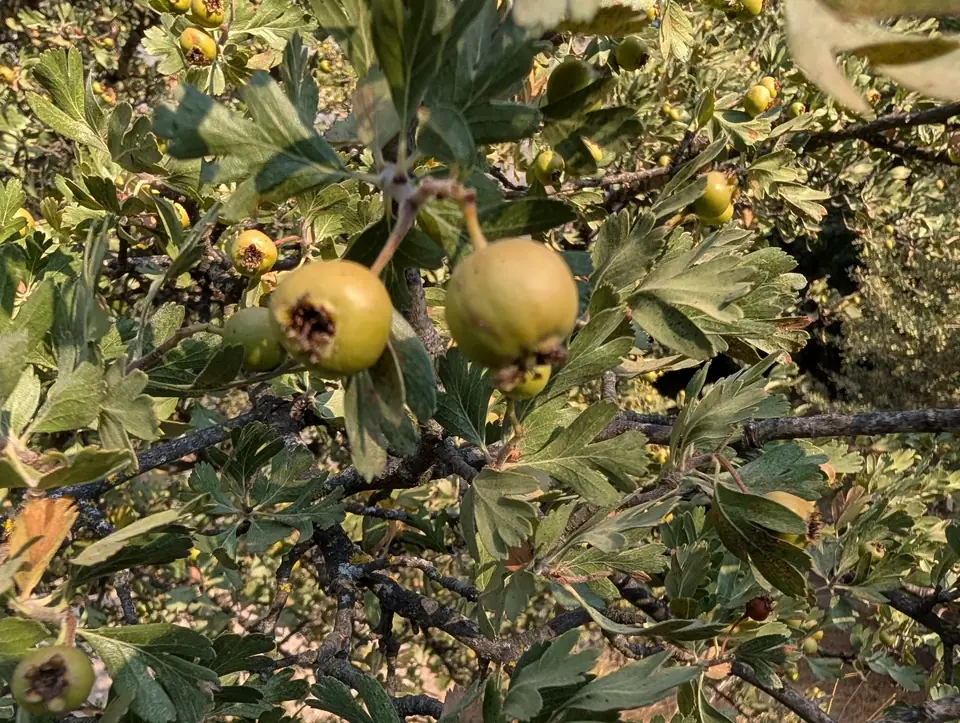
Cómo cultivar y cuidar Acerolo
Crataegus azarolus
Escrito por Emilio Marruso · última revisión
De un vistazo
El acerolo es un árbol agradecido que necesita poca agua y crece feliz a pleno sol o en semisombra. Su fruto tiene un agradable sabor ácido que recuerda a la manzana seca, y puedes comerlo fresco o secarlo para disfrutarlo más adelante. Incluso sus hojas secas sirven para preparar una infusión que sustituye al té.
- Sol
Pleno sol o semisombra
Qué dicen las fuentes (3)
Luz: Pleno sol a semisombra
Still, it delights in full sun and warmth—essential if you want a bountiful harvest of ripe fruit.
— This ancient fruit tree thrives with little water—and hides surprising health benefits - Futura-Sciences [5] Grows in semi-shade or no shade, can tolerate atmospheric pollution and grows in all soils.
— AUB - NCC Plants | Details [2] Trees growing in a sunny position generally produce more and better quality fruit than trees growing in the shade
— Crataegus azarolus - Useful Temperate Plants [1] - Riego
Necesita poco riego
Qué dicen las fuentes (1)
Riego: Bajo consumo de agua; requiere poco riego
It’s the dream candidate for a low-water garden, requiring little irrigation or fertilization.
— This ancient fruit tree thrives with little water—and hides surprising health benefits - Futura-Sciences [5] - Plantación
Plántalo a finales de primavera, tras pasar su primer año en maceta
Qué dicen las fuentes (1)
Plantación: Finales de primavera (plántulas en macetas para su primer año)
planting them out in late spring into nursery beds or their final positions
— Crataegus azarolus - Useful Temperate Plants [1] - Abonado
En primavera, antes de brotar: 15 ml de abono 10-10-10 por cada 30 cm de altura, hasta 240 ml
Qué dicen las fuentes (3)
Cuándo: Primavera, antes de que comience el nuevo crecimiento
Fertilize the hawthorn tree with a 10-10-10 fertilizer in the spring before new growth starts. Use one tablespoon of fertilizer per foot of tree height, up to one cup of fertilizer.
— [6] Hawthorns are difficult to propagate from seed, but do throw out shoots that can be replanted. Local nurseries sell hawthorns. They should be planted in full sun, and fertilized in the spring.
— [7] Abonos minerales: Fertilizante 10-10-10: 14.8 mL por cada 30.5 cm [12 in] de altura del árbol, hasta 237 mL
Fertilize the hawthorn tree with a 10-10-10 fertilizer in the spring before new growth starts. Use one tablespoon of fertilizer per foot of tree height, up to one cup of fertilizer.
— [6] - Cosecha
Fruto ácido que recuerda a la manzana seca, fresco o seco; las hojas secas sustituyen al té
- Plagas
Sensible al fuego bacteriano: vigila posibles brotes
- Atención
Por el fuego bacteriano, su plantación está prohibida en algunas regiones: consulta las normas locales
- Multiplicación
Por semilla o por injerto
Qué dicen las fuentes (2)
- Siembra
Siembra las semillas en cuanto maduren en otoño, en cajonera fría
Qué dicen las fuentes (1)
Siembra: En cuanto maduran en otoño (marco frío)
Seed - this is best sown as soon as it is ripe in the autumn in a cold frame
— Crataegus azarolus - Useful Temperate Plants [1]
Resumen
El azarol es un arbusto o árbol caducifolio con una larga historia de cultivo por su fruto comestible. [1] Disfruta del pleno sol y del calor, tolera la sequía y requiere poco riego o fertilización. [5] Es sensible al fuego bacteriano, por lo que su plantación está prohibida en ciertas regiones. [4]
Citado en inglés, como en la fuente.
Esta ficha está incompleta: las fuentes consultadas aún no cubren todos los campos.
Aún no cubierto por nuestras fuentes: Distancia de plantación
Cuidados
Riego
Bajo consumo de agua; requiere poco riego
Qué dicen las fuentes (1)
It’s the dream candidate for a low-water garden, requiring little irrigation or fertilization.Luz
Pleno sol a semisombra
Qué dicen las fuentes (3)
Still, it delights in full sun and warmth—essential if you want a bountiful harvest of ripe fruit.Grows in semi-shade or no shade, can tolerate atmospheric pollution and grows in all soils.Trees growing in a sunny position generally produce more and better quality fruit than trees growing in the shadeDónde cultivarla
No figura en las fuentes consultadas.
Propagación
Semilla; injerto
Cultivo
Abonado
Cuándo
Primavera, antes de que comience el nuevo crecimiento
Qué dicen las fuentes (2)
Fertilize the hawthorn tree with a 10-10-10 fertilizer in the spring before new growth starts. Use one tablespoon of fertilizer per foot of tree height, up to one cup of fertilizer.Hawthorns are difficult to propagate from seed, but do throw out shoots that can be replanted. Local nurseries sell hawthorns. They should be planted in full sun, and fertilized in the spring.Abonos minerales
Fertilizante 10-10-10: 14.8 mL por cada 30.5 cm [12 in] de altura del árbol, hasta 237 mL
Qué dicen las fuentes (1)
Fertilize the hawthorn tree with a 10-10-10 fertilizer in the spring before new growth starts. Use one tablespoon of fertilizer per foot of tree height, up to one cup of fertilizer.Problemas
Tizón de fuego
Síntoma: Sensible al fuego bacteriano (Erwinia amylovora); su plantación está prohibida en ciertas regiones.
Qué hacer: Vigilancia ante posibles ataques.
Qué dicen las fuentes (2)
Like other Rosaceae fruit trees, it does require vigilance for possible outbreaks of fire blight, a disease (caused by Erwinia amylovora)
— This ancient fruit tree thrives with little water—and hides surprising health benefits - Futura-Sciences [5] these plants are sensitive to fire blights and because of this their plantation is forbidden in certain regions.
— Azzeruolo di Albinea | Luoghi - Italian Botanical Heritage [4]
Remedios
Las fuentes consultadas no dan remedios para esta planta.
Calendario
Siembra
En cuanto maduran en otoño (marco frío)
Qué dicen las fuentes (1)
Seed - this is best sown as soon as it is ripe in the autumn in a cold framePlantación
Finales de primavera (plántulas en macetas para su primer año)
Qué dicen las fuentes (1)
planting them out in late spring into nursery beds or their final positionsCosecha
Las fuentes dan valores distintos según la región, la zona o las condiciones de cultivo.
Lo que dice cada fuente
Israel (maduración de los frutos): Octubre-noviembre
Según Futura Sciences (fruit ripens): Septiembre
Qué dicen las fuentes (2)
Israel (maduración de los frutos): The fruit ripens in October-November. It is tasty, juicy, red, and is shaped like a perfect sphere.Según Futura Sciences (fruit ripens): This fruit tree yields small “apples” that ripen from yellow to red in SeptemberMeses tal como los dan las fuentes, en su mayoría de Estados Unidos (hemisferio norte). En el hemisferio sur se desplazan unos seis meses.
Comestibilidad
Según la fuente, citada textualmente. No comas una planta basándote solo en esta página: los errores de identificación pueden ser peligrosos.
Plantas similares
Fuentes
Cada valor anterior se cita de estos documentos. Los enlaces llevan al editor original.
- Crataegus azarolus - Useful Temperate Plants · temperate.theferns.info, consultado
- AUB - NCC Plants | Details · plants.aub.edu.lb, consultado
- Hawthorn · wildflowers.co.il, consultado
- Azzeruolo di Albinea | Luoghi - Italian Botanical Heritage · luoghi.italianbotanicalheritage.com, consultado
- This ancient fruit tree thrives with little water—and hides surprising health benefits - Futura-Sciences · futura-sciences.com, consultado
- ask.extension.org · ask.extension.org
- ucanr.edu · ucanr.edu
Escrito por Emilio Marruso · última revisión