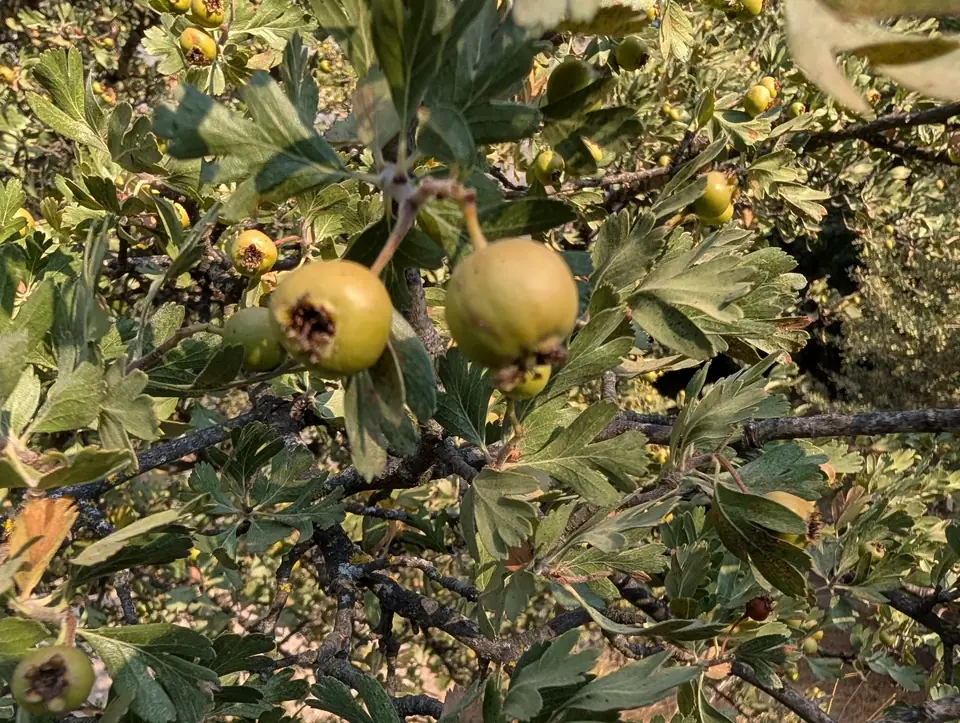
How to Grow and Care for Azarole
Crataegus azarolus
Written by Emilio Marruso · last checked
At a glance
The azarole is an easygoing tree that asks for little water and grows happily in full sun or partial shade. Its fruit has a pleasant tart taste that recalls dried apples, and you can eat it fresh or dry it to enjoy later. Even its dried leaves can be brewed as a tea substitute.
- Sun
Full sun to partial shade
What the sources say (3)
Light: Full sun to semi-shade
Still, it delights in full sun and warmth—essential if you want a bountiful harvest of ripe fruit.
— This ancient fruit tree thrives with little water—and hides surprising health benefits - Futura-Sciences [5] Grows in semi-shade or no shade, can tolerate atmospheric pollution and grows in all soils.
— AUB - NCC Plants | Details [2] Trees growing in a sunny position generally produce more and better quality fruit than trees growing in the shade
— Crataegus azarolus - Useful Temperate Plants [1] - Water
Needs little water
What the sources say (1)
Watering: Low-water; requires little irrigation
It’s the dream candidate for a low-water garden, requiring little irrigation or fertilization.
— This ancient fruit tree thrives with little water—and hides surprising health benefits - Futura-Sciences [5] - Planting
Plant out in late spring, after a first year in a pot
What the sources say (1)
Planting: Late spring (seedlings potted on for their first year)
planting them out in late spring into nursery beds or their final positions
— Crataegus azarolus - Useful Temperate Plants [1] - Feeding
In spring before new growth: 1 tablespoon of 10-10-10 per foot of tree height, up to 1 cup
What the sources say (3)
When: Spring, before new growth starts
Fertilize the hawthorn tree with a 10-10-10 fertilizer in the spring before new growth starts. Use one tablespoon of fertilizer per foot of tree height, up to one cup of fertilizer.
— [6] Hawthorns are difficult to propagate from seed, but do throw out shoots that can be replanted. Local nurseries sell hawthorns. They should be planted in full sun, and fertilized in the spring.
— [7] Mineral fertilizers: 10-10-10 fertilizer: 14.8 mL per 30.5 cm [12 in] of tree height, up to 237 mL
Fertilize the hawthorn tree with a 10-10-10 fertilizer in the spring before new growth starts. Use one tablespoon of fertilizer per foot of tree height, up to one cup of fertilizer.
— [6] - Harvest
Tart fruit like dried apples, fresh or dried; dried leaves make a tea substitute
- Pests
Sensitive to fire blight: keep an eye out for outbreaks
- Watch out
Because of fire blight, planting it is forbidden in some regions: check local rules
- Propagation
From seed or by grafting
What the sources say (2)
- Sowing
Sow the seeds as soon as they ripen in autumn, in a cold frame
What the sources say (1)
Sowing: As soon as ripe in autumn (cold frame)
Seed - this is best sown as soon as it is ripe in the autumn in a cold frame
— Crataegus azarolus - Useful Temperate Plants [1]
Overview
Azarole is a deciduous shrub or tree with a long history of cultivation for its edible fruit. [1] It delights in full sun and warmth, tolerates drought, and requires little irrigation or fertilization. [5] It is sensitive to fire blight, so its planting is forbidden in certain regions. [4]
This record is incomplete: the sources we read do not cover every field yet.
Not yet covered by our sources: Spacing
Azarole care
How to water Azarole
Low-water; requires little irrigation
What the sources say (1)
It’s the dream candidate for a low-water garden, requiring little irrigation or fertilization.How much light Azarole needs
Full sun to semi-shade
What the sources say (3)
Still, it delights in full sun and warmth—essential if you want a bountiful harvest of ripe fruit.Grows in semi-shade or no shade, can tolerate atmospheric pollution and grows in all soils.Trees growing in a sunny position generally produce more and better quality fruit than trees growing in the shadeWhere to grow Azarole
Not stated in the sources we read.
How to propagate Azarole
Seed; grafting
How to grow Azarole
Fertilizing
When
Spring, before new growth starts
What the sources say (2)
Fertilize the hawthorn tree with a 10-10-10 fertilizer in the spring before new growth starts. Use one tablespoon of fertilizer per foot of tree height, up to one cup of fertilizer.Hawthorns are difficult to propagate from seed, but do throw out shoots that can be replanted. Local nurseries sell hawthorns. They should be planted in full sun, and fertilized in the spring.Mineral fertilizers
10-10-10 fertilizer: 14.8 mL per 30.5 cm [12 in] of tree height, up to 237 mL
What the sources say (1)
Fertilize the hawthorn tree with a 10-10-10 fertilizer in the spring before new growth starts. Use one tablespoon of fertilizer per foot of tree height, up to one cup of fertilizer.Azarole pests and problems
Fire blight
Symptom: Sensitive to fire blight (Erwinia amylovora); planting is forbidden in certain regions.
What to do: Vigilance for possible outbreaks.
What the sources say (2)
Like other Rosaceae fruit trees, it does require vigilance for possible outbreaks of fire blight, a disease (caused by Erwinia amylovora)
— This ancient fruit tree thrives with little water—and hides surprising health benefits - Futura-Sciences [5] these plants are sensitive to fire blights and because of this their plantation is forbidden in certain regions.
— Azzeruolo di Albinea | Luoghi - Italian Botanical Heritage [4]
Remedies
The sources we checked give no remedies for this plant.
Calendar
Sowing
As soon as ripe in autumn (cold frame)
What the sources say (1)
Seed - this is best sown as soon as it is ripe in the autumn in a cold framePlanting
Late spring (seedlings potted on for their first year)
What the sources say (1)
planting them out in late spring into nursery beds or their final positionsHarvest
The sources give different values depending on region, zone or growing conditions.
What each source says
Israel (fruit ripens): October-November
According to Futura Sciences (fruit ripens): September
What the sources say (2)
Israel (fruit ripens): The fruit ripens in October-November. It is tasty, juicy, red, and is shaped like a perfect sphere.According to Futura Sciences (fruit ripens): This fruit tree yields small “apples” that ripen from yellow to red in SeptemberMonths as given by the sources, which are mostly from the United States (northern hemisphere). In the southern hemisphere they shift by about six months.
Edibility
Reported by the source, quoted verbatim. Do not eat a plant on the basis of this page alone: identification mistakes can be dangerous.
Similar plants
Sources
Every value above is quoted from these documents. Links lead to the original publisher.
- Crataegus azarolus - Useful Temperate Plants · temperate.theferns.info, consulted
- AUB - NCC Plants | Details · plants.aub.edu.lb, consulted
- Hawthorn · wildflowers.co.il, consulted
- Azzeruolo di Albinea | Luoghi - Italian Botanical Heritage · luoghi.italianbotanicalheritage.com, consulted
- This ancient fruit tree thrives with little water—and hides surprising health benefits - Futura-Sciences · futura-sciences.com, consulted
- ask.extension.org · ask.extension.org
- ucanr.edu · ucanr.edu
Written by Emilio Marruso · last checked