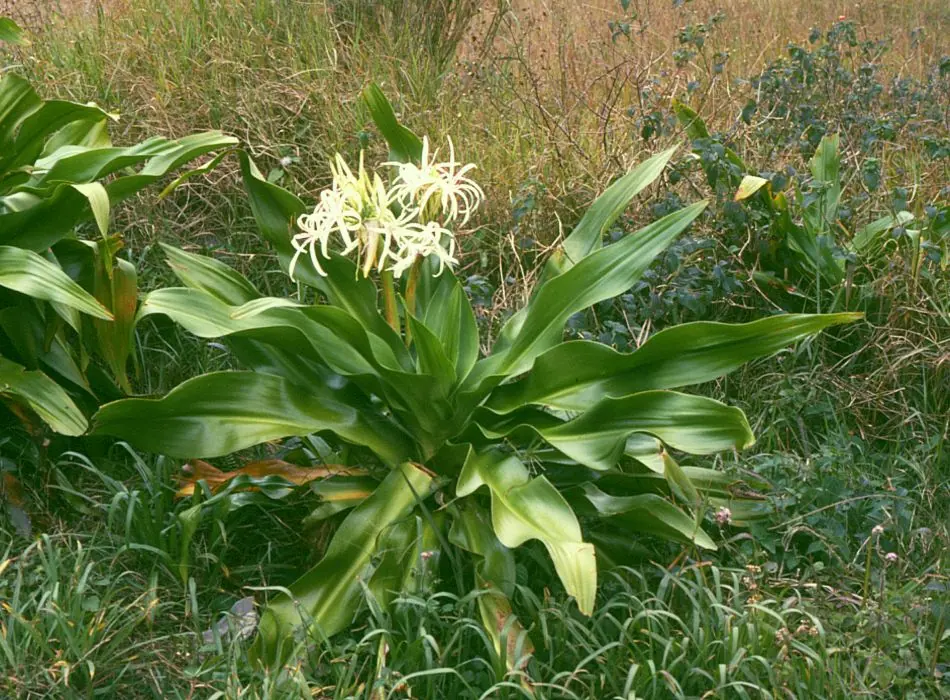
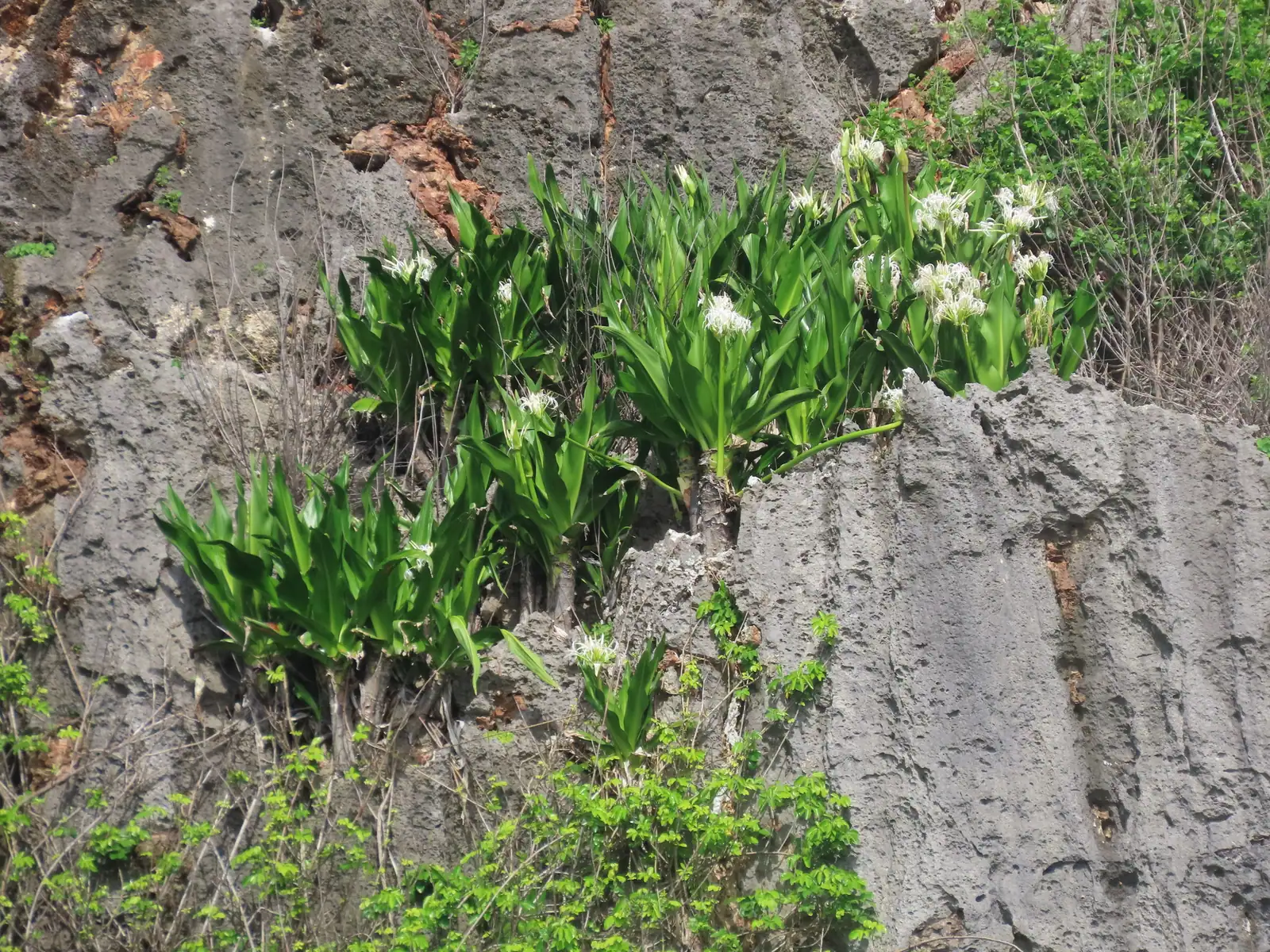

Cómo cultivar y cuidar Poisonbulb
Crinum asiaticum
Escrito por Emilio Marruso · última revisión
Tóxica para: Personas · Por qué
De un vistazo
Este crinum es una planta generosa y poco exigente: crece a pleno sol o en semisombra, necesita poco o ningún abono y también vive feliz en maceta. Dale un suelo bien drenado y rico en compost y podrá alcanzar hasta 2,1 m de ancho. Incluso puedes conseguir plantas nuevas a partir de los pequeños bulbos que forma a su alrededor.
- Sol
Pleno sol o semisombra
Qué dicen las fuentes (4)
Luz: Pleno sol a semisombra
Light: full sun Water: drought tolerant when established
— UNF: Crinum asiaticum [2] the grand crinum will grow in both sunny to part-shade sites with well-drained soil.
— The Grand Crinum Lily - UF/IFAS Extension Charlotte County [1] White Crinum Lily does well planted in light shade to full sun. Too much sun can cause leaf scorch.
— Crinum Asiaticum Care: Tips On Growing The White Crinum Lily [5] USDA: 9b-11 Sun Exposure: Part sun to full sun Origin: Tropical Indo-Pacific
— Poison Bulb (Crinum asiaticum) [6] - Riego
Riega menos en los meses frescos; deja de regar en invierno si las hojas se secan y los bulbos reposan
Qué dicen las fuentes (3)
Notas sobre el riego: Suelo bien drenado; reduce el riego en meses más frescos donde el crecimiento continúa; retén el agua en invierno donde el follaje se seca y los bulbos entran en reposo.
the grand crinum will grow in both sunny to part-shade sites with well-drained soil.
— The Grand Crinum Lily - UF/IFAS Extension Charlotte County [1] Reduce watering during the cooler months in areas where the plant continues to grow through the winter.
— Crinum Asiaticum Care: Tips On Growing The White Crinum Lily [5] Withhold water during the winter in areas where the foliage dies back, and the bulbs go dormant.
— Crinum Asiaticum Care: Tips On Growing The White Crinum Lily [5] - Suelo
Suelo bien drenado con abundante compost mezclado
Qué dicen las fuentes (6)
Notas sobre el riego: Suelo bien drenado; reduce el riego en meses más frescos donde el crecimiento continúa; retén el agua en invierno donde el follaje se seca y los bulbos entran en reposo.
the grand crinum will grow in both sunny to part-shade sites with well-drained soil.
— The Grand Crinum Lily - UF/IFAS Extension Charlotte County [1] Reduce watering during the cooler months in areas where the plant continues to grow through the winter.
— Crinum Asiaticum Care: Tips On Growing The White Crinum Lily [5] Withhold water during the winter in areas where the foliage dies back, and the bulbs go dormant.
— Crinum Asiaticum Care: Tips On Growing The White Crinum Lily [5] Abonos naturales: Mucho compost incorporado al suelo o al sustrato de cultivo
Siembra por semillas: Seeds are placed in a well-drained, sandy medium with plenty of compost and a slow-release fertilizer such as bonemeal, with regular watering and full sun.
— [7] In the garden most species will grow well in any soil to which plenty of compost has been added.
— [7] The plants will benefit greatly from occasional feeding with liquid fertilizer and compost added to the growing medium.
— [7] - Abonado
Necesita poco o ningún abono; basta un abono líquido de vez en cuando
Qué dicen las fuentes (3)
Frecuencia: Ocasional; se necesita poco o ningún fertilizante suplementario
The plants will benefit greatly from occasional feeding with liquid fertilizer and compost added to the growing medium.
— [7] Low maintenance care consists of removing winter damaged leaves and spent flower stalks and lubber grasshoppers, their main pest. They contain toxic alkaloids which deters most pests. Little or no supplemental fertilizer or water is needed.
— [8] Abonos minerales: Fertilizante líquido, ocasionalmente
The plants will benefit greatly from occasional feeding with liquid fertilizer and compost added to the growing medium.
— [7] - Poda
Corta las hojas antes de los meses fríos de invierno
Qué dicen las fuentes (1)
Poda: Antes de los fríos meses de invierno (recorta el follaje).
Cut back foliage in advance of cold winter months. In cold areas, mulch heavily during winter to protect the bulbs.
— Crinum Asiaticum Care: Tips On Growing The White Crinum Lily [5] - Plagas
Saltamontes y caracoles se comen las hojas; vigila las manchas foliares y la cochinilla algodonosa
Qué dicen las fuentes (2)
Plagas: saltamontes lubber
Lubber grasshoppers are perhaps the worst insect pest as crinums and others in the lily family are their favored foods.
— The Grand Crinum Lily - UF/IFAS Extension Charlotte County [1] Enfermedades: enfermedades de mancha foliar
Some leaf spot diseases are also known to develop on occasion.
— The Grand Crinum Lily - UF/IFAS Extension Charlotte County [1] - Tamaño
Hasta 2,1 m de ancho
Qué dicen las fuentes (1)
Anchura adulta: hasta 213.36 cm (7 pies)
This crinum forms a big rosette of leaves growing up to seven-feet across, and up to five feet high.
— The Grand Crinum Lily - UF/IFAS Extension Charlotte County [1] - Multiplicación
Por semilla, dividiendo los bulbillos en invierno o con los bulbillos de la base de la flor
Qué dicen las fuentes (2)
Propagación: Semilla; división de bulbillos de plantas maduras (invierno); plantación de bulbillos de la base de la cabeza floral.
Multiple huge seeds develop and readily sprout. Bulblets from mature plants can be divided during the winter for quick and easy propagation.
— The Grand Crinum Lily - UF/IFAS Extension Charlotte County [1] Crinum form bulbils (tubers) at the base of the flower head. These are not seeds, but plant them to grow new plants.
— Crinum Asiaticum Care: Tips On Growing The White Crinum Lily [5] - Maceta
Crece también en maceta
Qué dicen las fuentes (2)
En maceta: Sí
When keeping Crinum Lilies as potted plants, use containers only a couple of inches larger than the bulbs.
— Crinum Asiaticum Care: Tips On Growing The White Crinum Lily [5] As container plants, they’re attractive and easy care, but you must keep in mind moving them from place-to-place
— Crinum Asiaticum Care: Tips On Growing The White Crinum Lily [5] - Seguridad
Todas sus partes son venenosas: plántala donde no lleguen niños ni mascotas
Resumen
El Crinum asiaticum es un bulbo perenne de gran tamaño con hojas en forma de cinta y flores blancas fragantes, utilizado como espécimen de paisaje o para plantaciones masivas. [2][1] Crece a pleno sol o semisombra en suelo bien drenado y es fácil de cultivar. [1][2] Todas las partes son venenosas. [1]
Citado en inglés, como en la fuente.
Cuidados
Riego
Riego
Las fuentes dan valores distintos según la región, la zona o las condiciones de cultivo.
Lo que dice cada fuente
Según UNF Botanical Garden: Tolerante a la sequía una vez establecida, se beneficia del riego durante las sequías.
Según UF/IFAS Charlotte County: Tolerancia moderada a la sequía
Según PlantCareToday: Tolera períodos cortos de sequía pero requiere riego constante.
Según Desert-Tropicals: Riego abundante para mantener el suelo húmedo.
Qué dicen las fuentes (4)
Según UNF Botanical Garden: Water: drought tolerant when established, benefits from irrigation during droughtsSegún UF/IFAS Charlotte County: This gives a nice tropical look to the area with little extra care as this flowering bulb offers moderate drought tolerance.Según PlantCareToday: Crinum can tolerate short periods of drought but still requires consistent watering.Según Desert-Tropicals: Fruit: Round white or green
Watering Needs: Abundant water to wet soilNotas sobre el riego
Suelo bien drenado; reduce el riego en meses más frescos donde el crecimiento continúa; retén el agua en invierno donde el follaje se seca y los bulbos entran en reposo.
Qué dicen las fuentes (3)
the grand crinum will grow in both sunny to part-shade sites with well-drained soil.Reduce watering during the cooler months in areas where the plant continues to grow through the winter.Withhold water during the winter in areas where the foliage dies back, and the bulbs go dormant.Luz
Pleno sol a semisombra
Qué dicen las fuentes (4)
Light: full sun
Water: drought tolerant when establishedthe grand crinum will grow in both sunny to part-shade sites with well-drained soil.White Crinum Lily does well planted in light shade to full sun. Too much sun can cause leaf scorch.USDA: 9b-11
Sun Exposure: Part sun to full sun
Origin: Tropical Indo-PacificClima y frío
Rusticidad, zona más fría
Las fuentes dan valores distintos según la región, la zona o las condiciones de cultivo.
Lo que dice cada fuente
Según Harvest to Table: 8 [mínima invernal de −12,2 a −6,7 °C (de 10 a 20 °F)]
Según Desert-Tropicals: 9b [mínima invernal de −3,9 a −1,1 °C (de 25 a 30 °F)]
Según PlantCareToday: 10 [mínima invernal de −1,1 a 4,4 °C (de 30 a 40 °F)]
Qué dicen las fuentes (3)
Según Harvest to Table: C. asiaticum bears fragrant white flowers in spring and summer. 2 feet (.6m) tall. Zones 8 to 11.Según Desert-Tropicals: USDA: 9b-11
Sun Exposure: Part sun to full sun
Origin: Tropical Indo-PacificSegún PlantCareToday: This plant is winter hardy in United States hardiness zones 10 through 11 (USDA Zone).Rusticidad, zona más cálida
11 [mínima invernal de 4,4 a 10 °C (de 40 a 50 °F)]
Qué dicen las fuentes (3)
C. asiaticum bears fragrant white flowers in spring and summer. 2 feet (.6m) tall. Zones 8 to 11.USDA: 9b-11
Sun Exposure: Part sun to full sun
Origin: Tropical Indo-PacificThis plant is winter hardy in United States hardiness zones 10 through 11 (USDA Zone).Dónde cultivarla
Sí
Qué dicen las fuentes (2)
When keeping Crinum Lilies as potted plants, use containers only a couple of inches larger than the bulbs.As container plants, they’re attractive and easy care, but you must keep in mind moving them from place-to-placePropagación
Semilla; división de bulbillos de plantas maduras (invierno); plantación de bulbillos de la base de la cabeza floral.
Qué dicen las fuentes (2)
Multiple huge seeds develop and readily sprout. Bulblets from mature plants can be divided during the winter for quick and easy propagation.Crinum form bulbils (tubers) at the base of the flower head.
These are not seeds, but plant them to grow new plants.Cultivo
La planta
Familia
Amaryllidaceae
Qué dicen las fuentes (1)
Crinum asiaticum - Giant crinum
## Family Amaryllidaceae
## Description:
Approximately sixty to one hundred Crinum speciesAltura adulta
Anchura adulta
hasta 213.36 cm (7 pies)
Qué dicen las fuentes (1)
This crinum forms a big rosette of leaves growing up to seven-feet across, and up to five feet high.Plagas y enfermedades
Plagas
saltamontes lubber
Qué dicen las fuentes (1)
Lubber grasshoppers are perhaps the worst insect pest as crinums and others in the lily family are their favored foods.Enfermedades
enfermedades de mancha foliar
Qué dicen las fuentes (1)
Some leaf spot diseases are also known to develop on occasion.Abonado
Frecuencia
Ocasional; se necesita poco o ningún fertilizante suplementario
Qué dicen las fuentes (2)
The plants will benefit greatly from occasional feeding with liquid fertilizer and compost added to the growing medium.Low maintenance care consists of removing winter damaged leaves and spent flower stalks and lubber grasshoppers, their main pest. They contain toxic alkaloids which deters most pests. Little or no supplemental fertilizer or water is needed.Abonos naturales
Mucho compost incorporado al suelo o al sustrato de cultivo
Lo que dice cada fuente
Siembra por semillas: Sustrato arenoso con abundante compost y harina de huesos como fertilizante de liberación lenta
Qué dicen las fuentes (3)
Siembra por semillas: Seeds are placed in a well-drained, sandy medium with plenty of compost and a slow-release fertilizer such as bonemeal, with regular watering and full sun.In the garden most species will grow well in any soil to which plenty of compost has been added.The plants will benefit greatly from occasional feeding with liquid fertilizer and compost added to the growing medium.Abonos minerales
Fertilizante líquido, ocasionalmente
Qué dicen las fuentes (1)
The plants will benefit greatly from occasional feeding with liquid fertilizer and compost added to the growing medium.Problemas
Saltamontes lubber.
Síntoma: Los crinums y otros lirios son sus alimentos favoritos; plaga destructiva.
Qué dicen las fuentes (2)
Lubber grasshoppers are perhaps the worst insect pest as crinums and others in the lily family are their favored foods.
— The Grand Crinum Lily - UF/IFAS Extension Charlotte County [1] Where they are present, lubber grasshoppers are a destructive pest of crinums.
— UNF: Crinum asiaticum [2] Enfermedades de mancha foliar
Síntoma: Se sabe que las enfermedades de mancha foliar se desarrollan ocasionalmente.
Qué dicen las fuentes (1)
Some leaf spot diseases are also known to develop on occasion. Another name for the grand crinum lily
— The Grand Crinum Lily - UF/IFAS Extension Charlotte County [1] Caracoles, nematodos, cochinillas harinosas y mildiu polvoriento.
Síntoma: Los caracoles y los saltamontes mastican las hojas; la planta es susceptible a la antracnosis.
Remedios
Cada remedio indica qué dicen las fuentes oficiales; los remedios tradicionales sin fuente oficial aparecen marcados. Los perjudiciales están para que sepas evitarlos.
Cuidar la planta
saltamontes lubber
recogida manual Funciona en parte
Cómo: Recoge los saltamontes lentos directamente de la planta.
One simple method is to pick these slow-moving critters right off of the plant.
— plantcaretoday.com [9] Qué dicen las pruebas As lubbers are large targets and move slowly, non-chemical control via hand-picking, can help reduce numbers.
— blogs.ifas.ufl.edu [10] echar los saltamontes en agua jabonosa No verificado
Remedio tradicional, no verificado por una fuente oficial.
Cómo: Recoge los saltamontes de la planta y échalos en un cubo profundo lleno de agua jabonosa.
Rociado foliar de neem No verificado
Remedio tradicional, no verificado por una fuente oficial.
Cómo: Rocía neem al amanecer o al anochecer, directamente sobre los saltamontes.
tierra de diatomeas en polvo No verificado
Remedio tradicional, no verificado por una fuente oficial.
Cómo: Espolvorea los crinums con tierra de diatomeas; se vuelve ineficaz cuando se moja y se desplaza con el viento.
Toxicidad
Según la fuente, citada textualmente. No es un consejo médico ni veterinario: si una persona o un animal pudo haber ingerido esta planta, contacta con un centro de toxicología o con un veterinario.
all parts are poisonous. As such, keep this in mind and take precautions if children and pets are present.
[1]- Partes venenosas
Another name for the grand crinum lily is “poison bulb” – all parts are poisonous.
[1]
All parts of Crinum Lilies are quite toxic , and you should take care to choose a planting location not accessible to children and pets.
[5]
Calendario
Poda
Antes de los fríos meses de invierno (recorta el follaje).
Qué dicen las fuentes (1)
Cut back foliage in advance of cold winter months.
In cold areas, mulch heavily during winter to protect the bulbs.Meses tal como los dan las fuentes, en su mayoría de Estados Unidos (hemisferio norte). En el hemisferio sur se desplazan unos seis meses.
Valores orientativos
Valores de una fuente secundaria, no comprobados palabra por palabra como el resto de esta página. Úselos como punto de partida.
- Ciclo de vida
- PerenneValor orientativo, adáptalo a tu clima · Fuente secundaria
- pH del suelo
- 6-7.5Valor orientativo, adáptalo a tu clima · Fuente secundaria
- Nivel de cuidado
- MedioValor orientativo, adáptalo a tu clima · Fuente secundaria
- Crecimiento
- BajoValor orientativo, adáptalo a tu clima · Fuente secundaria
Plantas similares
- Hardy swamplily Crinum bulbispermum
- Swamp Lily Crinum americanum
- African Blood Lily Scadoxus multiflorus
- Agapanto Agapanthus praecox
- Allium triquetrum Allium triquetrum
- Amazon Lily Urceolina amazonica
- Aztec Lily Zephyranthes formosissima
- Blue Globe Onion Allium caeruleum
Fuentes
Cada valor anterior se cita de estos documentos. Los enlaces llevan al editor original.
- The Grand Crinum Lily - UF/IFAS Extension Charlotte County · blogs.ifas.ufl.edu, consultado
- UNF: Crinum asiaticum · unf.edu, consultado
- How to Grow Crinum - Milk-and-Wine Lilies · harvesttotable.com, consultado
- How to Grow and Care for Crinum Lilies | Gardener’s Path · gardenerspath.com, consultado
- Crinum Asiaticum Care: Tips On Growing The White Crinum Lily · plantcaretoday.com, consultado
- Poison Bulb (Crinum asiaticum) · desert-tropicals.com, consultado
- pza.sanbi.org · pza.sanbi.org
- blogs.ifas.ufl.edu · blogs.ifas.ufl.edu
- plantcaretoday.com · plantcaretoday.com
- blogs.ifas.ufl.edu · blogs.ifas.ufl.edu
Escrito por Emilio Marruso · última revisión