
How to Grow and Care for Poisonbulb
Crinum asiaticum
Written by Emilio Marruso · last checked
Toxic to: People · Why
At a glance
This crinum lily is a generous, easygoing plant: it grows in full sun or partial shade, needs little or no extra fertilizer, and is happy in a container too. Give it well-drained soil rich in compost and it can spread up to 7 feet wide. You can even grow new plants from the little bulbs it makes around itself.
- Sun
Full sun to partial shade
What the sources say (4)
Light: Full sun to partial shade
Light: full sun Water: drought tolerant when established
— UNF: Crinum asiaticum [2] the grand crinum will grow in both sunny to part-shade sites with well-drained soil.
— The Grand Crinum Lily - UF/IFAS Extension Charlotte County [1] White Crinum Lily does well planted in light shade to full sun. Too much sun can cause leaf scorch.
— Crinum Asiaticum Care: Tips On Growing The White Crinum Lily [5] USDA: 9b-11 Sun Exposure: Part sun to full sun Origin: Tropical Indo-Pacific
— Poison Bulb (Crinum asiaticum) [6] - Water
Water less in cool months; stop watering in winter if the leaves die back and the bulbs rest
What the sources say (3)
Watering notes: Well-drained soil; reduce watering in cooler months where growth continues; withhold water in winter where foliage dies back and bulbs go dormant
the grand crinum will grow in both sunny to part-shade sites with well-drained soil.
— The Grand Crinum Lily - UF/IFAS Extension Charlotte County [1] Reduce watering during the cooler months in areas where the plant continues to grow through the winter.
— Crinum Asiaticum Care: Tips On Growing The White Crinum Lily [5] Withhold water during the winter in areas where the foliage dies back, and the bulbs go dormant.
— Crinum Asiaticum Care: Tips On Growing The White Crinum Lily [5] - Soil
Well-drained soil with plenty of compost mixed in
What the sources say (6)
Watering notes: Well-drained soil; reduce watering in cooler months where growth continues; withhold water in winter where foliage dies back and bulbs go dormant
the grand crinum will grow in both sunny to part-shade sites with well-drained soil.
— The Grand Crinum Lily - UF/IFAS Extension Charlotte County [1] Reduce watering during the cooler months in areas where the plant continues to grow through the winter.
— Crinum Asiaticum Care: Tips On Growing The White Crinum Lily [5] Withhold water during the winter in areas where the foliage dies back, and the bulbs go dormant.
— Crinum Asiaticum Care: Tips On Growing The White Crinum Lily [5] Natural fertilizers: Plenty of compost worked into the soil or growing medium
seed sowing: Seeds are placed in a well-drained, sandy medium with plenty of compost and a slow-release fertilizer such as bonemeal, with regular watering and full sun.
— [7] In the garden most species will grow well in any soil to which plenty of compost has been added.
— [7] The plants will benefit greatly from occasional feeding with liquid fertilizer and compost added to the growing medium.
— [7] - Feeding
Needs little or no extra feeding; a liquid fertilizer now and then is enough
What the sources say (3)
How often: Occasional; little or no supplemental fertilizer needed
The plants will benefit greatly from occasional feeding with liquid fertilizer and compost added to the growing medium.
— [7] Low maintenance care consists of removing winter damaged leaves and spent flower stalks and lubber grasshoppers, their main pest. They contain toxic alkaloids which deters most pests. Little or no supplemental fertilizer or water is needed.
— [8] Mineral fertilizers: Liquid fertilizer, occasionally
The plants will benefit greatly from occasional feeding with liquid fertilizer and compost added to the growing medium.
— [7] - Pruning
Cut back the leaves before the cold winter months
What the sources say (1)
Pruning: Before cold winter months (cut back foliage)
Cut back foliage in advance of cold winter months. In cold areas, mulch heavily during winter to protect the bulbs.
— Crinum Asiaticum Care: Tips On Growing The White Crinum Lily [5] - Pests
Grasshoppers and snails chew the leaves; watch for leaf spots and mealybugs
What the sources say (2)
Pests: lubber grasshoppers
Lubber grasshoppers are perhaps the worst insect pest as crinums and others in the lily family are their favored foods.
— The Grand Crinum Lily - UF/IFAS Extension Charlotte County [1] Diseases: leaf spot diseases
Some leaf spot diseases are also known to develop on occasion.
— The Grand Crinum Lily - UF/IFAS Extension Charlotte County [1] - Size
Up to 7 ft wide
What the sources say (1)
Mature width: up to 213.36 cm (7 ft)
This crinum forms a big rosette of leaves growing up to seven-feet across, and up to five feet high.
— The Grand Crinum Lily - UF/IFAS Extension Charlotte County [1] - Propagation
By seed, by dividing the small bulbs in winter, or from bulbils at the base of the flower head
What the sources say (2)
Propagation: Seed; division of bulblets from mature plants (winter); planting bulbils from the base of the flower head
Multiple huge seeds develop and readily sprout. Bulblets from mature plants can be divided during the winter for quick and easy propagation.
— The Grand Crinum Lily - UF/IFAS Extension Charlotte County [1] Crinum form bulbils (tubers) at the base of the flower head. These are not seeds, but plant them to grow new plants.
— Crinum Asiaticum Care: Tips On Growing The White Crinum Lily [5] - Containers
Grows in containers too
What the sources say (2)
In containers: Yes
When keeping Crinum Lilies as potted plants, use containers only a couple of inches larger than the bulbs.
— Crinum Asiaticum Care: Tips On Growing The White Crinum Lily [5] As container plants, they’re attractive and easy care, but you must keep in mind moving them from place-to-place
— Crinum Asiaticum Care: Tips On Growing The White Crinum Lily [5] - Safety
All parts are poisonous: plant it where children and pets can't reach
Overview
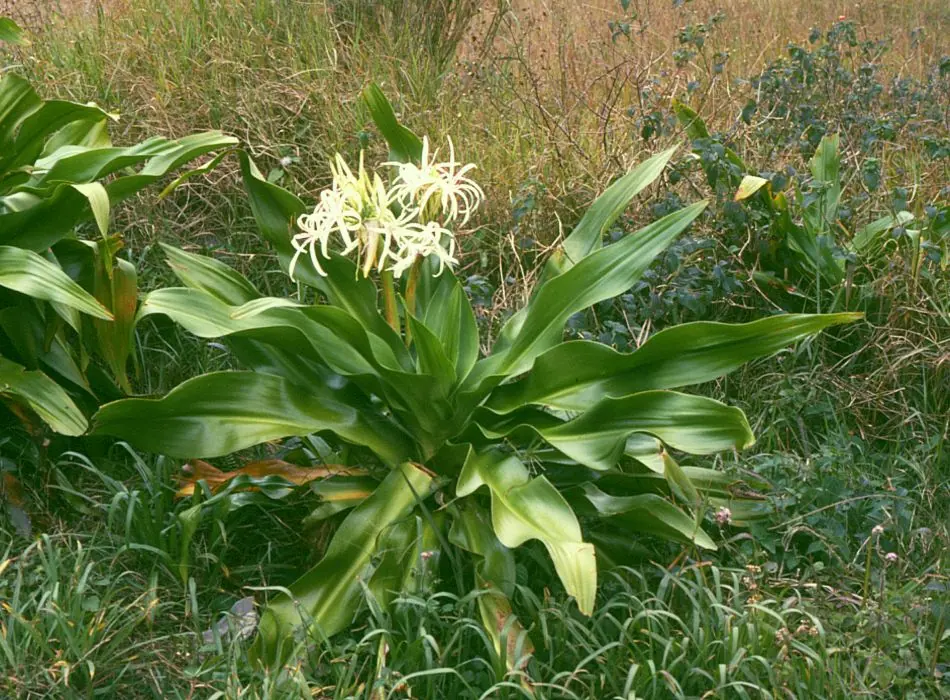
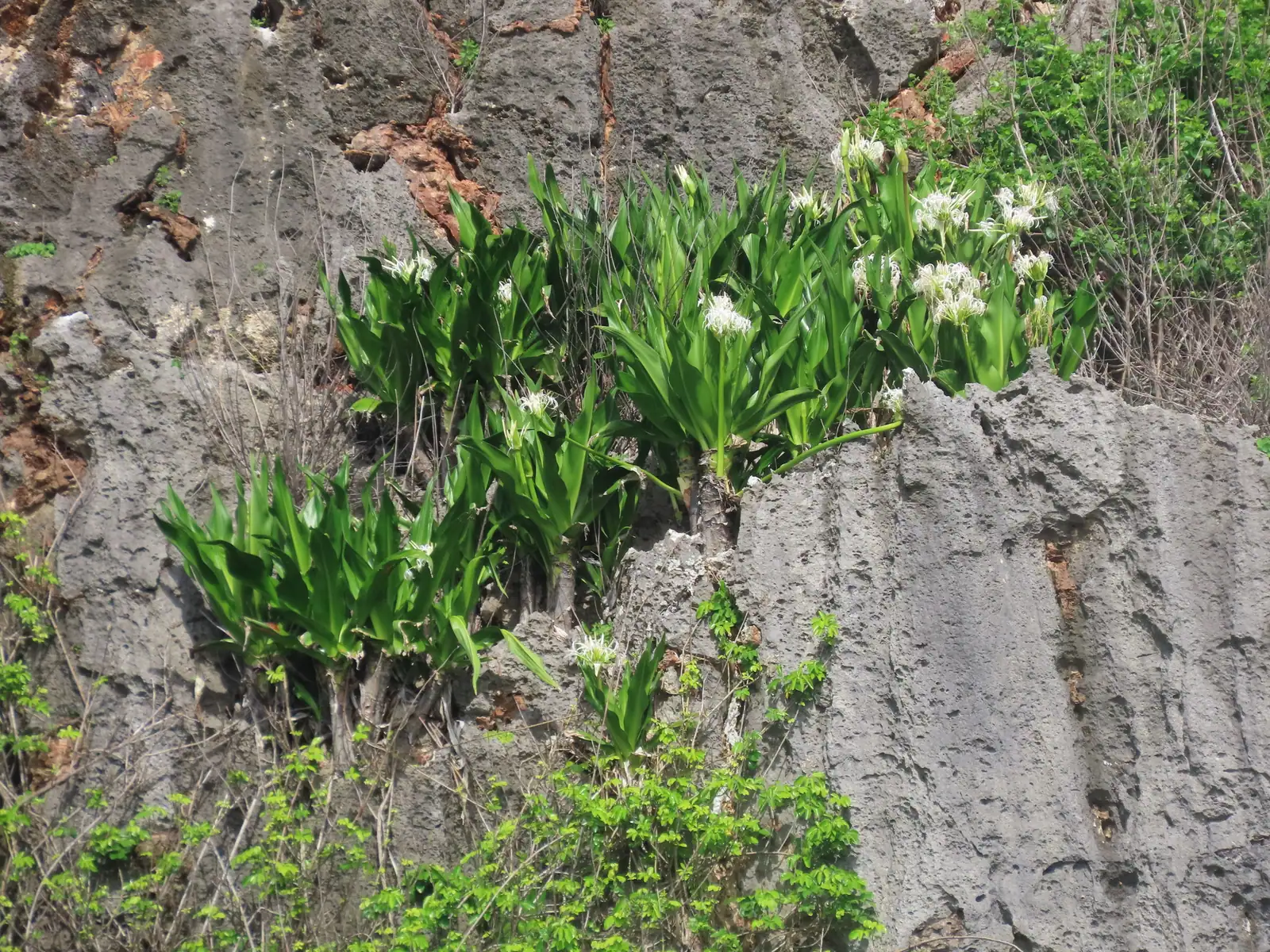
Crinum asiaticum is a large evergreen bulb with strap-like leaves and white fragrant flowers, used as a landscape specimen or for mass planting. [2][1] It grows in sun to part shade in well-drained soil and is easy to grow. [1][2] All parts are poisonous. [1]
Poisonbulb care
How to water Poisonbulb
Watering
The sources give different values depending on region, zone or growing conditions.
What each source says
According to UNF Botanical Garden: Drought tolerant when established, benefits from irrigation during droughts
According to UF/IFAS Charlotte County: Moderate drought tolerance
According to PlantCareToday: Tolerates short periods of drought but requires consistent watering
According to Desert-Tropicals: Abundant water to wet soil
What the sources say (4)
According to UNF Botanical Garden: Water: drought tolerant when established, benefits from irrigation during droughtsAccording to UF/IFAS Charlotte County: This gives a nice tropical look to the area with little extra care as this flowering bulb offers moderate drought tolerance.According to PlantCareToday: Crinum can tolerate short periods of drought but still requires consistent watering.According to Desert-Tropicals: Fruit: Round white or green
Watering Needs: Abundant water to wet soilWatering notes
Well-drained soil; reduce watering in cooler months where growth continues; withhold water in winter where foliage dies back and bulbs go dormant
What the sources say (3)
the grand crinum will grow in both sunny to part-shade sites with well-drained soil.Reduce watering during the cooler months in areas where the plant continues to grow through the winter.Withhold water during the winter in areas where the foliage dies back, and the bulbs go dormant.How much light Poisonbulb needs
Full sun to partial shade
What the sources say (4)
Light: full sun
Water: drought tolerant when establishedthe grand crinum will grow in both sunny to part-shade sites with well-drained soil.White Crinum Lily does well planted in light shade to full sun. Too much sun can cause leaf scorch.USDA: 9b-11
Sun Exposure: Part sun to full sun
Origin: Tropical Indo-PacificHow much cold Poisonbulb can take
Hardiness, coldest zone
The sources give different values depending on region, zone or growing conditions.
What each source says
According to Harvest to Table: 8 [winter low −12.2 to −6.7 °C (10 to 20 °F)]
According to Desert-Tropicals: 9b [winter low −3.9 to −1.1 °C (25 to 30 °F)]
According to PlantCareToday: 10 [winter low −1.1 to 4.4 °C (30 to 40 °F)]
What the sources say (3)
According to Harvest to Table: C. asiaticum bears fragrant white flowers in spring and summer. 2 feet (.6m) tall. Zones 8 to 11.According to Desert-Tropicals: USDA: 9b-11
Sun Exposure: Part sun to full sun
Origin: Tropical Indo-PacificAccording to PlantCareToday: This plant is winter hardy in United States hardiness zones 10 through 11 (USDA Zone).Hardiness, warmest zone
11 [winter low 4.4 to 10 °C (40 to 50 °F)]
What the sources say (3)
C. asiaticum bears fragrant white flowers in spring and summer. 2 feet (.6m) tall. Zones 8 to 11.USDA: 9b-11
Sun Exposure: Part sun to full sun
Origin: Tropical Indo-PacificThis plant is winter hardy in United States hardiness zones 10 through 11 (USDA Zone).Where to grow Poisonbulb
Yes
What the sources say (2)
When keeping Crinum Lilies as potted plants, use containers only a couple of inches larger than the bulbs.As container plants, they’re attractive and easy care, but you must keep in mind moving them from place-to-placeHow to propagate Poisonbulb
Seed; division of bulblets from mature plants (winter); planting bulbils from the base of the flower head
What the sources say (2)
Multiple huge seeds develop and readily sprout. Bulblets from mature plants can be divided during the winter for quick and easy propagation.Crinum form bulbils (tubers) at the base of the flower head.
These are not seeds, but plant them to grow new plants.How to grow Poisonbulb
The plant
Family
Amaryllidaceae
What the sources say (1)
Crinum asiaticum - Giant crinum
## Family Amaryllidaceae
## Description:
Approximately sixty to one hundred Crinum speciesMature height
Mature width
up to 213.36 cm (7 ft)
What the sources say (1)
This crinum forms a big rosette of leaves growing up to seven-feet across, and up to five feet high.Pests and diseases
Pests
lubber grasshoppers
What the sources say (1)
Lubber grasshoppers are perhaps the worst insect pest as crinums and others in the lily family are their favored foods.Diseases
leaf spot diseases
What the sources say (1)
Some leaf spot diseases are also known to develop on occasion.Fertilizing
How often
Occasional; little or no supplemental fertilizer needed
What the sources say (2)
The plants will benefit greatly from occasional feeding with liquid fertilizer and compost added to the growing medium.Low maintenance care consists of removing winter damaged leaves and spent flower stalks and lubber grasshoppers, their main pest. They contain toxic alkaloids which deters most pests. Little or no supplemental fertilizer or water is needed.Natural fertilizers
Plenty of compost worked into the soil or growing medium
What each source says
seed sowing: sandy medium with plenty of compost and bone meal as a slow-release fertilizer
What the sources say (3)
seed sowing: Seeds are placed in a well-drained, sandy medium with plenty of compost and a slow-release fertilizer such as bonemeal, with regular watering and full sun.In the garden most species will grow well in any soil to which plenty of compost has been added.The plants will benefit greatly from occasional feeding with liquid fertilizer and compost added to the growing medium.Mineral fertilizers
Liquid fertilizer, occasionally
What the sources say (1)
The plants will benefit greatly from occasional feeding with liquid fertilizer and compost added to the growing medium.Poisonbulb pests and problems
Lubber grasshoppers
Symptom: Crinums and other lilies are their favored foods; destructive pest.
What the sources say (2)
Lubber grasshoppers are perhaps the worst insect pest as crinums and others in the lily family are their favored foods.
— The Grand Crinum Lily - UF/IFAS Extension Charlotte County [1] Where they are present, lubber grasshoppers are a destructive pest of crinums.
— UNF: Crinum asiaticum [2] Leaf spot diseases
Symptom: Leaf spot diseases are known to develop on occasion.
What the sources say (1)
Some leaf spot diseases are also known to develop on occasion. Another name for the grand crinum lily
— The Grand Crinum Lily - UF/IFAS Extension Charlotte County [1] Snails, nematodes, mealybugs and anthracnose
Symptom: Snails and grasshoppers chew the leaves; the plant is susceptible to anthracnose.
Remedies
Each remedy shows what official sources say about it; traditional remedies without an official source are marked as such. Harmful ones are listed so you know to avoid them.
Treating the plant
lubber grasshoppers
hand-picking Partly works
How: Pick the slow-moving grasshoppers right off the plant.
One simple method is to pick these slow-moving critters right off of the plant.
— plantcaretoday.com [9] What the evidence says As lubbers are large targets and move slowly, non-chemical control via hand-picking, can help reduce numbers.
— blogs.ifas.ufl.edu [10] dropping grasshoppers into soapy water Not verified
Traditional remedy, not verified by an official source.
How: Pick the grasshoppers off the plant and drop them into a deep bucket full of soapy water.
neem foliar spray Not verified
Traditional remedy, not verified by an official source.
How: Spray neem at dawn or dusk, directly on the grasshoppers.
diatomaceous earth dust Not verified
Traditional remedy, not verified by an official source.
How: Dust the crinums with diatomaceous earth; it becomes ineffective when wet and dislodged by the wind.
Is Poisonbulb poisonous?
Reported by the source, quoted verbatim. This is not medical or veterinary advice: if a person or an animal may have eaten this plant, contact a poison control centre or a veterinarian.
all parts are poisonous. As such, keep this in mind and take precautions if children and pets are present.
[1]- Poisonous parts
Another name for the grand crinum lily is “poison bulb” – all parts are poisonous.
[1]
All parts of Crinum Lilies are quite toxic , and you should take care to choose a planting location not accessible to children and pets.
[5]
Calendar
Pruning
Before cold winter months (cut back foliage)
What the sources say (1)
Cut back foliage in advance of cold winter months.
In cold areas, mulch heavily during winter to protect the bulbs.Months as given by the sources, which are mostly from the United States (northern hemisphere). In the southern hemisphere they shift by about six months.
Indicative values
Values from a secondary source, not checked word for word like the rest of this page. Use them as a starting point.
- Life cycle
- PerennialIndicative value, adapt it to your climate · Secondary source
- Soil pH
- 6-7.5Indicative value, adapt it to your climate · Secondary source
- Care level
- MediumIndicative value, adapt it to your climate · Secondary source
- Growth rate
- LowIndicative value, adapt it to your climate · Secondary source
Similar plants
- Hardy swamplily Crinum bulbispermum
- Swamp Lily Crinum americanum
- African Blood Lily Scadoxus multiflorus
- African Blue Lily Agapanthus praecox
- Allium triquetrum Allium triquetrum
- Amazon Lily Urceolina amazonica
- Aztec Lily Zephyranthes formosissima
- Blue Globe Onion Allium caeruleum
Sources
Every value above is quoted from these documents. Links lead to the original publisher.
- The Grand Crinum Lily - UF/IFAS Extension Charlotte County · blogs.ifas.ufl.edu, consulted
- UNF: Crinum asiaticum · unf.edu, consulted
- How to Grow Crinum - Milk-and-Wine Lilies · harvesttotable.com, consulted
- How to Grow and Care for Crinum Lilies | Gardener’s Path · gardenerspath.com, consulted
- Crinum Asiaticum Care: Tips On Growing The White Crinum Lily · plantcaretoday.com, consulted
- Poison Bulb (Crinum asiaticum) · desert-tropicals.com, consulted
- pza.sanbi.org · pza.sanbi.org
- blogs.ifas.ufl.edu · blogs.ifas.ufl.edu
- plantcaretoday.com · plantcaretoday.com
- blogs.ifas.ufl.edu · blogs.ifas.ufl.edu
Written by Emilio Marruso · last checked