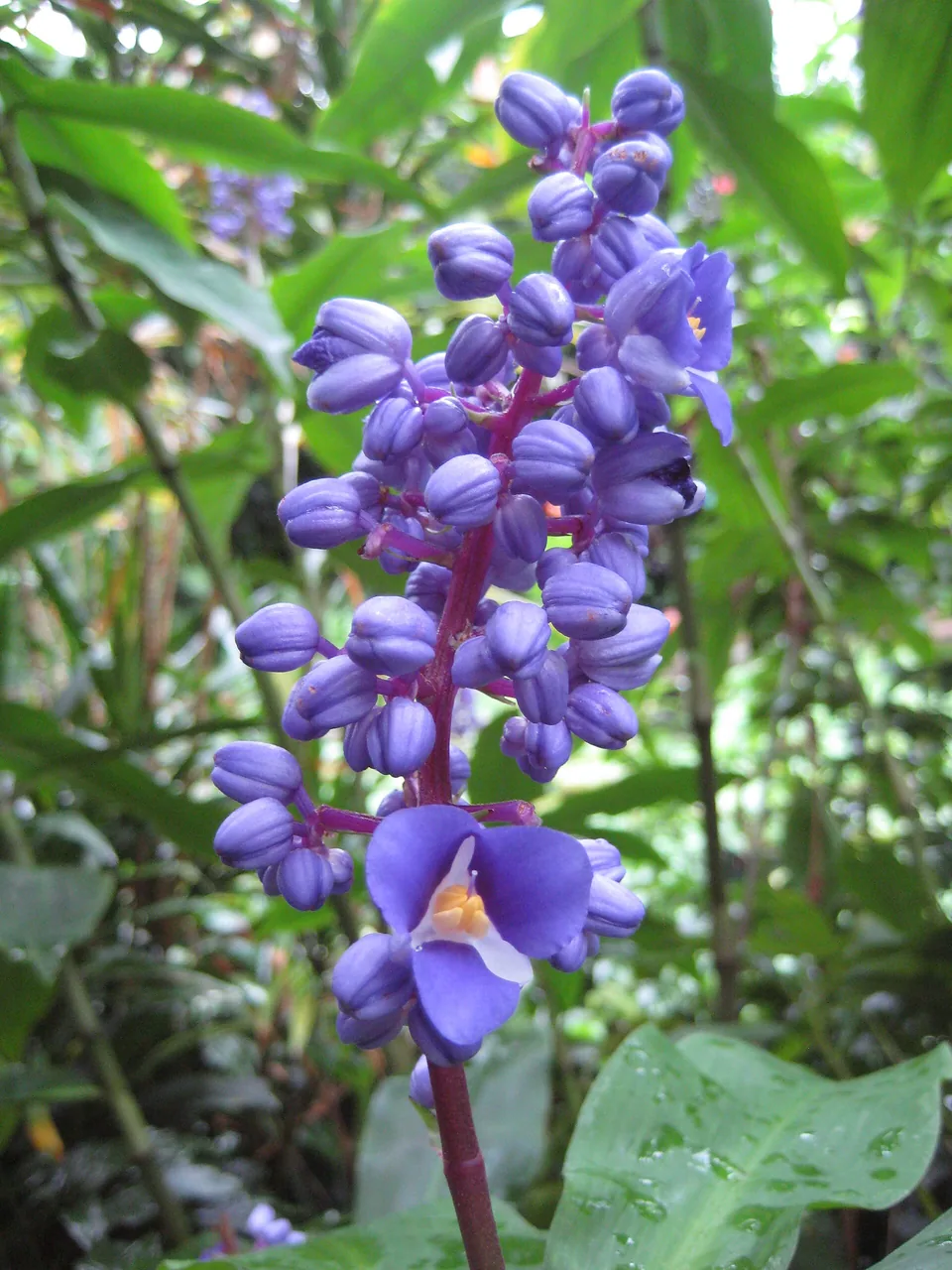
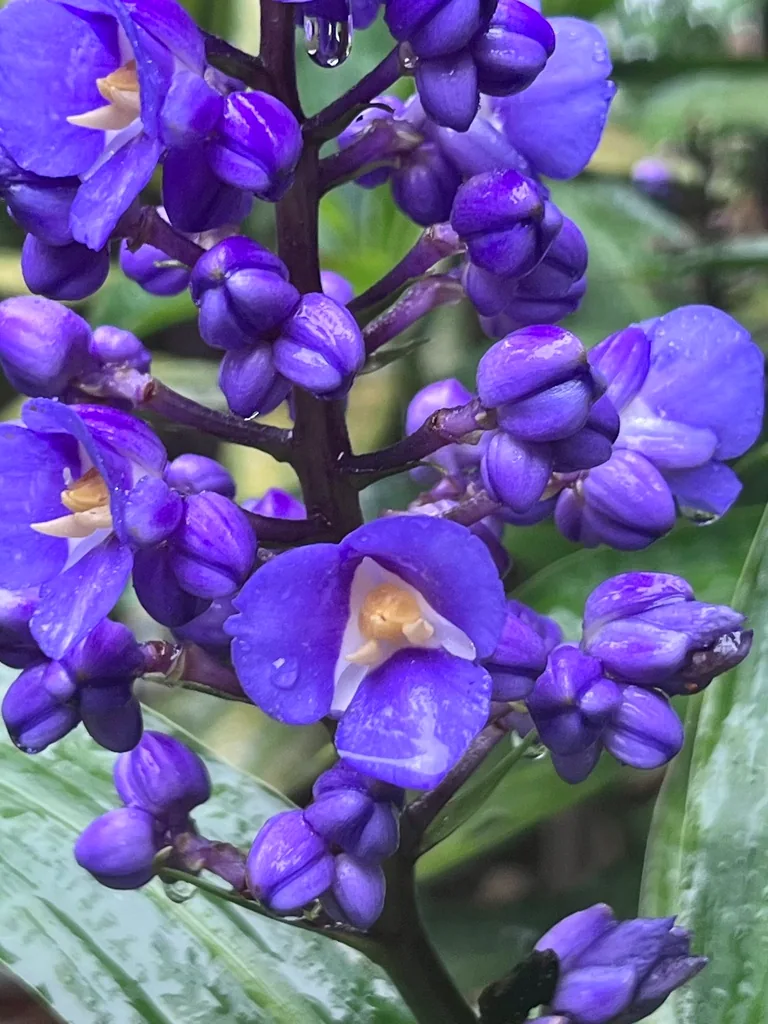

Cómo cultivar y cuidar Dichorisandra thyrsiflora
Dichorisandra thyrsiflora
Escrito por Emilio Marruso · última revisión
De un vistazo
Esta planta agradecida crece feliz en interior o en maceta, y hasta aguanta periodos cortos de sequía. Plántala en otoño o en primavera, en un suelo con buen drenaje y pH de 6,1–7,5, y pódala justo después de la floración. Luego compártela con tus amigos: divídela o enraíza unos esquejes de tallo para tener plantas nuevas.
- Riego
Aguanta periodos cortos de sequía; no dejes la tierra encharcada o se pudren las raíces
Qué dicen las fuentes (1)
Notas sobre el riego: Tolera condiciones de sequía por períodos cortos.
Let the soil dry between waterings. Blue ginger tolerates drought conditions for short periods of time.
— What Is Dichorisandra Blue Ginger - Learn About Blue Ginger Care | Gardening Know How [5] - Suelo
Suelo con buen drenaje, pH 6,1–7,5
Qué dicen las fuentes (2)
pH del suelo, mínimo: 6.1
Blue ginger needs to be sitting in a media with a pH of 6.1 to 7.5, ideally.
— How to Grow and Care for Blue Ginger Plants | Gardener’s Path [4] pH del suelo, máximo: 7.5
Blue ginger needs to be sitting in a media with a pH of 6.1 to 7.5, ideally.
— How to Grow and Care for Blue Ginger Plants | Gardener’s Path [4] - Distancia
46–91 cm entre plantas
Qué dicen las fuentes (1)
Distancia de plantación: 45.7-91.4 cm (18-36 pulgadas)
Rhizomes can be planted in individual pots, or spaced about 18 to 36 inches apart in the garden.
— How to Grow and Care for Blue Ginger Plants | Gardener’s Path [4] - Plantación
Planta en otoño o en primavera
Qué dicen las fuentes (1)
Plantación: Otoño o primavera
In fall or spring, prepare a well-draining growing medium, whether it’s soil somewhere in your garden or in a container.
— How to Grow and Care for Blue Ginger Plants | Gardener’s Path [4] - Poda
Poda justo después de la floración
Qué dicen las fuentes (2)
Poda: Justo después de la floración
7. Prune blue gingers only just after they bloom
— Blue Ginger Is an Easy-to-Grow Tropical Flower - Horticulture [7] Once the flowers are spent , you can snip them off, or you may cut the stems down to the ground when plants have finished flowering to promote lush regrowth.
— How to Grow and Care for Blue Ginger Plants | Gardener’s Path [4] - Plagas
Cochinilla algodonosa: bolitas blancas como algodón; elimínala con chorros de agua o aceite hortícola
- Multiplicación
Divide la planta, planta rizomas en reposo o enraíza esquejes de tallo
Qué dicen las fuentes (2)
Propagación: Rizomas inactivos; esquejes de tallo; división
You have a handful of options for propagating blue ginger: planting dormant rhizomes, rooting stem cuttings, division, or transplanting.
— How to Grow and Care for Blue Ginger Plants | Gardener’s Path [4] Propagation: Division in spring, or tip cutting in summer
— Blue Ginger, Brazilian Ginger (Dichorisandra thyrsiflora) [6] - Maceta
Crece también en maceta y en interior
Qué dicen las fuentes (2)
En maceta: Sí
Temperate-climate gardeners will have to grow their exotic blue gingers in containers that can be shifted into a warm, sunny window for the winter.
— Blue Ginger Is an Easy-to-Grow Tropical Flower - Horticulture [7] En interior: Sí
Blue ginger plants, with their stems of dainty blue flowers, make delightful houseplants.
— What Is Dichorisandra Blue Ginger - Learn About Blue Ginger Care | Gardening Know How [5]
Resumen
El jengibre azul es una perenne tropical de Brasil de la familia Commelinaceae, cultivada por sus racimos de flores azules y su follaje. [3]
Citado en inglés, como en la fuente.
Esta ficha está incompleta: las fuentes consultadas aún no cubren todos los campos.
Aún no cubierto por nuestras fuentes: Riego
Cuidados
Riego
Riego
No figura en las fuentes consultadas.
Notas sobre el riego
Tolera condiciones de sequía por períodos cortos.
Qué dicen las fuentes (1)
Let the soil dry between waterings. Blue ginger tolerates drought conditions for short periods of time.Luz
Las fuentes no coinciden:
Give the plant full sun or partial shade, keeping in mind that the blooms last longer if they have shade at least part of the day.
[5]
Qué dicen las fuentes (2)
Ensure partial shade exposure, protection from wind, and ample humidity – especially when the plant is in full bloom.Both blue ginger species are easy to grow, particularly in dappled shade conditions with regular moisture to promote the lushest growth.Clima y frío
Rusticidad, zona más fría
Las fuentes dan valores distintos según la región, la zona o las condiciones de cultivo.
Lo que dice cada fuente
Según Gardener’s Path: 9 [mínima invernal de −6,7 a −1,1 °C (de 20 a 30 °F)]
Según Gardening Know How: 9 [mínima invernal de −6,7 a −1,1 °C (de 20 a 30 °F)]
Según Horticulture Magazine: 9 [mínima invernal de −6,7 a −1,1 °C (de 20 a 30 °F)]
Según Desert-Tropicals: 10 [mínima invernal de −1,1 a 4,4 °C (de 30 a 40 °F)]
Qué dicen las fuentes (4)
Según Gardener’s Path: For year-round outdoor growth, make sure your garden is located in Zones 9 to 12.Según Gardening Know How: In Department of Agriculture plant hardiness zones 9 and 10, you can grow blue ginger outdoors.Según Horticulture Magazine: ( Dichorisandra thyrsiflora , USDA Zones 9–11), starts out with gawky upright stems ringed with shiny green leaves marked lightly in purple and silver.Según Desert-Tropicals: USDA: 10-12
Frost Tolerance: Tender in Phoenix, does not take any frost, should be kept insideRusticidad, zona más cálida
Las fuentes dan valores distintos según la región, la zona o las condiciones de cultivo.
Lo que dice cada fuente
Según Gardener’s Path: 12 [mínima invernal de 10 a 15,6 °C (de 50 a 60 °F)]
Según Gardening Know How: 10 [mínima invernal de −1,1 a 4,4 °C (de 30 a 40 °F)]
Según Horticulture Magazine: 11 [mínima invernal de 4,4 a 10 °C (de 40 a 50 °F)]
Según Desert-Tropicals: 12 [mínima invernal de 10 a 15,6 °C (de 50 a 60 °F)]
Qué dicen las fuentes (4)
Según Gardener’s Path: For year-round outdoor growth, make sure your garden is located in Zones 9 to 12.Según Gardening Know How: In Department of Agriculture plant hardiness zones 9 and 10, you can grow blue ginger outdoors.Según Horticulture Magazine: ( Dichorisandra thyrsiflora , USDA Zones 9–11), starts out with gawky upright stems ringed with shiny green leaves marked lightly in purple and silver.Según Desert-Tropicals: USDA: 10-12
Frost Tolerance: Tender in Phoenix, does not take any frost, should be kept insideSuelo
pH del suelo, mínimo
6.1
Qué dicen las fuentes (1)
Blue ginger needs to be sitting in a media with a pH of 6.1 to 7.5, ideally.pH del suelo, máximo
7.5
Qué dicen las fuentes (1)
Blue ginger needs to be sitting in a media with a pH of 6.1 to 7.5, ideally.Dónde cultivarla
En interior
Sí
Qué dicen las fuentes (1)
Blue ginger plants, with their stems of dainty blue flowers, make delightful houseplants.En maceta
Sí
Qué dicen las fuentes (1)
Temperate-climate gardeners will have to grow their exotic blue gingers in containers that can be shifted into a warm, sunny window for the winter.Distancia de plantación
45.7-91.4 cm (18-36 pulgadas)
Qué dicen las fuentes (1)
Rhizomes can be planted in individual pots, or spaced about 18 to 36 inches apart in the garden.Propagación
Rizomas inactivos; esquejes de tallo; división
Qué dicen las fuentes (2)
You have a handful of options for propagating blue ginger: planting dormant rhizomes, rooting stem cuttings, division, or transplanting.Propagation: Division in spring, or tip cutting in summerProblemas
Cochinillas
Síntoma: Grumos blancos y algodonosos en las axilas de las hojas o en las raíces; las partes infestadas pueden morir y el crecimiento se atrofia
Qué hacer: Chorro de agua, aceite hortícola o un empapado del suelo con piretrina
Qué dicen las fuentes (2)
mealybugs can cause the death of infested plant parts, and infestations may stunt overall growth.
— How to Grow and Care for Blue Ginger Plants | Gardener’s Path [4] The above tips for aphid control work for mealybug management , too.
— How to Grow and Care for Blue Ginger Plants | Gardener’s Path [4] Podredumbre de la raíz
Síntoma: Las raíces se vuelven necróticas en suelos demasiado saturados, perjudicando el crecimiento de los brotes y eventualmente matando la planta
Qué hacer: Proporciona un drenaje adecuado; desentierra las plantas afectadas y poda las raíces dañadas
Qué dicen las fuentes (2)
Providing proper drainage is essential for preventing root rot.
— How to Grow and Care for Blue Ginger Plants | Gardener’s Path [4] the roots begin to turn necrotic, which negatively impacts shoot growth above the soil line as well.
— How to Grow and Care for Blue Ginger Plants | Gardener’s Path [4]
Remedios
Cada remedio indica qué dicen las fuentes oficiales; los remedios tradicionales sin fuente oficial aparecen marcados. Los perjudiciales están para que sepas evitarlos.
Cuidar la planta
pulgones
chorro de agua a alta velocidad No verificado
Remedio tradicional, no verificado por una fuente oficial.
Cómo: Los chorros de agua a alta velocidad desprenden los pulgones de las superficies de las plantas.
spray de aceite hortícola Funciona
Vegetables and ornamental plants can be damaged by insecticidal soaps, horticultural oils, plant oils, and sulfur, especially at higher rates or application frequency.
— ask.ifas.ufl.edu [8] Cómo: Aplica aceite hortícola en los tejidos infestados.
High-velocity sprays of water work to knock aphids off of plant surfaces, while applications of horticultural oil on infested tissues will snuff out these pests
— How to Grow and Care for Blue Ginger Plants | Gardener’s Path [4] Qué dicen las pruebas When used correctly, horticultural oils and insecticidal soaps provide effective control for many pests, yet have extremely low toxicity and no residual effect after the spray has dried.
— ask.ifas.ufl.edu [8]
cochinillas harinosas
chorro de agua y aceite hortícola No verificado
Remedio tradicional, no verificado por una fuente oficial.
Vegetables and ornamental plants can be damaged by insecticidal soaps, horticultural oils, plant oils, and sulfur, especially at higher rates or application frequency.
— ask.ifas.ufl.edu [8] Cómo: Los consejos para el control de pulgones (chorros de agua, aceite hortícola) también funcionan para las cochinillas.
pudrición de la raíz
Poda las raíces dañadas. No verificado
Remedio tradicional, no verificado por una fuente oficial.
Cómo: Desentierra las plantas afectadas y poda las partes dañadas del sistema radicular, junto con una cantidad proporcional de brotes.
Calendario
Plantación
Otoño o primavera
Qué dicen las fuentes (1)
In fall or spring, prepare a well-draining growing medium, whether it’s soil somewhere in your garden or in a container.Poda
Justo después de la floración
Qué dicen las fuentes (2)
7. Prune blue gingers only just after they bloomOnce the flowers are spent , you can snip them off, or you may cut the stems down to the ground when plants have finished flowering to promote lush regrowth.Meses tal como los dan las fuentes, en su mayoría de Estados Unidos (hemisferio norte). En el hemisferio sur se desplazan unos seis meses.
Valores orientativos
Valores de una fuente secundaria, no comprobados palabra por palabra como el resto de esta página. Úselos como punto de partida.
- Ciclo de vida
- Perenne herbáceaValor orientativo, adáptalo a tu clima · Fuente secundaria
- Altura adulta
- 91.4-182.9 cm (3-6 pies).Valor orientativo, adáptalo a tu clima · Fuente secundaria
- Horas de sol
- 6-8 horasValor orientativo, adáptalo a tu clima · Fuente secundaria
- Riego
- PromedioValor orientativo, adáptalo a tu clima · Fuente secundaria
- Resiste la sequía
- SíValor orientativo, adáptalo a tu clima · Fuente secundaria
- Nivel de cuidado
- ModeradoValor orientativo, adáptalo a tu clima · Fuente secundaria
- Crecimiento
- BajoValor orientativo, adáptalo a tu clima · Fuente secundaria
Plantas similares
- Hipérico rastrero Hypericum calycinum
- Abeto de Vancuver Abies grandis
- Abraham Trachystemon orientalis
- Bananero de Etiopía Ensete ventricosum
- Acacia longifolia Acacia longifolia
- Acacia plateada Acacia retinodes
- Acanthus hungaricus Acanthus hungaricus
- Achlys triphylla Achlys triphylla
Fuentes
Cada valor anterior se cita de estos documentos. Los enlaces llevan al editor original.
- NParks | Dichorisandra thyrsiflora · nparks.gov.sg, consultado
- Dichorisandra thyrsiflora - Botany Brisbane · botanybrisbane.com, consultado
- Golden shrimp plant in Guadeloupe | Valombreuse Garden · jardindebalata.fr, consultado
- How to Grow and Care for Blue Ginger Plants | Gardener’s Path · gardenerspath.com, consultado
- What Is Dichorisandra Blue Ginger - Learn About Blue Ginger Care | Gardening Know How · gardeningknowhow.com, consultado
- Blue Ginger, Brazilian Ginger (Dichorisandra thyrsiflora) · desert-tropicals.com, consultado
- Blue Ginger Is an Easy-to-Grow Tropical Flower - Horticulture · hortmag.com, consultado
- ask.ifas.ufl.edu · ask.ifas.ufl.edu
Escrito por Emilio Marruso · última revisión