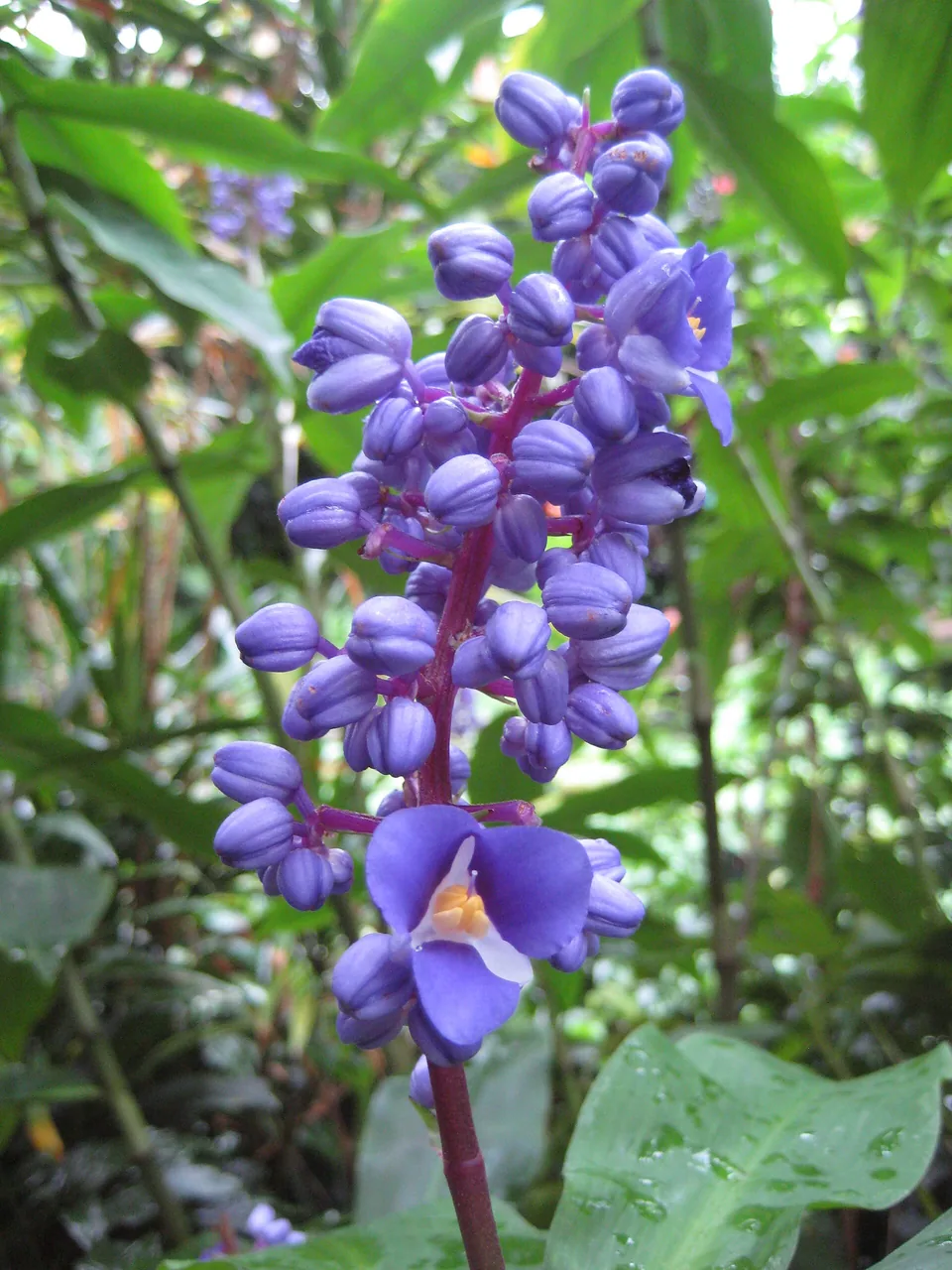
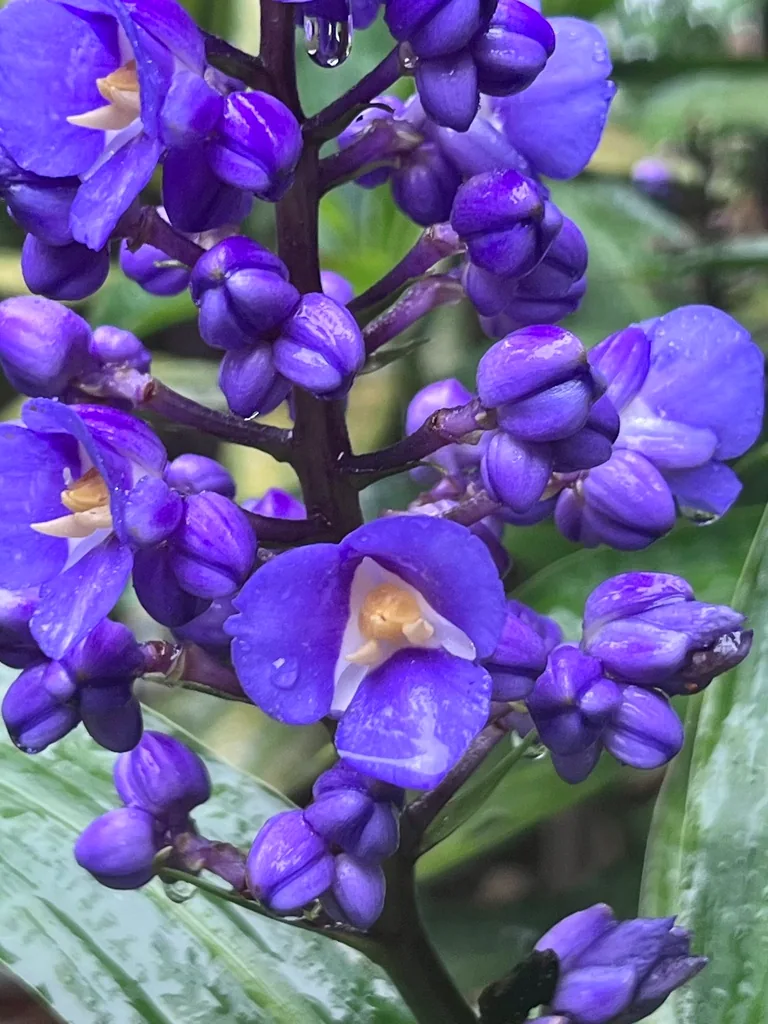

How to Grow and Care for Dichorisandra thyrsiflora
Dichorisandra thyrsiflora
Written by Emilio Marruso · last checked
At a glance
This easygoing plant grows happily indoors or in a container, and it can even handle short dry spells. Plant it in fall or spring in well-drained soil with a pH of 6.1–7.5, and trim it just after flowering. Then share it with friends by dividing it or rooting a few stem cuttings to make brand-new plants.
- Water
Handles short dry spells; never leave the soil soggy, or the roots rot
What the sources say (1)
Watering notes: Tolerates drought conditions for short periods
Let the soil dry between waterings. Blue ginger tolerates drought conditions for short periods of time.
— What Is Dichorisandra Blue Ginger - Learn About Blue Ginger Care | Gardening Know How [5] - Soil
Well-drained soil, pH 6.1–7.5
What the sources say (2)
Soil pH, minimum: 6.1
Blue ginger needs to be sitting in a media with a pH of 6.1 to 7.5, ideally.
— How to Grow and Care for Blue Ginger Plants | Gardener’s Path [4] Soil pH, maximum: 7.5
Blue ginger needs to be sitting in a media with a pH of 6.1 to 7.5, ideally.
— How to Grow and Care for Blue Ginger Plants | Gardener’s Path [4] - Spacing
18–36 in between plants
What the sources say (1)
Spacing: 45.7-91.4 cm (18-36 in)
Rhizomes can be planted in individual pots, or spaced about 18 to 36 inches apart in the garden.
— How to Grow and Care for Blue Ginger Plants | Gardener’s Path [4] - Planting
Plant in fall or spring
What the sources say (1)
Planting: Fall or spring
In fall or spring, prepare a well-draining growing medium, whether it’s soil somewhere in your garden or in a container.
— How to Grow and Care for Blue Ginger Plants | Gardener’s Path [4] - Pruning
Prune just after flowering
What the sources say (2)
Pruning: Just after flowering
7. Prune blue gingers only just after they bloom
— Blue Ginger Is an Easy-to-Grow Tropical Flower - Horticulture [7] Once the flowers are spent , you can snip them off, or you may cut the stems down to the ground when plants have finished flowering to promote lush regrowth.
— How to Grow and Care for Blue Ginger Plants | Gardener’s Path [4] - Pests
Mealybugs: white cottony clumps; wash them off with blasts of water or use horticultural oil
- Propagation
Divide the plant, plant dormant rhizomes or root stem cuttings
What the sources say (2)
Propagation: Dormant rhizomes; stem cuttings; division
You have a handful of options for propagating blue ginger: planting dormant rhizomes, rooting stem cuttings, division, or transplanting.
— How to Grow and Care for Blue Ginger Plants | Gardener’s Path [4] Propagation: Division in spring, or tip cutting in summer
— Blue Ginger, Brazilian Ginger (Dichorisandra thyrsiflora) [6] - Containers
Grows in containers and indoors too
What the sources say (2)
In containers: Yes
Temperate-climate gardeners will have to grow their exotic blue gingers in containers that can be shifted into a warm, sunny window for the winter.
— Blue Ginger Is an Easy-to-Grow Tropical Flower - Horticulture [7] Indoors: Yes
Blue ginger plants, with their stems of dainty blue flowers, make delightful houseplants.
— What Is Dichorisandra Blue Ginger - Learn About Blue Ginger Care | Gardening Know How [5]
Overview
Blue ginger is a tropical perennial from Brazil in the Commelinaceae, grown for its blue flower clusters and foliage. [3]
This record is incomplete: the sources we read do not cover every field yet.
Not yet covered by our sources: Watering
Dichorisandra thyrsiflora care
How to water Dichorisandra thyrsiflora
Watering
Not stated in the sources we read.
Watering notes
Tolerates drought conditions for short periods
What the sources say (1)
Let the soil dry between waterings. Blue ginger tolerates drought conditions for short periods of time.How much light Dichorisandra thyrsiflora needs
The sources disagree:
Give the plant full sun or partial shade, keeping in mind that the blooms last longer if they have shade at least part of the day.
[5]
What the sources say (2)
Ensure partial shade exposure, protection from wind, and ample humidity – especially when the plant is in full bloom.Both blue ginger species are easy to grow, particularly in dappled shade conditions with regular moisture to promote the lushest growth.How much cold Dichorisandra thyrsiflora can take
Hardiness, coldest zone
The sources give different values depending on region, zone or growing conditions.
What each source says
According to Gardener’s Path: 9 [winter low −6.7 to −1.1 °C (20 to 30 °F)]
According to Gardening Know How: 9 [winter low −6.7 to −1.1 °C (20 to 30 °F)]
According to Horticulture Magazine: 9 [winter low −6.7 to −1.1 °C (20 to 30 °F)]
According to Desert-Tropicals: 10 [winter low −1.1 to 4.4 °C (30 to 40 °F)]
What the sources say (4)
According to Gardener’s Path: For year-round outdoor growth, make sure your garden is located in Zones 9 to 12.According to Gardening Know How: In Department of Agriculture plant hardiness zones 9 and 10, you can grow blue ginger outdoors.According to Horticulture Magazine: ( Dichorisandra thyrsiflora , USDA Zones 9–11), starts out with gawky upright stems ringed with shiny green leaves marked lightly in purple and silver.According to Desert-Tropicals: USDA: 10-12
Frost Tolerance: Tender in Phoenix, does not take any frost, should be kept insideHardiness, warmest zone
The sources give different values depending on region, zone or growing conditions.
What each source says
According to Gardener’s Path: 12 [winter low 10 to 15.6 °C (50 to 60 °F)]
According to Gardening Know How: 10 [winter low −1.1 to 4.4 °C (30 to 40 °F)]
According to Horticulture Magazine: 11 [winter low 4.4 to 10 °C (40 to 50 °F)]
According to Desert-Tropicals: 12 [winter low 10 to 15.6 °C (50 to 60 °F)]
What the sources say (4)
According to Gardener’s Path: For year-round outdoor growth, make sure your garden is located in Zones 9 to 12.According to Gardening Know How: In Department of Agriculture plant hardiness zones 9 and 10, you can grow blue ginger outdoors.According to Horticulture Magazine: ( Dichorisandra thyrsiflora , USDA Zones 9–11), starts out with gawky upright stems ringed with shiny green leaves marked lightly in purple and silver.According to Desert-Tropicals: USDA: 10-12
Frost Tolerance: Tender in Phoenix, does not take any frost, should be kept insideBest soil for Dichorisandra thyrsiflora
Soil pH, minimum
6.1
What the sources say (1)
Blue ginger needs to be sitting in a media with a pH of 6.1 to 7.5, ideally.Soil pH, maximum
7.5
What the sources say (1)
Blue ginger needs to be sitting in a media with a pH of 6.1 to 7.5, ideally.Where to grow Dichorisandra thyrsiflora
Indoors
Yes
What the sources say (1)
Blue ginger plants, with their stems of dainty blue flowers, make delightful houseplants.In containers
Yes
What the sources say (1)
Temperate-climate gardeners will have to grow their exotic blue gingers in containers that can be shifted into a warm, sunny window for the winter.Spacing
45.7-91.4 cm (18-36 in)
What the sources say (1)
Rhizomes can be planted in individual pots, or spaced about 18 to 36 inches apart in the garden.How to propagate Dichorisandra thyrsiflora
Dormant rhizomes; stem cuttings; division
What the sources say (2)
You have a handful of options for propagating blue ginger: planting dormant rhizomes, rooting stem cuttings, division, or transplanting.Propagation: Division in spring, or tip cutting in summerDichorisandra thyrsiflora pests and problems
Mealybugs
Symptom: White, cottony clumps on leaf axils or roots; infested parts can die and growth is stunted
What to do: Blasts of water, horticultural oil, or a soil drench with pyrethrin
What the sources say (2)
mealybugs can cause the death of infested plant parts, and infestations may stunt overall growth.
— How to Grow and Care for Blue Ginger Plants | Gardener’s Path [4] The above tips for aphid control work for mealybug management , too.
— How to Grow and Care for Blue Ginger Plants | Gardener’s Path [4] Root rot
Symptom: Roots turn necrotic in over-saturated soils, harming shoot growth and eventually killing the plant
What to do: Provide proper drainage; dig up afflicted plants and prune damaged roots
What the sources say (2)
Providing proper drainage is essential for preventing root rot.
— How to Grow and Care for Blue Ginger Plants | Gardener’s Path [4] the roots begin to turn necrotic, which negatively impacts shoot growth above the soil line as well.
— How to Grow and Care for Blue Ginger Plants | Gardener’s Path [4]
Remedies
Each remedy shows what official sources say about it; traditional remedies without an official source are marked as such. Harmful ones are listed so you know to avoid them.
Treating the plant
aphids
high-velocity water spray Not verified
Traditional remedy, not verified by an official source.
How: High-velocity sprays of water knock aphids off plant surfaces.
horticultural oil spray Works
Vegetables and ornamental plants can be damaged by insecticidal soaps, horticultural oils, plant oils, and sulfur, especially at higher rates or application frequency.
— ask.ifas.ufl.edu [8] How: Apply horticultural oil on infested tissues.
High-velocity sprays of water work to knock aphids off of plant surfaces, while applications of horticultural oil on infested tissues will snuff out these pests
— How to Grow and Care for Blue Ginger Plants | Gardener’s Path [4] What the evidence says When used correctly, horticultural oils and insecticidal soaps provide effective control for many pests, yet have extremely low toxicity and no residual effect after the spray has dried.
— ask.ifas.ufl.edu [8]
mealybugs
water spray and horticultural oil Not verified
Traditional remedy, not verified by an official source.
Vegetables and ornamental plants can be damaged by insecticidal soaps, horticultural oils, plant oils, and sulfur, especially at higher rates or application frequency.
— ask.ifas.ufl.edu [8] How: The tips for aphid control (blasts of water, horticultural oil) also work for mealybugs.
root rot
prune damaged roots Not verified
Traditional remedy, not verified by an official source.
How: Dig up afflicted plants and prune the damaged parts of the root system, along with a proportionate amount of shoots.
Calendar
Planting
Fall or spring
What the sources say (1)
In fall or spring, prepare a well-draining growing medium, whether it’s soil somewhere in your garden or in a container.Pruning
Just after flowering
What the sources say (2)
7. Prune blue gingers only just after they bloomOnce the flowers are spent , you can snip them off, or you may cut the stems down to the ground when plants have finished flowering to promote lush regrowth.Months as given by the sources, which are mostly from the United States (northern hemisphere). In the southern hemisphere they shift by about six months.
Indicative values
Values from a secondary source, not checked word for word like the rest of this page. Use them as a starting point.
- Life cycle
- Herbaceous PerennialIndicative value, adapt it to your climate · Secondary source
- Mature height
- 91.4-182.9 cm (3-6 ft)Indicative value, adapt it to your climate · Secondary source
- Hours of sun
- 6-8 hoursIndicative value, adapt it to your climate · Secondary source
- Watering
- AverageIndicative value, adapt it to your climate · Secondary source
- Drought tolerant
- yesIndicative value, adapt it to your climate · Secondary source
- Care level
- ModerateIndicative value, adapt it to your climate · Secondary source
- Growth rate
- LowIndicative value, adapt it to your climate · Secondary source
Similar plants
- Aaron's Beard Hypericum calycinum
- Abies grandis Abies grandis
- Abraham Trachystemon orientalis
- Abyssinian banana Ensete ventricosum
- Acacia longifolia Acacia longifolia
- Acacia retinodes Acacia retinodes
- Acanthus hungaricus Acanthus hungaricus
- Achlys triphylla Achlys triphylla
Sources
Every value above is quoted from these documents. Links lead to the original publisher.
- NParks | Dichorisandra thyrsiflora · nparks.gov.sg, consulted
- Dichorisandra thyrsiflora - Botany Brisbane · botanybrisbane.com, consulted
- Golden shrimp plant in Guadeloupe | Valombreuse Garden · jardindebalata.fr, consulted
- How to Grow and Care for Blue Ginger Plants | Gardener’s Path · gardenerspath.com, consulted
- What Is Dichorisandra Blue Ginger - Learn About Blue Ginger Care | Gardening Know How · gardeningknowhow.com, consulted
- Blue Ginger, Brazilian Ginger (Dichorisandra thyrsiflora) · desert-tropicals.com, consulted
- Blue Ginger Is an Easy-to-Grow Tropical Flower - Horticulture · hortmag.com, consulted
- ask.ifas.ufl.edu · ask.ifas.ufl.edu
Written by Emilio Marruso · last checked