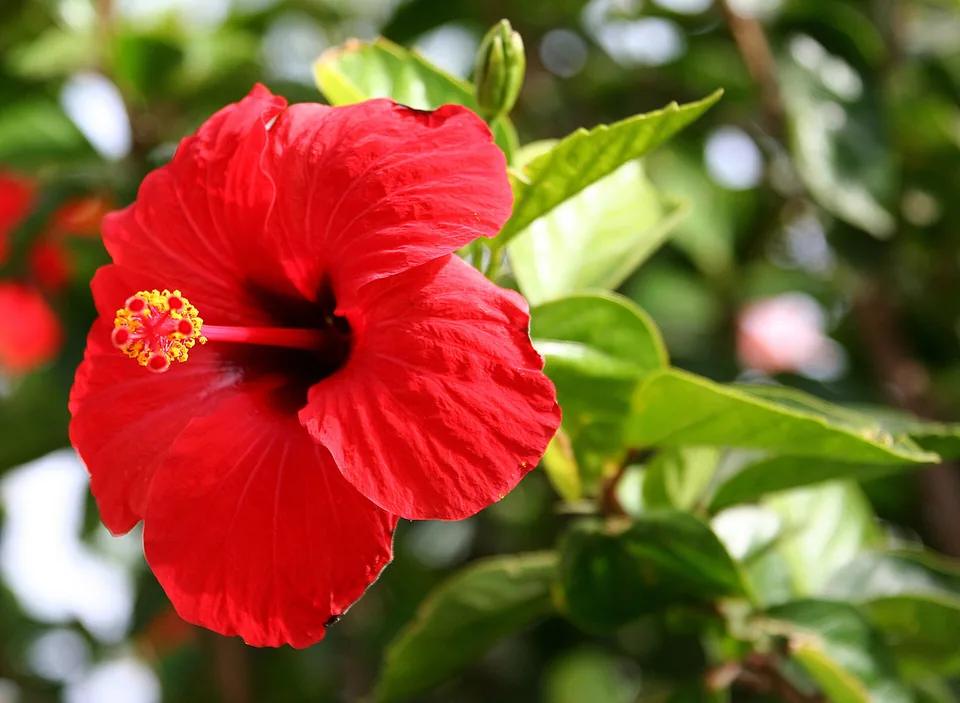
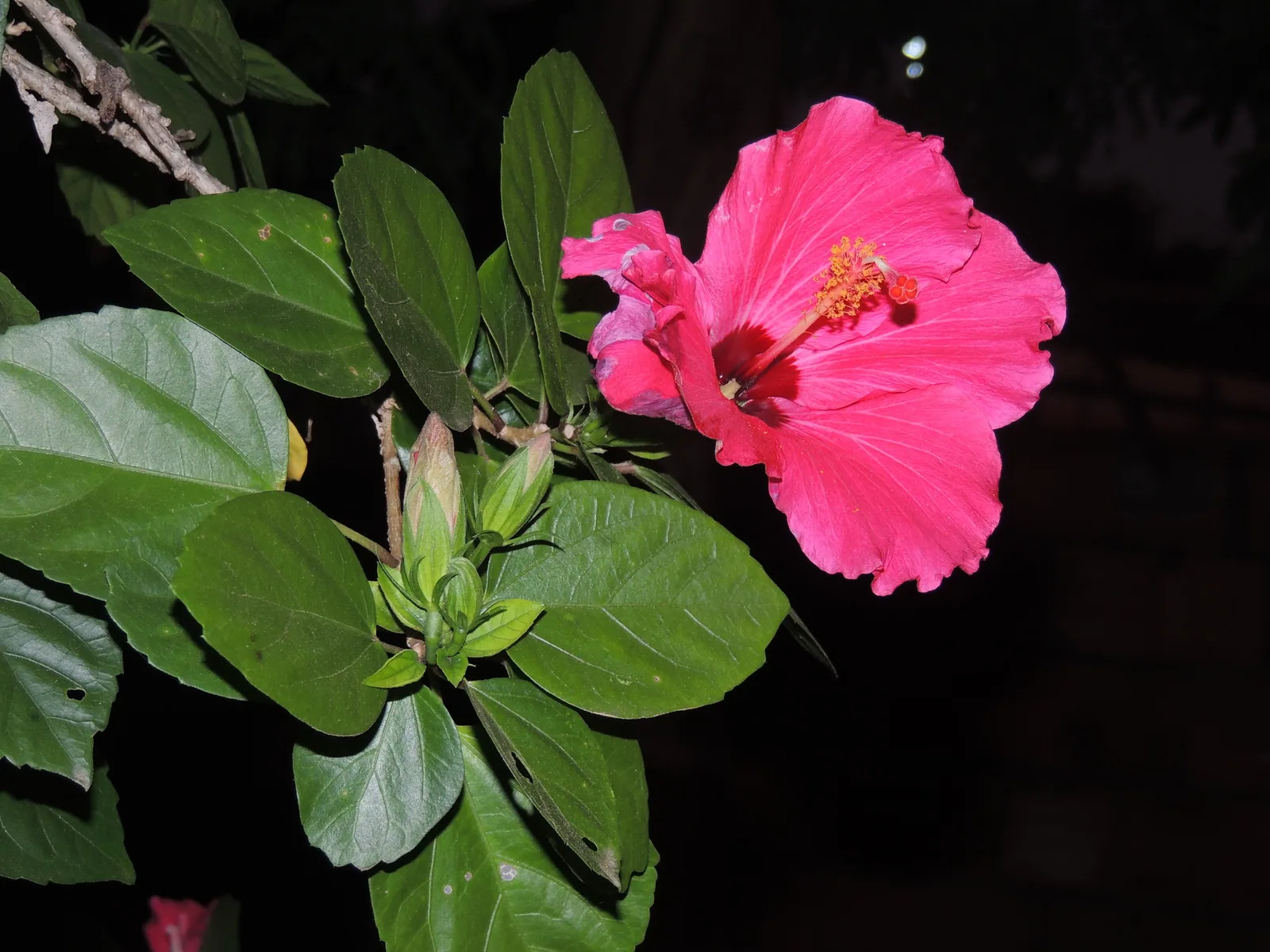
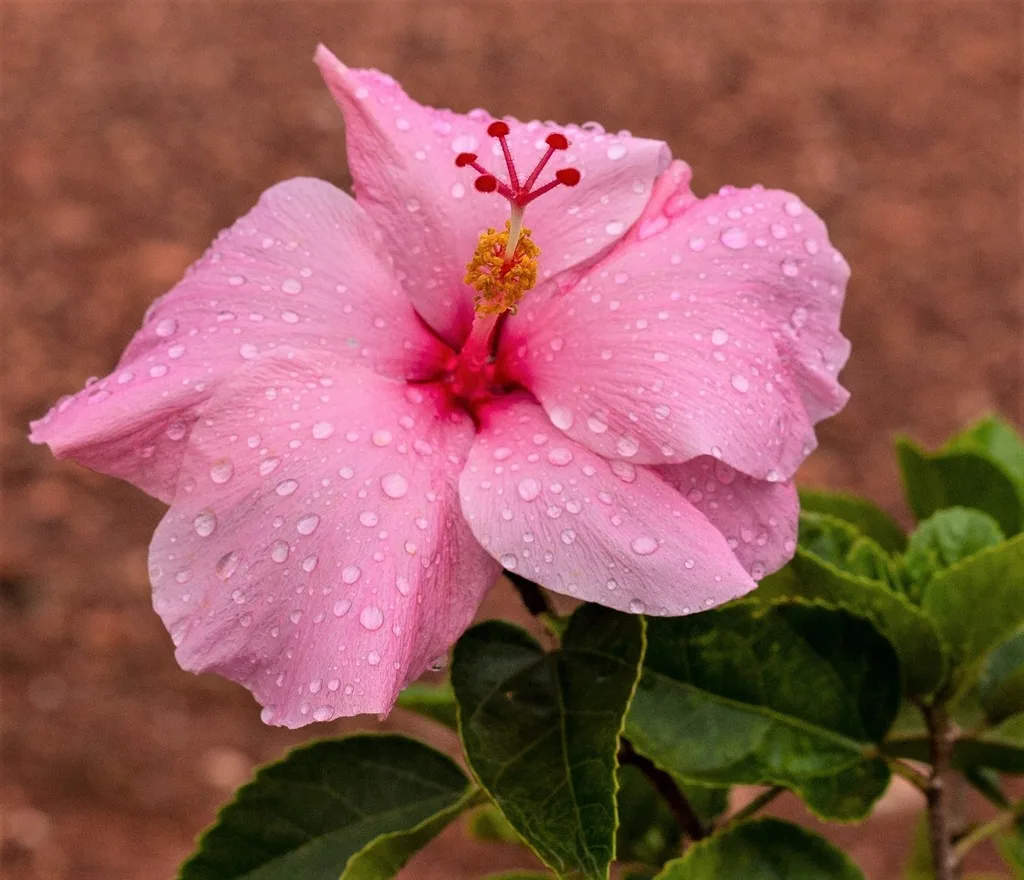
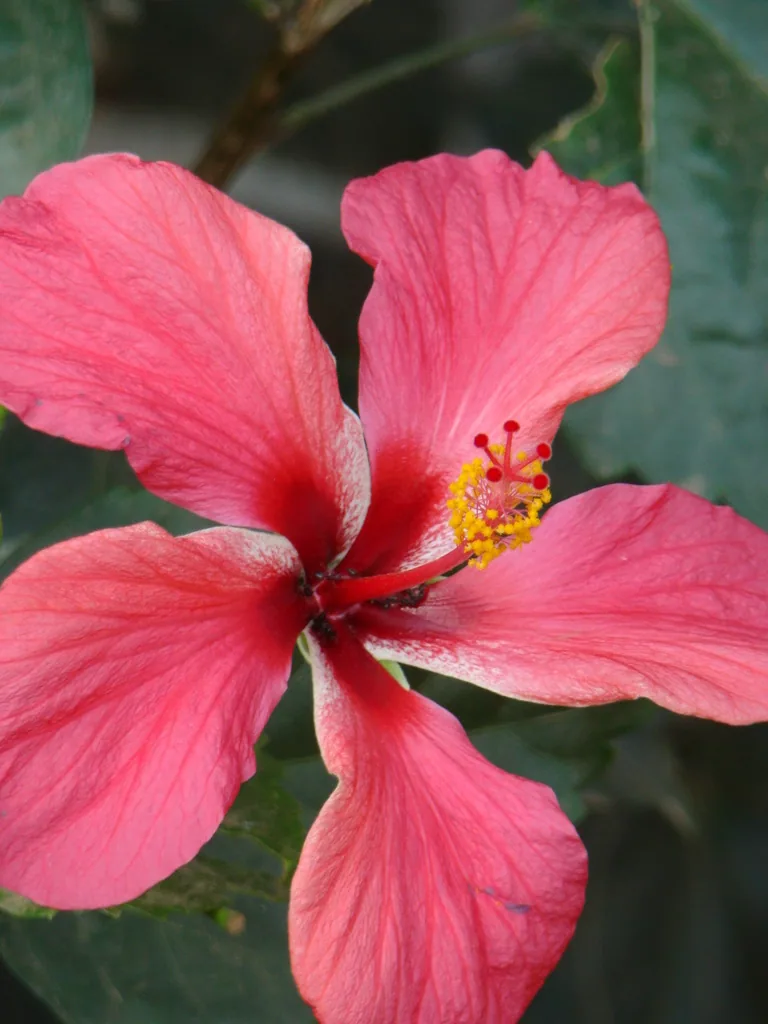

Cómo cultivar y cuidar Rosa de China
Hibiscus × rosa-sinensis
Escrito por Emilio Marruso · última revisión
De un vistazo
El hibisco es una planta perenne de flores comestibles que crece feliz en maceta e incluso en interior. Dale sol pleno o semisombra y una tierra siempre húmeda pero nunca encharcada, y puede alcanzar de 1,2 a 3 m de alto. Además, es fácil sacar plantas nuevas: los esquejes de tallo echan raíces en solo 3–5 semanas.
- Sol
Sol pleno o semisombra
Qué dicen las fuentes (2)
Luz: Pleno sol a semisombra
Plant in a location with full sun to partial shade
— Hibiscus rosa-sinensis (Chinese Hibiscus, HIbiscus) | North Carolina Extension Gardener Plant Toolbox [1] Light: Full sun (6 or more hours of direct sunlight a day) Partial Shade (Direct sunlight only part of the day, 2-6 hours)
— Hibiscus rosa-sinensis (Chinese Hibiscus, HIbiscus) | North Carolina Extension Gardener Plant Toolbox [1] - Riego
Tierra húmeda pero no encharcada; riega hasta que salga por abajo, y algo menos en invierno
Qué dicen las fuentes (6)
Riego: Mantén el suelo relativamente húmedo, no saturado
Keep the soil relatively moist, not saturated.
— Hibiscus | UMN Extension [2] The roots should be kept moist.
— Hibiscus rosa-sinensis (Chinese Hibiscus, HIbiscus) | North Carolina Extension Gardener Plant Toolbox [1] Notas sobre el riego: Riega desde la parte superior del suelo hacia abajo para que el agua salga por los agujeros del fondo; en invierno deja que el suelo se seque un poco más entre riegos
Water from the top of the soil down so that water runs out the bottom holes.
— Hibiscus | UMN Extension [2] During the winter months, allow the soil to dry out a little more between watering.
— Hibiscus | UMN Extension [2] Sequía: Necesita suelo húmedo: las raíces deben mantenerse húmedas y el suelo nunca debe secarse hasta el punto de marchitamiento.
Plant in a location with full sun to partial shade and in rich, moist soil with good drainage. The roots should be kept moist.
— Hibiscus rosa-sinensis (Chinese Hibiscus, HIbiscus) | North Carolina Extension Gardener Plant Toolbox [1] Keep the soil relatively moist, not saturated. - Never allow the soil to dry out to the point of wilting.
— Hibiscus | UMN Extension [2] - Frío
Aguanta inviernos de hasta −6,7 °C (20 °F)
Rústica en inviernos normales · USDA 9a · RHS H4 · Z9
Qué dicen las fuentes (2)
Rusticidad, zona más fría: 9a [mínima invernal de −6,7 a −3,9 °C (de 20 a 25 °F)]
USDA Plant Hardiness Zone: 9a, 9b, 10a, 10b, 11a, 11b
— Hibiscus rosa-sinensis (Chinese Hibiscus, HIbiscus) | North Carolina Extension Gardener Plant Toolbox [1] Rusticidad, zona más cálida: 11b [mínima invernal de 7,2 a 10 °C (de 45 a 50 °F)]
USDA Plant Hardiness Zone: 9a, 9b, 10a, 10b, 11a, 11b
— Hibiscus rosa-sinensis (Chinese Hibiscus, HIbiscus) | North Carolina Extension Gardener Plant Toolbox [1] - Abonado
Abono equilibrado a mitad de dosis; las hojas amarillas pueden indicar que necesita abono
Qué dicen las fuentes (3)
Abonos minerales: Fertilizante equilibrado como 20-20-20 o 10-10-10, a la mitad de la concentración indicada en la etiqueta
Hibiscus are heavy feeders and require a balanced fertilizer such as 20-20-20 or 10-10-10.
— Hibiscus | UMN Extension [2] Use at half the label recommended strength every 2-3 weeks when placed outside for the summer.
— Hibiscus | UMN Extension [2] Signos de carencia: Las hojas amarillentas pueden indicar la necesidad de fertilizante
Some yellowing is normal in spring or fall when growing conditions are in transition. - Yellowing may signal need for fertilizer.
— Hibiscus | UMN Extension [2] - Cosecha
Las flores son comestibles
- Plagas
Pulgones, araña roja y cochinillas
Qué dicen las fuentes (2)
Plagas: áfidos, arañas rojas, cochinillas
The most common insects are aphids and spider mites
— Hibiscus | UMN Extension [2] Insects, Diseases, and Other Plant Problems: No significant problems, but watch for scale insects.
— Hibiscus rosa-sinensis (Chinese Hibiscus, HIbiscus) | North Carolina Extension Gardener Plant Toolbox [1] - Atención
Cambios bruscos de riego o temperatura y corrientes amarillean las hojas; el frío o el calor tiran los capullos
- Tamaño
De 1,2 a 3 m de alto y de 1,5 a 2,4 m de ancho
Qué dicen las fuentes (2)
Altura adulta: 122-305 cm (4-10 pies)
It grows 4 to 10 feet high and 5 to 8 feet wide, so consider its space requirements when determining its planting location.
— Hibiscus rosa-sinensis (Chinese Hibiscus, HIbiscus) | North Carolina Extension Gardener Plant Toolbox [1] Anchura adulta: 152-244 cm (5-8 pies)
It grows 4 to 10 feet high and 5 to 8 feet wide, so consider its space requirements when determining its planting location.
— Hibiscus rosa-sinensis (Chinese Hibiscus, HIbiscus) | North Carolina Extension Gardener Plant Toolbox [1] - Multiplicación
Esquejes de tallo de 8–13 cm en sustrato ligero y algo húmedo; enraízan en 3–5 semanas
Qué dicen las fuentes (6)
Propagación: Esquejes de tallo
Propagation is by stem cutting.
— Hibiscus rosa-sinensis (Chinese Hibiscus, HIbiscus) | North Carolina Extension Gardener Plant Toolbox [1] The easiest method of propagating these plants is from vegetative cuttings.
— Hibiscus | UMN Extension [2] Esquejes: Esquejes de tallo de 7.6-12.7 cm [3–5 in] de largo de los brotes más fuertes, con los extremos cortados sumergidos en hormona de enraizamiento, en una maceta pequeña con mezcla para macetas ligera mantenida ligeramente húmeda en un lugar bien iluminado; las raíces se forman en 3-5 semanas.
Take 3"-5" cuttings from the strongest shoots available.
— Hibiscus | UMN Extension [2] Dip the cut ends in a rooting hormone compound, tap off the excess and stick in a small pot filled with a light potting mixture.
— Hibiscus | UMN Extension [2] Keep slightly moist and place in a well lighted area.
— Hibiscus | UMN Extension [2] After 3-5 weeks, they should develop a good root system and be ready for transplanting.
— Hibiscus | UMN Extension [2] - Maceta
Crece también en maceta y en interior
Qué dicen las fuentes (2)
En maceta: Sí
It can also be grown in a container and as a houseplant or conservatory plant.
— Hibiscus rosa-sinensis (Chinese Hibiscus, HIbiscus) | North Carolina Extension Gardener Plant Toolbox [1] En interior: Sí
Hibiscus make great house plants
— Hibiscus | UMN Extension [2]
Resumen
El hibisco chino es un arbusto perenne tropical con grandes flores en forma de embudo que necesitan protección contra las heladas. [1] Se puede cultivar al aire libre o en contenedores y en interiores con luz brillante. [1]
Citado en inglés, como en la fuente.
Cuidados
Riego
Riego
Mantén el suelo relativamente húmedo, no saturado
Notas sobre el riego
Riega desde la parte superior del suelo hacia abajo para que el agua salga por los agujeros del fondo; en invierno deja que el suelo se seque un poco más entre riegos
Luz
Pleno sol a semisombra
Qué dicen las fuentes (2)
Plant in a location with full sun to partial shadeLight:
Full sun (6 or more hours of direct sunlight a day)
Partial Shade (Direct sunlight only part of the day, 2-6 hours)Clima y frío
Rusticidad, zona más fría
9a [mínima invernal de −6,7 a −3,9 °C (de 20 a 25 °F)]
Qué dicen las fuentes (1)
USDA Plant Hardiness Zone:
9a, 9b, 10a, 10b, 11a, 11bRusticidad, zona más cálida
11b [mínima invernal de 7,2 a 10 °C (de 45 a 50 °F)]
Qué dicen las fuentes (1)
USDA Plant Hardiness Zone:
9a, 9b, 10a, 10b, 11a, 11bDónde cultivarla
En interior
Sí
Qué dicen las fuentes (1)
Hibiscus make great house plantsEn maceta
Sí
Qué dicen las fuentes (1)
It can also be grown in a container and as a houseplant or conservatory plant.Propagación
Cultivo
La planta
Ciclo de vida
perenne
Qué dicen las fuentes (1)
Chinese hibiscus is a woody perennial shrub of the mallow family (Malvaceae).Familia
Malvaceae
Qué dicen las fuentes (1)
Chinese hibiscus is a woody perennial shrub of the mallow family (Malvaceae).Altura adulta
122-305 cm (4-10 pies)
Qué dicen las fuentes (1)
It grows 4 to 10 feet high and 5 to 8 feet wide, so consider its space requirements when determining its planting location.Anchura adulta
152-244 cm (5-8 pies)
Qué dicen las fuentes (1)
It grows 4 to 10 feet high and 5 to 8 feet wide, so consider its space requirements when determining its planting location.Plagas y enfermedades
Plagas
áfidos, arañas rojas, cochinillas
Qué dicen las fuentes (2)
The most common insects are aphids and spider mitesInsects, Diseases, and Other Plant Problems: No significant problems, but watch for scale insects.Abonado
Cuándo
Las fuentes dan valores distintos según la región, la zona o las condiciones de cultivo.
Lo que dice cada fuente
al aire libre: Verano, mientras la planta esté al aire libre
en interiores: Primavera y verano, con menos frecuencia en invierno
Qué dicen las fuentes (2)
al aire libre: Use at half the label recommended strength every 2-3 weeks when placed outside for the summer.en interiores: Indoors, fertilize less often, using ½-strength formulation, every month or so in spring and summer, less frequently in winter.Frecuencia
Las fuentes dan valores distintos según la región, la zona o las condiciones de cultivo.
Lo que dice cada fuente
al aire libre: Cada 2 a 3 semanas en verano
en interiores: Una vez al mes en primavera y verano, con menos frecuencia en invierno
Qué dicen las fuentes (2)
al aire libre: Use at half the label recommended strength every 2-3 weeks when placed outside for the summer.en interiores: Indoors, fertilize less often, using ½-strength formulation, every month or so in spring and summer, less frequently in winter.Abonos minerales
Fertilizante equilibrado como 20-20-20 o 10-10-10, a la mitad de la concentración indicada en la etiqueta
Signos de carencia
Las hojas amarillentas pueden indicar la necesidad de fertilizante
Qué dicen las fuentes (1)
Some yellowing is normal in spring or fall when growing conditions are in transition. - Yellowing may signal need for fertilizer.Propagación
Esquejes
Esquejes de tallo de 7.6-12.7 cm [3–5 in] de largo de los brotes más fuertes, con los extremos cortados sumergidos en hormona de enraizamiento, en una maceta pequeña con mezcla para macetas ligera mantenida ligeramente húmeda en un lugar bien iluminado; las raíces se forman en 3-5 semanas.
Qué dicen las fuentes (4)
Take 3"-5" cuttings from the strongest shoots available.Dip the cut ends in a rooting hormone compound, tap off the excess and stick in a small pot filled with a light potting mixture.Keep slightly moist and place in a well lighted area.After 3-5 weeks, they should develop a good root system and be ready for transplanting.Calor y sequía
Sequía
Necesita suelo húmedo: las raíces deben mantenerse húmedas y el suelo nunca debe secarse hasta el punto de marchitamiento.
Qué dicen las fuentes (2)
Plant in a location with full sun to partial shade and in rich, moist soil with good drainage. The roots should be kept moist.Keep the soil relatively moist, not saturated. - Never allow the soil to dry out to the point of wilting.Problemas
Hojas amarillas
Síntoma: Hojas amarillentas
Qué hacer: Causado por cambios bruscos en la humedad del suelo, la temperatura del aire o las corrientes de aire; evita el riego excesivo.
Qué dicen las fuentes (1)
Caused by abrupt changes in soil moisture, air temperature or drafts.
— Hibiscus | UMN Extension [2] Caída de brotes
Síntoma: Caída de los botones florales
Qué hacer: Causado por que la planta está demasiado fría o demasiado caliente; evita las corrientes de aire, el riego insuficiente o excesivo y la poca luz.
Qué dicen las fuentes (1)
Caused by the plant being too cold or too hot.
— Hibiscus | UMN Extension [2]
Remedios
Cada remedio indica qué dicen las fuentes oficiales; los remedios tradicionales sin fuente oficial aparecen marcados. Los perjudiciales están para que sepas evitarlos.
Cuidar la planta
pulgones y arañitas rojas
jabón insecticida Fuente oficial, sin prueba independiente
Always follow the pesticide label directions attached to the pesticide container you are using.
— Hibiscus | UMN Extension [2] Cómo: Usa jabón insecticida si es necesario.
Use insecticidal soap or insecticides labeled for use on hibiscus if necessary.
— Hibiscus | UMN Extension [2]
Calendario
Poda
Las fuentes dan valores distintos según la región, la zona o las condiciones de cultivo.
Lo que dice cada fuente
Según NC State Extension: Principios de primavera
Según UMN Extension (houseplant): Finales del invierno
Qué dicen las fuentes (2)
Según NC State Extension: Prune back by about one-half the height in early springSegún UMN Extension (houseplant): Prune in late winter to encourage a bushier plant.Meses tal como los dan las fuentes, en su mayoría de Estados Unidos (hemisferio norte). En el hemisferio sur se desplazan unos seis meses.
Comestibilidad
Según la fuente, citada textualmente. No comas una planta basándote solo en esta página: los errores de identificación pueden ser peligrosos.
Edibility: Edible flowers.
[1]
Valores orientativos
Valores de una fuente secundaria, no comprobados palabra por palabra como el resto de esta página. Úselos como punto de partida.
- Horas de sol
- 6-8 horasValor orientativo, adáptalo a tu clima · Fuente secundaria
- Suelo
- Ácido, Bien drenadoValor orientativo, adáptalo a tu clima · Fuente secundaria
- pH del suelo
- 6-7Valor orientativo, adáptalo a tu clima · Fuente secundaria
- Nivel de cuidado
- MedioValor orientativo, adáptalo a tu clima · Fuente secundaria
- Crecimiento
- ModeradoValor orientativo, adáptalo a tu clima · Fuente secundaria
Plantas similares
- Cranberry Hibiscus Hibiscus acetosella
- Flower of an hour Hibiscus trionum
- Hibisco militar Hibiscus laevis
- Hamabo Hibiscus Hibiscus hamabo
- Tulipán del Monte Hibiscus martianus
- Altea Hibiscus syriacus
- Scarlet Rose Mallow Hibiscus coccineus
- Sea hibiscus Hibiscus tiliaceus
Fuentes
Cada valor anterior se cita de estos documentos. Los enlaces llevan al editor original.
- Hibiscus rosa-sinensis (Chinese Hibiscus, HIbiscus) | North Carolina Extension Gardener Plant Toolbox · plants.ces.ncsu.edu, consultado
- Hibiscus | UMN Extension · extension.umn.edu, consultado
Escrito por Emilio Marruso · última revisión