
Cómo cultivar y cuidar Bristly hawkbit
Leontodon hispidus
Escrito por Emilio Marruso · última revisión
De un vistazo
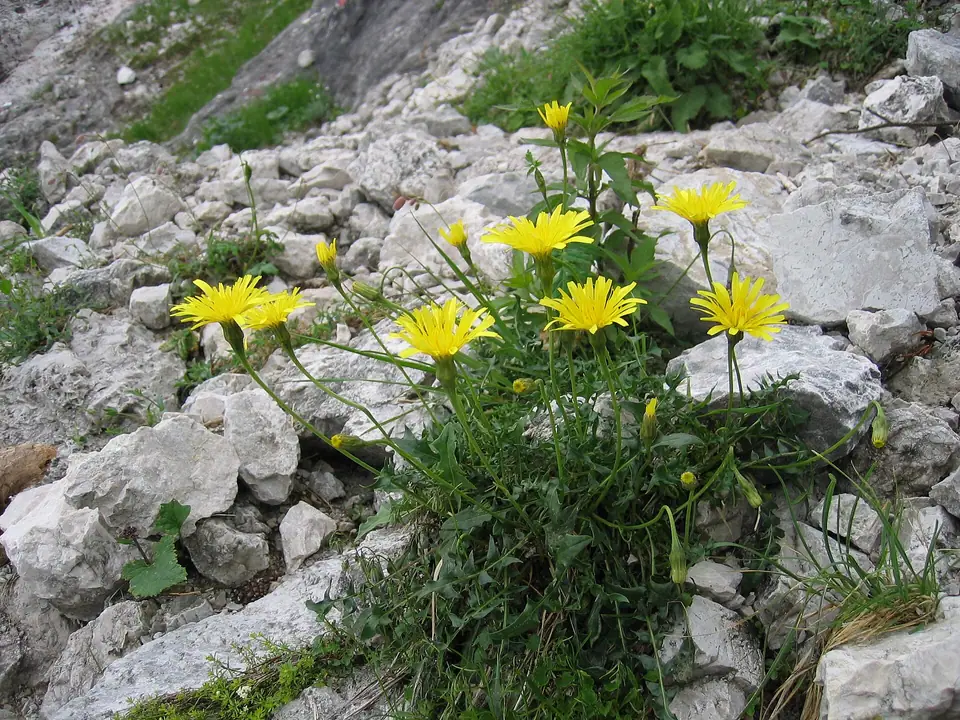
Esta perenne tan sencilla agradece un rincón soleado: sus raíces profundas apenas notan la sequía y no pasa de 15–40 cm de alto. Siembra las semillas directamente en la tierra antes de principios de julio. Su mejor regalo llega cuando casi nada crece: hojas tiernas que puedes recoger a finales del invierno y comer crudas.
- Sol
Sol pleno
Qué dicen las fuentes (1)
Luz: Posición soleada
it prefers a sunny position in a well-drained soil
— Leontodon hispidus - Useful Temperate Plants [1] - Riego
Aguanta bien la sequía gracias a sus raíces profundas; evita la tierra encharcada
Qué dicen las fuentes (2)
Notas sobre el riego: Las raíces profundas la hacen mínimamente sensible a la sequía; se deben evitar suelos húmedos o encharcados.
Because of its deep roots it is minimally sensitive to drought.
— Site-specific grasses and herbs [4] Soils that are wet, waterlogged, or tend to a high weed infestation should be avoided
— Site-specific grasses and herbs [4] - Suelo
Suelo que no se encharque, pH 5,5–7,5
- Cosecha
Recoge las hojas tiernas a finales del invierno y cómelas crudas
Qué dicen las fuentes (1)
Cosecha: Finales del invierno (hojas jóvenes).
Neither the taste nor the texture are by any means wonderful, but the leaves are acceptable raw, particularly since they can be available in the late winter.
— Leontodon hispidus - Useful Temperate Plants [1] - Tamaño
De 15 a 40 cm de alto
Qué dicen las fuentes (1)
Altura adulta: 15-40 cm [6–16 in]
Perennial, rhizomatous, glabrate to sparsely hispid, 15–40 cm tall
— Leontodon hispidus L. | Plants of the World Online | Kew Science [3] - Multiplicación
Se multiplica por semilla sembrada directamente al aire libre
Qué dicen las fuentes (1)
Propagación: Semilla (siembra a cielo abierto).
Open sowing is unproblematic, if sowing is carried out by the beginning of July at the latest (at mild locations by the middle of July).
— Site-specific grasses and herbs [4] - Siembra
Siembra como muy tarde a principios de julio; en climas suaves, hasta mediados de julio
Qué dicen las fuentes (1)
Siembra: A más tardar a principios de julio (en lugares templados: a mediados de julio).
Open sowing is unproblematic, if sowing is carried out by the beginning of July at the latest (at mild locations by the middle of July).
— Site-specific grasses and herbs [4]
Resumen
La lechuga de halcón áspera es una perenne que prefiere una posición soleada en suelo bien drenado. [1] Sus hojas jóvenes son aceptables crudas y pueden estar disponibles a finales del invierno. [1] Una guía de restauración indica un rango de pH del suelo de 5.5 a 7.5 para la especie. [4]
Citado en inglés, como en la fuente.
Esta ficha está incompleta: las fuentes consultadas aún no cubren todos los campos.
Aún no cubierto por nuestras fuentes: Riego, Distancia de plantación
Cuidados
Riego
Riego
No figura en las fuentes consultadas.
Notas sobre el riego
Las raíces profundas la hacen mínimamente sensible a la sequía; se deben evitar suelos húmedos o encharcados.
Luz
Posición soleada
Qué dicen las fuentes (1)
it prefers a sunny position in a well-drained soilSuelo
pH del suelo, mínimo
5.5
Qué dicen las fuentes (1)
The pH should range between 5.5 and 7.5.pH del suelo, máximo
7.5
Qué dicen las fuentes (1)
The pH should range between 5.5 and 7.5.Dónde cultivarla
No figura en las fuentes consultadas.
Propagación
Semilla (siembra a cielo abierto).
Qué dicen las fuentes (1)
Open sowing is unproblematic, if sowing is carried out by the
beginning of July at the latest (at mild locations by the middle of July).Cultivo
La planta
Ciclo de vida
perenne
Qué dicen las fuentes (1)
The native range of this species is Europe to Caucasus. It is a perennial and grows primarily in the temperate biome.Altura adulta
15-40 cm [6–16 in]
Qué dicen las fuentes (1)
Perennial, rhizomatous, glabrate to sparsely hispid, 15–40 cm tallRemedios
Las fuentes consultadas no dan remedios para esta planta.
Calendario
Siembra
A más tardar a principios de julio (en lugares templados: a mediados de julio).
Qué dicen las fuentes (1)
Open sowing is unproblematic, if sowing is carried out by the
beginning of July at the latest (at mild locations by the middle of July).Cosecha
Finales del invierno (hojas jóvenes).
Qué dicen las fuentes (1)
Neither the taste nor the texture are by any means wonderful, but the leaves are acceptable raw, particularly since they can be available in the late winter.Meses tal como los dan las fuentes, en su mayoría de Estados Unidos (hemisferio norte). En el hemisferio sur se desplazan unos seis meses.
Comestibilidad
Según la fuente, citada textualmente. No comas una planta basándote solo en esta página: los errores de identificación pueden ser peligrosos.
Neither the taste nor the texture are by any means wonderful, but the leaves are acceptable raw, particularly since they can be available in the late winter.
[1]
Plantas similares
- Bananero de Etiopía Ensete ventricosum
- Agretti Soda inermis
- Ají Capsicum chinense
- Apio caballar Smyrnium olusatrum
- Allium senescens Allium senescens
- Allium triquetrum Allium triquetrum
- Alpine dock Rumex alpinus
- Alpine mountain-sorrel Oxyria digyna
Fuentes
Cada valor anterior se cita de estos documentos. Los enlaces llevan al editor original.
- Leontodon hispidus - Useful Temperate Plants · temperate.theferns.info, consultado
- Search for species - Rauher Löwenzahn (Leontodon hispidus L.) · i-flora.com, consultado
- Leontodon hispidus L. | Plants of the World Online | Kew Science · powo.science.kew.org, consultado
- Site-specific grasses and herbs · fao.org, consultado
- British Wild Plant: Leontodon hispidus Rough Hawkbit · ukwildflowers.com, consultado
Escrito por Emilio Marruso · última revisión