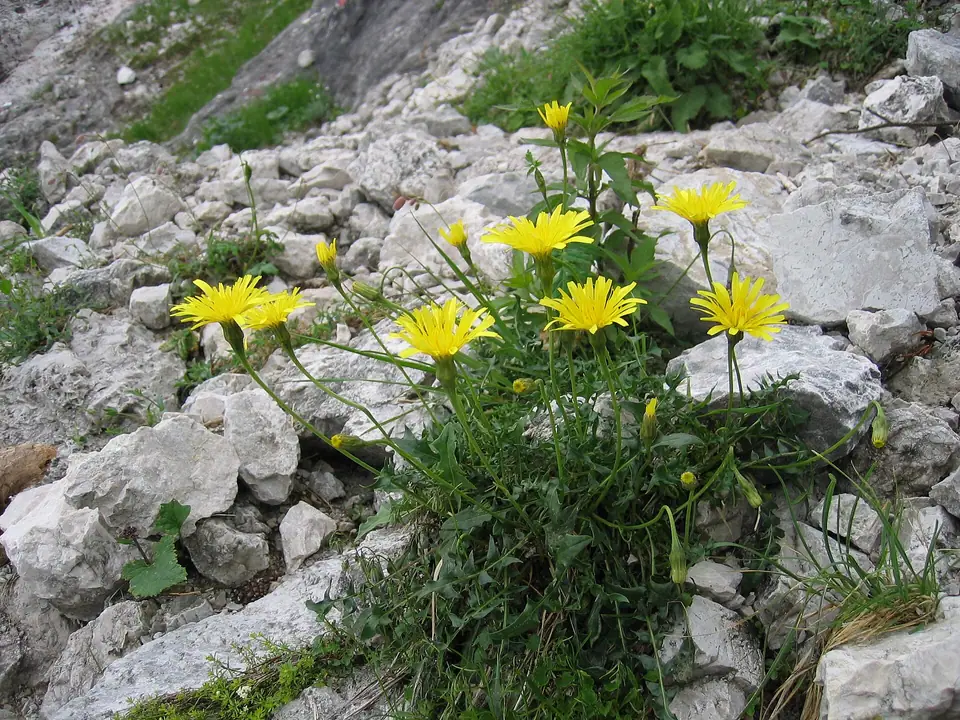
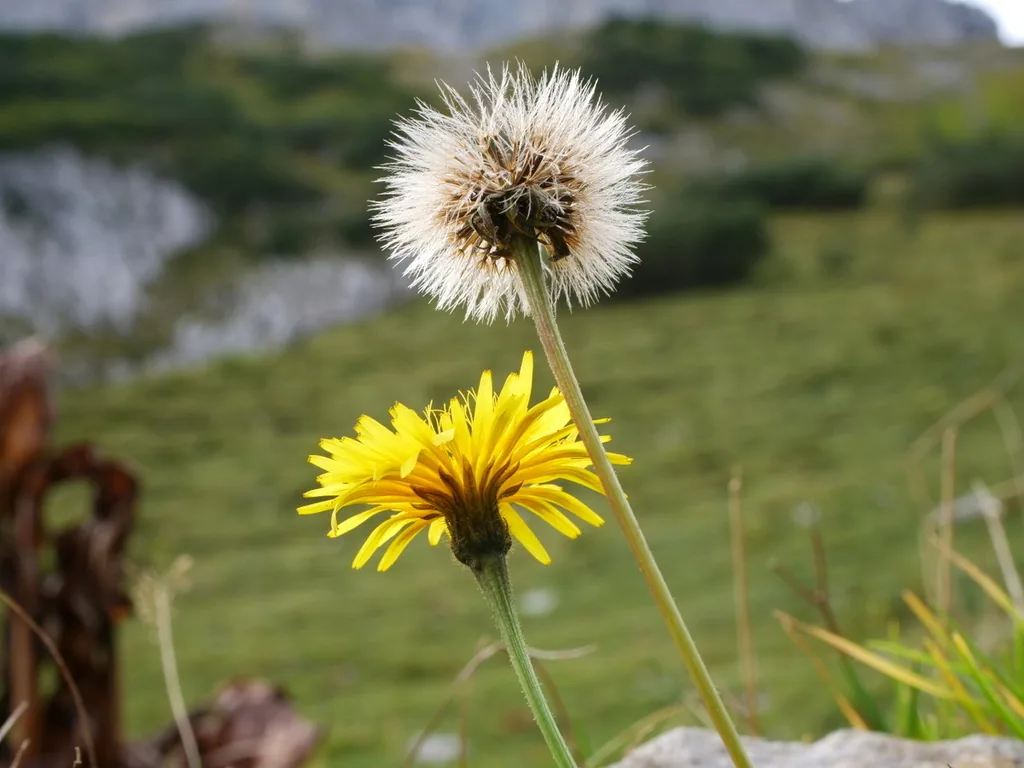

How to Grow and Care for Bristly hawkbit
Leontodon hispidus
Written by Emilio Marruso · last checked
At a glance
Rough hawkbit is an easygoing perennial for a sunny spot: its deep roots barely notice drought, and it stays a modest 6–16 inches tall. Sow the seeds straight into the ground by early July. Its real treat comes when little else grows: young leaves you can pick in late winter and eat raw.
- Sun
Full sun
What the sources say (1)
Light: Sunny position
it prefers a sunny position in a well-drained soil
— Leontodon hispidus - Useful Temperate Plants [1] - Water
Handles drought well thanks to deep roots; avoid wet, soggy soil
What the sources say (2)
Watering notes: Deep roots make it minimally sensitive to drought; wet or waterlogged soils should be avoided
Because of its deep roots it is minimally sensitive to drought.
— Site-specific grasses and herbs [4] Soils that are wet, waterlogged, or tend to a high weed infestation should be avoided
— Site-specific grasses and herbs [4] - Soil
Well-drained soil, pH 5.5–7.5
- Harvest
Pick the young leaves in late winter and eat them raw
What the sources say (1)
Harvest: Late winter (young leaves)
Neither the taste nor the texture are by any means wonderful, but the leaves are acceptable raw, particularly since they can be available in the late winter.
— Leontodon hispidus - Useful Temperate Plants [1] - Size
6–16 inches tall
What the sources say (1)
Mature height: 15-40 cm [6–16 in]
Perennial, rhizomatous, glabrate to sparsely hispid, 15–40 cm tall
— Leontodon hispidus L. | Plants of the World Online | Kew Science [3] - Propagation
Grows from seed sown directly outdoors
What the sources say (1)
Propagation: Seed (open sowing)
Open sowing is unproblematic, if sowing is carried out by the beginning of July at the latest (at mild locations by the middle of July).
— Site-specific grasses and herbs [4] - Sowing
Sow by early July at the latest; in mild climates, by mid-July
What the sources say (1)
Sowing: By the beginning of July at the latest (mild locations: by the middle of July)
Open sowing is unproblematic, if sowing is carried out by the beginning of July at the latest (at mild locations by the middle of July).
— Site-specific grasses and herbs [4]
Overview
Rough hawkbit is a perennial that prefers a sunny position in well-drained soil. [1] Its young leaves are acceptable raw and can be available in late winter. [1] A restoration guide gives a soil pH range of 5.5 to 7.5 for the species. [4]
This record is incomplete: the sources we read do not cover every field yet.
Not yet covered by our sources: Watering, Spacing
Bristly hawkbit care
How to water Bristly hawkbit
Watering
Not stated in the sources we read.
Watering notes
Deep roots make it minimally sensitive to drought; wet or waterlogged soils should be avoided
How much light Bristly hawkbit needs
Sunny position
What the sources say (1)
it prefers a sunny position in a well-drained soilBest soil for Bristly hawkbit
Soil pH, minimum
5.5
What the sources say (1)
The pH should range between 5.5 and 7.5.Soil pH, maximum
7.5
What the sources say (1)
The pH should range between 5.5 and 7.5.Where to grow Bristly hawkbit
Not stated in the sources we read.
How to propagate Bristly hawkbit
Seed (open sowing)
What the sources say (1)
Open sowing is unproblematic, if sowing is carried out by the
beginning of July at the latest (at mild locations by the middle of July).How to grow Bristly hawkbit
The plant
Life cycle
perennial
What the sources say (1)
The native range of this species is Europe to Caucasus. It is a perennial and grows primarily in the temperate biome.Mature height
15-40 cm [6–16 in]
What the sources say (1)
Perennial, rhizomatous, glabrate to sparsely hispid, 15–40 cm tallRemedies
The sources we checked give no remedies for this plant.
Calendar
Sowing
By the beginning of July at the latest (mild locations: by the middle of July)
What the sources say (1)
Open sowing is unproblematic, if sowing is carried out by the
beginning of July at the latest (at mild locations by the middle of July).Harvest
Late winter (young leaves)
What the sources say (1)
Neither the taste nor the texture are by any means wonderful, but the leaves are acceptable raw, particularly since they can be available in the late winter.Months as given by the sources, which are mostly from the United States (northern hemisphere). In the southern hemisphere they shift by about six months.
Edibility
Reported by the source, quoted verbatim. Do not eat a plant on the basis of this page alone: identification mistakes can be dangerous.
Neither the taste nor the texture are by any means wonderful, but the leaves are acceptable raw, particularly since they can be available in the late winter.
[1]
Similar plants
- Abyssinian banana Ensete ventricosum
- Agretti Soda inermis
- Aji Capsicum chinense
- Alexanders Smyrnium olusatrum
- Allium senescens Allium senescens
- Allium triquetrum Allium triquetrum
- Alpine dock Rumex alpinus
- Alpine mountain-sorrel Oxyria digyna
Sources
Every value above is quoted from these documents. Links lead to the original publisher.
- Leontodon hispidus - Useful Temperate Plants · temperate.theferns.info, consulted
- Search for species - Rauher Löwenzahn (Leontodon hispidus L.) · i-flora.com, consulted
- Leontodon hispidus L. | Plants of the World Online | Kew Science · powo.science.kew.org, consulted
- Site-specific grasses and herbs · fao.org, consulted
- British Wild Plant: Leontodon hispidus Rough Hawkbit · ukwildflowers.com, consulted
Written by Emilio Marruso · last checked