
Cómo cultivar y cuidar Goji
Lycium barbarum
Escrito por Emilio Marruso · última revisión
De un vistazo
El goji es un arbusto generoso y poco exigente: una vez asentado, aguanta bien la sequía y apenas necesita abono. Dale sol pleno o semisombra y una tierra que no se encharque, y se llenará de bayas rojas o naranjas ricas en vitaminas, deliciosas frescas, secas o en mermeladas y zumos. Además, crece estupendamente en maceta.
- Sol
Sol pleno o semisombra
Qué dicen las fuentes (2)
- Riego
Riega a menudo mientras es joven; una vez asentado, basta con 2,5 cm de agua a la semana
Qué dicen las fuentes (4)
Riego: Bastante tolerante a la sequía una vez establecida; 1 pulgada [2,5 cm] de agua por semana después del establecimiento
Although fairly drought-tolerant once established, more frequent irrigation is needed to establish new transplants.
— 1 [2] In general, approximately 1 inch of irrigation water per week may be sufficient
— HS1391 [3] Notas sobre el riego: Se necesita riego más frecuente para establecer los trasplantes nuevos; susceptible al encharcamiento, no plantes en zonas bajas con mal drenaje
more frequent irrigation is needed to establish new transplants.
— 1 [2] Goji berry is susceptible to waterlogging and should not be planted in lowlands that do not drain well.
— HS1391 [3] - Suelo
Suelo con buen drenaje: sufre en terrenos bajos y encharcados
Qué dicen las fuentes (2)
Notas sobre el riego: Se necesita riego más frecuente para establecer los trasplantes nuevos; susceptible al encharcamiento, no plantes en zonas bajas con mal drenaje
more frequent irrigation is needed to establish new transplants.
— 1 [2] Goji berry is susceptible to waterlogging and should not be planted in lowlands that do not drain well.
— HS1391 [3] - Distancia
0,9–1,5 m entre plantas, 1,8–2,4 m entre hileras
Qué dicen las fuentes (1)
Distancia de plantación: 91.4-152.4 cm (3-5 pies) en la hilera; 182.9-243.8 cm (6-8 pies) entre hileras
Goji berry in-row plant spacing is 3 to 5 feet apart, with between-row spacing of 6 to 8 feet
— HS1391 [3] - Abonado
Abona poco en primavera; el exceso da muchas hojas y frutos de peor calidad
Qué dicen las fuentes (4)
Cuándo: En primavera
Fertilizers have the greatest impact on goji berry growth when applied in springtime.
— HS1391 [3] Evitar: Exceso de fertilización: las plantas establecidas prosperan con poca o ninguna fertilización.
Too much fertility results in excess vegetation, shading, and reduced fruit quality.
— 1 [2] There is some evidence suggesting that established goji perform very well with little or no fertilization.
— 1 [2] Signos de exceso: Exceso de vegetación, sombra y reducción de la calidad del fruto.
Too much fertility results in excess vegetation, shading, and reduced fruit quality.
— 1 [2] - Poda
Acorta ramas a principios de primavera; quita tallos sobrantes en invierno y aclara la copa en verano
Qué dicen las fuentes (2)
Poda: Principios de primavera (acortar ramas, segundo año); invierno (limpiar tallos no deseados) y verano (controlar la copa), tercer año
trim off spindly stems, remove dead and damaged branches, improve plant shape, and shorten branches in early spring.
— HS1391 [3] In the third year, clean unwanted stems in winter, and control structure and canopy growth in summer.
— HS1391 [3] - Cosecha
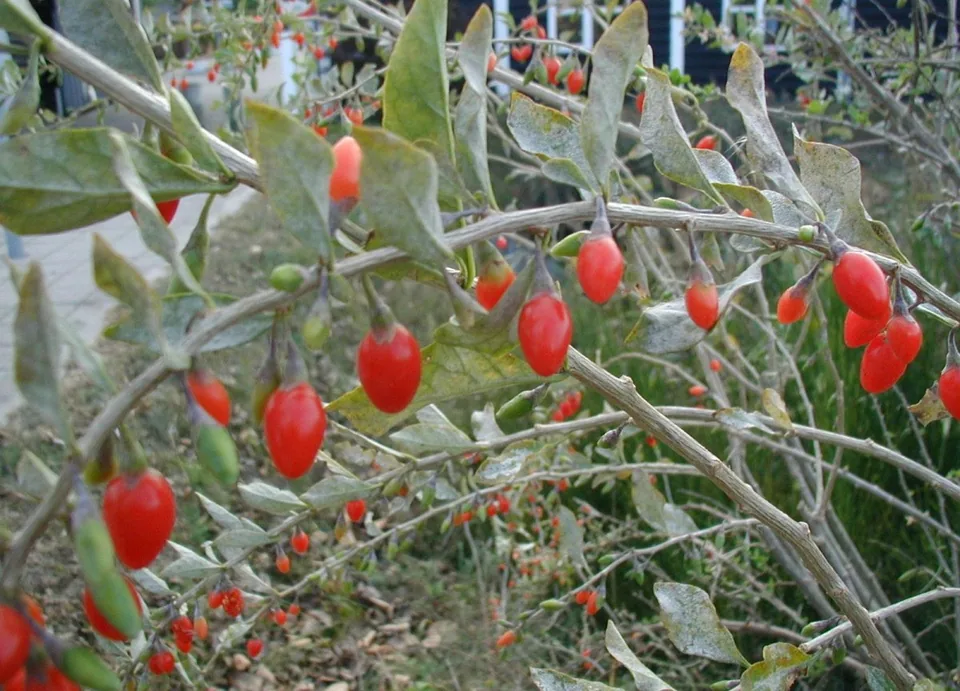
Recoge a mano cuando las bayas estén rojas o naranjas y el rabillo se suelte; cómelas frescas o secas
Qué dicen las fuentes (1)
Cómo cosechar: Cosecha a mano cuando las bayas se ponen rojas o naranjas y el pedúnculo se afloja
Berries can be harvested when they turn red or orange (Figure 5A, B; Figure 6A, B) and the peduncle loosens
— HS1391 [3] - Plagas
Pulgón, ácaros, escarabajos de las hojas y oídio; una buena ventilación previene el oídio
Qué dicen las fuentes (2)
Plagas: pulgones, ácaros del goji, escarabajos de las hojas del goji
Goji berry hosts pests such as aphids, goji berry mites, and goji berry leaf beetles
— HS1391 [3] Enfermedades: mildiu polvoriento, goma exudada, pudrición de la raíz
The main diseases occurring on goji berry include powdery mildew, runny gum disease, and root rot.
— HS1391 [3] - Tamaño
0,9–1,8 m de alto si lo podas, hasta 3,7 m sin podar; 1,2 m de ancho
Qué dicen las fuentes (2)
Altura adulta: 91-183 cm (3-6 pies) cuando se poda; hasta 366 cm (12 pies) si se deja sin cultivar
When pruned, plants are typically 3 to 6 feet tall but if left without cultivation they can reach 12 feet.
— 1 [2] Anchura adulta: 122 cm (4 pies)
Goji berry is a deciduous woody shrub that can naturally reach 12 feet tall with a spread of approximately 4 feet.
— HS1391 [3] - Multiplicación
Lo más fácil es por esquejes; también por semilla o trasplantando chupones
Qué dicen las fuentes (2)
Propagación: Esquejes (el método más común y fácil), semillas; los chupones se pueden quitar y trasplantar
Goji berry propagation can be started from seeds or cuttings, but cuttings are the most common and easiest way to propagate.
— HS1391 [3] Suckers begin to form after 3 to 4 years. These should be removed and can be transplanted.
— 1 [2] - Maceta
Crece también en maceta
Qué dicen las fuentes (1)
En maceta: Sí
goji berry can be grown in containers as an ornamental plant.
— HS1391 [3]
Resumen
La baya de goji crece mejor a pleno sol y tolera condiciones relativamente duras. [3][2] Se propaga principalmente por esquejes y necesita suelo bien drenado, ya que es susceptible al encharcamiento. [3] Las bayas se cosechan cuando se ponen rojas o naranjas. [3]
Citado en inglés, como en la fuente.
Esta ficha está incompleta: las fuentes consultadas aún no cubren todos los campos.
Aún no cubierto por nuestras fuentes: Plantación
Cuidados
Las medidas entre corchetes son nuestra conversión al otro sistema de unidades; el texto citado no cambia.
Riego
Riego
Bastante tolerante a la sequía una vez establecida; 1 pulgada [2,5 cm] de agua por semana después del establecimiento
Notas sobre el riego
Se necesita riego más frecuente para establecer los trasplantes nuevos; susceptible al encharcamiento, no plantes en zonas bajas con mal drenaje
Luz
Clima y frío
Las fuentes dan valores distintos según la región, la zona o las condiciones de cultivo.
Lo que dice cada fuente
Arizona (cultivares): 4-7 [mínima invernal de −34,4 a −12,2 °C (de −30 a 10 °F)]
Según UF/IFAS Extension: 4b-9b [mínima invernal de −31,7 a −1,1 °C (de −25 a 30 °F)]
Según University of Wisconsin: 3-10 [mínima invernal de −40 a 4,4 °C (de −40 a 40 °F)]
Qué dicen las fuentes (3)
Arizona (cultivares): Multiple hardy Goji berry cultivars are available for USDA Plant Hardiness Zones 4 - 7.Según UF/IFAS Extension: This crop can be grown in Plant Hardiness Zones 4b to 9b as defined by the US Department of AgricultureSegún University of Wisconsin: Hardiness zone – 3-10 (some cultivars only 5-9)Dónde cultivarla
En maceta
Sí
Qué dicen las fuentes (1)
goji berry can be grown in containers as an ornamental plant.Distancia de plantación
91.4-152.4 cm (3-5 pies) en la hilera; 182.9-243.8 cm (6-8 pies) entre hileras
Qué dicen las fuentes (1)
Goji berry in-row plant spacing is 3 to 5 feet apart, with between-row spacing of 6 to 8 feetPropagación
Esquejes (el método más común y fácil), semillas; los chupones se pueden quitar y trasplantar
Cultivo
La planta
Familia
Solanáceas
Qué dicen las fuentes (1)
is a native shrub to China belonging to the Solanaceae family.Altura adulta
91-183 cm (3-6 pies) cuando se poda; hasta 366 cm (12 pies) si se deja sin cultivar
Qué dicen las fuentes (1)
When pruned, plants are typically 3 to 6 feet tall but if left without cultivation they can reach 12 feet.Anchura adulta
122 cm (4 pies)
Qué dicen las fuentes (1)
Goji berry is a deciduous woody shrub that can naturally reach 12 feet tall with a spread of approximately 4 feet.Cosecha y conservación
Cómo cosechar
Cosecha a mano cuando las bayas se ponen rojas o naranjas y el pedúnculo se afloja
Qué dicen las fuentes (1)
Berries can be harvested when they turn red or orange (Figure 5A, B; Figure 6A, B) and the peduncle loosensConservación
Las bayas frescas duran aproximadamente una semana a temperatura ambiente o un par de semanas en el refrigerador; las bayas secas duran al menos un año en un lugar oscuro, seco y fresco
Plagas y enfermedades
Plagas
pulgones, ácaros del goji, escarabajos de las hojas del goji
Qué dicen las fuentes (1)
Goji berry hosts pests such as aphids, goji berry mites, and goji berry leaf beetlesEnfermedades
mildiu polvoriento, goma exudada, pudrición de la raíz
Qué dicen las fuentes (1)
The main diseases occurring on goji berry include powdery mildew, runny gum disease, and root rot.Abonado
Cuándo
En primavera
Qué dicen las fuentes (1)
Fertilizers have the greatest impact on goji berry growth when applied in springtime.Abonos naturales
Materiales orgánicos y compost en suelos arenosos y francos, que retienen la humedad y los nutrientes y reducen la necesidad de fertilizantes químicos.
Qué dicen las fuentes (1)
Adding organic materials and compost to sandy and loam soils may help the soil better retain moisture and nutrients and improve the soil environment by reducing the need for the excessive ap-plication of chemical fertilizers.Abonos minerales
Primero fertilizante nitrogenado, luego fosfato y potasio: urea, sulfato de amonio, nitrato de amonio o UAN-32 para el nitrógeno; superfosfato triple o doble para el fosfato; sulfato de potasio o cloruro de potasio para el potasio; aplica las recomendaciones del análisis de suelo para cultivos de Solanáceas.
Qué dicen las fuentes (4)
Especially beneficial is nitrogen fertilizer, followed by phosphate and potassium.Recommended nitrogen fertilizers include urea, ammonium sulfate, ammonium nitrate, and UAN-32 (50% urea and 50% ammonium nitrate).Recommended phosphate fertilizers include triple superphosphate and double superphosphate. Recommended potassium fertilizers include potassium sulfate and potassium chloride.In addition, the Solanaceae fertilizer recommendations based on soil testing for other Solanaceae crops are likely to work well for goji berry.Evitar
Exceso de fertilización: las plantas establecidas prosperan con poca o ninguna fertilización.
Signos de exceso
Exceso de vegetación, sombra y reducción de la calidad del fruto.
Qué dicen las fuentes (1)
Too much fertility results in excess vegetation, shading, and reduced fruit quality.Problemas
Mildiu polvoriento
Síntoma: Se menciona entre las principales enfermedades del baya de goji
Qué hacer: Una buena circulación de aire previene la infección
Pulgones
Síntoma: La baya de goji alberga pulgones entre otras plagas
Qué hacer: Rocía jabón agrícola sobre las hojas.
Remedios
Cada remedio indica qué dicen las fuentes oficiales; los remedios tradicionales sin fuente oficial aparecen marcados. Los perjudiciales están para que sepas evitarlos.
Cuidar la planta
pulgones
spray de jabón agrícola Funciona
Certain plants are sensitive to insecticidal soap sprays and may be injured. When in doubt, test soap-detergent sprays for phytotoxicity problems on a small area a day or two before an extensive area is treated.
— extension.colostate.edu [6] Cómo: Si rocías las hojas con jabón agrícola, también puedes controlar los pulgones de forma eficaz.
Spraying agricultural soap on the leaves is also effective to control aphids
— edis.ifas.ufl.edu [5] Qué dicen las pruebas Spraying agricultural soap on the leaves is also effective to control aphids
— HS1391 [3]
Calendario
Plantación
No figura en las fuentes consultadas.
Cosecha
Cuando las bayas se vuelven rojas o naranjas y el pedúnculo se afloja
Lo que dice cada fuente
China: Agosto - Octubre
California: Las bayas comienzan a madurar a mediados del verano
Qué dicen las fuentes (3)
China: In China, the goji berry harvest period begins in August and ends in October.California: Plants grown in California first bloom in late spring to early summer, and berries begin to ripen in midsummer.Berries can be harvested when they turn red or orange (Figure 5A, B; Figure 6A, B) and the peduncle loosensPoda
Principios de primavera (acortar ramas, segundo año); invierno (limpiar tallos no deseados) y verano (controlar la copa), tercer año
Meses tal como los dan las fuentes, en su mayoría de Estados Unidos (hemisferio norte). En el hemisferio sur se desplazan unos seis meses.
Comestibilidad
Según la fuente, citada textualmente. No comas una planta basándote solo en esta página: los errores de identificación pueden ser peligrosos.
Valores orientativos
Valores de una fuente secundaria, no comprobados palabra por palabra como el resto de esta página. Úselos como punto de partida.
- Ciclo de vida
- PerenneValor orientativo, adáptalo a tu clima · Fuente secundaria
- Horas de sol
- 6-7 horasValor orientativo, adáptalo a tu clima · Fuente secundaria
- Resiste la sequía
- SíValor orientativo, adáptalo a tu clima · Fuente secundaria
- pH del suelo
- 6.5-7.5Valor orientativo, adáptalo a tu clima · Fuente secundaria
- Nivel de cuidado
- MedioValor orientativo, adáptalo a tu clima · Fuente secundaria
- Crecimiento
- BajoValor orientativo, adáptalo a tu clima · Fuente secundaria
Plantas similares
- Cauquí Lycium chinense
- Trompetero Brugmansia suaveolens
- Bufera Withania somnifera
- Alquequenje Alkekengi officinarum
- Brazilian nightshade Solanum seaforthianum
- Brunfelsia Brunfelsia pauciflora
- Pimiento morrón Capsicum annuum
- Clammy Ground Cherry Physalis heterophylla
Fuentes
Cada valor anterior se cita de estos documentos. Los enlaces llevan al editor original.
- Wolfberry - Lycium | North Carolina Extension Gardener Plant Toolbox · plants.ces.ncsu.edu, consultado
- 1 · extension.arizona.edu, consultado
- HS1391 · edis.ifas.ufl.edu, consultado
- Gogi (Wolfberry) – Uncommon Fruit · uncommonfruit.cias.wisc.edu, consultado
- edis.ifas.ufl.edu · edis.ifas.ufl.edu
- extension.colostate.edu · extension.colostate.edu
Escrito por Emilio Marruso · última revisión