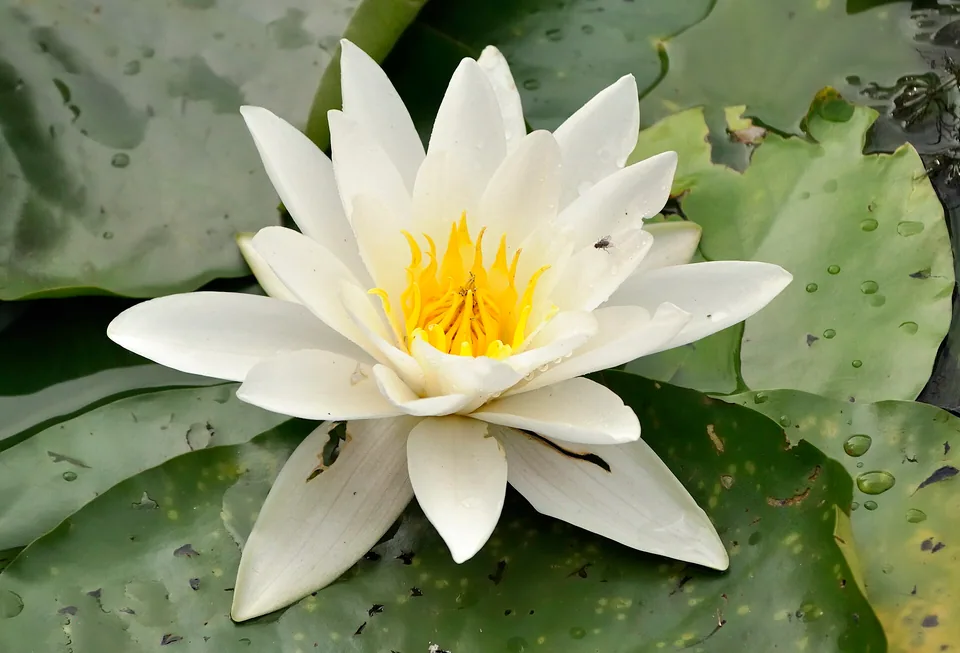
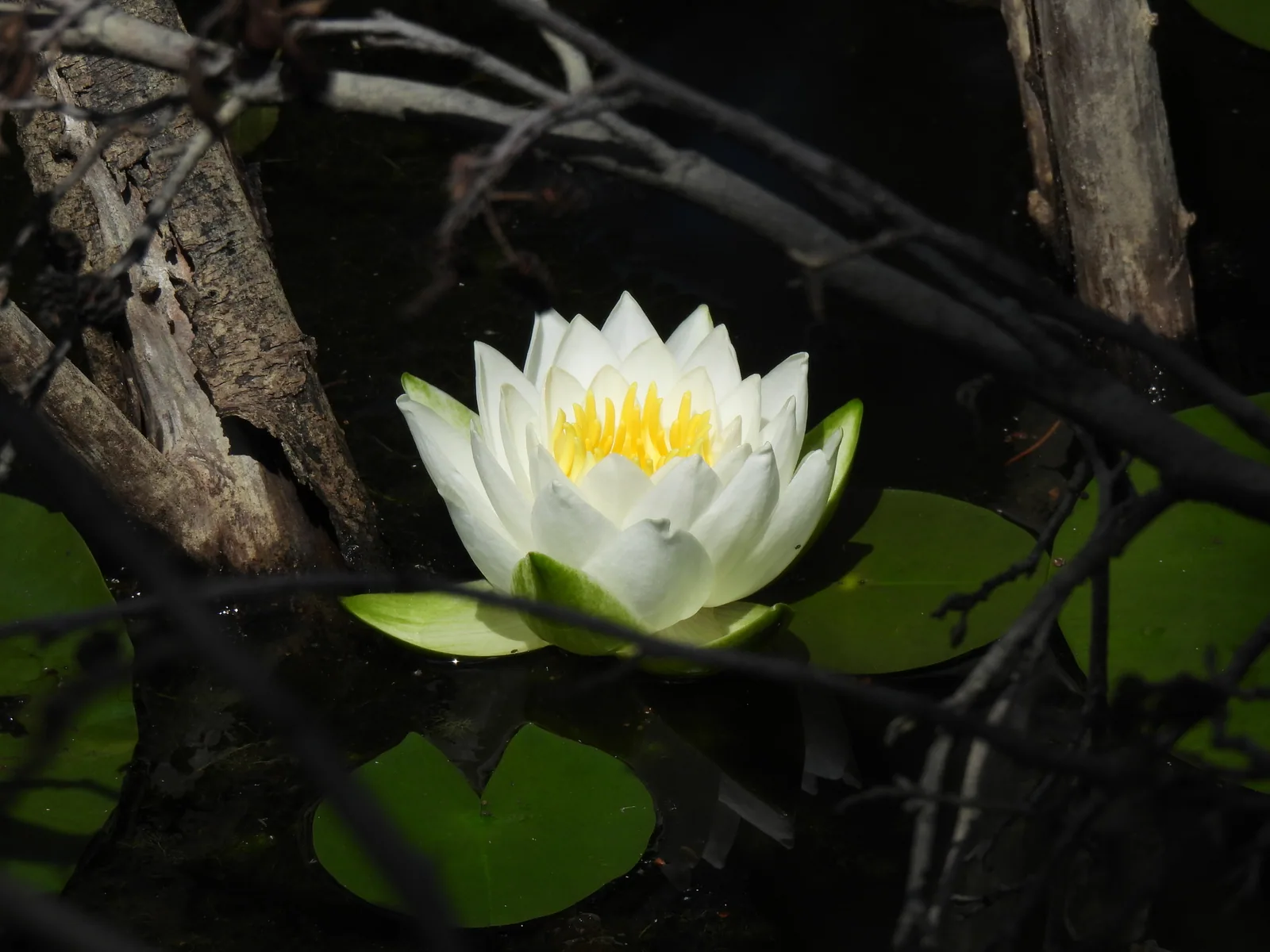

Cómo cultivar y cuidar Nenúfar blanco europeo
Nymphaea alba
Escrito por Emilio Marruso · última revisión
Tóxica para: Personas · Por qué
De un vistazo
El nenúfar blanco convierte un estanque de agua quieta o de corriente lenta en un rincón tranquilo y soleado. Dale sol pleno y 2–2,5 m de agua, y hasta aguantará breves periodos secos con el nivel del agua a cero. Siémbralo en cuanto la semilla esté madura o, más fácil aún, divide los rizomas en primavera.
- Sol
Sol pleno
- Riego
Vive en agua quieta o lenta, mejor a 2–2,5 m de profundidad; aguanta breves periodos secos
Qué dicen las fuentes (3)
Riego: Planta acuática cultivada en aguas quietas o de movimiento lento
A water plant requiring a rich soil and a sunny position in still or slowly moving water
— Nymphaea alba - Useful Temperate Plants [1] Notas sobre el riego: Lo mejor es cultivarla en 2-2.5 metros [6,6–8,2 ft] de agua; puede soportar períodos secos cortos con el nivel de agua reducido a cero
Best grown in 2 - 2.5 metres of water
— Nymphaea alba - Useful Temperate Plants [1] but can bear short dry periods, with the water level reduced to zero
— Nymphaea alba - Monaco Nature Encyclopedia [4] - Suelo
De ligeramente ácido a neutro, pH 6–7
- Plantación
Planta en el exterior a finales de primavera, tras al menos dos años bajo protección
Qué dicen las fuentes (1)
Plantación: Finales de primavera (plántulas cultivadas bajo cubierta durante al menos dos años)
grow them on in water in a greenhouse for at least two years before planting them out in late spring
— Nymphaea alba - Useful Temperate Plants [1] - Cosecha
Rizomas comestibles solo pelados y muy cocidos, cambiando el agua; la semilla tostada sustituye al café
- Multiplicación
Por semilla o dividiendo los rizomas en mayo o en primavera
- Siembra
Siembra en cuanto la semilla esté madura
Qué dicen las fuentes (1)
Siembra: Tan pronto como la semilla esté madura
Seed - sow as soon as it is ripe in a greenhouse in pots submerged under 25mm of water.
— Nymphaea alba - Useful Temperate Plants [1] - Seguridad
Muy tóxica: afecta al sistema nervioso y puede ser mortal
Resumen
El nenúfar blanco es una perenne acuática de hojas flotantes que se cultiva en aguas quietas o de movimiento lento en un lugar soleado. [1][4] Se propaga por semilla o por división de los rizomas, y contiene alcaloides tóxicos. [4][1]
Citado en inglés, como en la fuente.
Esta ficha está incompleta: las fuentes consultadas aún no cubren todos los campos.
Aún no cubierto por nuestras fuentes: Rusticidad, zona más fría, Rusticidad, zona más cálida, Poda
Cuidados
Las medidas entre corchetes son nuestra conversión al otro sistema de unidades; el texto citado no cambia.
Riego
Riego
Planta acuática cultivada en aguas quietas o de movimiento lento
Qué dicen las fuentes (1)
A water plant requiring a rich soil and a sunny position in still or slowly moving waterNotas sobre el riego
Lo mejor es cultivarla en 2-2.5 metros [6,6–8,2 ft] de agua; puede soportar períodos secos cortos con el nivel de agua reducido a cero
Luz
Clima y frío
Rusticidad, zona más fría
No figura en las fuentes consultadas.
Rusticidad, zona más cálida
No figura en las fuentes consultadas.
Suelo
pH del suelo, mínimo
6
Qué dicen las fuentes (1)
Prefers a pH between 6 and 7pH del suelo, máximo
7
Qué dicen las fuentes (1)
Prefers a pH between 6 and 7Propagación
Remedios
Cada remedio indica qué dicen las fuentes oficiales; los remedios tradicionales sin fuente oficial aparecen marcados. Los perjudiciales están para que sepas evitarlos.
Cómo eliminarla
estanque cubierto de maleza
Levanta, aclara y divide. Fuente oficial, sin prueba independiente
Nymphaea alba (white waterlily) is a vigorous perennial, so may need controlling in smaller ponds
— rhs.org.uk [6] No, there are no weedkillers approved for use by home gardeners for the control of aquatic weeds.
— rhs.org.uk [6] Cómo: Levanta, aclara y divide las plantas cada pocos años para controlar su propagación, replantando las divisiones en cestas de plantación.
Lift, thin and divide plants every few years to control their spread. Replant the divisions, ideally into planting baskets to make the job easier.
— rhs.org.uk [6] Recorta las hojas. Fuente oficial, sin prueba independiente
Nymphaea alba (white waterlily) is a vigorous perennial, so may need controlling in smaller ponds
— rhs.org.uk [6] Cómo: Corta y retira las plantas de hojas flotantes; si cortas, solo obtienes un control a corto plazo porque las nuevas hojas vuelven a crecer desde los rizomas.
With waterlilies , bear in mind that cutting only gives short-term control because new leaves will regrow from the rhizomes
— rhs.org.uk [6]
propagación invasiva
Excavando. No verificado
Remedio tradicional, no verificado por una fuente oficial.
Follow up treated areas 3 times per year.
— tiakitamakimakaurau.nz [7] Cómo: Excava la planta, desechando todas las partes en residuos verdes o vertedero si es práctico, y revisa las zonas tratadas 3 veces al año.
Toxicidad
Según la fuente, citada textualmente. No es un consejo médico ni veterinario: si una persona o un animal pudo haber ingerido esta planta, contacta con un centro de toxicología o con un veterinario.
Calendario
Siembra
Tan pronto como la semilla esté madura
Qué dicen las fuentes (1)
Seed - sow as soon as it is ripe in a greenhouse in pots submerged under 25mm of water.Plantación
Finales de primavera (plántulas cultivadas bajo cubierta durante al menos dos años)
Qué dicen las fuentes (1)
grow them on in water in a greenhouse for at least two years before planting them out in late springPoda
No figura en las fuentes consultadas.
Meses tal como los dan las fuentes, en su mayoría de Estados Unidos (hemisferio norte). En el hemisferio sur se desplazan unos seis meses.
Comestibilidad
Según la fuente, citada textualmente. No comas una planta basándote solo en esta página: los errores de identificación pueden ser peligrosos.
Plantas similares
- Loto azul Nymphaea caerulea
- Abeto de Vancuver Abies grandis
- Abraham Trachystemon orientalis
- Bananero de Etiopía Ensete ventricosum
- Acacia longifolia Acacia longifolia
- Acanthus hungaricus Acanthus hungaricus
- Acónito común Aconitum napellus
- Palma de aguja Yucca flaccida
Fuentes
Cada valor anterior se cita de estos documentos. Los enlaces llevan al editor original.
- Nymphaea alba - Useful Temperate Plants · temperate.theferns.info, consultado
- Nymphaea alba • New Zealand Plant Conservation Network · nzpcn.org.nz, consultado
- Flora of New Zealand | Taxon Profile | Nymphaea alba · nzflora.info, consultado
- Nymphaea alba - Monaco Nature Encyclopedia · monaconatureencyclopedia.com, consultado
- How to Plant & Grow Water Lilies (Nymphaea spp.) - Pond Informer · pondinformer.com, consultado
- rhs.org.uk · rhs.org.uk
- tiakitamakimakaurau.nz · tiakitamakimakaurau.nz
Escrito por Emilio Marruso · última revisión