
Cómo cultivar y cuidar Loto azul
Nymphaea caerulea
Escrito por Emilio Marruso · última revisión
De un vistazo
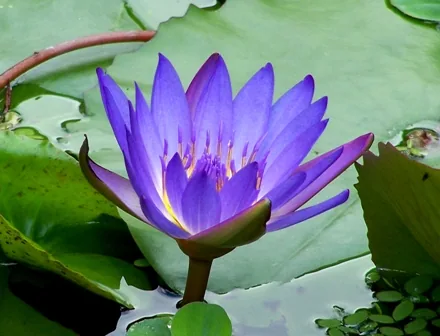
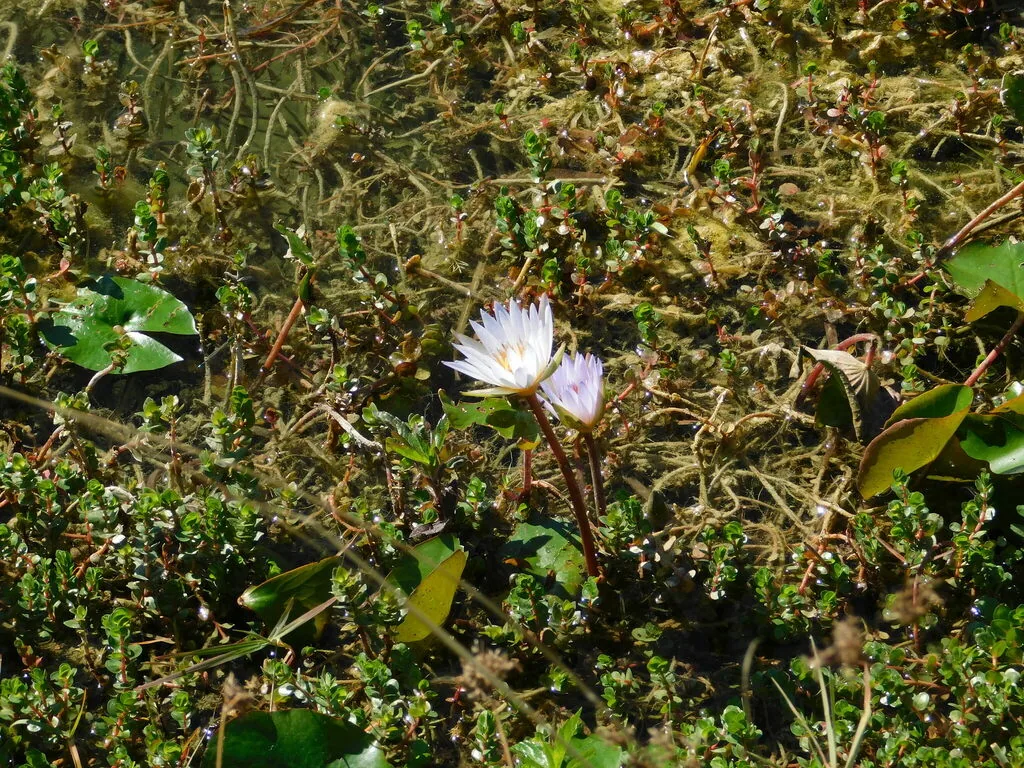
El nenúfar azul convierte un rincón con agua en un jardín: vive todo el año en agua quieta, hasta 60 cm de profundidad. Dale sol pleno y agua cálida, de al menos 24 °C, y te premiará con sus flores. Crece incluso en maceta, y sus hojas y tallos florales se comen como verdura.
- Sol
Sol pleno: al menos 6 horas al día para que florezca
Qué dicen las fuentes (2)
Luz: Pleno sol (mínimo de cuatro a cinco horas cada día)
Según EcuRed: Pleno sol . Necesitan un mínimo de 6 horas para florecer.
— Nenúfar azul - EcuRed [7] Generally, Water Lilies require a minimum of four to five hours of full sun each day to produce the most blooms.
— Nymphaea nouchali var. caerulea - World of Flowering Plants [5] - Riego
Vive en agua quieta todo el año, hasta 60 cm de profundidad
Qué dicen las fuentes (3)
Riego: Húmedo (agua estancada todo el año)
Wet is defined as year-round standing water, such as a concave area of the ground or pond.
— Nymphaea caerulea ( Blue Lotus ) - Professional Gardening Tips [3] Notas sobre el riego: Idealmente se cultiva a profundidades de hasta 60 cm [24 in]; planta en agua no más fría que 75 F, ya que el agua más fría hace que la planta entre en reposo
The plants are ideally grown at depths of up to 60 cm.
— Nymphaea nouchali var. caerulea (Savigny) Verdc. - BAP [6] Planting should be done in water no cooler than 75 degrees F. If the water is too cool the plant will enter a dormant state.
— Nymphaea caerulea ( Blue Lotus ) - Professional Gardening Tips [3] - Suelo
Suelo de ligeramente ácido a neutro, pH 6,1–7,0
Qué dicen las fuentes (2)
pH del suelo, mínimo: 6.1
Nymphaea nouchali var. caerulea should be planted using a slightly acidic mixture of clay and loam with a pH of 6.1-7.0.
— Nymphaea nouchali var. caerulea (Savigny) Verdc. - BAP [6] pH del suelo, máximo: 7.0
Nymphaea nouchali var. caerulea should be planted using a slightly acidic mixture of clay and loam with a pH of 6.1-7.0.
— Nymphaea nouchali var. caerulea (Savigny) Verdc. - BAP [6] - Plantación
Planta en agua de al menos 24 °C; con agua más fría entra en reposo
Qué dicen las fuentes (2)
Notas sobre el riego: Idealmente se cultiva a profundidades de hasta 60 cm [24 in]; planta en agua no más fría que 75 F, ya que el agua más fría hace que la planta entre en reposo
The plants are ideally grown at depths of up to 60 cm.
— Nymphaea nouchali var. caerulea (Savigny) Verdc. - BAP [6] Planting should be done in water no cooler than 75 degrees F. If the water is too cool the plant will enter a dormant state.
— Nymphaea caerulea ( Blue Lotus ) - Professional Gardening Tips [3] - Cosecha
Hojas y tallos florales se comen como verdura; las flores se hierven para hacer infusión
- Plagas
Pulgón; las mariquitas y las crisopas se lo comen, y mantén a raya las malas hierbas
- Multiplicación
Por semilla o dividiendo el rizoma, la raíz gruesa enterrada
Qué dicen las fuentes (3)
Propagación: Semilla; división del rizoma
Seed - needs to be kept moist prior to sowing. Sow seed, together with the surrounding pulp, in pots covered by about 25mm of water at 23 - 27c
— Nymphaea nouchali - Useful Tropical Plants [1] Division, or the removal of a portion of the rhizome with a sprouting eye
— Nymphaea nouchali - Useful Tropical Plants [1] Se multiplica por semillas y por división de rizomas en primavera , cuando el agua está a una temperatura cálida.
— Nenúfar azul - EcuRed [7] - Maceta
Crece también en maceta
Qué dicen las fuentes (1)
En maceta: Sí
They should be planted in a large, wide pot, using a slightly acidic mixture of clay and loam with a pH of 6.1-7.0.
— Nymphaea nouchali var. caerulea - World of Flowering Plants [5]
Resumen
El lirio de agua azul es una perenne que forma matas, con rizomas tuberosos anclados en el barro del estanque. [5] Es un lirio de agua tropical de aguas tranquilas y profundas que necesita pleno sol y es sensible a las heladas. [7] Se propaga por semilla y por división del rizoma. [1]
Citado en inglés, como en la fuente.
Esta ficha está incompleta: las fuentes consultadas aún no cubren todos los campos.
Aún no cubierto por nuestras fuentes: Poda
Cuidados
Las medidas entre corchetes son nuestra conversión al otro sistema de unidades; el texto citado no cambia.
Riego
Riego
Húmedo (agua estancada todo el año)
Qué dicen las fuentes (1)
Wet is defined as year-round standing water, such as a concave area of the ground or pond.Notas sobre el riego
Idealmente se cultiva a profundidades de hasta 60 cm [24 in]; planta en agua no más fría que 75 F, ya que el agua más fría hace que la planta entre en reposo
Qué dicen las fuentes (2)
The plants are ideally grown at depths of up to 60 cm.Planting should be done in water no cooler than 75 degrees F. If the water is too cool the plant will enter a dormant state.Luz
Pleno sol (mínimo de cuatro a cinco horas cada día)
Lo que dice cada fuente
Según EcuRed: Pleno sol (mínimo de 6 horas para florecer)
Qué dicen las fuentes (2)
Según EcuRed: Pleno sol . Necesitan un mínimo de 6 horas para florecer.Generally, Water Lilies require a minimum of four to five hours of full sun each day to produce the most blooms.Clima y frío
Rusticidad, zona más fría
Las fuentes dan valores distintos según la región, la zona o las condiciones de cultivo.
Lo que dice cada fuente
Según World of Flowering Plants: 10b [mínima invernal de 1,7 a 4,4 °C (de 35 a 40 °F)]
Según Backyard Gardener: 5 [mínima invernal de −28,9 a −23,3 °C (de −20 a −10 °F)]
Qué dicen las fuentes (2)
Según World of Flowering Plants: USDA hardiness zone 10b to 11b: from 35 °F (+1.7 °C) to 50 °F (+10 °C).Según Backyard Gardener: USDA Hardiness Zone:
5 to 10Rusticidad, zona más cálida
Las fuentes dan valores distintos según la región, la zona o las condiciones de cultivo.
Lo que dice cada fuente
Según World of Flowering Plants: 11b [mínima invernal de 7,2 a 10 °C (de 45 a 50 °F)]
Según Backyard Gardener: 10 [mínima invernal de −1,1 a 4,4 °C (de 30 a 40 °F)]
Qué dicen las fuentes (2)
Según World of Flowering Plants: USDA hardiness zone 10b to 11b: from 35 °F (+1.7 °C) to 50 °F (+10 °C).Según Backyard Gardener: USDA Hardiness Zone:
5 to 10Suelo
pH del suelo, mínimo
6.1
Qué dicen las fuentes (1)
Nymphaea nouchali var. caerulea should be planted using a slightly acidic mixture of clay and loam with a pH of 6.1-7.0.pH del suelo, máximo
7.0
Qué dicen las fuentes (1)
Nymphaea nouchali var. caerulea should be planted using a slightly acidic mixture of clay and loam with a pH of 6.1-7.0.Dónde cultivarla
Sí
Qué dicen las fuentes (1)
They should be planted in a large, wide pot, using a slightly acidic mixture of clay and loam with a pH of 6.1-7.0.Propagación
Semilla; división del rizoma
Qué dicen las fuentes (3)
Seed - needs to be kept moist prior to sowing. Sow seed, together with the surrounding pulp, in pots covered by about 25mm of water at 23 - 27cDivision, or the removal of a portion of the rhizome with a sprouting eyeSe multiplica por semillas y por división de rizomas en primavera , cuando el agua está a una temperatura cálida.Cultivo
La planta
Familia
Nymphaeaceae
Qué dicen las fuentes (1)
Nymphaeaceae Nymphaea Nymphaea nouchali ## Nymphaea nouchali var. caerulea (Savigny) Verdc. First published in Fl. Trop. E. Africa, Nymphaeac.: 7 (1989)Abonado
Abonos minerales
Las fuentes dan valores distintos según la región, la zona o las condiciones de cultivo.
Lo que dice cada fuente
nenúfares tropicales que florecen de día en general: Fertilizante para nenúfares a la tasa indicada en la etiqueta
Qué dicen las fuentes (1)
nenúfares tropicales que florecen de día en general: Provide at least 5 hours of sun in fertile loamy soils and fertilize with an appropriate fertilizer for water lilies according to package directions.Problemas
Pulgones
Síntoma: Insectos de cuerpo blando que succionan los fluidos de la planta, causando atrofia y deformación de hojas y brotes
Qué hacer: Mantén las malas hierbas al mínimo; las mariquitas y los crisópidos se alimentan de los pulgones
Qué dicen las fuentes (1)
Aphids are small, soft-bodied, slow-moving insects that suck fluids from plants.
— Nymphaea caerulea ( Blue Lotus ) - Professional Gardening Tips [3]
Remedios
Cada remedio indica qué dicen las fuentes oficiales; los remedios tradicionales sin fuente oficial aparecen marcados. Los perjudiciales están para que sepas evitarlos.
Cuidar la planta
pulgones y escarabajos de los nenúfares
Elimínalos a mano Fuente oficial, sin prueba independiente
Cómo: Los pulgones y escarabajos se pueden limpiar de las hojas y brotes; es viable en estanques pequeños donde las hojas de los nenúfares estén al alcance desde los bordes del estanque.
Waterlily aphids and beetles can be wiped off the leaves and buds. This is feasible on small ponds where the lily leaves are within reach from the sides of the pond.
— rhs.org.uk [10]
Calendario
Poda
No figura en las fuentes consultadas.
Meses tal como los dan las fuentes, en su mayoría de Estados Unidos (hemisferio norte). En el hemisferio sur se desplazan unos seis meses.
Comestibilidad
Según la fuente, citada textualmente. No comas una planta basándote solo en esta página: los errores de identificación pueden ser peligrosos.
Valores orientativos
Valores de una fuente secundaria, no comprobados palabra por palabra como el resto de esta página. Úselos como punto de partida.
- Ciclo de vida
- Perenne herbáceaValor orientativo, adáptalo a tu clima · Fuente secundaria
- Altura adulta
- 22.9-30.5 cm (0.75-1 pie)Valor orientativo, adáptalo a tu clima · Fuente secundaria
- Horas de sol
- 6-8 horasValor orientativo, adáptalo a tu clima · Fuente secundaria
- Nivel de cuidado
- ModeradoValor orientativo, adáptalo a tu clima · Fuente secundaria
- Crecimiento
- BajoValor orientativo, adáptalo a tu clima · Fuente secundaria
- Poda
- marzo, abril, mayoValor orientativo, adáptalo a tu clima · Fuente secundaria
Plantas similares
- Nenúfar blanco europeo Nymphaea alba
- Victoria amazónica Victoria amazonica
- Irupe Victoria cruziana
- Abeto de Vancuver Abies grandis
- Abraham Trachystemon orientalis
- Bananero de Etiopía Ensete ventricosum
- Acacia longifolia Acacia longifolia
- Acanthus hungaricus Acanthus hungaricus
Fuentes
Cada valor anterior se cita de estos documentos. Los enlaces llevan al editor original.
- Nymphaea nouchali - Useful Tropical Plants · tropical.theferns.info, consultado
- Nymphaea caerulea (Cultivated) – eFlora of India · efloraofindia.com, consultado
- Nymphaea caerulea ( Blue Lotus ) - Professional Gardening Tips · backyardgardener.com, consultado
- Nymphaea nouchali var. caerulea (Savigny) Verdc. | Plants of the World Online | Kew Science · powo.science.kew.org, consultado
- Nymphaea nouchali var. caerulea - World of Flowering Plants · worldoffloweringplants.com, consultado
- Nymphaea nouchali var. caerulea (Savigny) Verdc. - BAP · biotopeaquariumproject.com, consultado
- Nenúfar azul - EcuRed · ecured.cu, consultado
- Plants of South Eastern New South Wales · apps.lucidcentral.org, consultado
- plants.ces.ncsu.edu · plants.ces.ncsu.edu
- rhs.org.uk · rhs.org.uk
Escrito por Emilio Marruso · última revisión